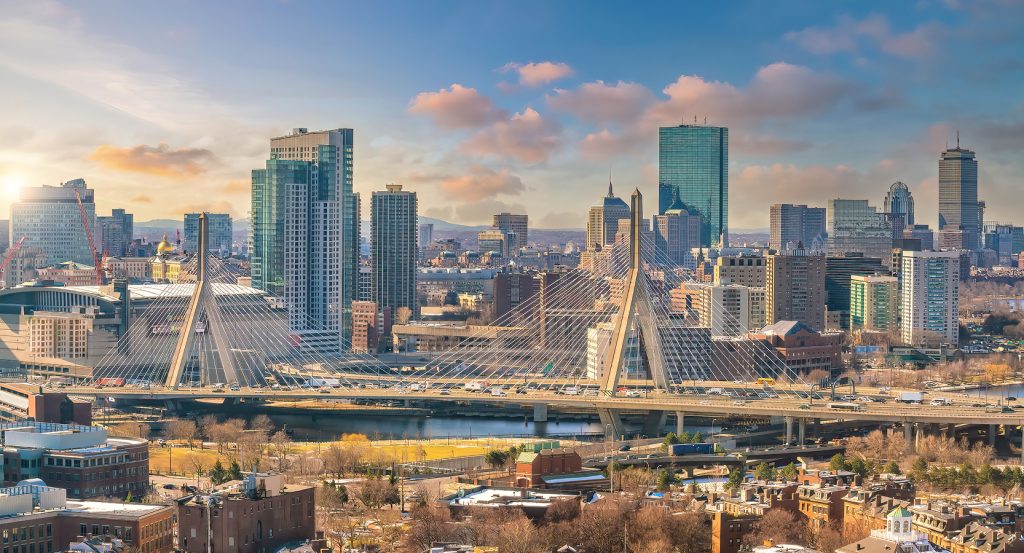
Top places to stay in Boston, Massachusetts.
Boston cultivated a distinctive tradition of American hospitality through its colonial maritime economy, revolutionary heritage, and enduring prominence in education and commerce, with nineteenth-century rail travel and grand urban architecture establishing the Massachusetts capital as a center of refined New England hospitality. Founded in 1630 on the Shawmut Peninsula, the settlement developed around a sheltered harbor that connected Massachusetts merchants with trading networks extending across the Atlantic. The city's early taverns and inns served merchants, sailors, government officials, and travelers arriving through its maritime approaches, establishing public gathering places that became important institutions of colonial commercial and political life. The Green Dragon Tavern acquired particular significance during the years preceding the American Revolution through its association with Boston's patriot movement, illustrating the close relationship between hospitality establishments and the political culture of the colonial capital. The construction of the Exchange Coffee House in 1809 introduced a more ambitious form of commercial hospitality, combining accommodation and public gathering spaces within a substantial building serving the city's expanding mercantile economy. The opening of the Tremont House in 1829, designed by Isaiah Rogers, established a landmark in American hotel development through its sophisticated public interiors, indoor plumbing, and private guest accommodations, introducing innovations that influenced luxury hospitality across the United States. The completion of the Boston & Lowell Railroad in 1835 and the subsequent expansion of regional railway connections strengthened Boston's position as a commercial gateway to New England, encouraging hotel construction near transportation terminals and the emerging financial district. The reclamation of Back Bay during the nineteenth century transformed the city's accommodation geography, creating a prestigious residential neighborhood of broad avenues, landscaped squares, and substantial Victorian townhouses. The opening of the original Hotel Vendome on Commonwealth Avenue in 1871 established a distinguished hospitality institution within this newly developed district, reflecting the ambitions of Boston's industrial and mercantile elite. The opening of the original Parker House in 1855 introduced another influential establishment near Boston Common, where proprietor Harvey D. Parker developed a reputation for refined service and sophisticated dining. The hotel's culinary and literary associations subsequently connected Boston hospitality with prominent figures including Charles Dickens, Ralph Waldo Emerson, and members of the Saturday Club. The completion of the Copley Plaza Hotel in 1912, designed by Henry Janeway Hardenbergh, established an expansive expression of grand hotel architecture overlooking Copley Square, reinforcing Back Bay's position as a center of prestigious accommodation. The construction of the original Ritz-Carlton Boston in 1927 introduced an internationally influential standard of luxury hospitality beside the Public Garden, with its formal interiors and personalized service contributing to the development of the Ritz-Carlton identity. Following the Second World War, the expansion of higher education, medical research, financial services, and international business strengthened demand for sophisticated accommodation across the metropolitan area. The transformation of the historic Charles Street Jail into The Liberty Hotel in 2007 demonstrated the architectural potential of adapting significant civic institutions for contemporary luxury hospitality. The subsequent development of waterfront hotels, restored industrial properties, and contemporary accommodations near Boston's expanding innovation districts established a lodging landscape that connects the city's colonial inheritance with its continuing importance as an international center of education, research, and commerce.
Foresyte Travel's top five choices.
5. The Langham, Boston
The Langham, Boston occupies the former Federal Reserve Bank of Boston, a Renaissance Revival building completed in 1922 to designs by the Boston firm R. Clipston Sturgis. Expansive limestone façades, arched windows and surviving banking details preserve the building's institutional origins in the heart of Boston's Financial District, where the Federal Reserve operated until relocating in the 1970s. The property became a hotel in 1981 and entered the Langham portfolio in 2003, connecting an early Federal Reserve headquarters with a hospitality company descended from London's pioneering 1865 Langham. A major transformation completed in 2021 restored architectural elements and incorporated references to the building's banking history throughout the interiors, extending the site's financial character into its modern use.
4. Raffles Boston
Raffles Boston became the Singapore-born hospitality company's first North American property when it opened in 2023 inside a purpose-built tower at the meeting point of Back Bay and the South End. The 35-story building was designed by The Architectural Team with interiors involving Stonehill Taylor and Rockwell Group, combining hotel spaces and private residences within a slender mixed-use structure on Stuart Street. A dramatic three-story sky lobby placed the principal arrival sequence high above street level, departing from the conventional ground-floor organization of Boston's historic luxury hotels. The project marked both Raffles' entrance into the United States and a major new architectural addition to a district dominated by nineteenth and early-twentieth-century Back Bay fabric.
3. The Ritz-Carlton, Boston
The Ritz-Carlton, Boston forms part of Millennium Place and the broader redevelopment of the former Combat Zone, where major investment around Washington Street helped reconnect Downtown Crossing, the Theater District and Boston Common. Its institutional significance also reaches back to the original Ritz-Carlton Boston, opened on Arlington Street in 1927 under hotelier Edward N. Wyner and developed according to service principles associated with César Ritz. Marriott acquired The Ritz-Carlton Hotel Company in the 1990s, and the historic Arlington Street property ultimately became Taj Boston after the Ritz-Carlton name transferred to the contemporary downtown hotel in 2001. That succession makes the present property the inheritor of a Boston hotel lineage that played a formative role in establishing the Ritz-Carlton name in the United States decades before its development into a global brand.
2. Four Seasons Hotel Boston
Four Seasons Hotel Boston occupies a prominent Boylston Street site facing the Public Garden, the nineteenth-century landscape whose creation established one of the city's defining boundaries between Downtown and Back Bay. The hotel opened in 1985 during Four Seasons' early expansion across the United States, giving the Toronto-founded company a major New England property as its international luxury model accelerated beyond Canada. Architect Roger Ferris later directed a substantial transformation of the property, introducing a contemporary architectural style shaped around its relationship with the Public Garden and surrounding Back Bay streetscape. The Boston hotel connects Four Seasons' formative American expansion with one of the city's most historically consequential pieces of public landscape.
1. The Newbury Boston
The Newbury Boston occupies the building created for the original Ritz-Carlton Boston, which opened at the corner of Arlington and Newbury streets in 1927 under developer Edward N. Wyner. Wyner adopted the Ritz-Carlton name and cultivated service traditions associated with César Ritz, turning the property into a gathering place for Boston society and helping establish the brand's America character long before the modern Ritz-Carlton hotel company emerged. The building subsequently operated as Taj Boston before Highgate and its partners undertook an extensive transformation with architecture by CambridgeSeven and interiors by Jeffrey Beers International, Champalimaud Design and Ken Fulk. Reopened as The Newbury Boston in 2021, the property carries nearly a century of luxury-hotel history into a new character while retaining the extraordinary corner overlooking the Public Garden that defined the original Ritz-Carlton's place in Boston.
Where your story begins.
Foresyte Travel reveals places that feel extraordinary long before you arrive.
Enjoy editorial crafted for luxury travelers.