
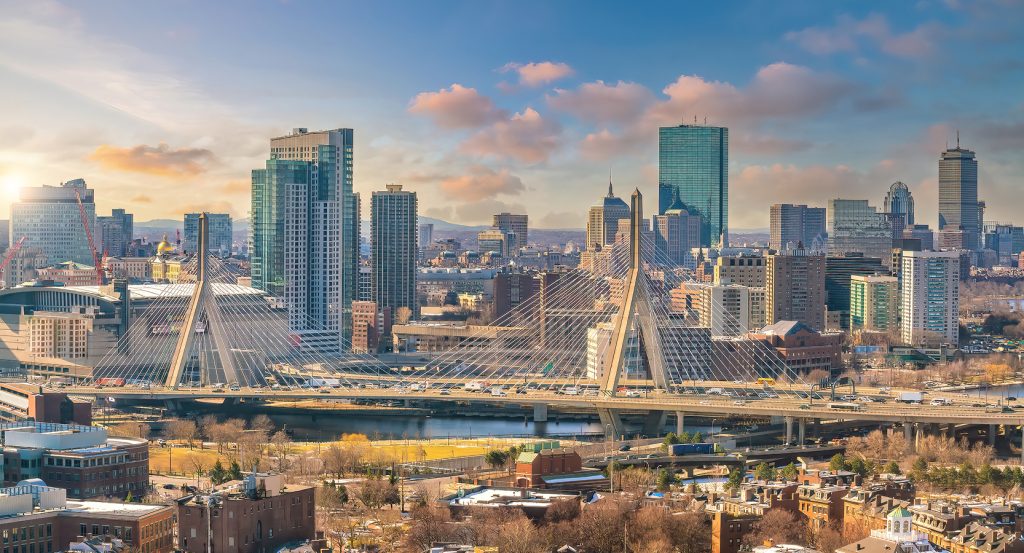
Why Fairmont Copley Plaza matters.
Fairmont Copley Plaza is a grand historic hotel where Back Bay's Beaux-Arts civic ambition meets Boston's social history, political life and more than a century of ceremonial hospitality.
Occupying the corner of Saint James Avenue and Dartmouth Street across from Copley Square, Fairmont Copley Plaza stands between Boylston Street, Huntington Avenue and the commercial frontage of Newbury Street, with Trinity Church and the Boston Public Library defining the surrounding urban ensemble. The hotel occupies the original site of the Museum of Fine Arts, which stood in Copley Square from 1876 until its relocation to Huntington Avenue in 1909. Its E-shaped structure fills an entire city block and rests on wooden pilings driven 70 feet below street level, reflecting the engineering demands of Boston's filled Back Bay. The building's location places it within the formal street grid created after the tidal marsh was converted into an urban district of residences, institutions, churches and hotels. Dartmouth Street directs movement toward the library and the Charles River-facing streets, while Huntington Avenue creates a diagonal route toward the Fenway district and Boston's cultural institutions. Saint James Avenue connects the hotel with the Commonwealth Avenue Mall, the Public Garden and the residential streets of the western Back Bay. The hotel's stone mass forms a deliberate counterpoint to the open space of Copley Square and the vertical towers surrounding it. The result is a hotel that occupies one of Boston's most consequential civic and architectural intersections.
What defines Fairmont Copley Plaza.
Fairmont Copley Plaza is best known for opening in 1912 on the former site of the Museum of Fine Arts and becoming one of the central social institutions of Boston's twentieth-century hotel culture. The building was designed in a French and Venetian Renaissance style by architect Henry Janeway Hardenbergh, whose earlier work included the Plaza Hotel in New York and the Willard Hotel in Washington. Its E-shaped plan filled a full city block while creating interior courts, formal entrances and a broad sequence of public rooms. The structure was supported by wooden pilings driven deep into the filled land of the Back Bay. The Copley Plaza opened on August 19, 1912, with a grand reception hosted by Boston mayor John F. Fitzgerald, the maternal grandfather of President John F. Kennedy. More than 1,000 prominent guests attended the opening, and rooms had been reserved 16 months in advance. The hotel immediately joined Boston's political, commercial and cultural life as a place for formal dinners, private clubs, public receptions and visiting dignitaries. Its location opposite Copley Square allowed it to participate in the civic character of the Back Bay while also serving the city's financial and social elite. During Prohibition, the Oak Bar operated as the Merry-Go-Round Bar, whose working carousel gave the hotel one of its most distinctive entertainment spaces. Patrons celebrated the repeal of Prohibition in 1933 at the same bar, turning a legal change into a public social event. During the Second World War, the hotel's elevator operators were required to be over 65 so that younger men could remain available for military service. The Copley Plaza also became associated with technological changes in hospitality. It was the first completely air-conditioned hotel in Boston, among the first hotels to operate an international reservations system, among the first anywhere to accept credit cards and an early adopter of direct telephone dialing. These innovations connected the traditional grand hotel to the emerging systems of international travel and modern communications. The property hosted presidents, foreign dignitaries, actors, musicians, business leaders and members of Boston's established families. Richard Burton and Elizabeth Taylor made a widely remembered arrival at the hotel in 1964 after their first wedding, drawing a crowd of 1,000 admirers. In 1967, two gilded lions originally carved for the Kensington Hotel were rescued before demolition and placed at the St. James entrance. The lions became a permanent visual emblem of the property and a physical link to Boston's earlier hotel history. The hotel joined Historic Hotels of America in 1998, preserving its position within the national history of landmark hospitality properties. Its continuing operation reflects the transformation of Boston from an industrial port and mercantile city into a center of finance, education, culture and international travel. Fairmont Copley Plaza matters because it has remained embedded in that transformation, retaining the ceremonial architecture of the early twentieth century while adapting to successive eras of urban life.
Henry Janeway Hardenbergh's design gives the hotel an architectural language of formal symmetry, sculpted ornament and carefully controlled procession. The public entrance creates a strong relationship with Saint James Avenue, while the interior sequence moves from the lobby into ballrooms, restaurants, meeting rooms and private accommodations. The building's Renaissance references connect it to European hotel traditions, but its scale and material presence belong specifically to the ambitions of early twentieth-century Boston. The lobby and principal public rooms were designed to support the social rituals of a grand hotel, including receptions, banquets, weddings, political gatherings and business dinners. The Oak Bar continues that tradition through a more intimate setting shaped by dark wood, historic associations and a strong relationship with the hotel's public history. The hotel's ballroom spaces extend the property's role as a host for major events, providing rooms large enough for formal ceremonies while retaining the architectural character of the original building. The two gilded lions at the St. James entrance function as more than decorative guardians. They preserve an object from a demolished Boston hotel and connect Fairmont Copley Plaza with the city's earlier network of grand accommodations. The hotel's guest rooms and suites have been updated across successive periods, but the property continues to present itself as a historic urban residence. Its 383 rooms include 17 suites, allowing the building to serve both short business stays and longer visits requiring larger living areas. Fairmont Gold introduces a more private hospitality layer through lounge access, breakfast, evening hors d'oeuvres and personalized service. The hotel's position in the Back Bay also gives it a direct relationship with the city's cultural and commercial calendar. The Boston Marathon passes through the surrounding district, while Copley Square supports farmers markets, civic events and seasonal gatherings. Newbury Street, the Commonwealth Avenue Mall and the area's galleries and restaurants extend the hotel's social environment beyond its walls. AAA awarded the hotel Four Diamond status from 1994 through 2025. Forbes Travel Guide awarded the hotel a recommended designation from 2018 through 2025. The Knot awarded the property Best of Weddings status from 2020 through 2025. Fairmont Copley Plaza still operates as a place where public ceremony, private residence, political life and cultural memory overlap. Its historical character is not limited to the building's age. It rests in the way the hotel has repeatedly absorbed the changing customs, technologies and social expectations of Boston while preserving the grand-hotel structure created in 1912.
How Fairmont Copley Plaza fits.
Fairmont Copley Plaza works as a base for an outing connecting Boston's planned public landscape, its state government and the historic residential and reform culture of Beacon Hill.
Begin at Boston Public Garden, the landscaped civic park occupying the western edge of the Boston Common. The Public Garden was created in 1837 as the first public botanical garden in the United States, introducing carefully arranged plantings, a lagoon and ornamental paths into the center of Boston. Its landscape reflects the Victorian belief that urban parks could serve both scientific and social purposes, combining horticulture with public recreation. The Swan Boats began operating in 1877 and became one of the park's longest-running traditions, while the equestrian statue of George Washington was installed in 1869. The garden's plantings and water features create a deliberate contrast with the dense masonry of Back Bay and the formal civic buildings surrounding it. Continue to Massachusetts State House, rising on Beacon Hill above the northern edge of Boston Common. Charles Bulfinch designed the building, which opened in 1798 as a purpose-built seat of Massachusetts government. Its gilded dome, originally covered in wood and later sheathed in copper, became one of the defining elements of Boston's skyline. The State House occupies land once belonging to John Hancock, placing the building within the political geography of revolutionary Massachusetts. Its chambers, legislative offices and ceremonial rooms preserve the institutional history of the Commonwealth from the early republic through the modern state. The building's position above the Common makes government physically visible within the city, linking the public landscape below with the political authority concentrated on the hill. Conclude at Beacon Hill, the historic neighborhood extending north and west from the State House through streets of brick row houses, granite steps and narrow lanes. The district became home to Boston's political leaders, merchants, writers and reformers while also supporting one of the city's most important African American communities. The African Meeting House, constructed in 1806, served as a church, school and civic center and remains the oldest surviving African Meeting House in the United States. Louisburg Square and the streets around Mount Vernon Street preserve the residential architecture of the nineteenth-century elite, while Charles Street connects the hill to the Common and the river-facing neighborhoods beyond. Beacon Hill's layered social history reveals how Boston's public character developed through both inherited privilege and organized reform. The progression moves from Boston Public Garden's civic landscape through Massachusetts State House's political authority and culminates in Beacon Hill's layered residential and reform history, connecting the city's parks, government and social institutions around Fairmont Copley Plaza.
Where your story begins.
Foresyte Travel reveals places that feel extraordinary long before you arrive.
Enjoy editorial crafted for luxury travelers.
Foresyte may earn a commission when you book.







































































































