Why Boston Common matters.
Boston Common is a historic public park where Downtown's colonial heritage meets the origins of American civic life, the political struggles of the Revolutionary era and nearly four centuries of public gatherings in the oldest municipal park in the United States.
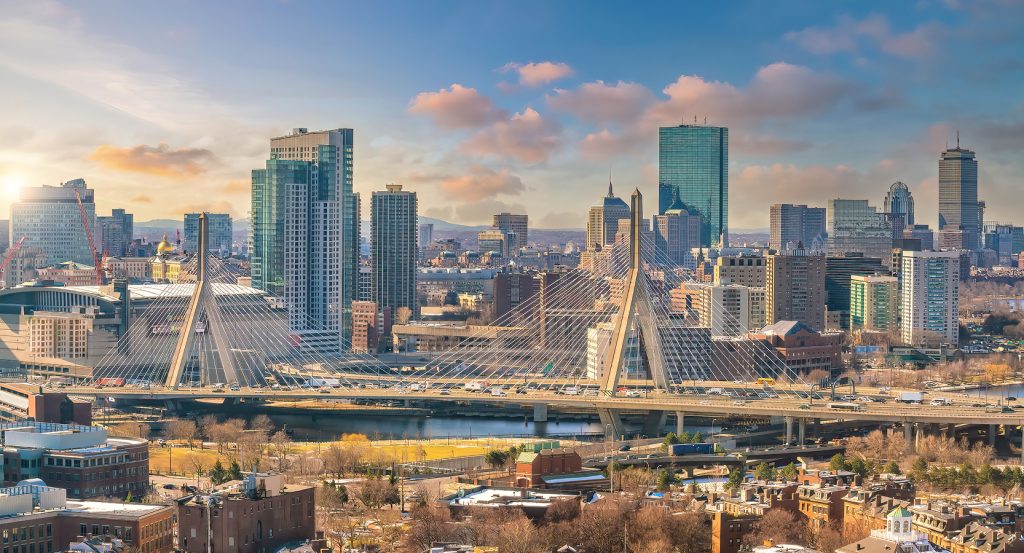
Positioned along Tremont Street between Beacon Hill and the Theater District, the expansive park occupies fifty acres of Central Boston, extending toward Charles Street and the Public Garden through a landscape of rolling lawns, mature trees, pedestrian paths and historic monuments. Broad walkways cross gently sloping terrain, connecting formal entrances with recreational grounds and shaded gathering places. The northeastern hillside rises toward the Massachusetts State House, creating a prominent relationship between the park and the seat of state government. Frog Pond occupies a central position within the grounds, surrounded by open lawns and established tree canopies. The result is a substantial civic landscape whose preserved geography, public monuments and enduring recreational traditions connect Boston's colonial origins with its modern urban character.
What defines Boston Common.
Boston Common is best known as the oldest public park in the United States, established in 1634 when Boston purchased land associated with early settler William Blackstone for communal use. Blackstone had occupied the Shawmut Peninsula before the arrival of the Puritan settlement led by John Winthrop in 1630. The town acquired forty-four acres through a collective purchase financed by local householders, establishing common ground for livestock grazing and other shared activities. Colonial authorities subsequently used portions of the property for military musters, public assemblies and civic ceremonies. The Common also became a site of public punishment, including executions associated with the religious and political conflicts of seventeenth-century Massachusetts. Mary Dyer, a Quaker who challenged the colony's restrictions on religious worship, was executed on the Common in 1660, becoming a prominent figure in the history of religious liberty. British soldiers occupied the grounds during the years preceding the American Revolution, establishing encampments and conducting military exercises near the center of colonial Boston. The park served as an important military staging area during the British occupation of the city between 1775 and 1776. Following independence, its civic functions expanded as Boston developed into a major commercial and political center. Municipal improvements during the nineteenth century gradually transformed the former grazing ground into a landscaped public park, introducing additional pathways, ornamental plantings and recreational facilities. The establishment of the adjacent Public Garden strengthened the Common's position within a growing network of landscaped urban spaces. Public gatherings subsequently included abolitionist meetings, labor demonstrations, political rallies and celebrations associated with major events in American history. Martin Luther King Jr. addressed a large gathering on the Common in 1965 following a civil rights march through Boston, establishing another consequential chapter in the park's history of political assembly.
The Soldiers and Sailors Monument rises above Flagstaff Hill, commemorating Massachusetts residents who served during the American Civil War. Designed by sculptor Martin Milmore and dedicated in 1877, the granite monument incorporates allegorical figures representing national unity, history, peace and the sacrifices of military service. Its elevated position creates one of the park's principal commemorative settings. The Brewer Fountain stands near the Tremont Street entrance, presenting a bronze composition inspired by a nineteenth-century French fountain. Donated by Gardner Brewer and installed in 1868, the fountain incorporates figures associated with classical mythology and decorative water features. The Robert Gould Shaw and Massachusetts 54th Regiment Memorial occupies a prominent position near Beacon Street, commemorating one of the first African American regiments organized for the Union Army. Sculptor Augustus Saint-Gaudens developed the bronze relief, which was dedicated in 1897 and became an important achievement of American commemorative sculpture. The monument honors Colonel Robert Gould Shaw and the Black soldiers whose service contributed to the struggle against slavery. The Boston Massacre Memorial, created by Robert Kraus and dedicated in 1888, commemorates the colonial civilians killed during the confrontation with British soldiers in 1770. Its allegorical sculpture connects the park with the political resistance that preceded the Revolutionary War. Frog Pond provides a contrasting recreational setting, operating as a spray pool during warmer months and a seasonal ice-skating rink during winter. The Parkman Bandstand, dedicated in 1912, accommodates performances and public events within an open lawn surrounded by mature trees. The Common also forms the starting point of the Freedom Trail, the historic pedestrian route connecting sixteen sites associated with Boston's colonial and Revolutionary history. Its enduring importance rests in the concentration of public monuments, recreational facilities and civic spaces within a landscape that has served successive generations of Boston residents.
How Boston Common fits.
Boston Common works as the civic anchor for a Central Boston outing connecting the city's historic religious institutions, its nineteenth-century residential architecture and the preserved cultural collections of Beacon Hill.
Begin at Park Street Church, the historic Congregational church established in 1809 near the eastern edge of the Common. Its prominent steeple, designed by architect Peter Banner, became one of Boston's most recognizable early nineteenth-century architectural features. The church developed into an important center of religious activity and social reform, hosting influential public gatherings during the abolitionist movement. William Lloyd Garrison delivered his first major public antislavery address there in 1829, establishing a consequential association with the developing campaign against slavery. The church also became connected with missionary activity and the expansion of Protestant religious institutions during the nineteenth century. Continue to Nichols House Museum, the preserved Beacon Hill townhouse constructed in 1804 and associated with the family of landscape architect and social reformer Rose Standish Nichols. Designed by Charles Bulfinch, the Federal-style residence preserves architectural details and domestic furnishings associated with Boston's nineteenth-century upper-class households. Nichols developed an influential professional career in landscape design, creating gardens and publishing extensively on European and American horticultural traditions. The museum's interiors contain furniture, decorative objects and family possessions that illuminate the cultural interests and domestic arrangements of successive residents. Its location along Mount Vernon Street provides an intimate perspective on Beacon Hill's historic residential development. Conclude at Boston Athenaeum, the distinguished independent library founded in 1807 and established in its present Beacon Street building in 1849. The institution developed as a major center of literary and intellectual activity, assembling extensive collections of books, manuscripts, paintings and historical artifacts. Its Italianate building, designed by Edward Clarke Cabot, incorporates elegant reading rooms and substantial architectural detailing. The library's collections include important materials associated with American literature, early printing and the cultural history of Boston. Its exhibitions and public programs extend the institution's role within the city's scholarly community. The progression moves from Park Street Church's religious and reform history through Nichols House Museum's preserved domestic interiors and culminates at Boston Athenaeum's literary collections, connecting three consequential dimensions of Boston's civic and cultural development.
Where your story begins.
Foresyte Travel reveals places that feel extraordinary long before you arrive.
Enjoy editorial crafted for luxury travelers.
Foresyte may earn a commission when you book.