Fun facts about New Orleans, Louisiana.
New Orleans developed its unmistakable streetscape through the physical demands of a low-lying delta, where natural levees, reclaimed swamps, and shifting waterways influenced settlement patterns and architectural construction. The Mississippi River curves around the historic center in a broad crescent, giving rise to the city's enduring nickname, the Crescent City. The French Quarter preserves the rectangular street grid laid out during the colonial period, with narrow blocks, interior courtyards, and closely spaced buildings reflecting the practical requirements of a humid subtropical environment. Jackson Square forms the ceremonial center of the district, framed by St. Louis Cathedral, the Cabildo, and the Presbytère, whose grand façades reflect the city's colonial religious and governmental institutions. The cathedral's present appearance developed through nineteenth-century reconstruction, with its prominent spires rising above the landscaped square and surrounding historic buildings. The Pontalba Buildings, constructed during the 1840s and 1850s under the direction of Baroness Micaela Almonester de Pontalba, introduced elegant residential and commercial structures distinguished by continuous cast-iron balconies. Throughout the French Quarter, wrought-iron galleries, stucco façades, shuttered windows, and concealed courtyards create a distinctive architectural environment influenced by Spanish colonial reconstruction and subsequent American development. Royal Street preserves a concentration of historic residences, galleries, and commercial buildings, including the elaborate Cornstalk Fence at the Cornstalk Hotel, whose decorative ironwork became a celebrated example of nineteenth-century craftsmanship. Beyond Canal Street, the Central Business District developed through the expansion of banking, commerce, and transportation, introducing substantial commercial buildings and later high-rise construction. The Garden District presents a contrasting residential landscape of Greek Revival mansions, Italianate villas, and elaborate gardens established during the nineteenth-century expansion of American New Orleans. St. Charles Avenue became a principal ceremonial boulevard, its historic streetcar line connecting the downtown core with Uptown neighborhoods and the campuses of Tulane and Loyola universities. The city's characteristic shotgun houses, with rooms arranged sequentially along narrow residential lots, became a defining feature of working-class neighborhoods, particularly in areas including the Irish Channel, Bywater, and Tremé. These buildings reflect practical adaptations to limited frontage, ventilation requirements, and the economics of urban land development. The Tremé neighborhood also preserves important landmarks associated with African American and Creole history, including St. Augustine Church and the surrounding streets where generations of musicians, artisans, and community leaders lived and worked. Along the Mississippi waterfront, the former commercial wharves and warehouses of the Warehouse District have been adapted into museums, galleries, residences, and hospitality establishments. The city's extensive drainage infrastructure, developed through pumping systems and canals during the twentieth century, enabled urban expansion into areas below sea level, creating a metropolitan landscape dependent upon continuous water management. City Park introduces another important environment through its ancient live oaks, lagoons, and landscaped grounds, preserving a substantial green space within the urban fabric. New Orleans reveals the inseparable relationship between delta geography, colonial planning, style construction, and the engineering systems required to sustain a major city beside one of the world's most powerful rivers.
Louisianan cultural traditions reached an exceptional concentration in New Orleans, where African, French, Spanish, Caribbean, and American influences developed into distinctive forms of music, cuisine, religious practice, and public celebration. The city's most consequential contribution to international culture emerged through the development of jazz during the late nineteenth and early twentieth centuries, when African American musicians combined blues, ragtime, brass-band traditions, improvisation, and rhythmic experimentation into a revolutionary musical language. Congo Square, located within present-day Louis Armstrong Park, became an important gathering place where enslaved and free people of African descent performed music and dance, preserving elements of African cultural expression within the colonial city. The subsequent development of jazz drew upon neighborhood brass bands, social aid and pleasure clubs, dance halls, and the musical innovations of performers including Buddy Bolden, Jelly Roll Morton, and Louis Armstrong. Armstrong's international career transformed jazz into a major form of twentieth-century popular music, establishing improvisation and expressive individuality as defining features of modern performance. New Orleans also developed influential traditions of rhythm and blues, funk, and contemporary popular music through artists including Professor Longhair, Fats Domino, Allen Toussaint, and the Neville Brothers. The city's musical inheritance remains closely connected to its public celebrations, particularly Mardi Gras, whose parades, elaborate costumes, masked balls, and ceremonial organizations reflect centuries of Carnival tradition. The emergence of African American krewes, including Zulu, contributed distinctive forms of performance and social expression to the festivities. The Mardi Gras Indians preserve another remarkable cultural tradition through elaborate hand-sewn suits, ceremonial processions, and musical performances that express relationships between African American communities and the historical memory of Indigenous peoples. New Orleans cuisine developed through equally complex cultural exchanges, producing Creole and Cajun culinary traditions distinguished by regional seafood, rice, spices, and slow-cooked preparations. Gumbo, jambalaya, red beans and rice, and étouffée reflect the interaction of African, French, Spanish, and Indigenous foodways, with ingredients and techniques adapted to the agricultural and maritime resources of Louisiana. The po'boy sandwich became an enduring local specialty through the city's working-class food culture, particularly following its popularization during the 1929 streetcar strike. Beignets and café au lait preserve another aspect of the city's French-influenced culinary inheritance, associated with historic coffee stands and neighborhood cafés. The city's literary history includes Tennessee Williams, whose play A Streetcar Named Desire captured the psychological tensions of postwar New Orleans, and Kate Chopin, whose fiction explored gender, social conventions, and the complexities of Louisiana society. Contemporary cultural life extends through the New Orleans Jazz & Heritage Festival, the Preservation Hall jazz tradition, independent music clubs, and the neighborhood celebrations known as second-line parades. These processions, accompanied by brass bands and dancing crowds, preserve the communal importance of music within the city's African American social institutions. New Orleans sustains a cultural character of unusual depth because its artistic traditions developed through the lived experiences of communities whose histories encompass enslavement, migration, religious adaptation, political struggle, and collective celebration.
Five fascinations.
5. New Orleans once required its dead to be buried above ground.
New Orleans' famous above-ground tombs developed partly in response to the city's difficult environmental conditions and European burial traditions. High groundwater, flooding, limited cemetery space, and influences from French and Spanish funerary customs encouraged the construction of family tombs and masonry vaults. Cemeteries including St. Louis Cemetery No. 1 evolved into dense landscapes of stone monuments resembling miniature streets and buildings. The resulting “cities of the dead” became one of New Orleans' most distinctive architectural traditions, turning burial grounds into extraordinary physical expressions of the city's geography, ancestry, and cultural inheritance.
4. New Orleans gave birth to jazz in neighborhoods shaped by extraordinary cultural exchange.
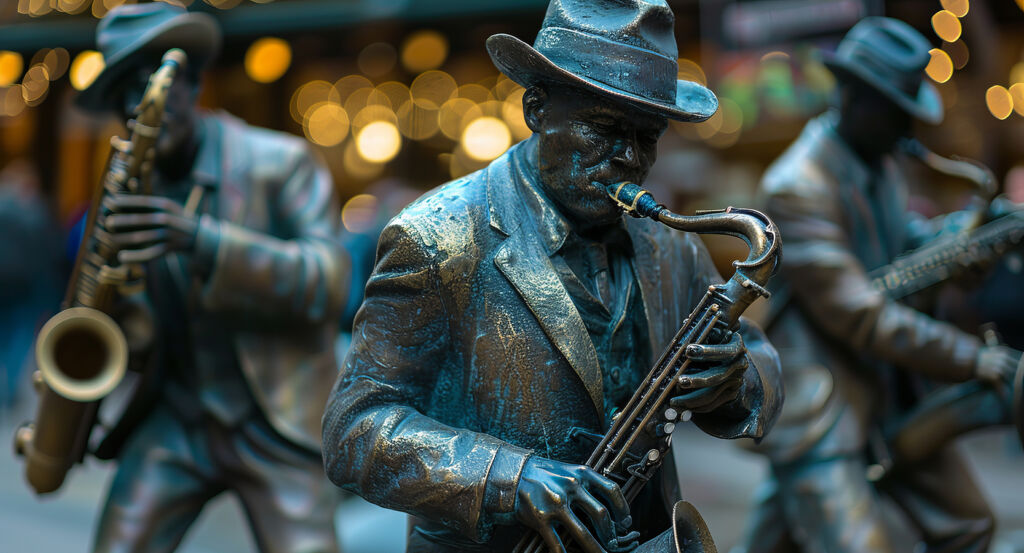
Around the turn of the twentieth century, New Orleans became the birthplace of jazz as African American musical traditions converged with blues, ragtime, brass-band music, Caribbean rhythms, European instrumentation, and the city's distinctive performance culture. Musicians including Buddy Bolden helped shape the emerging sound, and later figures such as Louis Armstrong carried it far beyond Louisiana. Dance halls, saloons, streets, parades, and neighborhood gatherings all contributed to its development. A musical language created through New Orleans' unusual cultural mixture ultimately became one of the United States' most influential contributions to world culture.
3. The French Quarter is filled with architecture created during Spanish rule.
The neighborhood most closely associated with New Orleans' French heritage contains a striking architectural legacy from the decades when Spain governed Louisiana. Major fires in 1788 and 1794 destroyed large portions of the colonial city, forcing extensive reconstruction under Spanish administration. New building regulations encouraged fire-resistant brick construction, tiled roofs, courtyards, and other features better suited to limiting future disasters. Wrought- and cast-iron galleries later added another defining layer to the streetscape. The French Quarter preserves an architectural character shaped substantially by Spanish-era rebuilding, making its familiar appearance more culturally complex than its name suggests.
2. New Orleans built one of the world's largest systems for moving water out of a city.
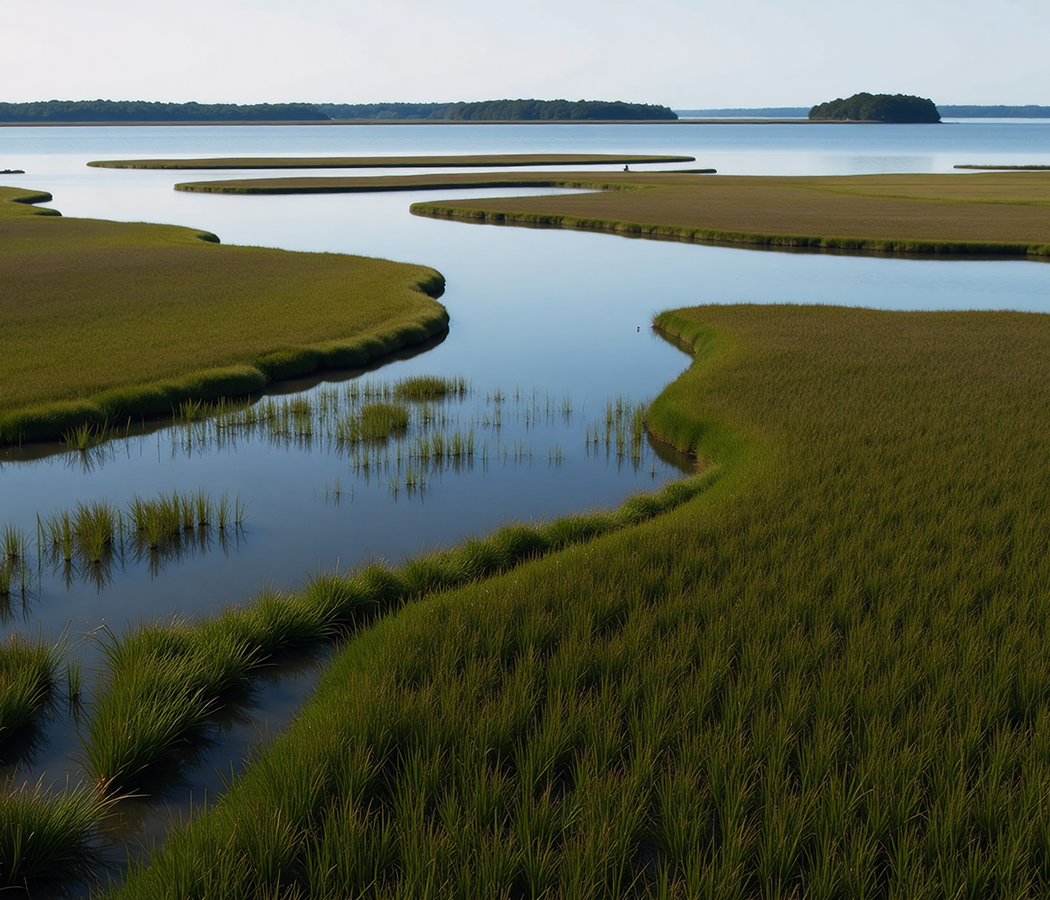
Much of New Orleans sits at or below sea level, making water management fundamental to its existence. Engineer Albert Baldwin Wood developed powerful screw pumps during the early twentieth century that dramatically improved the city's ability to drain low-lying land. Pumping stations and an extensive network of canals helped open previously swampy areas to urban development and transformed the physical footprint of New Orleans. The same intervention also contributed to long-term subsidence as drained soils compressed. The system captures a defining New Orleans paradox: engineering made vast portions of the modern city possible while intensifying some of the environmental vulnerabilities confronting it.
1. Mardi Gras parade floats are part of a tradition stretching back more than 150 years.
The modern New Orleans Carnival tradition took a decisive turn in 1857 when the Mistick Krewe of Comus staged an organized nighttime Mardi Gras procession with themed floats, costumes, and tableaux. Other krewes followed, developing elaborate visual identities and annual parades that transformed Carnival into an enormous exercise in temporary public art. Float-building evolved into a specialized local craft involving sculpture, painting, engineering, satire, mythology, and theatrical design. Each Carnival season, these enormous moving artworks turn ordinary streets into performance spaces, making the city itself part of a tradition continuously reinvented across generations.
Where your story begins.
Foresyte Travel reveals places that feel extraordinary long before you arrive.
Enjoy editorial crafted for luxury travelers.
Foresyte may earn a commission when you book.