Fun facts about Cairo, Egypt.
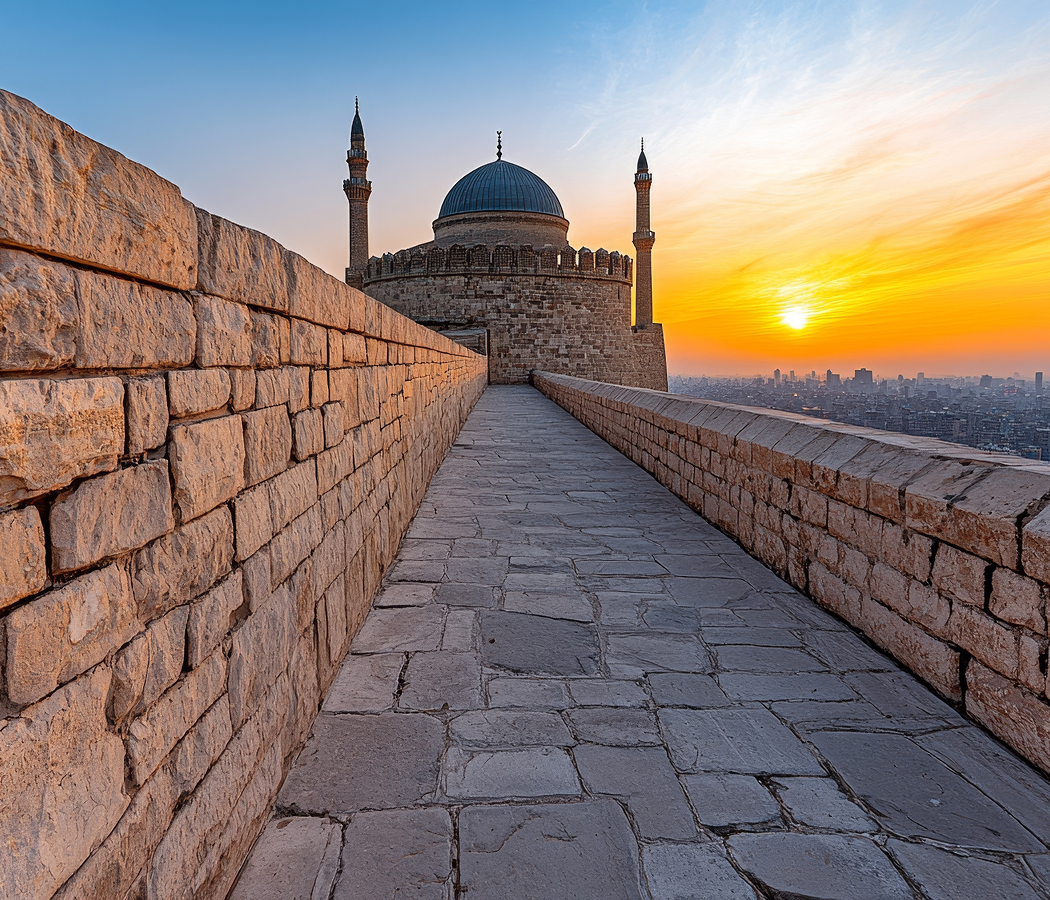
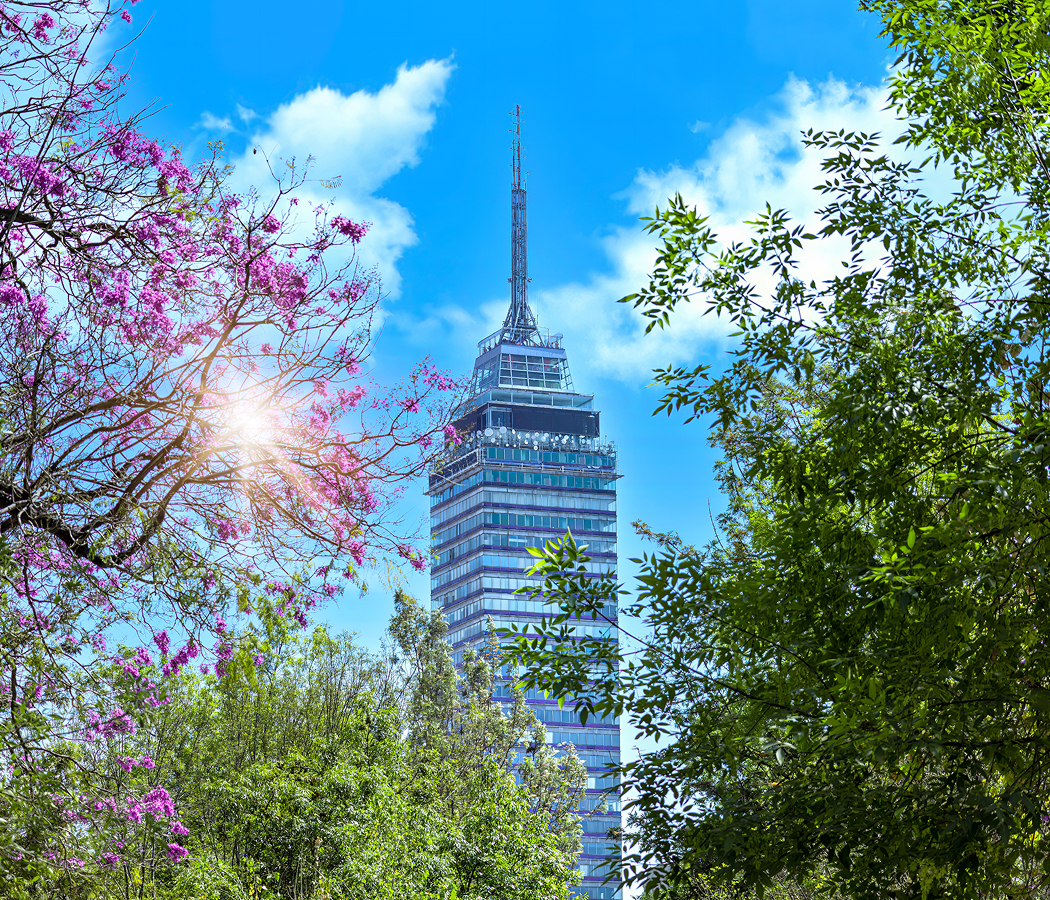
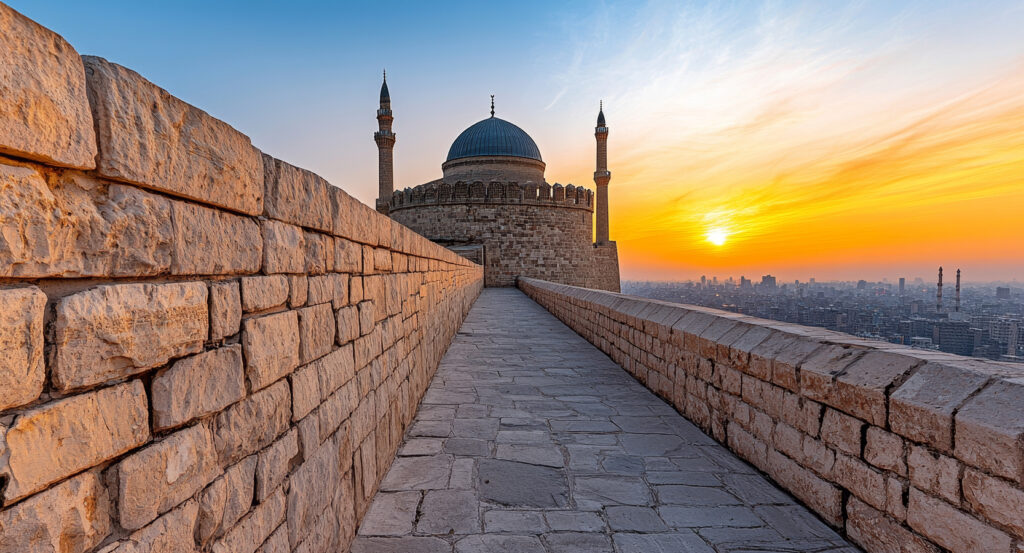
Cairo stretches along the Nile at the point where the river approaches its broad Mediterranean delta, with dense urban districts extending across both banks and into the surrounding desert plateau. The river provides the city's central geographic axis, dividing the historic eastern core from the western districts of Giza and Dokki. Its islands, bridges, and waterfront boulevards create a distinctive metropolitan landscape in which modern towers stand near medieval religious monuments and ancient archaeological sites. Downtown Cairo occupies the nineteenth-century expansion west of the old Islamic city, organized around broad streets, European-inspired façades, commercial arcades, and expansive public buildings. Tahrir Square forms its principal civic space, bordered by the Egyptian Museum, whose historic collections include major objects from pharaonic Egypt. Nearby, the Nile Corniche follows the river past hotels, government buildings, and residential towers. Gezira Island contains the neighborhoods of Zamalek and Gezira, where tree-lined streets, embassies, cultural institutions, and apartment buildings occupy a relatively green setting between the Nile's channels. Cairo Tower rises above the island through its open-lattice concrete structure, offering expansive views of the metropolitan basin. Eastward, Islamic Cairo preserves one of the world's richest concentrations of medieval Islamic architecture. Al-Muizz Street passes through a succession of Fatimid, Ayyubid, Mamluk, and Ottoman monuments, including the expansive complexes of Sultan Qalawun and Sultan Barquq. The northern gates of Bab al-Futuh and Bab al-Nasr preserve substantial portions of the Fatimid fortifications. Khan el-Khalili occupies a dense commercial district of covered passages, workshops, mosques, and traditional shops associated with Cairo's historic trading economy. Southward, the Mosque of Sultan Hassan presents an expansive fourteenth-century composition distinguished by its immense courtyard, soaring entrance portal, and imposing stone façades. The adjoining Al-Rifa'i Mosque forms another prominent landmark beneath the Citadel, whose elevated position commands broad views across the city. The Mosque of Muhammad Ali, completed during the nineteenth century, crowns the Citadel with large domes and slender Ottoman-style minarets. Farther south, Coptic Cairo contains the Hanging Church, the Church of Saints Sergius and Bacchus, and the Coptic Museum within the historic precinct surrounding the Roman fortress. Across the Nile, Giza extends toward the desert escarpment, where the Great Pyramid and Great Sphinx stand above the modern urban landscape. The Grand Egyptian Museum occupies a vast site near the Giza Plateau, connecting contemporary museum architecture with the expansive setting of the pyramids. North and east of the historic center, Heliopolis contains early twentieth-century boulevards, villas, and buildings influenced by European and Islamic revival styles. Nasr City and New Cairo represent later phases of metropolitan expansion, characterized by wide roads, residential compounds, universities, and commercial districts extending into the eastern desert. Cairo's physical character arises from the extraordinary proximity of ancient monuments, medieval urban fabric, nineteenth-century boulevards, and rapidly expanding contemporary neighborhoods within the narrow fertile corridor of the Nile.
Egyptian literature, cinema, music, and religious scholarship have found their principal modern center in Cairo, where institutions and artists have shaped cultural life throughout the Arabic-speaking world. Al-Azhar developed into a major institution of Islamic education, attracting students and scholars from across Africa, Asia, and the Middle East. Its intellectual influence extends through jurisprudence, theology, Arabic language studies, and religious teaching. Cairo's literary heritage includes Naguib Mahfouz, whose novels transformed the representation of Egyptian urban society through detailed portrayals of families, neighborhoods, political change, and everyday moral conflict. His Cairo Trilogy follows three generations of a family living in the historic city, and he received the Nobel Prize in Literature in 1988. The city's literary cafés and publishing houses helped sustain an influential community of novelists, poets, journalists, and political intellectuals during the twentieth century. Egyptian cinema became a dominant force in Arabic-language entertainment, with Cairo serving as the principal center of film production, acting, directing, and distribution. Actors including Faten Hamama, Omar Sharif, and Adel Imam gained widespread recognition through films that reached audiences across the Middle East and North Africa. The Cairo International Film Festival, established in 1976, contributed to the city's international cinematic profile. Cairo also became the center of modern Arabic popular music through the careers of Umm Kulthum and Abdel Halim Hafez, whose recordings and performances reached audiences far beyond Egypt. Umm Kulthum's celebrated concerts combined classical Arabic poetry, elaborate orchestration, and extended vocal improvisation, establishing an enduring musical legacy. Composer Mohamed Abdel Wahab contributed to the development of modern Egyptian song through compositions that incorporated classical Arabic forms and international musical influences. The Cairo Opera House, opened in 1988 on Gezira Island, provides a major venue for opera, orchestral concerts, ballet, and contemporary performance. The Museum of Islamic Art preserves an extensive collection of ceramics, manuscripts, metalwork, textiles, and architectural objects associated with Islamic civilizations. Contemporary galleries and independent cultural organizations contribute to the city's visual arts scene, with artists exploring urban life, political history, and changing social relationships. Cairo's culinary heritage reflects the agricultural abundance of the Nile Valley and centuries of exchange across the Mediterranean and Middle East. Koshari, a mixture of rice, lentils, pasta, chickpeas, tomato sauce, and fried onions, became one of the city's defining everyday dishes through its affordability and substantial flavor. Ful medames, slow-cooked fava beans commonly seasoned with olive oil, lemon, and cumin, remains a foundational breakfast preparation. Taameya, the Egyptian version of falafel made primarily from fava beans, is another staple of street food and neighborhood dining. Molokhia, a green soup prepared from finely chopped jute leaves, reflects a longstanding Egyptian cooking tradition, often served with rice and poultry. Historic cafés around Khan el-Khalili and Downtown Cairo preserve social customs associated with coffee, tea, conversation, and public gathering. Ramadan brings a distinctive rhythm to the city through evening meals, illuminated streets, and communal celebrations following the daily fast. Cairo's enduring cultural importance rests upon its position as a center of Arabic intellectual life, its profound influence on regional music and cinema, and the continuity of religious, literary, and culinary practices sustained across generations.
Five fascinations.
5. Cairo grew beside an older Roman fortress that still anchors one of the city's most historic districts.
Long before Cairo became the capital of Egypt, the Romans maintained the fortress of Babylon near the Nile in what is now Old Cairo. Early Christian communities subsequently established churches around and within its surviving defenses, helping create the extraordinary concentration of Coptic heritage found there today. The Hanging Church was constructed above a gatehouse of the fortress, while other churches and religious sites accumulated nearby over centuries. Modern Cairo contains an urban layer far older than its medieval Islamic foundation, where Roman military architecture became physically intertwined with one of the world's oldest continuous Christian traditions.
4. Cairo was founded by a new dynasty as a purpose-built royal capital.
The Fatimids conquered Egypt in 969 and established a new fortified city northeast of the existing settlement of Fustat. Named al-Qāhirah, “the Victorious”, the foundation became Cairo. The new capital initially functioned as an exclusive center of Fatimid political and ceremonial power, with immense palaces occupying its core. Al-Azhar Mosque was founded soon afterward and evolved into one of the Islamic world's most enduring centers of scholarship. As Cairo expanded beyond its original walls, markets, mosques, residences, schools, and workshops transformed the royal enclosure into a dense metropolis whose medieval street network still shapes significant portions of the historic city.
3. Cairo's medieval skyline developed around an extraordinary concentration of minarets.
Successive Fatimid, Ayyubid, Mamluk, and Ottoman rulers filled Cairo with mosques, madrasas, mausoleums, and religious complexes, producing one of the richest ensembles of Islamic architecture anywhere in the world. Minarets rose above dense commercial and residential districts in an enormous variety of forms, reflecting changing dynasties and architectural traditions across centuries. The Mamluk period proved particularly prolific, producing expansive complexes associated with rulers including Sultan Hassan and Qalawun. Cairo acquired the enduring nickname “City of a Thousand Minarets,” expressing the extraordinary vertical presence of religious architecture across its historic urban fabric.
2. The Nile once flowed considerably closer to the heart of medieval Cairo.
Cairo's relationship with the Nile has changed repeatedly as the river shifted and human intervention altered its banks. Areas now occupied by major boulevards, neighborhoods, and riverfront development emerged through centuries of sedimentation, embankment construction, reclamation, and modernization. Gezira Island also became increasingly integrated into the metropolitan core as bridges connected it with both banks. These transformations changed Cairo from a city whose historic center stood much nearer the river into a vast metropolis extending far beyond its medieval geography. The modern waterfront represents only the latest configuration of a continuously evolving relationship between Cairo and the river that made urban life possible.
1. The pyramids appear to stand in open desert, yet modern Cairo reaches almost to their base.
The Giza pyramid complex was constructed more than 4,500 years ago on a desert plateau west of the Nile floodplain, long before Cairo existed. Khufu's Great Pyramid, the pyramids of Khafre and Menkaure, the Great Sphinx, temples, causeways, and associated tombs formed an immense royal funerary landscape. Over the twentieth and twenty-first centuries, metropolitan expansion pushed dense neighborhoods across the agricultural plain toward the plateau. The resulting boundary is extraordinary: one of humanity's most famous ancient landscapes now rises immediately beyond the urban fabric of Greater Cairo, creating a dramatic collision between pharaonic monumentality and a modern megacity.
Where your story begins.
Foresyte Travel reveals places that feel extraordinary long before you arrive.
Enjoy editorial crafted for luxury travelers.
Foresyte may earn a commission when you book.