Fun facts about Charleston, South Carolina.
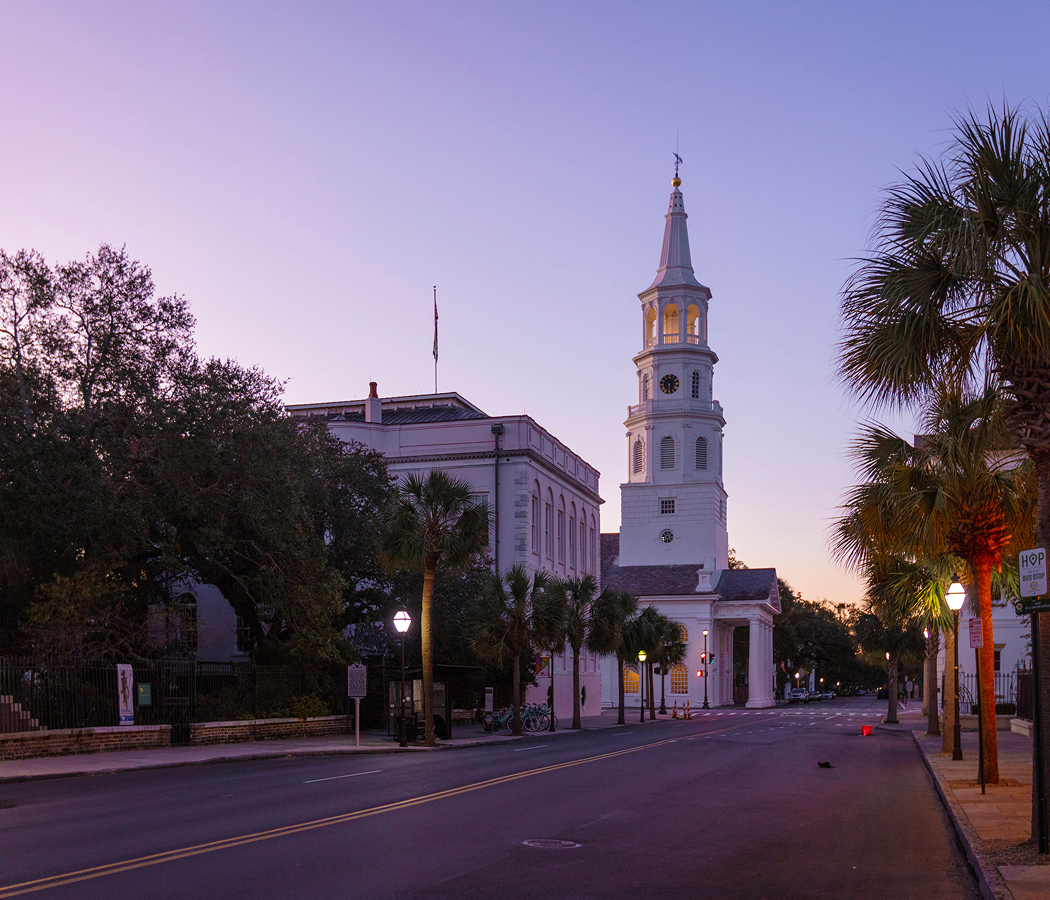
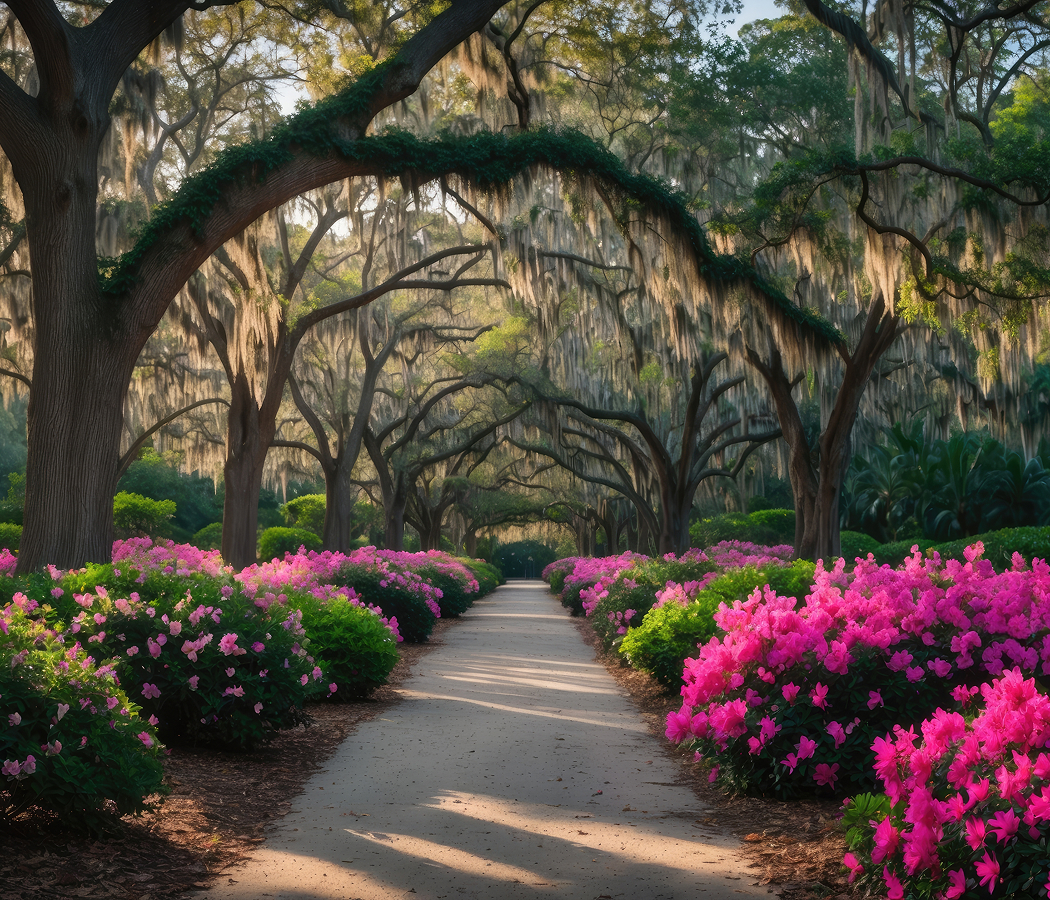
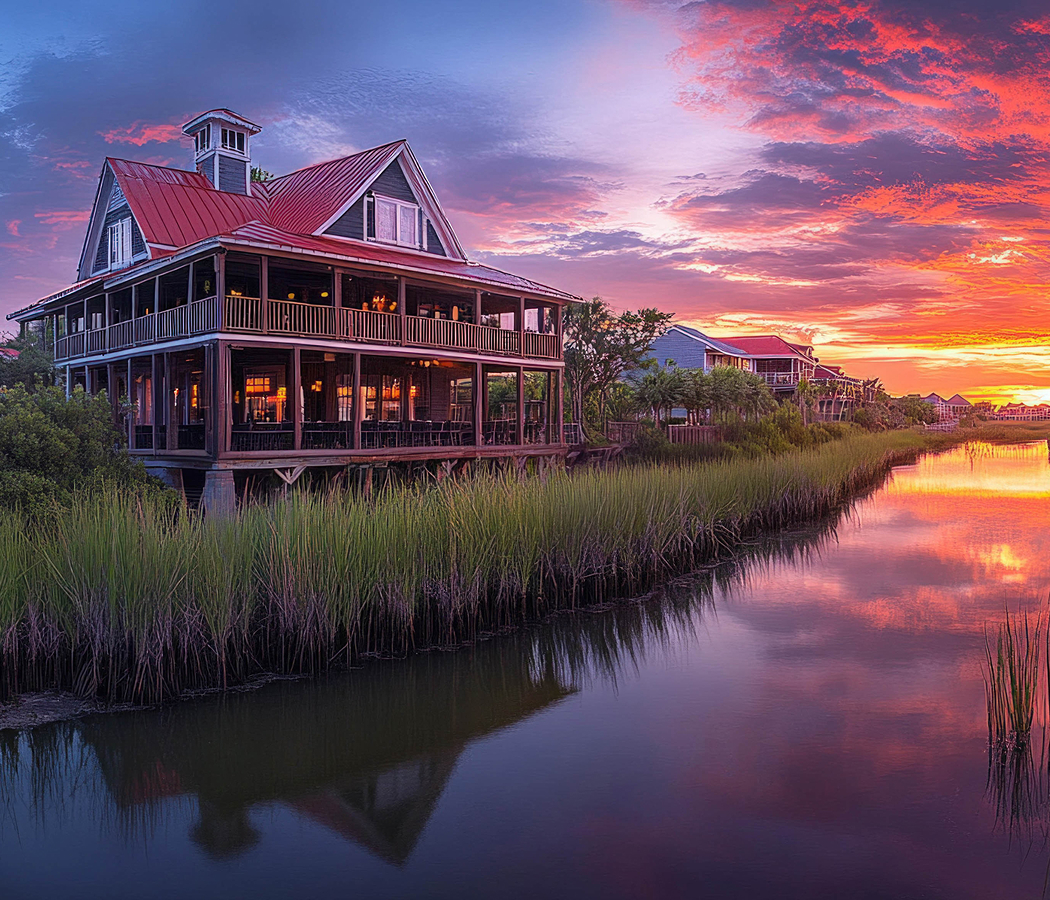
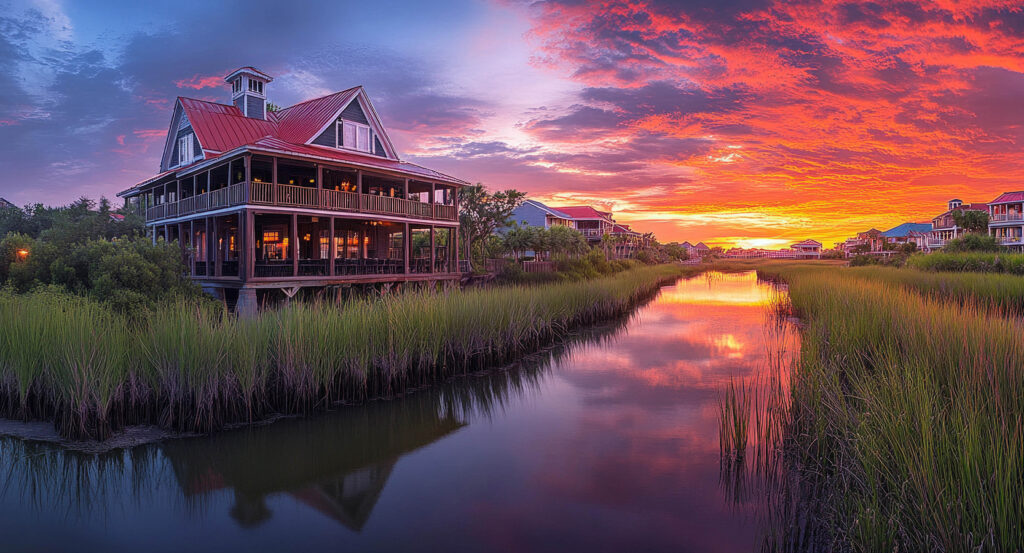
Charleston extends across a low-lying peninsula between the Ashley and Cooper rivers, where tidal waterways, historic streets, church steeples, and carefully preserved residential districts create an urban landscape shaped by colonial planning and the environmental conditions of the South Carolina Lowcountry. The historic peninsula developed around a compact street grid extending northward from Charleston Harbor, with early commercial activity concentrated near the waterfront and the principal civic spaces of the colonial settlement. The Battery forms a celebrated waterfront promenade along the peninsula's southern edge, overlooking the harbor through a landscaped corridor of historic mansions, defensive works, and mature live oaks. White Point Garden occupies the southernmost portion of this landscape, preserving military monuments, artillery displays, and shaded pathways associated with the city's maritime history. Along East Battery and Murray Boulevard, substantial nineteenth-century residences present an exceptional sequence of Greek Revival, Italianate, and other architectural styles adapted to Charleston's coastal climate. The city's distinctive single house developed through a narrow building arrangement positioned perpendicular to the street, often incorporating a long side porch known as a piazza. These shaded outdoor spaces encouraged ventilation and provided sheltered living areas during the region's hot, humid summers. The historic South of Broad neighborhood preserves an extensive concentration of these residences alongside elaborate townhouses, garden walls, and intimate streetscapes. Rainbow Row introduces another recognizable architectural ensemble through thirteen historic houses along East Bay Street, whose pastel-colored façades became a defining image of Charleston's waterfront heritage. Nearby, the Old Exchange and Provost Dungeon, completed in 1771, preserves an important colonial commercial and governmental building associated with the city's revolutionary history. The surrounding French Quarter contains historic churches, galleries, and commercial buildings reflecting successive periods of urban development. St. Philip's Church rises above Church Street through a prominent steeple, contributing to the skyline that established Charleston's longstanding association with religious architecture. The Circular Congregational Church presents another distinctive landmark through its unusual architectural form and historic burial ground. Farther north, the Charleston City Market extends through a series of market buildings and covered stalls, with its principal Greek Revival Market Hall completed in 1841. The market preserves a longstanding commercial tradition associated with local crafts, regional products, and Gullah sweetgrass basketmaking. King Street forms a principal commercial corridor through the historic peninsula, connecting antique shops, galleries, restaurants, and retail establishments within a varied collection of nineteenth-century buildings. The College of Charleston occupies an important architectural setting near the center of the peninsula, with Randolph Hall presenting a distinguished example of early nineteenth-century academic design. The nearby Aiken-Rhett House preserves an unusually intact urban property, including domestic interiors and surviving service buildings that illuminate the physical organization of antebellum household labor. Across the Cooper River, the Arthur Ravenel Jr. Bridge spans the harbor approaches through an expansive cable-stayed structure completed in 2005, establishing a dramatic contemporary landmark above the historic waterfront. Charleston's surrounding islands introduce another essential dimension of its geography, particularly through Sullivan's Island, James Island, and Johns Island, where maritime forests, tidal marshes, and coastal settlements preserve the ecological character of the Lowcountry. Fort Sumter stands within the harbor as an expansive reminder of the Civil War's opening confrontation. Charleston's architectural distinction arises from the integration of colonial street planning, climate-responsive residential design, maritime infrastructure, and a coastal landscape whose waterways remain fundamental to the city's physical organization.
South Carolinian cultural traditions acquired a distinctive coastal expression in Charleston, where African American heritage, Gullah Geechee craftsmanship, Southern literature, historic religious institutions, and Lowcountry cuisine developed through centuries of interaction between Atlantic communities. The city's cultural inheritance is inseparable from the experiences of enslaved Africans and their descendants, whose labor, languages, religious practices, and artistic traditions shaped the broader Lowcountry. The Gullah Geechee communities of coastal South Carolina and Georgia preserved distinctive linguistic and cultural practices through generations of relative geographic isolation, maintaining important connections to West and Central African heritage. Their traditions encompass storytelling, spiritual music, foodways, agricultural knowledge, and specialized craftsmanship. Sweetgrass basketmaking became one of the region's most recognizable artistic forms, with artisans developing intricate coiled baskets through techniques connected to African rice cultivation and domestic traditions. Charleston's City Market and surrounding communities remain important centers for this craft, supporting generations of basketmakers whose work reflects a living cultural inheritance. The city's African American religious institutions played a central role in the development of community organization and political life, particularly through Emanuel African Methodist Episcopal Church, whose congregation traces its origins to the early nineteenth century. The church became an important center of Black religious and civic leadership, and the racially motivated murder of nine worshippers there in 2015 brought renewed national attention to the persistence of racial violence and the significance of historical memory. Charleston's literary traditions developed through writers who explored Southern society, historical conflict, and the complexities of regional identity. DuBose Heyward, born in Charleston in 1885, drew upon the city's African American communities in his novel Porgy, which subsequently inspired the opera Porgy and Bess, composed by George Gershwin with lyrics by Ira Gershwin and Heyward. The work introduced Charleston's Catfish Row setting into the international operatic repertoire, although its representations of Black life have generated substantial cultural debate. The Charleston Renaissance of the early twentieth century encouraged renewed interest in regional painting, literature, and historic preservation, with artists including Alice Ravenel Huger Smith developing influential interpretations of Lowcountry landscapes and local traditions. The Gibbes Museum of Art became a principal institution for the preservation and exhibition of Southern visual art, supporting collections that connect colonial portraiture with contemporary artistic production. Charleston's performing arts environment acquired international prominence through Spoleto Festival USA, established in 1977 by composer Gian Carlo Menotti. The festival introduced major programs of opera, theater, dance, orchestral music, and experimental performance, transforming the historic city into a significant setting for international artistic exchange. The annual Piccolo Spoleto Festival expanded this environment through community-oriented performances and exhibitions. Charleston's culinary culture reflects the agricultural abundance of the Lowcountry and the foundational influence of African American cooking traditions. Rice remains central to regional cuisine, particularly through dishes including Hoppin' John, red rice, and seafood preparations developed from ingredients cultivated across the coastal plantations and waterways. Shrimp and grits became an enduring specialty associated with the region's maritime resources and domestic food traditions. She-crab soup, oysters, benne wafers, and seasonal vegetables contribute additional elements to a culinary inheritance shaped by African, European, and Indigenous influences. The city's contemporary restaurant culture has extended these traditions through chefs emphasizing regional agriculture, sustainable seafood, and the historical significance of Lowcountry ingredients. Charleston's cultural importance lies in the enduring influence of Gullah Geechee heritage, African American artistic traditions, Southern literary expression, and a culinary culture rooted in the complex social history of the Atlantic coast.
Five fascinations.
5. Charleston's famous pastel houses began as ordinary eighteenth-century waterfront residences.
Rainbow Row, the celebrated sequence of colorful houses along East Bay Street, occupies land that once faced directly toward Charleston's commercial waterfront. Merchants built many of the residences during the eighteenth century, often operating businesses on lower levels and living above them. By the early twentieth century, the aging buildings had deteriorated substantially. Preservation efforts beginning in the 1930s restored the row, and successive owners embraced the pastel façades that eventually became one of Charleston's defining visual signatures. A streetscape now synonymous with the city represents both its colonial mercantile history and an influential era of historic preservation.
4. Charleston contains one of America's earliest purpose-built museums.
The Charleston Museum traces its origins to 1773, when members of the Charleston Library Society established an institution devoted to collecting and studying natural and cultural materials. Its founding preceded the creation of the United States itself and reflected Charleston's place within the intellectual networks of the eighteenth-century Atlantic world. Collections developed across natural history, decorative arts, archaeology, textiles, and regional history as the institution evolved through successive generations. Charleston's unusually deep museum tradition emerged from the same colonial city that was simultaneously developing into one of British North America's most important commercial centers.
3. Charleston's sideways houses evolved into an architectural form uniquely suited to narrow city lots.
The Charleston single house became one of the city's most recognizable residential forms through a distinctive relationship between architecture, climate, and urban land. These narrow houses typically present their slender ends toward the street, extending deep into their lots with stacked piazzas running along one side. Doors visible from the sidewalk frequently open onto these piazzas. The arrangement provided outdoor living space and encouraged ventilation through rooms during Charleston's hot, humid summers. Repeated across historic neighborhoods, the form gave Charleston an architectural style shaped directly by its lot patterns and subtropical environment.
2. Charleston's celebrated church skyline helped give it the nickname “Holy City.”
Church steeples have dominated Charleston's low-rise skyline for centuries, reflecting the extraordinary range of religious communities established in the historic port. St. Michael's Church raised its prominent white steeple in the eighteenth century, and later landmarks added additional towers across the peninsula. The city also became home to Kahal Kadosh Beth Elohim, among America's oldest Jewish congregations, and Emanuel African Methodist Episcopal Church, founded from a congregation created during the early nineteenth century. Charleston's “Holy City” character emerged from a dense religious landscape whose institutions became inseparable from both its architecture and its complex social history.
1. Charleston created America's first historic district to protect an entire urban landscape.
Charleston adopted a pioneering zoning ordinance in 1931 that established the Old and Historic District and created a Board of Architectural Review. The approach extended preservation beyond saving individual monuments by protecting the architectural character of a broader section of the city. Houses, churches, commercial buildings, streets, gardens, and other elements of Charleston's historic fabric became part of an integrated preservation structure. The model influenced preservation practice far beyond South Carolina as American cities confronted redevelopment pressures during the twentieth century. Much of Charleston's celebrated historic environment survives today partly because the city treated preservation as an urban-planning issue unusually early.
Where your story begins.
Foresyte Travel reveals places that feel extraordinary long before you arrive.
Enjoy editorial crafted for luxury travelers.
Foresyte may earn a commission when you book.