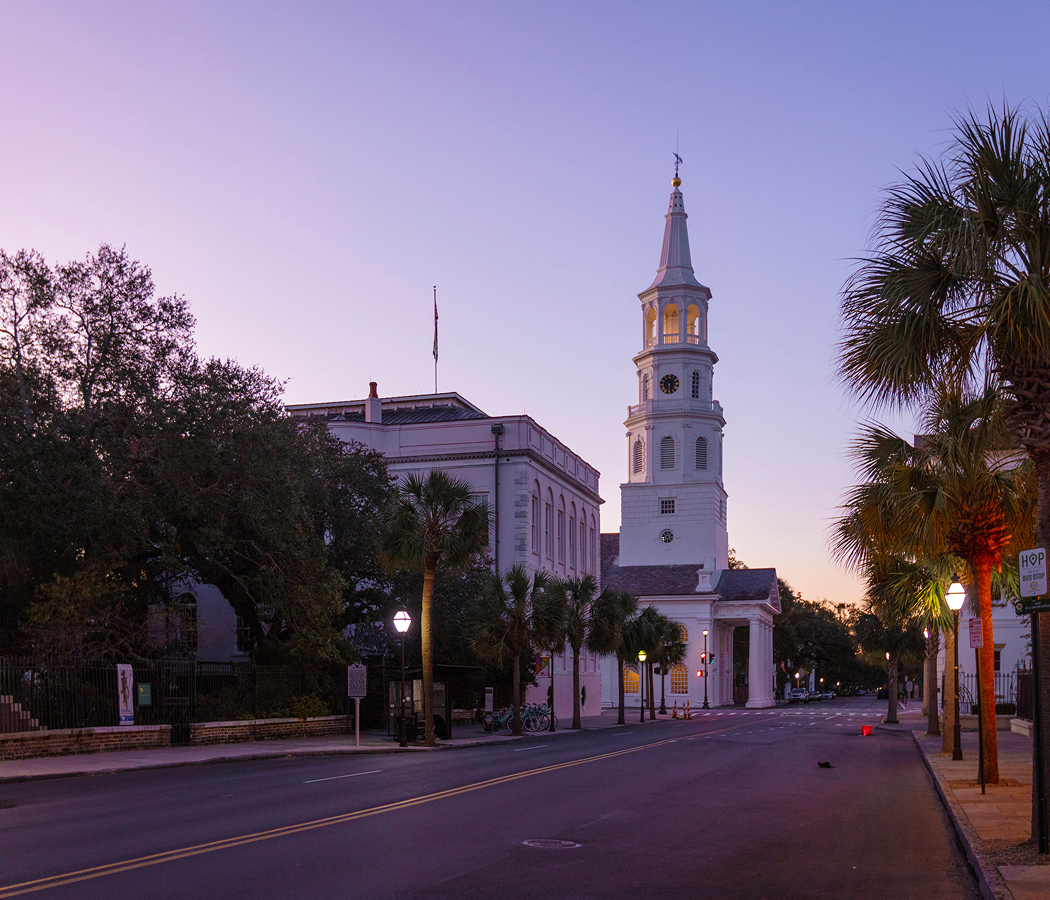
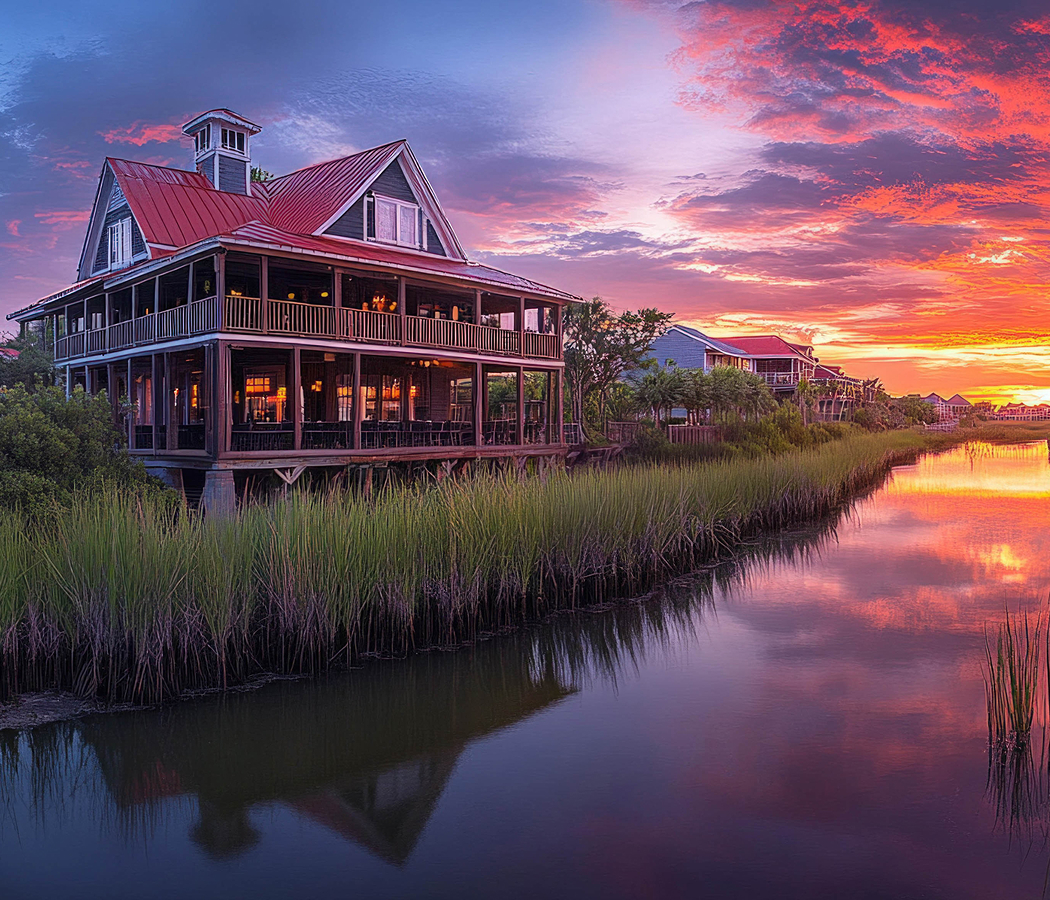
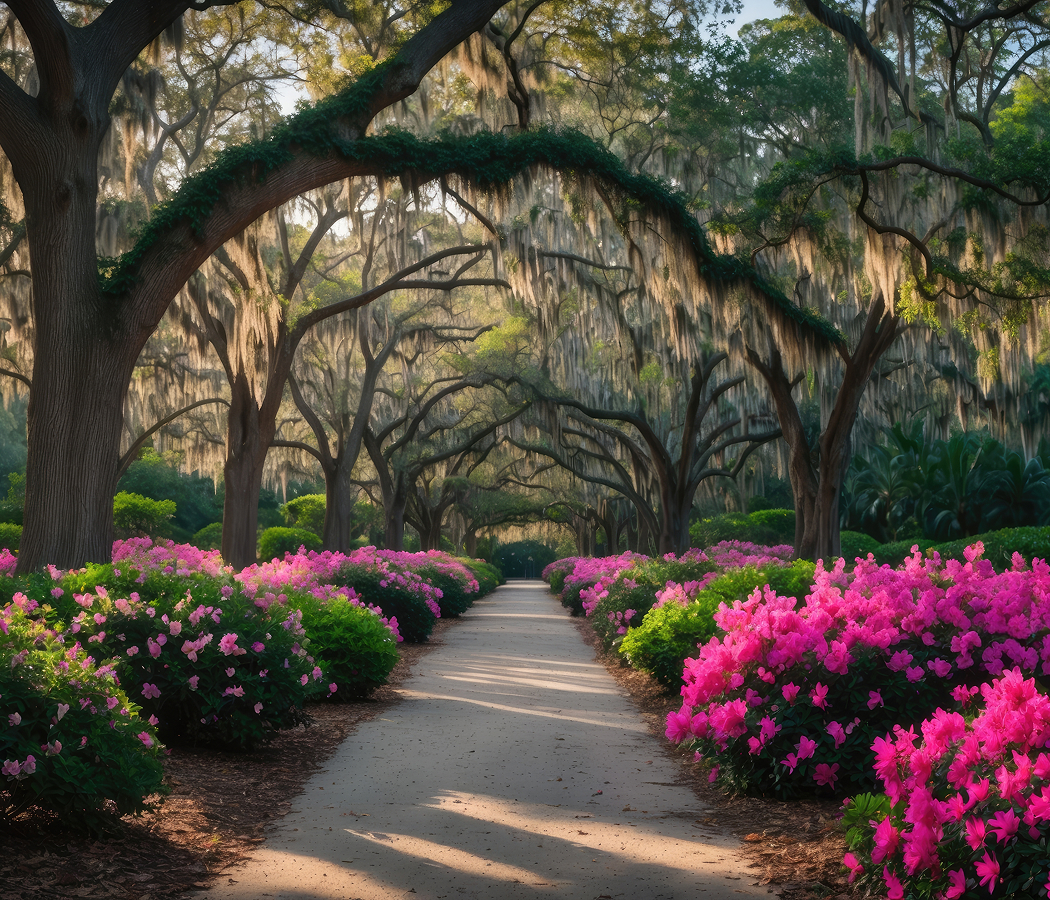
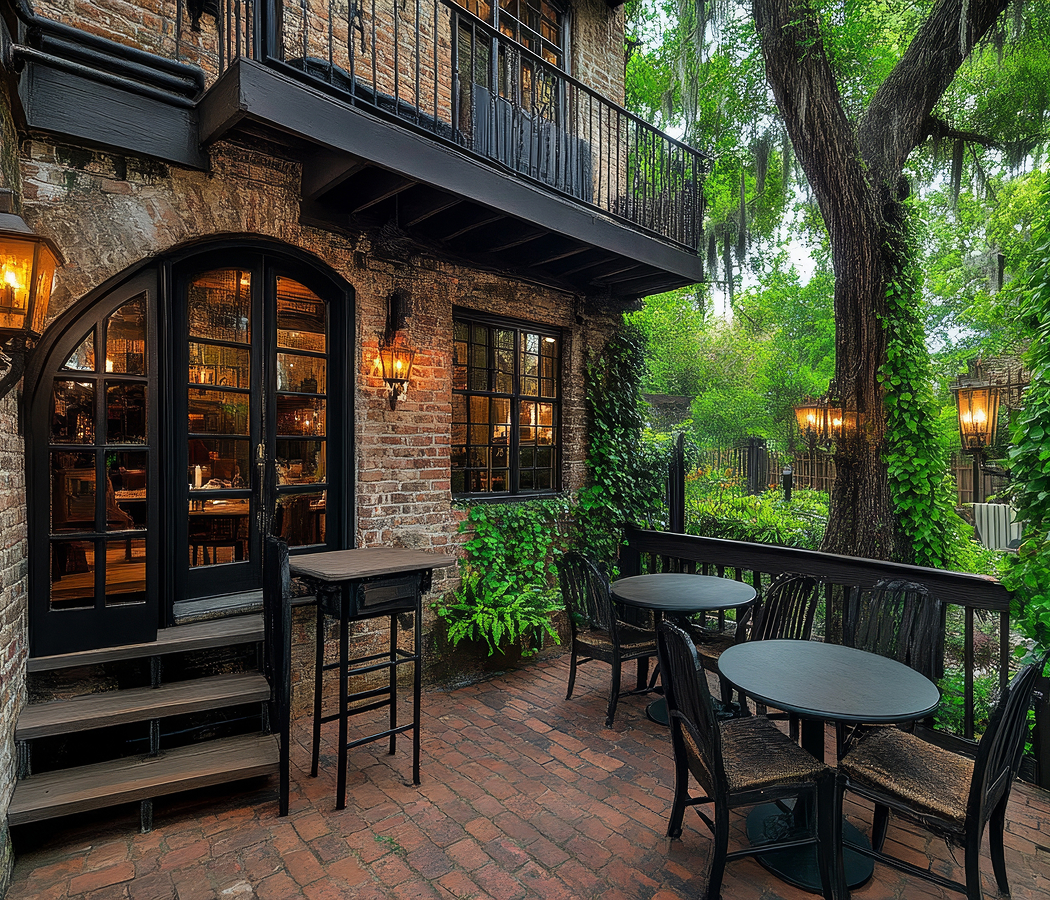
Perfect weekend in Charleston, South Carolina.
Charleston's position at the confluence of the Ashley and Cooper rivers established one of the most consequential maritime cities in colonial America, where Atlantic commerce, plantation agriculture, and political upheaval shaped the history of the southeastern coast. Founded in 1670 as Charles Town by English colonists on the western bank of the Ashley River, the settlement relocated to the peninsula between the two rivers in 1680, gaining access to a sheltered harbor and expanding transatlantic trade routes. The surrounding Lowcountry formed part of the ancestral territories of Indigenous peoples including the Kiawah, whose knowledge of coastal waterways contributed to early encounters with European settlers. During the eighteenth century, rice and indigo cultivation generated immense wealth for South Carolina's plantation economy through the forced labor of enslaved Africans. West and Central African agricultural knowledge proved fundamental to the development of rice production across the tidal wetlands. Charleston became a principal port of the British Atlantic world, importing enslaved people and exporting agricultural commodities to Europe and the Caribbean. The city played a prominent role in the American Revolution, with British forces capturing Charleston in 1780 following a prolonged siege. Following independence, the expansion of cotton cultivation strengthened the region's commercial relationships with the American interior. Charleston became a center of political conflict over slavery and federal authority during the nineteenth century, particularly through the Nullification Crisis of 1832 and the secession movement preceding the Civil War. The conflict devastated the city's economy and accelerated changes to its political and social institutions. Reconstruction brought new opportunities for formerly enslaved communities, although segregation and discriminatory legislation subsequently restricted African American political participation. During the twentieth century, port modernization, military investment, and historic preservation contributed to Charleston's economic development. The city's coastal geography, colonial street plan, and substantial surviving architecture continue to connect its metropolitan character with the complex history of the Atlantic South.
South Carolinian Gullah Geechee culture represents one of the most significant surviving African diasporic traditions in the United States, preserving linguistic, artistic, agricultural, and culinary practices developed by enslaved Africans and their descendants along the southeastern coast. The relative geographic isolation of the Sea Islands contributed to the continuity of cultural traditions rooted in West and Central Africa. Sweetgrass basket weaving became particularly associated with the Charleston region, with artisans using sweetgrass, bulrush, pine needles, and palmetto strips to produce intricate coiled baskets. The craft developed from African agricultural basketry traditions and subsequently acquired importance as both a practical skill and a celebrated form of regional artistry. Charleston's literary history includes the work of DuBose Heyward, whose novel Porgy inspired the opera Porgy and Bess, composed by George Gershwin with lyrics by Ira Gershwin and Heyward. The opera premiered in 1935 and became an influential work in American musical theater, drawing international attention to the cultural history of Charleston's African American communities. The Spoleto Festival USA, established in 1977 by composer Gian Carlo Menotti, strengthened the city's performing arts institutions through opera, theater, dance, and contemporary musical programming. The Gibbes Museum of Art, founded in 1905, developed collections devoted to American art and the artistic history of the South, including works associated with the Charleston Renaissance of the early twentieth century. Charleston's culinary foundations emerged from the agricultural knowledge of enslaved Africans, Indigenous foodways, and the coastal resources of the Lowcountry. Carolina Gold rice became central to regional cooking, supporting preparations including pilau, red rice, and seafood-based dishes. Okra, benne seeds, field peas, and leafy greens preserve connections to African agricultural traditions, and the surrounding estuaries supply shrimp, oysters, blue crab, and local fish. She-crab soup developed into a Charleston specialty, combining crabmeat, cream, and traditional seasonings. Lowcountry boils bring shrimp, corn, potatoes, and sausage together in a preparation associated with coastal gatherings and communal dining. Contemporary chefs extend these foundations through heirloom grains, seasonal produce, traditional preservation techniques, and refined interpretations of Southern cooking. Charleston's enduring appeal lies in the depth of its Atlantic history, the craftsmanship of its historic communities, and a Lowcountry culinary tradition inseparable from the people and landscapes of coastal South Carolina.
Three day itinerary.
Day 1: Rainbow Row
Rainbow Row is best known for the sequence of pastel-colored historic houses lining East Bay Street near Charleston's waterfront. The surviving residences developed primarily during the eighteenth century, when merchants used buildings along the commercial waterfront for businesses at street level and living quarters above. Charleston's shifting shoreline eventually moved commercial activity away from this section of East Bay, and the properties entered a prolonged period of decline. Preservationist Susan Pringle Frost acquired and restored several houses during the 1920s, helping establish the preservation movement that subsequently reshaped Charleston's historic core. Dorothy Haskell Porcher Legge later restored and painted another property pink, contributing to the colorful treatment associated with the row. The thirteen adjoining houses form one of the city's most concentrated surviving streetscapes from Charleston's early commercial history.
Day 1: FIG
FIG is best known for Mike Lata's ingredient-driven interpretation of the Lowcountry through relationships with South Carolina farmers, fishermen, and producers. Lata opened the restaurant with Adam Nemirow in 2003, taking its name from the principle “Food Is Good” and building a kitchen around the agricultural seasons of the surrounding region. Seafood from coastal waters, locally grown vegetables, heritage ingredients, and carefully developed stocks and sauces established a culinary character grounded in product quality and classical technique. Lata received the James Beard Award for Best Chef: Southeast in 2009, strengthening Charleston's emergence as a nationally consequential restaurant city. FIG became an enduring model for contemporary Southern cooking rooted directly in the ingredients and food systems of the Lowcountry.
Day 2: Middleton Place
Middleton Place is best known for its eighteenth-century formal gardens and its preserved landscape of plantation agriculture, slavery, and generations of Middleton family history. Henry Middleton developed the property along the Ashley River during the eighteenth century, creating terraced gardens organized around geometric forms, reflecting pools, and carefully controlled views. His son Arthur Middleton became a signer of the Declaration of Independence, connecting the estate directly to the political formation of the United States. Enslaved Africans and African Americans created and maintained the plantation's agricultural wealth, architecture, gardens, and domestic systems across generations. Union forces burned major portions of the residential complex during the Civil War, and the 1886 Charleston earthquake inflicted further damage. The surviving house, gardens, working areas, and archaeological landscape preserve the intertwined histories of elite plantation society and the people whose forced labor sustained it.
Day 2: Lewis Barbecue
Lewis Barbecue is best known for bringing the traditions of Central Texas barbecue to Charleston through the exceptional pitmaster craftsmanship of John Lewis, whose wood-fired brisket, handmade sausages, and grand custom-built smokers have established the restaurant as one of the American South's defining barbecue destinations. Born in Brooklyn and raised in El Paso, Texas, Lewis developed his fascination with barbecue during his teenage years, eventually constructing his first smoker and mastering the demanding techniques of low-temperature cooking over hardwood fires. His professional journey led to Austin, where he worked alongside Aaron Franklin at Franklin Barbecue before joining LeAnn Mueller at La Barbecue, two influential establishments that helped transform Central Texas barbecue into an internationally celebrated culinary tradition. Lewis relocated to Charleston in 2015 and opened his namesake restaurant in 2016, introducing the city's deeply rooted Lowcountry food culture to the distinctive smoking methods of the Texas Hill Country. The restaurant's enormous offset smokers, designed and fabricated by Lewis himself, maintain carefully controlled temperatures through the combustion of oak wood, producing brisket distinguished by its deeply caramelized bark, rendered fat, and exceptionally tender texture. Texas hot guts sausage, beef ribs, pulled pork, and turkey complement the signature brisket, accompanied by traditional sides including green chile corn pudding, cowboy pinto beans, and tangy coleslaw. The restaurant's industrial-style dining room, expansive outdoor seating, and counter-service format preserve the communal atmosphere of classic Texas barbecue establishments. Lewis Barbecue represents a significant intersection of two American regional culinary traditions, connecting the technical precision of Central Texas pit smoking with Charleston's celebrated reputation as a destination for exceptional Southern food.
Day 2: Fort Sumter National Monument
Fort Sumter National Monument is best known as the site where the American Civil War began with the Confederate bombardment of the federal garrison on April 12, 1861. Construction of the artificial-island fort in Charleston Harbor began after the War of 1812 as part of a broader coastal defense system protecting major American ports. Major Robert Anderson moved his United States Army garrison from Fort Moultrie to Sumter during the secession crisis, making possession of the unfinished fortress a direct confrontation between federal authority and South Carolina. Confederate artillery opened fire after demands for evacuation failed, and Anderson surrendered the following day. Union forces later subjected the fort to sustained bombardment during attempts to retake Charleston, leaving its masonry extensively damaged and permanently associating the harbor fortress with the nation's defining internal conflict.
Day 2: Husk
Husk is best known for helping redefine modern Southern cooking around the agricultural products, culinary traditions, and historical ingredients of the region. The restaurant opened in a restored nineteenth-century Charleston house in 2010 and built its kitchen around an emphatically Southern pantry sourced from farmers, fishermen, millers, and craftspeople. Heritage grains, regional vegetables, preserved foods, seafood, pork, and historically significant ingredients gave the menu a material connection to Southern agriculture beyond conventional interpretations of regional dishes. Its pantry and kitchen helped accelerate national interest in heirloom crops and producer-driven Southern cuisine. Husk became one of the pivotal restaurants in Charleston's twenty-first-century culinary ascent and broadened the national understanding of Southern food as a sophisticated agricultural tradition with deep historical roots.
Day 3: Millers All Day
Millers All Day is best known for placing Southern grain traditions at the center of an ambitious Charleston breakfast restaurant. The project developed around freshly milled grains and the regional importance of corn, rice, wheat, and other staples that shaped Lowcountry cooking across centuries. Biscuits, grits, pancakes, breads, and breakfast preparations use those ingredients as structural foundations, connecting familiar morning dishes to milling and agricultural history. The restaurant's commitment to grains extends into its own milling operation and relationships with regional producers, giving breakfast an unusually direct connection to raw agricultural materials. Millers All Day treats a meal category frequently dominated by standardized staples as an expression of Charleston's enduring relationship with Southern grain culture.
Day 3: Charleston City Market
Charleston City Market is best known for preserving more than two centuries of commercial activity within a long market complex extending through the historic peninsula. The market developed after land was provided for public use in the late eighteenth century and became an important center for food vendors and everyday commerce. The Greek Revival Market Hall, designed by Edward Brickell White, was completed in the nineteenth century at the Meeting Street entrance and gave the sprawling sheds a grand civic facade. Sweetgrass basket makers later became central to the market's cultural identity, carrying forward a West African-derived craft tradition maintained by Gullah Geechee communities in the Lowcountry. The surviving sheds and hall preserve a commercial institution whose history reaches across Charleston's changing economy, architecture, and African American cultural traditions.
Day 3: Arthur Ravenel Jr. Bridge
Arthur Ravenel Jr. Bridge is best known for transforming the physical connection between Charleston and Mount Pleasant through one of North America's longest cable-stayed bridge spans. The structure replaced the aging Grace Memorial and Silas N. Pearman bridges, whose limitations had become increasingly incompatible with modern traffic and maritime requirements. Parsons Brinckerhoff led the engineering of a cable-stayed crossing whose diamond-shaped towers rise above the Cooper River and support the roadway through radiating steel cables. The main span extends 1,546 feet, leaving a broad navigation channel for major ships entering Charleston Harbor. Completed in 2005, the bridge fundamentally changed regional transportation and introduced a grand piece of infrastructure whose profile became inseparable from the modern Charleston skyline.
Day 3: The Ordinary
The Ordinary is best known for Mike Lata's celebration of Atlantic seafood within a restored Charleston bank building. Lata and Adam Nemirow opened the restaurant in 2012 inside a 1920s structure whose soaring former banking hall gives the dining room unusual architectural scale. The kitchen concentrates on oysters, shellfish, finfish, and preparations connected to coastal food traditions, drawing heavily from the waters and fisheries surrounding South Carolina. Raw-bar service places the diversity of regional oysters and marine products at the center of the restaurant, linking contemporary cooking to Charleston's centuries-old dependence on tidal creeks, estuaries, and the Atlantic. The Ordinary extended Lata's influence beyond FIG and established a major Charleston institution devoted specifically to the maritime resources of the Lowcountry.
Where your story begins.
Foresyte Travel reveals places that feel extraordinary long before you arrive.
Enjoy editorial crafted for luxury travelers.
Foresyte may earn a commission when you book.