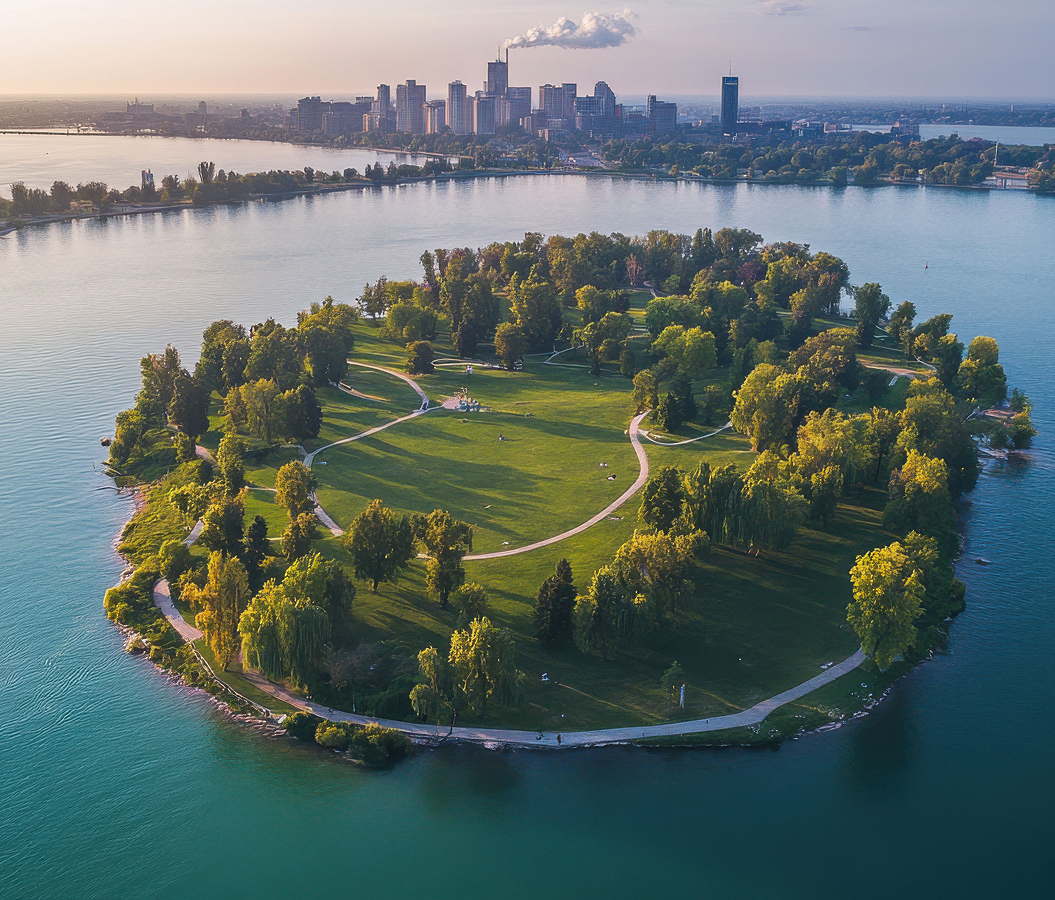
Perfect weekend in Detroit, Michigan.
Detroit's emergence as the birthplace of the modern American automobile industry developed from more than three centuries of Great Lakes commerce, French colonial settlement, industrial innovation, and profound social change. Situated along the Detroit River between Lake St. Clair and Lake Erie, the city occupies a strategic position connecting the Upper Great Lakes with the waterways of eastern North America. Indigenous peoples, including the Anishinaabe communities of the region, maintained extensive trading relationships throughout the surrounding territory long before European colonization. French explorer Antoine de la Mothe Cadillac established Fort Pontchartrain du Détroit in 1701, creating a fortified trading settlement that connected French commercial interests with Indigenous communities and the region's valuable fur trade. British forces assumed control in 1760 following the French and Indian War, and Detroit subsequently became part of the United States under the terms of the Jay Treaty in 1796. The city experienced substantial destruction during the Great Fire of 1805, prompting an ambitious reconstruction program associated with Judge Augustus Woodward and a street plan influenced by European urban design. Detroit's industrial expansion accelerated during the nineteenth century through shipbuilding, railway manufacturing, metalworking, and commercial transportation. Henry Ford established the Ford Motor Company in 1903, and the introduction of the moving assembly line at Highland Park in 1913 revolutionized automobile manufacturing by dramatically increasing production efficiency. General Motors and Chrysler subsequently contributed to the concentration of automotive production throughout southeastern Michigan, establishing Detroit as a center of American industrial power. The Great Migration brought hundreds of thousands of African Americans from the southern United States to Detroit, profoundly influencing its labor movements, political institutions, and artistic traditions. Industrial restructuring, suburbanization, and population decline challenged the city during the second half of the twentieth century, followed by substantial reinvestment in residential neighborhoods, commercial districts, and historic buildings.
American popular music, modern architecture, visual art, and industrial design underwent profound changes in Detroit during the twentieth century, establishing the city as an influential center of creative production. Berry Gordy founded Motown Records in 1959, developing a recording enterprise that brought performers including Marvin Gaye, Stevie Wonder, Diana Ross and the Supremes, and the Temptations to international prominence. The label's sophisticated arrangements, distinctive vocal performances, and integration of rhythm and blues with popular songwriting helped reshape American music during the civil rights era. Detroit subsequently became central to the emergence of techno music during the 1980s, with Juan Atkins, Derrick May, and Kevin Saunderson developing electronic compositions that influenced dance music internationally. The city's architectural achievements include the Fisher Building, designed by Albert Kahn and completed in 1928, whose elaborate Art Deco interiors and expansive proportions demonstrate the wealth generated by the automobile industry. Detroit's literary history includes poet Robert Hayden, whose work explored African American history and personal memory, and novelist Jeffrey Eugenides, whose fiction examined the city's changing social and residential landscapes. The Charles H. Wright Museum of African American History preserves extensive collections devoted to African American life, political movements, and artistic achievement. Detroit's culinary traditions developed through German, Polish, Italian, Greek, Middle Eastern, and African American communities whose food businesses contributed to the city's neighborhood economies. Detroit-style pizza, distinguished by its rectangular shape, crisp cheese-edged crust, and characteristic layering of toppings, originated during the mid-twentieth century and became an established regional specialty. Other traditions include Coney Island hot dogs, Polish pierogi, soul food, and the extensive Lebanese and Yemeni cuisines associated with the broader metropolitan region. Contemporary Detroit restaurants have expanded these foundations through regional agriculture, independent culinary enterprises, and renewed investment in historic commercial districts. A weekend in Detroit connects the industrial innovations that reshaped modern transportation with the musical revolutions, architectural achievements, and culinary communities that continue to distinguish America's Motor City.
Three day itinerary.
Day 1: The Henry Ford Museum of American Innovation
The Henry Ford Museum of American Innovation is best known for preserving the machines, inventions, vehicles, and historical artifacts that transformed American industry and everyday life. Founded by Henry Ford and opened to the public in 1933, the museum occupies an immense exhibition complex in Dearborn, immediately west of Detroit. Its transportation collections include the presidential limousine in which John F. Kennedy was assassinated in 1963, connecting automotive engineering with a defining event in American political history. The museum also preserves the bus on which Rosa Parks refused to surrender her seat in Montgomery, Alabama, in 1955, an act that helped ignite the modern civil rights movement. The Wright brothers' aviation achievements, the development of industrial manufacturing, and the evolution of consumer technology form additional foundations of its exhibitions. Ford's original vision brought together technological innovation and the social transformations produced by industrialization. The Henry Ford Museum represents one of America's most consequential institutions devoted to the relationship between invention, transportation, manufacturing, and national history.
Day 1: Selden Standard
Selden Standard is best known for chef Andy Hollyday's ingredient-driven interpretation of contemporary American cuisine within Detroit's Midtown neighborhood. Hollyday and restaurateur Evan Hansen established the restaurant in 2014, developing a kitchen centered on seasonal produce, regional agriculture, and wood-fired cooking. Hollyday's culinary background includes work with acclaimed Detroit chef Michael Symon, whose influence helped shape the city's modern restaurant renaissance. The menu emphasizes carefully prepared vegetables, seafood, meats, and small plates organized around the availability of ingredients from Michigan farms and producers. Its wood-burning oven provides a central technical foundation, introducing smoke, concentrated heat, and distinctive textures across the menu. The restaurant occupies a restored commercial building whose industrial character reflects Midtown's architectural heritage. Selden Standard represents a defining institution in Detroit's contemporary dining culture through its commitment to regional sourcing, independent culinary authorship, and sophisticated neighborhood hospitality.
Day 2: Detroit Institute of Arts
Detroit Institute of Arts is best known for its extraordinary encyclopedic art collection and Diego Rivera's expansive Detroit Industry Murals, among the most consequential works of twentieth-century American public art. Founded in 1885, the institution developed into one of the United States' leading art museums through collections encompassing European painting, African sculpture, Asian art, American decorative arts, and modern artistic movements. Its principal building opened in 1927 under architect Paul Philippe Cret, establishing an expansive Beaux-Arts presence along Woodward Avenue. Rivera completed his celebrated fresco cycle in 1933, transforming the museum's central courtyard into an ambitious depiction of automotive manufacturing, industrial labor, technology, and the relationship between human activity and mechanical production. Commissioned through the support of Edsel Ford, the murals emerged during the Great Depression and generated controversy through their treatment of industry, class, and modern society. The museum's collection includes major works by Vincent van Gogh, Rembrandt, Pieter Bruegel the Elder, and numerous other influential artists. Detroit Institute of Arts represents an extraordinary intersection of international art history, American industrial development, and the cultural ambitions of twentieth-century Detroit.
Day 2: Baobab Fare
Baobab Fare is best known for introducing the culinary traditions of Burundi and East Africa to Detroit through the work of founders Hamissi Mamba and Nadia Nijimbere. The couple arrived in the United States after fleeing political instability in Burundi and subsequently established the restaurant in 2021. Their culinary program draws on East African ingredients and preparations through rice, beans, plantains, stewed meats, vegetables, and aromatic sauces associated with the region's agricultural traditions. Dishes such as nyumbani, a preparation combining slow-cooked beef with vegetables and spices, reflect the relationship between traditional home cooking and the restaurant's contemporary presentation. Baobab Fare developed into an important cultural institution through its connection with Detroit's immigrant communities and its celebration of African culinary heritage. The restaurant received national recognition for its food and the founders' entrepreneurial achievements. Baobab Fare represents a distinctive contribution to Detroit's restaurant culture through its preservation of Burundian culinary traditions and the city's longstanding history of immigrant entrepreneurship.
Day 2: Motown Museum
Motown Museum is best known for preserving Hitsville U.S.A., the original recording headquarters where Berry Gordy Jr. built one of the most influential music companies in American history. Gordy established Motown Records in 1959, developing a distinctive production system that combined songwriting, performance training, studio recording, and national distribution. The modest residential buildings along West Grand Boulevard became the creative center for artists including Stevie Wonder, Marvin Gaye, Diana Ross and the Supremes, the Temptations, and the Four Tops. Studio A produced recordings that transformed American popular music through an influential combination of gospel, rhythm and blues, pop, and soul. The Funk Brothers, Motown's extraordinary studio musicians, developed the rhythmic and instrumental foundation behind numerous celebrated recordings. Gordy's operation helped expand opportunities for Black performers within the American music industry during the civil rights era. Motown Museum preserves an exceptional chapter in Detroit's cultural history through the recording studios and entrepreneurial vision that reshaped global popular music.
Day 2: Grey Ghost
Grey Ghost is best known for its contemporary interpretation of American meat-centered cooking within Detroit's Brush Park neighborhood. Chefs John Vermiglio and Joe Giacomino established the restaurant in 2016, developing a culinary character grounded in premium meats, inventive preparations, and the traditions of American butchery. Its name references a renowned Detroit rumrunner associated with the city's Prohibition-era criminal history, connecting the restaurant with an earlier period of urban folklore. The kitchen emphasizes carefully prepared steaks, burgers, charcuterie, seasonal vegetables, and composed dishes informed by contemporary culinary technique. Creative cocktails and a substantial beverage program complement the restaurant's concentration on rich flavors and refined casual dining. The surrounding Brush Park district preserves an architectural landscape shaped by nineteenth-century residential development and subsequent urban transformation. Grey Ghost represents Detroit's modern independent restaurant movement through its combination of culinary precision, historic neighborhood character, and contemporary hospitality.
Day 3: Dime Store
Dime Store is best known for its inventive interpretation of American breakfast and brunch within Downtown Detroit's historic Chrysler House. The restaurant occupies a central commercial building associated with the city's early twentieth-century financial and architectural development. Its kitchen draws on traditional American breakfast preparations through eggs, pancakes, French toast, sandwiches, and carefully composed savory dishes, incorporating contemporary ingredients and culinary techniques. The restaurant's distinctive approach emphasizes substantial flavors, creative combinations, and an independent café character rooted in Detroit's downtown revival. Its location within the central business district connects the dining room with the commercial architecture that emerged during the city's period of industrial prosperity. Dime Store represents an established expression of Detroit's contemporary brunch culture through its combination of familiar American cooking and inventive culinary development.
Day 3: Guardian Building
Guardian Building is best known for its extraordinary Art Deco architecture and its status as one of the most ambitious skyscrapers constructed during Detroit's industrial golden age. Designed by architect Wirt C. Rowland of Smith, Hinchman & Grylls, the building opened in 1929 as the headquarters of the Union Trust Company. Its exterior combines orange brick, terra-cotta ornament, and a distinctive vertical composition that reflects the vivacious architectural experimentation of the late 1920s. The interior banking hall contains an extraordinary concentration of colored tile, marble, mosaic, and geometric decorative elements inspired by Native American and other artistic traditions. Pewabic Pottery, founded in Detroit by Mary Chase Perry Stratton, contributed to the building's remarkable ceramic decoration. The structure's elaborate craftsmanship earned it the enduring nickname Cathedral of Finance. Guardian Building represents one of the finest surviving examples of American Art Deco architecture and the extraordinary commercial ambitions of pre-Depression Detroit.
Day 3: Detroit Riverwalk
Detroit Riverwalk is best known for reconnecting Downtown Detroit with the Detroit River through an extensive system of waterfront parks, pedestrian promenades, and public recreational spaces. The riverfront developed historically as a center of shipping, manufacturing, warehousing, and international commerce, reflecting Detroit's strategic position opposite Windsor, Ontario. Industrial facilities and transportation infrastructure occupied substantial portions of the shoreline during the city's manufacturing expansion. The Detroit Riverfront Conservancy, established in 2003, helped transform former industrial and commercial waterfront properties into a connected public landscape. The promenade extends through a sequence of plazas, gardens, recreational areas, and gathering spaces that provide views across the international waterway toward Canada. Its development became a major component of Detroit's broader downtown revitalization and public-space investment. Detroit Riverwalk represents an important achievement in postindustrial urban redevelopment through the restoration of public access to one of North America's most historically significant commercial waterways.
Day 3: Freya
Freya is best known for its contemporary tasting-menu approach to American cuisine within Detroit's Milwaukee Junction neighborhood. The restaurant emerged from a culinary team associated with the development of independent fine dining in the city's former industrial districts. Its kitchen emphasizes seasonal ingredients, regional produce, carefully prepared proteins, and modern techniques organized into a structured multicourse experience. Fermentation, preservation, precise cooking methods, and creative flavor combinations contribute to a menu shaped by contemporary American gastronomy. The restaurant's intimate dining room establishes a close relationship between culinary preparation and service, reflecting the growing influence of tasting-menu restaurants within Detroit's hospitality culture. Freya represents a significant expression of the city's independent fine-dining development through its concentration on technical precision, seasonal cooking, and contemporary culinary authorship.
Where your story begins.
Foresyte Travel reveals places that feel extraordinary long before you arrive.
Enjoy editorial crafted for luxury travelers.
Foresyte may earn a commission when you book.