Why Baobab Fare matters.
Baobab Fare is a celebrated East African restaurant where New Center's industrial and cultural heritage meets Hamissi Mamba and Nadia Nijimbere's Burundian culinary traditions, refugee entrepreneurship and commitment to Detroit's immigrant communities.
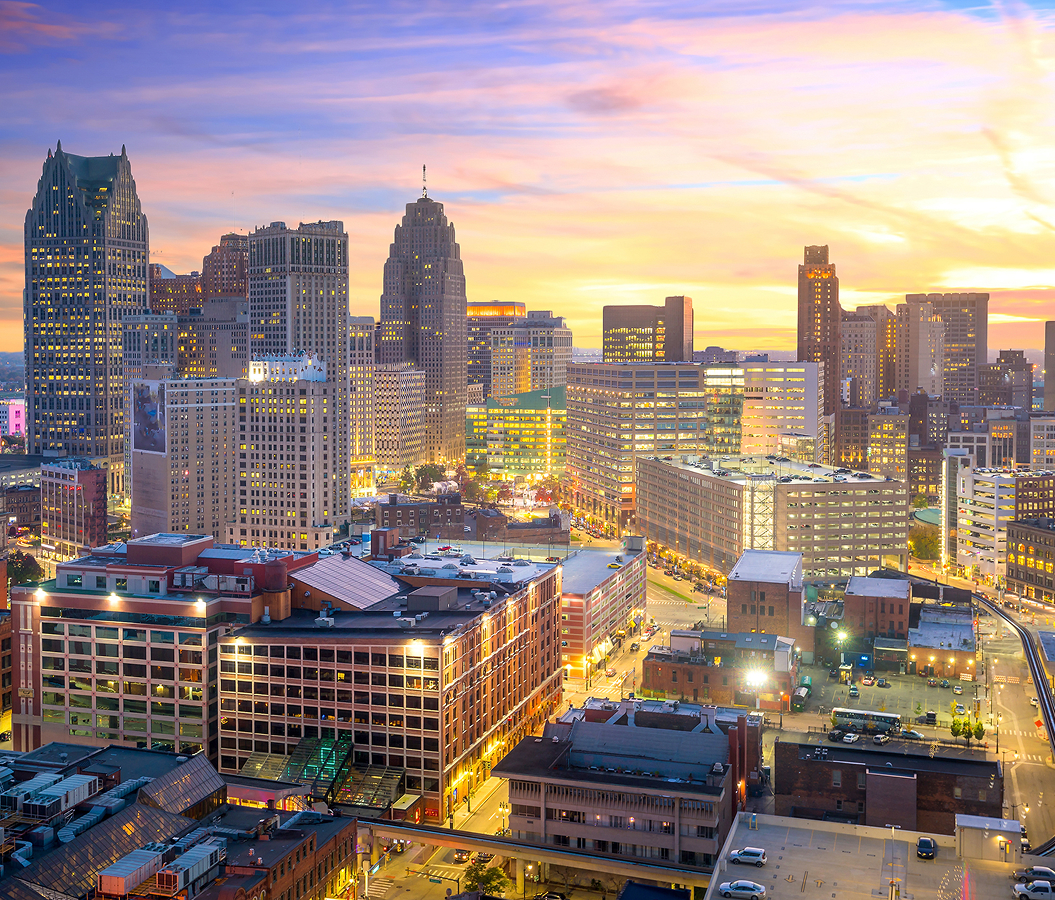
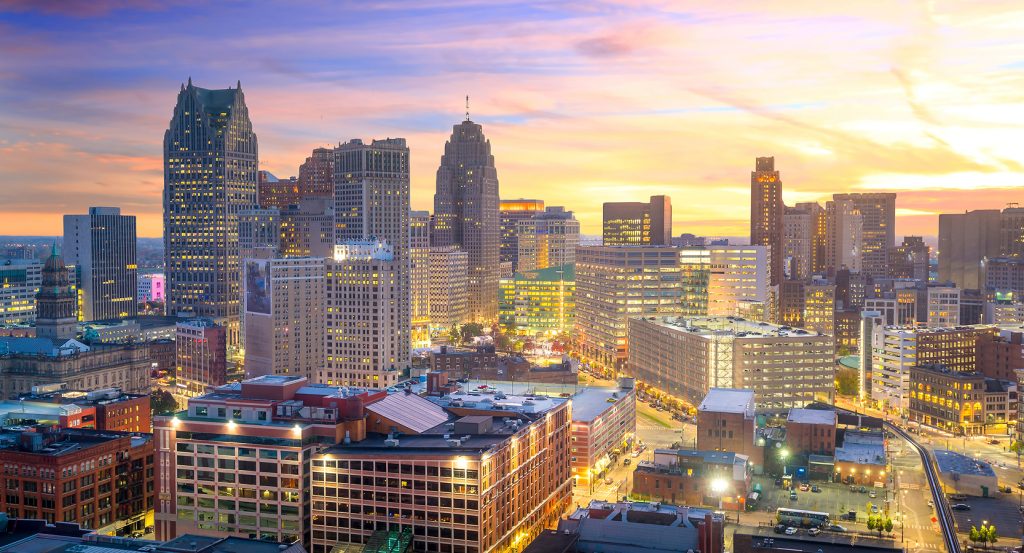
Set at the intersection of Woodward Avenue and East Grand Boulevard, a short walk from the Fisher Building, the restaurant occupies New Center's principal commercial corridor between Milwaukee Junction's historic manufacturing district, the North End and the cultural institutions of Midtown Detroit. Its street-facing windows connect the dining room to Woodward Avenue, where early twentieth-century commercial buildings and substantial office towers reflect the district's development around automobile manufacturing and corporate headquarters. Inside, vivid yellow furnishings, woven East African baskets and contemporary decorative elements introduce Burundian cultural references into a bright, informal dining space. Black tables and a patterned tile floor provide visual contrast, giving the restaurant a distinctive interior character within the surrounding historic commercial streetscape. The result is a restaurant whose prominent location, colorful interior and connection to East African craftsmanship establish a physical setting for one of Detroit's most consequential immigrant-founded culinary ventures.
What defines Baobab Fare.
Baobab Fare is best known for Hamissi Mamba and Nadia Nijimbere transforming their journey from political persecution in Burundi into an internationally recognized restaurant that introduced Burundian cooking to a broader Detroit audience. Nijimbere fled Burundi in 2013 and reached Detroit before her husband, finding shelter at Freedom House, an organization supporting people seeking asylum in the United States. She discovered she was pregnant with twins during her early months in the city, beginning a difficult period of family separation and adaptation to an unfamiliar country. Mamba joined her in 2015 after leaving behind a professional background in sales and marketing, reuniting the family as they began establishing their lives in Michigan. Both worked demanding jobs during their early years in Detroit, with Nijimbere finding employment as a caregiver and Mamba working in manufacturing. Their overlapping schedules made family life difficult, and the couple began considering a business that would allow them to build a more stable future together. Nijimbere's love of cooking and Mamba's commercial background provided complementary foundations for a restaurant devoted to the food of their homeland. Through Freedom House, Mamba encountered entrepreneurial training offered by ProsperUs Detroit, gaining practical knowledge of business development and the resources available to emerging entrepreneurs. The couple began introducing their cooking through pop-up events, including appearances at Brooklyn Street Local in 2017, gradually establishing an audience for East African food in a city whose restaurant culture contained few comparable establishments. Their ambitions received a decisive financial breakthrough in August 2017 when Baobab Fare won the Hatch Detroit competition, securing a $50,000 grand prize and $200,000 in associated business support services. The winning proposal emphasized Burundian food, cultural exchange and employment opportunities for refugees, connecting the restaurant's commercial prospects to the community that had supported the founders' resettlement. Mamba and Nijimbere subsequently redirected their original West Village ambitions toward a commercial property in New Center, securing the premises in 2018 and undertaking the prolonged process of developing their permanent restaurant. Additional assistance came through Detroit's Motor City Match program, which awarded the project another $50,000 toward its establishment. Baobab Fare began welcoming diners through limited events in February 2021 before celebrating its official grand opening on April 1, attended by Mayor Mike Duggan and representatives of Detroit's entrepreneurial community. National recognition followed rapidly when Eater included the restaurant among America's best new restaurants of 2021, bringing its founders' story and Burundian cooking to audiences far beyond Michigan. Esquire subsequently included Baobab Fare among its best new restaurants of 2022, strengthening its position within the national dining conversation. Mamba expanded his individual culinary reputation by winning Food Network's Chopped in 2023, bringing the techniques and flavors of his upbringing into a competitive television setting. The James Beard Foundation named Mamba and Nijimbere finalists for Outstanding Restaurateur in 2024, recognizing the business achievement behind a restaurant whose significance extended into refugee employment and cultural representation. Their expanding enterprise also introduced Soko by Baobab Fare, a retail initiative connecting Burundian coffee, sauces and other products with American consumers, and Waka by Baobab Fare, an East African street-food concept that developed from mobile service into a permanent Eastern Market restaurant in 2026. Baobab Fare's development connects the founders' personal migration history to Detroit's entrepreneurial institutions, national culinary recognition and a growing network of businesses rooted in East African culture.
How Baobab Fare fits.
Baobab Fare works as the concluding destination for a New Center itinerary connecting Detroit's expansive industrial-era architecture, the birthplace of mass-market automobile innovation and the preservation of the city's broader historical development.
Begin at Fisher Building, the extraordinary Art Deco landmark commissioned by the seven Fisher brothers after their automobile-body manufacturing enterprise became one of Detroit's most successful industrial businesses. The brothers hired architect Albert Kahn in 1927 to create an office complex that would express both their commercial achievement and their appreciation for American craftsmanship. Completed in 1928, the building combined a soaring tower with an elaborate interior arcade whose hand-painted barrel-vaulted ceilings, mosaics, bronze detailing and extensive marble surfaces transformed a commercial headquarters into an architectural monument. Its original gold-leaf tower tiles were subsequently covered during the Second World War amid concerns that the reflective surface would make the building a conspicuous target during an aerial attack. Kahn received the Architectural League of New York's silver medal for the project, establishing the Fisher Building as one of the defining architectural achievements of Detroit's industrial prosperity. Continue to Ford Piquette Avenue Plant, the preserved automobile factory where Henry Ford and his engineers developed the Model T before the company introduced the moving assembly line at Highland Park. Ford Motor Company authorized construction of the factory in 1904, commissioning Field, Hinchman & Smith to design a three-story brick manufacturing building beside the Milwaukee Junction rail network. In January 1907, Ford established a secret experimental room on the third floor, where a small engineering team developed the automobile intended to make personal transportation accessible to a much larger American population. The first Model T built for sale emerged on September 27, 1908, beginning a production run that ultimately sent 12,000 examples from the Piquette factory before operations transferred to Highland Park in 1910. After subsequent industrial use by Studebaker and other businesses, preservation efforts secured the building in 2000, establishing a museum whose surviving manufacturing spaces retain a direct connection to the origins of modern automobile production. Conclude at Detroit Historical Museum, the institution whose collections trace the city's development from an eighteenth-century French settlement into a center of American manufacturing, migration and cultural achievement. The Detroit Historical Society emerged in 1921 following historian Clarence M. Burton's donation of historical papers, and its first museum opened on the twenty-third floor of Barlum Tower in 1928. Architect William E. Kapp designed the institution's permanent Woodward Avenue building, dedicated on July 24, 1951 during celebrations marking the 250th anniversary of Detroit's founding. The Streets of Old Detroit exhibition reconstructs commercial environments from the nineteenth and early twentieth centuries, connecting the city's earlier trading and retail culture to the industrial metropolis that followed. Later additions included the 1968 Kresge Exhibition Hall and The Motor City exhibition, whose industrial artifacts examine automobile production and the manufacturing systems that reshaped Detroit's economy. The progression moves from the Fisher brothers' expansive expression of industrial wealth through the Ford Piquette Avenue Plant's transformative automobile engineering and culminates in Detroit Historical Museum's preservation of the city's wider historical record, placing Baobab Fare within a landscape continually reshaped by enterprise, migration and cultural change.
Where your story begins.
Foresyte Travel reveals places that feel extraordinary long before you arrive.
Enjoy editorial crafted for luxury travelers.