Perfect weekend in Philadelphia, Pennsylvania.
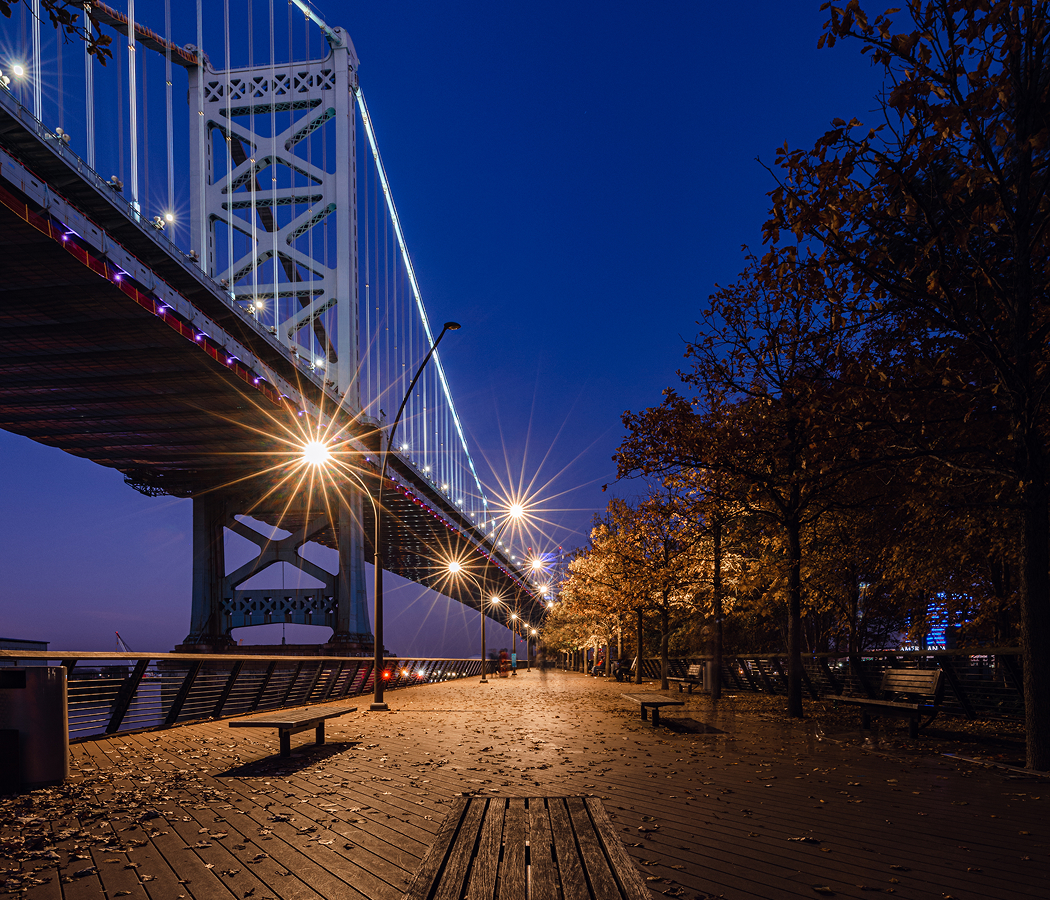
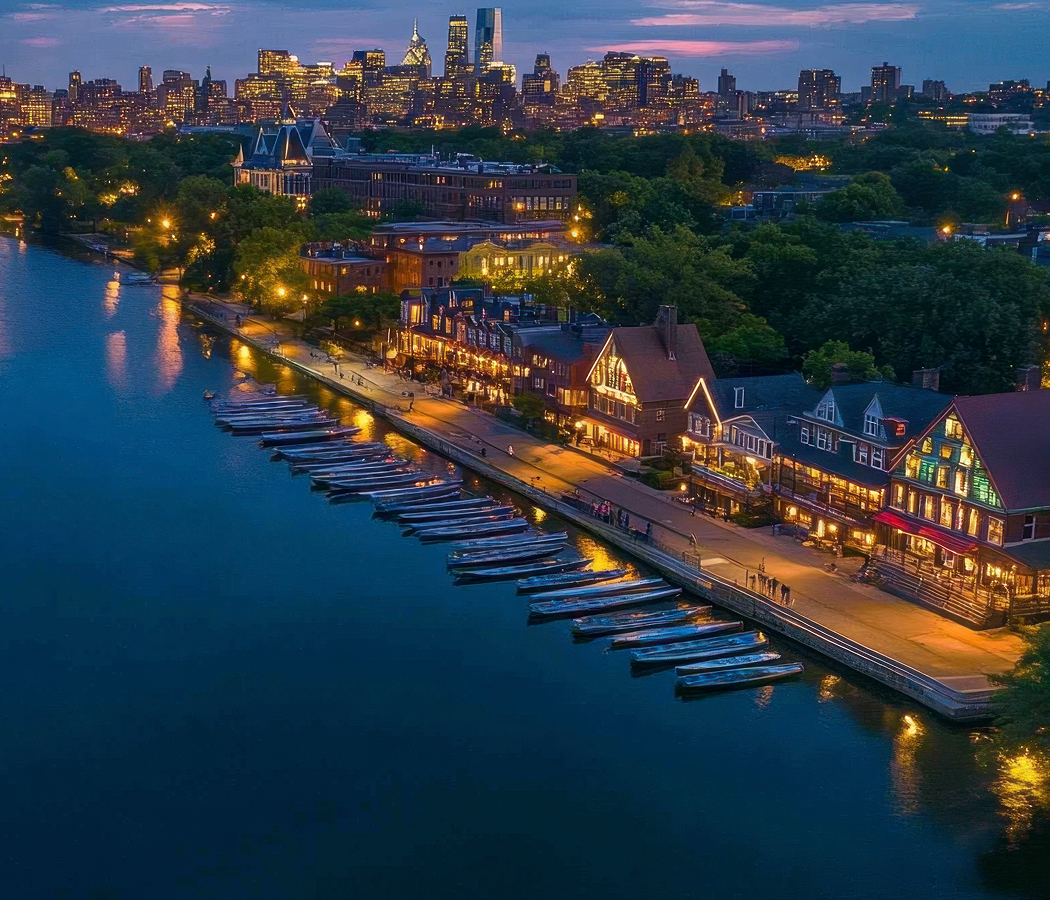
Philadelphia played a central role in the founding of the United States, developing from a seventeenth-century Quaker settlement into a major center of political thought, manufacturing, scientific inquiry, and American commerce. Situated between the Delaware and Schuylkill rivers, the city occupies territory traditionally inhabited by the Lenape, whose communities maintained agricultural settlements and trading relationships throughout the Delaware Valley. William Penn founded Philadelphia in 1682 as the principal city of his Pennsylvania colony, establishing a planned street grid intended to accommodate commercial growth, religious tolerance, and public green spaces. Its position along the Delaware River encouraged maritime trade, attracting merchants, craftspeople, and immigrants from across Europe and the Atlantic world. By the eighteenth century, Philadelphia had become British North America's largest city and an influential center of publishing, education, and political debate. Benjamin Franklin contributed to its intellectual and civic development through institutions devoted to scientific inquiry, public education, and community improvement. The First Continental Congress assembled in Philadelphia in 1774, and the city subsequently became the principal gathering place for revolutionary leaders seeking independence from Britain. Philadelphia served as the temporary capital of the United States from 1790 to 1800, accommodating the federal government during the republic's formative decade. Industrial expansion during the nineteenth century transformed the city into a manufacturing center specializing in textiles, machinery, shipbuilding, and railroad equipment. The Centennial International Exhibition of 1876 brought international attention to Philadelphia's industrial achievements and the centennial of American independence. During the twentieth century, immigration, industrial restructuring, and the expansion of universities and medical institutions reshaped its metropolitan economy. Philadelphia's historical significance rests in its extraordinary concentration of foundational American political events and the commercial institutions that supported the country's early development.
Pennsylvanian intellectual and artistic achievement acquired exceptional prominence in Philadelphia, where scientific institutions, literary societies, musical organizations, and publishing enterprises helped shape American cultural life. Benjamin Franklin founded the American Philosophical Society in 1743, establishing an institution devoted to scientific investigation and the exchange of scholarly ideas. The Pennsylvania Academy of the Fine Arts, founded in 1805, became the first art museum and school of fine arts in the United States, supporting generations of American painters and sculptors. Thomas Eakins developed his artistic career in Philadelphia, producing influential paintings that explored anatomy, professional life, and the human figure with extraordinary technical precision. His painting The Gross Clinic, completed in 1875, became one of the most celebrated works of nineteenth-century American realism. Philadelphia's musical history includes the Philadelphia Orchestra, founded in 1900, whose international prominence grew under conductors including Leopold Stokowski and Eugene Ormandy. The city's African American musical traditions contributed to the development of jazz, gospel, soul, and rhythm and blues, with performers including John Coltrane, Billie Holiday, and Marian Anderson establishing enduring associations with Philadelphia. During the 1970s, producers Kenny Gamble and Leon Huff developed the Philadelphia soul sound, combining orchestral arrangements, sophisticated songwriting, and rhythmic innovation into recordings that influenced popular music internationally. Philadelphia's literary history includes Edgar Allan Poe, who lived in the city during the 1830s and 1840s and produced several significant works of Gothic fiction and literary criticism. The city's culinary traditions developed through Pennsylvania agriculture, maritime commerce, and the foodways of successive immigrant communities. The Philadelphia cheesesteak became a celebrated regional specialty, combining thinly sliced beef with melted cheese on a long roll. Pennsylvania Dutch cooking contributed pretzels, scrapple, traditional baked goods, and substantial preparations associated with the agricultural communities of southeastern Pennsylvania. Italian American families established enduring traditions involving roast pork sandwiches, fresh pasta, and neighborhood bakeries, and the city's substantial immigrant communities introduced Vietnamese, Mexican, Chinese, and Middle Eastern culinary practices. Contemporary chefs extend these foundations through regional produce, Atlantic seafood, and techniques drawn from international fine dining. Philadelphia rewards a weekend devoted to the foundations of American democracy, the achievements of its artistic institutions, and the extraordinary culinary traditions developed across the Delaware Valley.
Three day itinerary.
Day 1: Independence Hall
Independence Hall is best known as the birthplace of the Declaration of Independence and the United States Constitution, placing Philadelphia at the center of two foundational events in American political history. Constructed between 1732 and 1753 as the Pennsylvania State House, the Georgian building became the meeting place of the Second Continental Congress during the American Revolution. Thomas Jefferson, John Adams, Benjamin Franklin, and their fellow delegates participated in the deliberations that culminated in the adoption of the Declaration of Independence on July 4, 1776. Eleven years later, George Washington presided over the Constitutional Convention within the same building, where James Madison and other delegates developed the structure of the federal government. The Assembly Room preserves the architectural setting associated with both events. Independence Hall subsequently became part of Independence National Historical Park and received UNESCO World Heritage designation in 1979. Its significance extends across constitutional government, representative democracy, and the international history of political independence.
Day 1: Zahav
Zahav is best known for chef Michael Solomonov's transformation of modern Israeli cooking into one of Philadelphia's most influential culinary institutions. Solomonov and restaurateur Steve Cook opened the restaurant in 2008, developing a kitchen grounded in the regional traditions of Israel and the wider eastern Mediterranean. Solomonov's culinary character emerged through his Israeli upbringing, family history, and engagement with the diverse communities whose food shaped modern Israeli cuisine. Wood-fired cooking, freshly baked laffa, hummus, tahini, seasonal vegetables, and intensely seasoned meats provide the foundations of a menu built around shared dishes. The restaurant's celebrated pomegranate-glazed lamb shoulder exemplifies its concentration on slow cooking and layered flavors. Zahav received the James Beard Award for Outstanding Restaurant in 2019, following Solomonov's recognition as Outstanding Chef in 2017. Its influence helped establish Philadelphia as a major American destination for chef-driven dining.
Day 2: Reading Terminal Market
Reading Terminal Market is best known for preserving one of America's great public food markets within a historic commercial complex in Center City Philadelphia. The market opened in 1893 beneath the elevated train shed of the Philadelphia and Reading Railroad, bringing hundreds of food merchants into a purpose-built urban trading environment. Pennsylvania Dutch farmers became central to its character through stalls devoted to baked goods, meats, produce, dairy products, and traditional regional preparations. Generations of independent merchants subsequently expanded its culinary range through Philadelphia specialties and food traditions associated with immigrant communities. Roast pork sandwiches, soft pretzels, scrapple, baked goods, seafood, and fresh produce reflect the market's unusually broad commercial inheritance. The railroad terminal above ceased passenger operations during the twentieth century, and preservation efforts secured the market's continued operation. Reading Terminal Market captures Philadelphia's agricultural connections, immigrant food culture, and enduring tradition of independent urban commerce.
Day 2: Middle Child Clubhouse
Middle Child Clubhouse is best known for expanding chef Matt Cahn's celebrated Philadelphia sandwich concept into a larger restaurant devoted to inventive American comfort food. Cahn established the original Middle Child in Center City before developing the Clubhouse in Fishtown, among Philadelphia's most influential contemporary restaurant neighborhoods. The kitchen draws on the city's sandwich traditions through carefully prepared breads, meats, vegetables, cheeses, and condiments, extending those foundations into a broader menu of contemporary American dishes. Its approach combines familiar preparations with unusually precise ingredient selection and lively culinary development. The restaurant's large dining room and neighborhood-centered character connect the project with Fishtown's transformation from an industrial district into a major center of independent hospitality. Middle Child Clubhouse represents Philadelphia's contemporary casual dining culture through its relationship with the city's historic sandwich heritage.
Day 2: Philadelphia Museum of Art
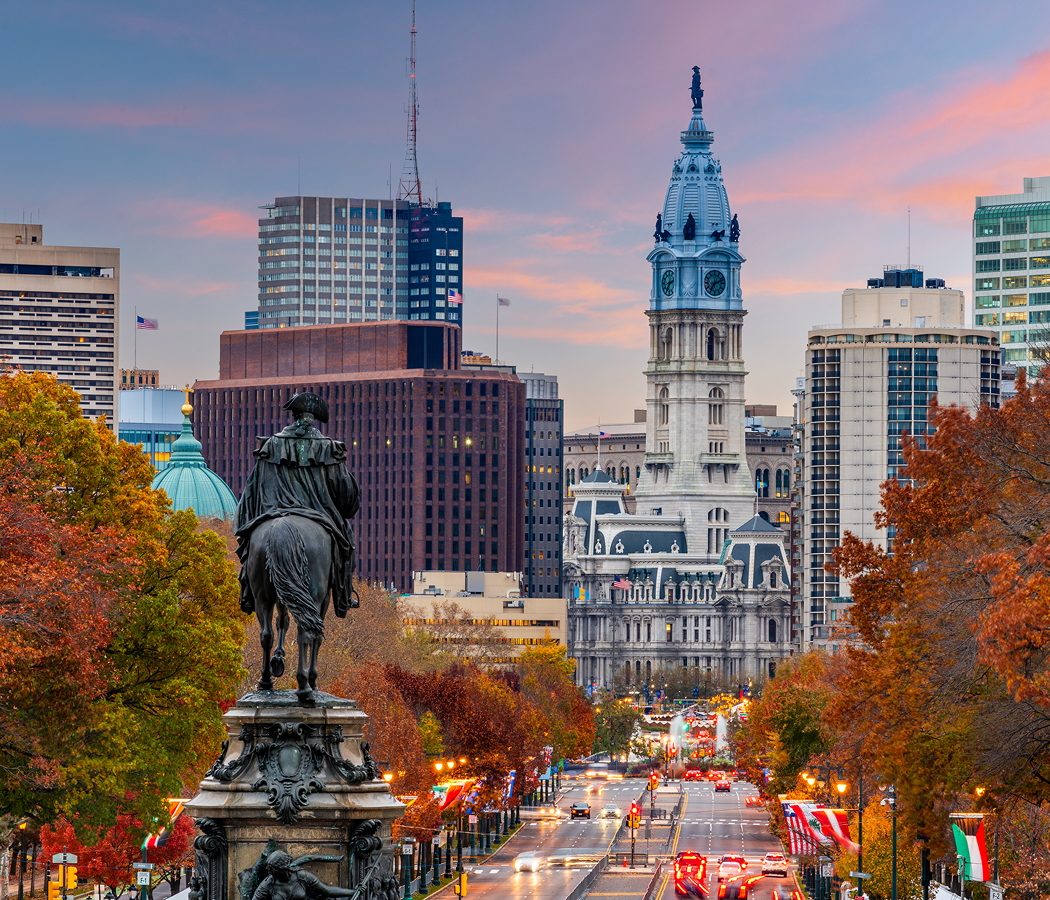
Philadelphia Museum of Art is best known for housing one of the United States' most comprehensive art collections within a grand building overlooking the Benjamin Franklin Parkway. Founded in 1876 in connection with the Centennial Exhibition, the institution developed into a major center for European, American, and Asian art. Its principal building opened in 1928, combining classical architectural forms with an elevated position above the Schuylkill River. Collections encompass Renaissance painting, European decorative arts, American furniture, Asian sculpture, Impressionism, and modern art. Marcel Duchamp's Étant donnés occupies a specially constructed installation, reflecting the museum's important relationship with twentieth-century artistic experimentation. The institution also preserves major architectural interiors and extensive collections associated with Philadelphia's industrial and cultural history. Its broad staircase achieved international recognition through the film Rocky, adding a distinctive popular-cultural association to one of America's leading art museums.
Day 2: Friday Saturday Sunday
Friday Saturday Sunday is best known for chef Chad Williams's transformation of a longstanding Philadelphia restaurant into one of the city's most accomplished contemporary fine-dining institutions. The original establishment opened in 1973, becoming an important fixture of the city's restaurant renaissance before Williams and his wife Hanna Whitaker acquired the business in 2015. Williams developed a tasting menu rooted in classical technique, seasonal ingredients, and the diverse culinary influences of Philadelphia. Seafood, vegetables, meats, fermented ingredients, and carefully structured sauces form a progression distinguished by concentrated flavors and precise execution. The intimate Rittenhouse Square setting preserves the restaurant's neighborhood character while supporting an ambitious multicourse format. Friday Saturday Sunday received the James Beard Award for Outstanding Restaurant in 2023, establishing its position among the most consequential independent restaurants in the United States.
Day 3: Parc
Parc is best known for recreating the atmosphere of a traditional Parisian brasserie beside Philadelphia's historic Rittenhouse Square. Restaurateur Stephen Starr established the restaurant in 2008, developing a dining room inspired by the grand cafés and neighborhood brasseries of France. Its culinary repertoire draws on French breakfast and lunch traditions through pastries, eggs, omelets, breads, seafood, salads, and carefully prepared café dishes. The restaurant's sidewalk seating extends along the square, connecting its dining culture with one of Philadelphia's most established residential and commercial districts. Rittenhouse Square originated within William Penn's seventeenth-century city plan and subsequently became the center of a distinguished neighborhood of historic residences and cultural institutions. Parc combines French café traditions with the architectural and social character of Central Philadelphia, making it a defining institution of the city's contemporary brunch culture.
Day 3: Eastern State Penitentiary
Eastern State Penitentiary is best known for revolutionizing prison architecture through a radial cellblock design that influenced correctional institutions across the world. Designed by architect John Haviland, the prison opened in 1829 as an ambitious experiment in incarceration and moral reform. Its original system emphasized solitary confinement, private exercise yards, and individual cells intended to encourage reflection and penitence. Seven cellblocks radiated from a central surveillance point, creating an architectural arrangement that allowed staff to oversee multiple corridors from one location. Charles Dickens criticized the institution's isolation system after visiting during the nineteenth century, reflecting growing controversy over its psychological consequences. The prison subsequently abandoned strict solitary confinement and expanded through successive construction campaigns. Al Capone served a sentence there during the twentieth century, adding a prominent criminal-history association. Eastern State Penitentiary preserves a grand record of changing American attitudes toward punishment, rehabilitation, and institutional architecture.
Day 3: Barnes Foundation
Barnes Foundation is best known for assembling one of the world's most extraordinary collections of Impressionist, Post-Impressionist, and early modern painting through the vision of physician and pharmaceutical entrepreneur Albert C. Barnes. Barnes developed his fortune through the antiseptic compound Argyrol and devoted substantial resources to acquiring art during the early twentieth century. His collection includes exceptional concentrations of works by Pierre-Auguste Renoir, Paul Cézanne, Henri Matisse, Pablo Picasso, and Vincent van Gogh. Barnes organized paintings alongside African sculpture, Native American objects, metalwork, furniture, and decorative arts according to visual relationships involving color, form, and composition. The collection originally occupied a purpose-built institution in Merion before moving to Philadelphia's Benjamin Franklin Parkway in 2012. Architects Tod Williams and Billie Tsien designed the new building to preserve the distinctive arrangements of the original galleries. The Barnes Foundation remains one of America's most consequential experiments in art collecting and visual education.
Day 3: Vernick Food & Drink
Vernick Food & Drink is best known for chef Greg Vernick's refined interpretation of contemporary American cooking through an ingredient-driven restaurant in Philadelphia's Rittenhouse neighborhood. Vernick developed his culinary foundation in acclaimed kitchens including Jean-Georges Vongerichten's New York restaurants before opening his independent Philadelphia establishment in 2012. The kitchen gives particular prominence to seasonal vegetables, seafood, carefully prepared meats, and the restaurant's celebrated toasted preparations, whose apparent simplicity depends on exceptional ingredients and precise execution. Wood-fired cooking, balanced sauces, and restrained compositions provide a coherent culinary foundation across the menu. Vernick received the James Beard Award for Best Chef: Mid-Atlantic in 2017, establishing his position among the region's leading culinary figures. The restaurant subsequently became the foundation of a broader Philadelphia hospitality group. Vernick Food & Drink represents the city's modern fine-dining culture through technical discipline, independent authorship, and a sustained commitment to ingredient quality.
Where your story begins.
Foresyte Travel reveals places that feel extraordinary long before you arrive.
Enjoy editorial crafted for luxury travelers.
Foresyte may earn a commission when you book.