Perfect weekend in Greece.
Mykonos occupies a distinctive place in the history of the Cyclades, where ancient maritime connections, Aegean trading traditions, and centuries of island life shaped one of Greece's most internationally recognized destinations. Located in the Central Aegean Sea, the island developed within a network of maritime routes connecting mainland Greece, the Cycladic archipelago, and the eastern Mediterranean. Its ancient history is closely associated with the religious importance of the surrounding islands, particularly the sanctuary of Apollo, which attracted pilgrims, merchants, and political representatives from across the Greek world. During the Hellenistic and Roman periods, regional commerce supported communities engaged in agriculture, fishing, and maritime transportation. Mykonos subsequently experienced Byzantine administration, Venetian influence, and Ottoman sovereignty, with its inhabitants maintaining strong connections to seafaring and commercial enterprise. The Greek War of Independence brought the island into the struggle against Ottoman rule, with Manto Mavrogenous, a prominent Mykonian revolutionary, contributing substantial personal wealth to the independence movement. During the nineteenth century, maritime trade and shipping sustained the local economy, although changing commercial routes encouraged migration to larger Greek ports. The twentieth century introduced a different period of prosperity as artists, writers, and international travelers became interested in the island's Cycladic architecture, coastal scenery, and Mediterranean traditions. By the latter decades of the century, Mykonos had developed an international reputation for hospitality, artistic independence, and cosmopolitan social culture.
Mykonos's cultural traditions extend through Cycladic architecture, religious celebrations, maritime craftsmanship, and a regional cuisine shaped by the agricultural resources of the Aegean islands. The Archaeological Museum of Mykonos houses ancient sculptures, ceramics, and funerary objects associated with the island's historical connections to the wider Greek world. Its collections include significant pottery from the Archaic period, providing insight into the artistic production and religious practices of early Aegean communities. The Aegean Maritime Museum preserves nautical instruments, ship models, and historical artifacts associated with Greek seafaring, emphasizing the commercial and cultural importance of maritime transportation. Traditional Mykonian architecture developed through whitewashed masonry, compact building forms, and narrow passages designed for the climatic conditions of the Cyclades. Religious festivals continue to occupy an important place in island traditions, bringing local communities together through Orthodox ceremonies, regional music, and communal dining. Mykonian cuisine incorporates fresh seafood, olive oil, seasonal vegetables, and products associated with traditional island agriculture. Local specialties include kopanisti, a pungent fermented cheese with protected designation of origin status, and louza, a cured pork delicacy seasoned with regional herbs. Amygdalota, traditional almond sweets, connect the island's confectionery heritage to broader Cycladic culinary customs. A perfect weekend in Mykonos brings together ancient Aegean history, distinctive island settlements, maritime traditions, and Mediterranean gastronomy against the limestone landscapes and turquoise waters of the Cyclades.
Three day itinerary.
Day 1: Little Venice
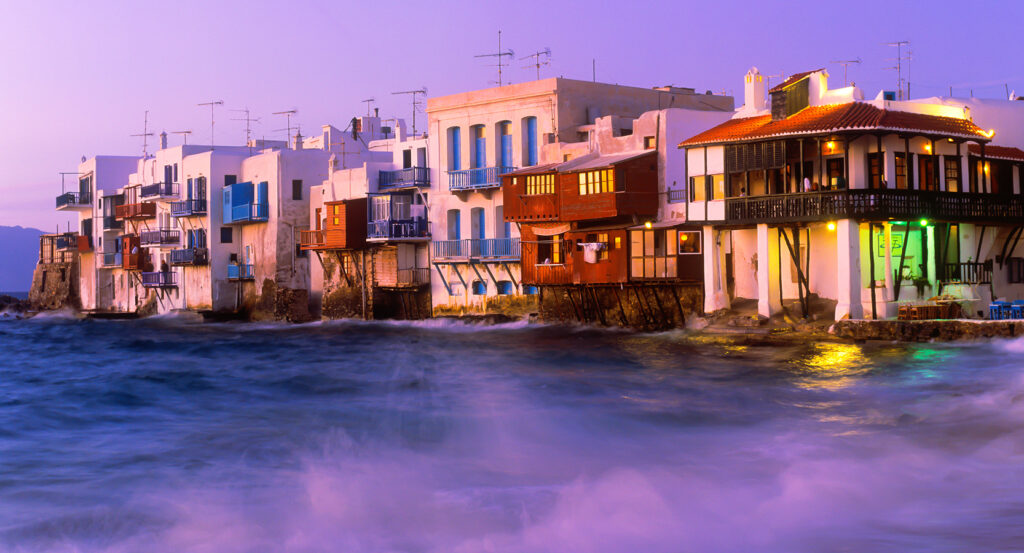
Little Venice is best known for the eighteenth-century waterfront houses whose balconies project directly above the Aegean along the western edge of Mykonos Town. Merchants and ship captains developed the district when maritime commerce gave the island sustained connections with ports across the eastern Mediterranean. Multi-story houses combined domestic space with direct proximity to the water, producing a dense architectural edge whose painted wooden balconies contrast with the whitewashed masonry characteristic of the Cyclades. The shoreline curves toward Kato Mili, placing the district within the same coastal landscape as the island's historic windmills. Waves, narrow pedestrian lanes, churches, and tightly packed houses preserve the relationship between Chora and the sea that shaped Mykonos long before tourism transformed its economy.
Day 1: M-Eating Restaurant Mykonos Town
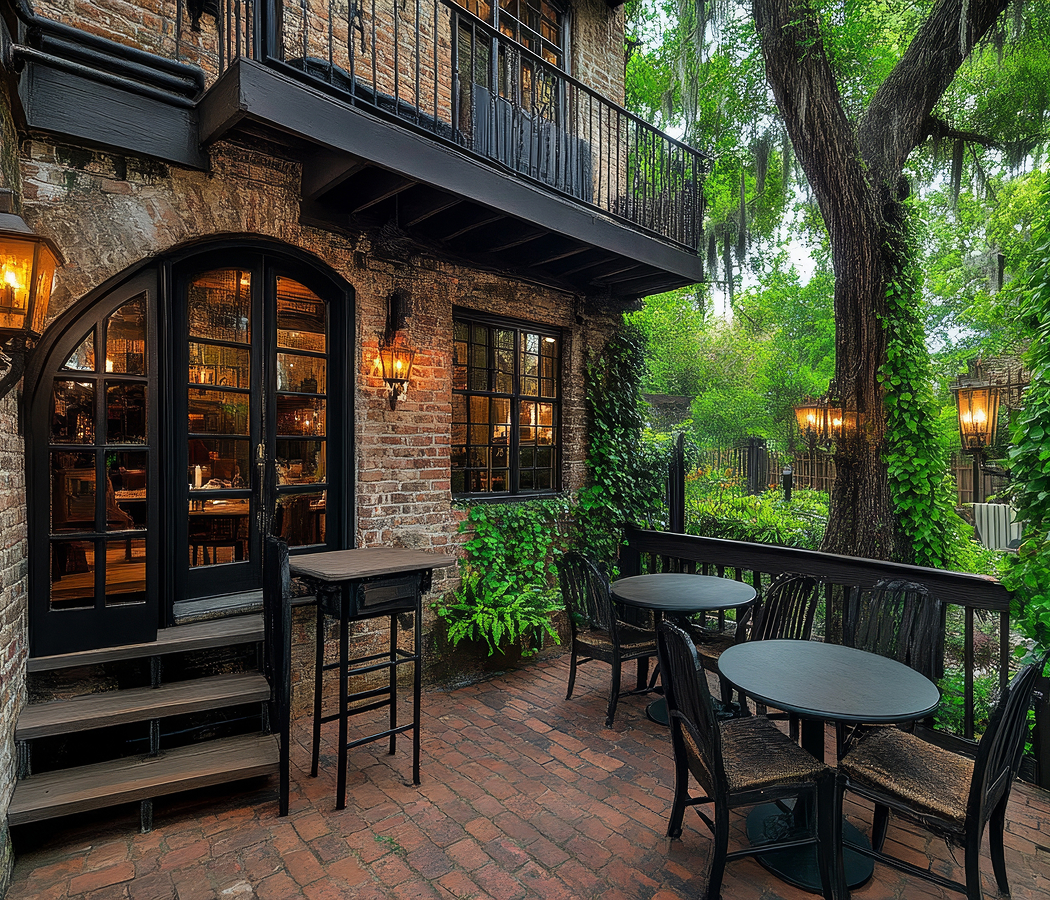
M-Eating Restaurant Mykonos Town is best known for Panagiotis Menardos's contemporary interpretation of Greek cooking within the historic fabric of Chora. Menardos returned to Mykonos after developing his culinary career beyond the island and built the restaurant around Greek ingredients treated with disciplined modern technique. Seafood, vegetables, meats, herbs, olive oil, and products associated with the Aegean provide the foundation for compositions that retain recognizable Mediterranean flavors. The restaurant occupies a traditional Mykonian building whose enclosed garden creates an intimate setting within the dense pedestrian streets of town. Its longevity and concentration on Greek culinary foundations have made m-eating one of the most established chef-driven restaurants in Mykonos.
Day 2: Kato Mili
Kato Mili is best known for preserving the infrastructure of the grain economy that developed above Mykonos Town during the island's maritime era. Strong northern winds made the exposed ridge beside Chora exceptionally productive for wind-powered milling, and a larger concentration of mills once operated across the island. Their cylindrical whitewashed masonry bodies, conical roofs, and radial wooden mechanisms converted wind energy into the mechanical force required to grind grain. Flour production supported local consumption and maritime provisioning within an island economy deeply connected to Aegean shipping routes. Five surviving mills stand together at Kato Mili above the waterfront, preserving an industrial technology whose functional form became one of the most recognizable architectural expressions of the Cyclades.
Day 2: To Maereio
To Maereio is best known for preserving the intimate scale and culinary traditions of a Mykonian neighborhood kitchen in the center of Chora. The restaurant operates from a compact space on Kalogera Street, placing diners close to the preparation of dishes grounded in Greek island cooking. Local cheeses, sausages, vegetables, meats, herbs, and slow-cooked preparations connect the menu to products and techniques associated with Mykonos and the Cyclades. Louza, the island's cured pork specialty, belongs to a Mykonian preservation tradition developed around domestic pig slaughter and seasoning with regional aromatics. To Maereio gives these local foodways unusual prominence within a destination increasingly shaped by international luxury dining.
Day 2: Church of Panagia Paraportiani
Church of Panagia Paraportiani is best known for its extraordinary sculptural composition of five interconnected churches beside the medieval entrance to Mykonos Town. The complex developed incrementally over centuries in the Kastro quarter, with four chapels forming the lower structure and the church dedicated to the Virgin Mary rising above them. Its name derives from its position beside a former gateway in the fortified settlement. Thick whitewashed masonry, rounded edges, irregular volumes, shallow domes, and minimal exterior ornament create a form shaped as much by accumulated construction as by a single architectural plan. Intense Cycladic light reduces the building to shifting planes of white against the Aegean, making Paraportiani one of the clearest architectural expressions of the style forms associated with Mykonos.
Day 2: Noema
Noema is best known for building contemporary Cycladic cooking around fire, preservation, and ingredients associated with the Aegean islands. The restaurant occupies a secluded courtyard within Mykonos Town, placing its culinary program inside the whitewashed pedestrian fabric of Chora. Open-fire cooking gives vegetables, seafood, and meats pronounced char and concentration, extending techniques historically suited to simple island ingredients into a more elaborate restaurant format. Fermentation, curing, drying, and other preservation methods deepen the relationship with culinary practices developed under the environmental constraints of the Cyclades. Noema has become one of the island's defining contemporary dining institutions by treating Mykonian and broader Aegean food culture as the foundation for a sophisticated modern kitchen.
Day 3: Cosmo Café
Cosmo Café is best known for an established breakfast culture in Mykonos Town built around the relaxed morning rhythms of the Cyclades. Eggs, yogurt, fruit, breads, coffee, juices, and substantial breakfast plates form the core of a daytime format suited to the pedestrian streets surrounding Fabrika. Its position near one of Chora's principal transportation points gives the restaurant a close relationship with the daily movement between the historic town and the beaches beyond it. Outdoor seating places breakfast within the compact whitewashed streetscape that defines Central Mykonos. Cosmo Café has developed into a durable morning institution on an island whose celebrated dining culture is otherwise heavily concentrated around lunch, sunset, and late-night service.
Day 3: Delos Island
Delos Island is best known as one of the most important sacred centers of the ancient Greek world and the mythological birthplace of Apollo and Artemis. Its sanctuary attracted worshippers from across the Aegean, giving the small island religious importance far beyond its physical scale. Delos later developed into a major commercial port whose position within Mediterranean trade generated dense residential quarters, marketplaces, temples, warehouses, and houses decorated with elaborate mosaics. The Terrace of the Lions, Sanctuary of Apollo, House of Dionysus, theater district, and surviving commercial structures reveal the coexistence of sacred ritual and cosmopolitan urban life. Archaeological remains spread across the largely treeless landscape preserve an ancient settlement of exceptional completeness within the geographic center of the Cyclades.
Day 3: Mykonos Town (Chora)
Mykonos Town is best known for its dense Cycladic urban fabric of whitewashed houses, narrow pedestrian passages, churches, small squares, and waterfront structures assembled around a natural harbor. The settlement developed through maritime commerce and island life under conditions that favored compact construction and streets offering protection from intense sun and Aegean winds. Cubic masonry buildings create irregular passages whose changing widths and orientations distinguish the town from formally planned urban centers. Blue and brightly painted doors, external staircases, balconies, chapels, and paved lanes give individual buildings strong visual identities within an unusually coherent architectural environment. Chora subsequently became the social and commercial center of modern Mykonos, preserving the physical structure of a Cycladic port town beneath the island's international cultural prominence.
Day 3: Armira Mykonos
Armira Mykonos is best known for contemporary Greek cooking grounded in the seafood, vegetables, herbs, cheeses, and culinary traditions of the Aegean. Its position in Mykonos Town places the restaurant within the island's historic urban center, where maritime trade and fishing shaped local food culture across generations. The kitchen develops recognizable Greek preparations through careful treatment of regional ingredients, giving seafood and produce particular prominence. Meze, grilled products, olive oil, herbs, and dishes drawn from island traditions connect the menu to the broader culinary geography of the Cyclades. Armira provides a distinctly Greek conclusion to a Mykonos itinerary dominated by the island's architecture, maritime history, archaeology, and enduring relationship with the Aegean.
Where your story begins.
Foresyte Travel reveals places that feel extraordinary long before you arrive.
Enjoy editorial crafted for luxury travelers.
Foresyte may earn a commission when you book.