
Why Armira Mykonos matters.
Armira Mykonos is a family-run Greek restaurant where Chora's traditional taverna culture meets the island's increasingly sophisticated dining scene, bringing fresh Aegean seafood, slow-cooked regional dishes and personal hospitality to the intimate surroundings of Goumenio Square.
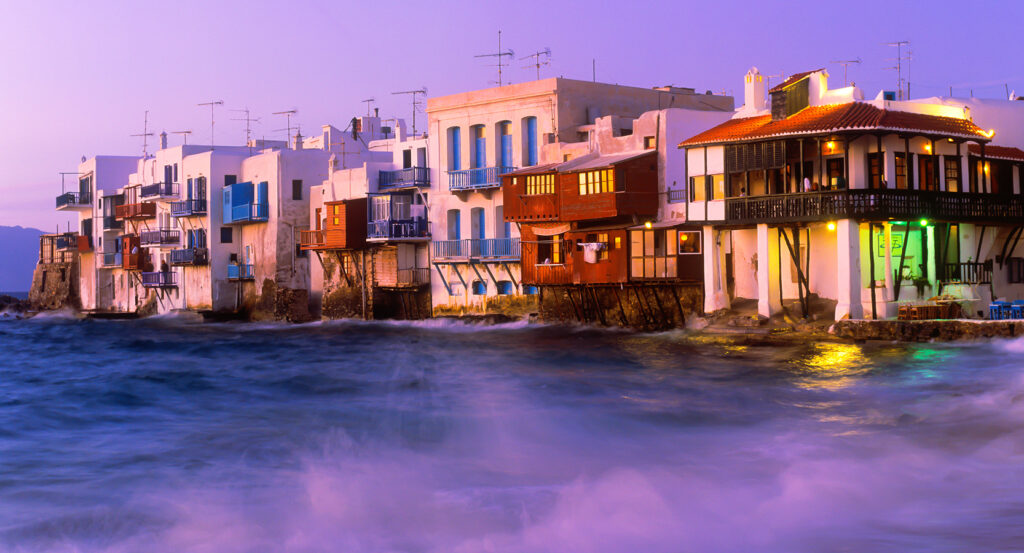
Positioned on Goumenio Square in the pedestrianized center of Mykonos Town, a short walk from the Old Port and the commercial lanes surrounding Matogianni, the restaurant occupies a sheltered neighborhood setting among whitewashed Cycladic buildings, narrow passageways and traditional small businesses. Its understated dining room uses a predominantly white interior to preserve the simplicity associated with older island tavernas. Tables extend into the adjoining square, creating an outdoor dining area integrated with the surrounding pedestrian streets. The compact arrangement encourages interaction between guests and the family operating the restaurant, reinforcing its informal atmosphere. The result is a welcoming neighborhood establishment whose modest architecture, intimate square and traditional hospitality offer a distinctive expression of everyday Mykonian dining.
What defines Armira Mykonos.
Armira Mykonos is best known for introducing a family-operated Greek restaurant to Goumenio Square during a period of considerable expansion in Mykonos's international hospitality industry. The establishment emerged in 2026 as a newcomer to Chora's restaurant scene, developing its reputation through traditional cooking and approachable prices. Its arrival reflected the continuing importance of independent tavernas within a destination increasingly associated with internationally financed restaurants and elaborate beach clubs. The owners developed Armira around a husband-and-wife partnership, establishing a direct relationship between the kitchen and dining room. The husband assumed responsibility for cooking, giving the restaurant a consistent culinary direction grounded in familiar Greek preparations. His wife became the principal presence in the dining room, shaping the hospitality through personal attention and direct interaction with guests. Their complementary responsibilities established the intimate operating structure characteristic of family tavernas throughout the Cyclades. The restaurant's Greek name evokes the salinity of the sea, connecting its culinary character with the maritime environment surrounding Mykonos. Seafood became an important part of its early reputation, attracting particular attention from visitors seeking fresh fish prepared in a traditional Mediterranean manner. Armira developed this emphasis alongside the slow-cooked meat dishes associated with Greek domestic cooking, giving its menu a broader connection to regional food traditions. The kitchen's repertoire includes lamb prepared with potatoes and beef cheek accompanied by pasta, two substantial preparations that demonstrate its commitment to familiar flavors and extended cooking. Its more informal offerings include pork and chicken souvlaki, preserving the accessible character of a neighborhood Greek restaurant. This combination allowed Armira to appeal to diners seeking a complete evening meal and visitors interested in straightforward traditional cooking. The restaurant's pricing became another defining feature of its early reception, with meals generally occupying a more accessible range than those of many prominent Mykonos establishments. By July 2026, international visitor coverage was already describing Armira as a newly opened restaurant distinguished by its food, welcoming service and reasonable prices. Its appearance in regional dining guides during the same season reflected the speed with which the establishment had entered the island's competitive restaurant market. Armira subsequently developed a substantial collection of favorable visitor assessments, strengthening its reputation among travelers exploring Chora's smaller dining establishments. The restaurant's significance rests on this combination of family ownership, traditional culinary knowledge and accessible hospitality, preserving the character of the Greek neighborhood taverna within Mykonos's expanding gastronomic landscape.
How Armira Mykonos fits.
Armira Mykonos works as the culinary culmination of an exploration of Chora's revolutionary history, ancient maritime connections and religious architecture, connecting the island's political achievements with the institutions and monuments that preserve its wider Aegean heritage.
Begin at Manto Mavrogenous Square, the public space near Mykonos's Old Port commemorating one of the Greek War of Independence's most consequential female figures. Born into a wealthy Greek family in 1796, Manto Mavrogenous returned to Mykonos during the revolutionary period and committed substantial personal resources to the struggle against Ottoman rule. She financed ships and armed forces, supporting military operations throughout the Aegean and establishing an important connection between the island and the movement for Greek independence. Her involvement extended to correspondence with European supporters of the Greek cause, strengthening the revolution's international political relationships. The square's commemorative bust preserves her contribution within the public landscape of the island's capital. Continue to Archaeological Museum of Mykonos, the institution overlooking the northern section of the Old Port. Established in 1902, the museum developed to accommodate archaeological discoveries from the neighboring island of Rhenia, where excavations uncovered an extensive ancient burial assemblage. The discoveries originated in the purification of Delos during 425-426 BC, when the Athenians removed graves from the sacred island and transferred their contents to Rhenia. The museum's collections include pottery, funerary objects and sculptures spanning successive periods of Aegean civilization. Particularly significant ceramics illuminate the artistic traditions and commercial relationships that connected Mykonos with the wider ancient Greek world. Conclude at Panagia Paraportiani, the celebrated church complex overlooking the waterfront in the historic Kastro district. Developed through successive building campaigns between the fifteenth and seventeenth centuries, the monument combines five interconnected churches into an extraordinary example of Cycladic religious architecture. Four chapels occupy the lower level, dedicated to Saint Efstathios, the Holy Unmercenaries, Saint Sozon and Saint Anastasia, with a fifth chapel dedicated to the Virgin Mary rising above them. Its irregular arrangement of whitewashed walls, rounded surfaces and compact volumes reflects the gradual development of the structure through generations of local construction. The church's name derives from its position beside a secondary entrance to the island's medieval castle, preserving a connection with the fortified settlement that preceded the expansion of modern Chora. The progression connects Mykonos's contribution to Greek independence with the archaeological heritage of the ancient Aegean and concludes at a monument to the island's distinctive religious architecture.
Where your story begins.
Foresyte Travel reveals places that feel extraordinary long before you arrive.
Enjoy editorial crafted for luxury travelers.




















































































































