Perfect weekend in Croatia.
Dubrovnik's commanding position along the Adriatic coast shaped centuries of maritime commerce, diplomatic independence, and architectural achievement, establishing the city among the most influential trading centers of the medieval Mediterranean. Its origins extend to the early medieval settlement of Ragusa, which developed into a prosperous port through commercial relationships with the Byzantine Empire, the Italian maritime republics, and the Balkan interior. The Treaty of Zadar in 1358 brought Dubrovnik under the sovereignty of the Hungarian-Croatian crown, allowing the city substantial political autonomy and strengthening the institutions of the Republic of Ragusa. Its merchant fleets subsequently connected Mediterranean ports with commercial centers across Europe and the Ottoman Empire, generating wealth through shipping, diplomacy, and international trade. The republic cultivated sophisticated diplomatic relationships with competing powers, securing commercial privileges that supported its independence for centuries. Dubrovnik also developed an influential tradition of civic administration, establishing a public pharmacy in 1317 and a quarantine facility in 1377 to protect maritime commerce from epidemic disease. The earthquake of 1667 devastated much of the city, prompting extensive reconstruction that introduced Baroque architecture into its medieval streetscape. Napoleon's forces ended the republic's independence in 1808, bringing Dubrovnik into a succession of political arrangements that eventually placed it under Habsburg administration. The city's survival through these political transformations left an exceptional concentration of medieval and early modern architecture overlooking the Adriatic Sea.
Dubrovnik's literary and artistic achievements developed through centuries of humanist scholarship, religious patronage, and cultural exchange across the Adriatic. Marin Držić, born in Dubrovnik in 1508, became one of the most influential playwrights of Croatian Renaissance literature, creating comedies that examined social hierarchy, human ambition, and the customs of the republic's urban society. Ivan Gundulić subsequently advanced Croatian Baroque poetry through works including Osman, an epic composition concerned with political conflict and the fortunes of the Ottoman Empire. The Rector's Palace represents the ceremonial architecture of the republic through its combination of Gothic, Renaissance, and Baroque elements, recalling the administrative institutions that governed Dubrovnik's maritime state. The Franciscan monastery houses an important collection of historical manuscripts and religious art, contributing to the preservation of the city's intellectual heritage. The Dubrovnik Summer Festival, established in 1950, developed an international reputation through theatrical productions, classical music, and dance performed within historic courtyards and public spaces. Southern Dalmatian cuisine draws upon Adriatic seafood, olive oil, regional wines, and agricultural produce cultivated along the coast and neighboring islands. Traditional preparations include black risotto, fresh oysters from Mali Ston, grilled fish, and slow-cooked meats associated with the surrounding countryside. A perfect weekend in Dubrovnik brings together the maritime achievements, architectural heritage, literary traditions, and coastal gastronomy of one of the Adriatic's most historically consequential cities.
Three day itinerary.
Day 1: Old Town
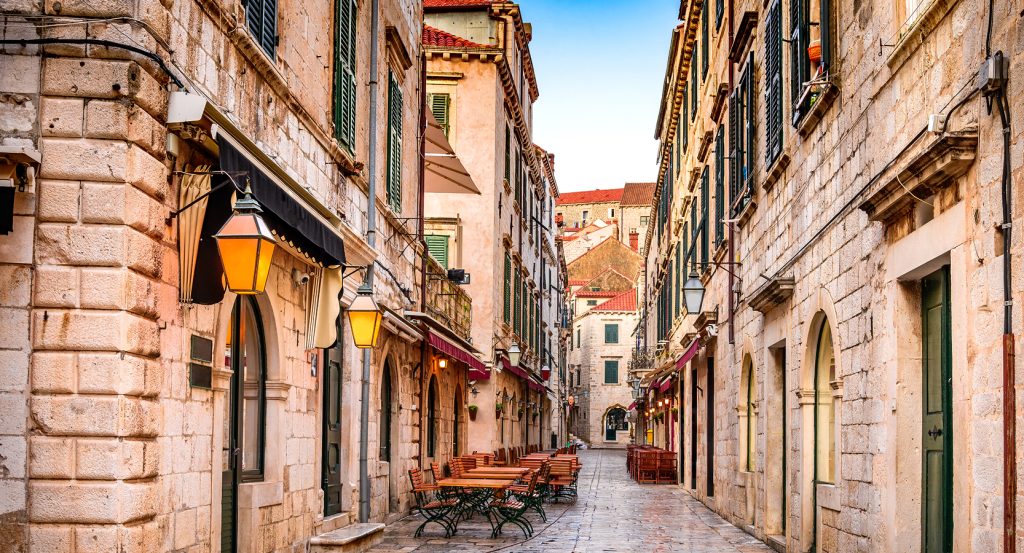
Old Town is best known for preserving the urban core of the former Republic of Ragusa within an extraordinary system of stone fortifications on the Adriatic coast. Ragusa developed into a powerful maritime republic whose merchant fleet, diplomacy, and commercial networks connected the eastern Mediterranean with European markets. The Stradun became the principal civic axis through a city organized around churches, monasteries, palaces, fountains, warehouses, and government buildings constructed from pale limestone. A catastrophic earthquake in 1667 destroyed large portions of Dubrovnik and prompted extensive rebuilding that gave many streets their Baroque architectural character. Rector's Palace, Sponza Palace, the Franciscan complex, and the city's expansive gates preserve institutions central to Ragusan political and commercial life. The surviving urban ensemble captures centuries of maritime wealth, civic independence, diplomacy, and Adriatic architecture.
Day 1: Restaurant 360
Restaurant 360 is best known for Marijo Curić's technically ambitious interpretation of Dubrovnik and Mediterranean cooking within the fortifications of the historic city. Curić was born and raised in Dubrovnik and developed his career through European kitchens associated with chefs including Philip Howard, Marcus Wareing, and Enrico Bartolini. French technique provides the structural foundation for preparations shaped by Adriatic seafood, regional ingredients, fermentation, precise sauces, and contemporary cooking methods. The restaurant occupies terraces incorporated directly into Dubrovnik's medieval walls beside St. John Fortress, joining the kitchen physically to the defensive architecture surrounding the Old Port. Restaurant 360 earned Dubrovnik's first MICHELIN star in 2018, establishing a new international benchmark for fine dining within the city.
Day 2: Dubrovnik City Walls
Dubrovnik City Walls are best known for forming one of Europe's most complete surviving fortified urban systems around the historic Republic of Ragusa. Successive construction campaigns between the medieval and early modern periods strengthened the circuit as Dubrovnik defended its political independence and maritime wealth against powerful neighboring states. Stone walls, bastions, towers, gates, and detached fortifications created overlapping defensive positions across both landward and maritime approaches. Engineers expanded and modernized the system as artillery altered warfare, producing massive masonry works adapted to cannon defense. The walls survived the 1667 earthquake and later military conflicts, including shelling during the Croatian War of Independence. Their continuous circuit preserves the physical scale of the defensive investment that protected a small republic whose diplomatic and commercial influence extended far beyond its territory.
Day 2: Fish Restaurant Proto
Fish Restaurant Proto is best known for carrying Dubrovnik's longstanding seafood tradition into one of the historic center's most established restaurant institutions. Its culinary foundation lies in fish and shellfish from the Adriatic, connecting the kitchen directly to the maritime environment that sustained Dubrovnik's economy and food culture for centuries. Preparations center on the natural character of seafood through grilling, roasting, sauces, olive oil, vegetables, and techniques rooted in Dalmatian coastal cooking. The restaurant's position inside the Old Town embeds this cuisine within the former commercial center of the Republic of Ragusa, where maritime exchange shaped both prosperity and everyday foodways. Proto Fish occupies a distinctive place in Dubrovnik dining through its sustained concentration on the Adriatic products most closely connected to the city's geographic identity.
Day 2: Tvrđava Minčeta
Tvrđava Minčeta is best known for dominating the northern defenses of Dubrovnik through the highest and most imposing strongpoint in the city-wall system. An earlier square tower occupied the site before fifteenth-century military pressures prompted substantial reinforcement of Dubrovnik's landward fortifications. Florentine architect Michelozzo di Bartolomeo Michelozzi contributed to its transformation, and Juraj Dalmatinac subsequently completed the expansive circular form. Thick masonry, a broad base, elevated firing positions, and commanding sightlines reflected the growing importance of artillery in late medieval defensive engineering. Its position above the city gave defenders control over vulnerable approaches from the north and created a powerful architectural statement of Ragusan security. The tower's massive profile became the culminating vertical element of the fortifications that protected Dubrovnik's independence.
Day 2: Restaurant Pjerin
Restaurant Pjerin is best known for refined Mediterranean cooking shaped by Dubrovnik's coastal geography and the culinary traditions of southern Dalmatia. The restaurant occupies Villa Dubrovnik on the rocky shoreline southeast of the Old Town, establishing a direct physical relationship with the Adriatic and the fortified city across the water. Seafood, vegetables, herbs, olive oil, meats, and regional ingredients provide the foundation for compositions developed through precise contemporary technique. Its culinary focus draws directly from the agricultural and maritime products historically associated with Croatia's southern coast. Pjerin's combination of disciplined cooking and Adriatic regionality places it among Dubrovnik's strongest expressions of contemporary Mediterranean gastronomy.
Day 3: Stara Loza
Stara Loza is best known for bringing contemporary Mediterranean cooking into a historic stone setting along Prijeko Street within Dubrovnik's Old Town. The restaurant operates within the Prijeko Palace complex, embedding its dining spaces in the dense masonry fabric that developed behind the Stradun. Adriatic ingredients, seasonal produce, seafood, eggs, breads, and Mediterranean preparations support a format extending naturally into the morning and daytime hours. Rooftop dining introduces a vertical perspective across Dubrovnik's terracotta roofs and surrounding fortifications, connecting the restaurant closely to the architectural character of the historic center. Stara Loza combines the rhythms of a Croatian coastal breakfast with the urban fabric of the former Ragusan capital, giving the itinerary a distinctly Dubrovnik-specific morning institution.
Day 3: Lovrjenac Fortress
Lovrjenac Fortress is best known for commanding Dubrovnik's western maritime approach from a sheer rock promontory outside the city walls. Ragusan authorities developed the fortress at a strategically critical position overlooking both the Adriatic and the entrance toward the fortified city. Its irregular triangular plan follows the contours of the rock, with exceptionally thick seaward walls engineered to withstand naval attack. The inscription above its entrance, Non bene pro toto libertas venditur auro, declares that liberty is not sold for all the gold in the world, encapsulating the political philosophy of a republic that guarded its independence through diplomacy and defensive strength. Lovrijenac became one of the clearest architectural expressions of Dubrovnik's determination to control the approaches to its harbor and preserve its sovereignty.
Day 3: Dubrovnik Cable Car
Dubrovnik Cable Car is best known for linking the historic city with Mount Srđ, the strategic summit that rises immediately above Dubrovnik and the Adriatic. The original cable-car system opened in 1969, creating a direct ascent from the city toward the mountain that dominates its inland geography. Mount Srđ acquired profound significance during the Croatian War of Independence when fighting around its summit formed part of the defense of Dubrovnik during the 1991 siege. Fort Imperial, constructed during the Napoleonic era, occupies the ridge and later became associated with that modern conflict. Reconstruction restored cable-car service in 2010, reconnecting the city with a summit whose panoramic geography reveals Dubrovnik's walls, Lokrum, the Adriatic coastline, and the mountainous terrain that has shaped the city's military history.
Day 3: Nautika
Nautika is best known for Mediterranean seafood served at Pile directly beneath the western fortifications of Dubrovnik. The restaurant occupies the former Dubrovnik School of Maritime Studies, connecting its dining rooms to a site associated with the city's seafaring tradition since the nineteenth century. Adriatic fish and shellfish form the culinary foundation, with lobster from Vis and products from Croatian waters reinforcing the maritime geography surrounding the restaurant. Its terraces face Fort Lovrijenac and Bokar Fortress across the small inlet outside Pile Gate, creating an unusually direct relationship between dining and Dubrovnik's defensive architecture. Nautika's combination of maritime history, Adriatic cooking, and exceptional physical placement gives it genuine destination significance beyond conventional luxury dining.
Where your story begins.
Foresyte Travel reveals places that feel extraordinary long before you arrive.
Enjoy editorial crafted for luxury travelers.
Foresyte may earn a commission when you book.