Perfect weekend in Mumbai, India.
Mumbai's emergence as India's financial and commercial capital unfolded through centuries of maritime trade, colonial expansion, industrial enterprise, and migration from across the Indian subcontinent. Situated on the Arabian Sea along India's western coast, the metropolis developed from an archipelago of seven islands whose natural harbor provided access to commercial routes connecting South Asia with the Persian Gulf, East Africa, and Europe. Indigenous Koli fishing communities established settlements along the surrounding coastline, sustaining maritime traditions that preceded European colonization by centuries. The islands subsequently formed part of several regional kingdoms, including territories governed by the Silhara dynasty and the Gujarat Sultanate. Portuguese authorities acquired Bombay in 1534, introducing Catholic religious institutions and strengthening commercial connections with their Indian Ocean possessions. The islands passed to the English Crown in 1661 as part of the marriage arrangements between Charles II and Catherine of Braganza, before their transfer to the English East India Company in 1668. Bombay subsequently developed into an important colonial trading port, supported by shipbuilding, cotton commerce, and the expansion of British maritime interests. The Hornby Vellard project, initiated during the eighteenth century, contributed to the reclamation of tidal areas separating the original islands, establishing the foundations of the modern peninsula. The opening of India's first passenger railway between Bombay and Thane in 1853 accelerated industrial growth, followed by the expansion of cotton mills and commercial enterprises during the nineteenth century. Bombay became a center of Indian nationalism, hosting the first session of the Indian National Congress in 1885 and the launch of the Quit India Movement in 1942. Following Indian independence in 1947, the city continued its expansion as a center of finance, manufacturing, entertainment, and international commerce, adopting the official name Mumbai in 1995.
Indian cinema, literature, theater, and visual art acquired substantial international influence through Mumbai's creative institutions and the generations of artists who established their careers in the city. The Hindi-language film industry developed during the early twentieth century, with Dadasaheb Phalke's Raja Harishchandra, released in 1913, representing a foundational achievement in Indian feature filmmaking. Mumbai subsequently became the principal center of Hindi commercial cinema, supporting studios, performers, composers, and filmmakers whose productions reached audiences throughout South Asia and across the world. The Prithvi Theatre, established in 1978 by Shashi Kapoor and Jennifer Kapoor, contributed to the development of contemporary Indian theater through performances, workshops, and independent dramatic productions. The Chhatrapati Shivaji Maharaj Vastu Sangrahalaya, originally established as the Prince of Wales Museum of Western India, houses extensive collections of Indian sculpture, miniature painting, decorative arts, and archaeological objects. Mumbai's visual arts community also includes the Progressive Artists' Group, founded in 1947 by painters including F. N. Souza, M. F. Husain, and S. H. Raza, whose experiments contributed to the development of modern Indian painting. The city's literary history includes writers such as Salman Rushdie and Rohinton Mistry, whose novels explore the social complexity, political upheavals, and personal histories associated with metropolitan India. Mumbai's culinary traditions draw upon the coastal cooking of Maharashtra, the vegetarian practices of Gujarati communities, Parsi cuisine, and the diverse regional foods introduced through migration. Traditional specialties include vada pav, pav bhaji, misal pav, and Bombay duck, a fish associated with the region's longstanding seafood traditions. Parsi preparations such as dhansak and patrani machhi contribute further depth, accompanied by the distinctive street foods and regional dishes of the city's commercial neighborhoods. Contemporary Mumbai restaurants have expanded these foundations through seasonal Indian ingredients, regional culinary research, and innovative interpretations of traditional cooking. A weekend in Mumbai connects centuries of Indian Ocean commerce, extraordinary architectural traditions, influential cinema and literature, and the culinary diversity of India's western metropolis.
Three day itinerary.
Day 1: Marine Drive
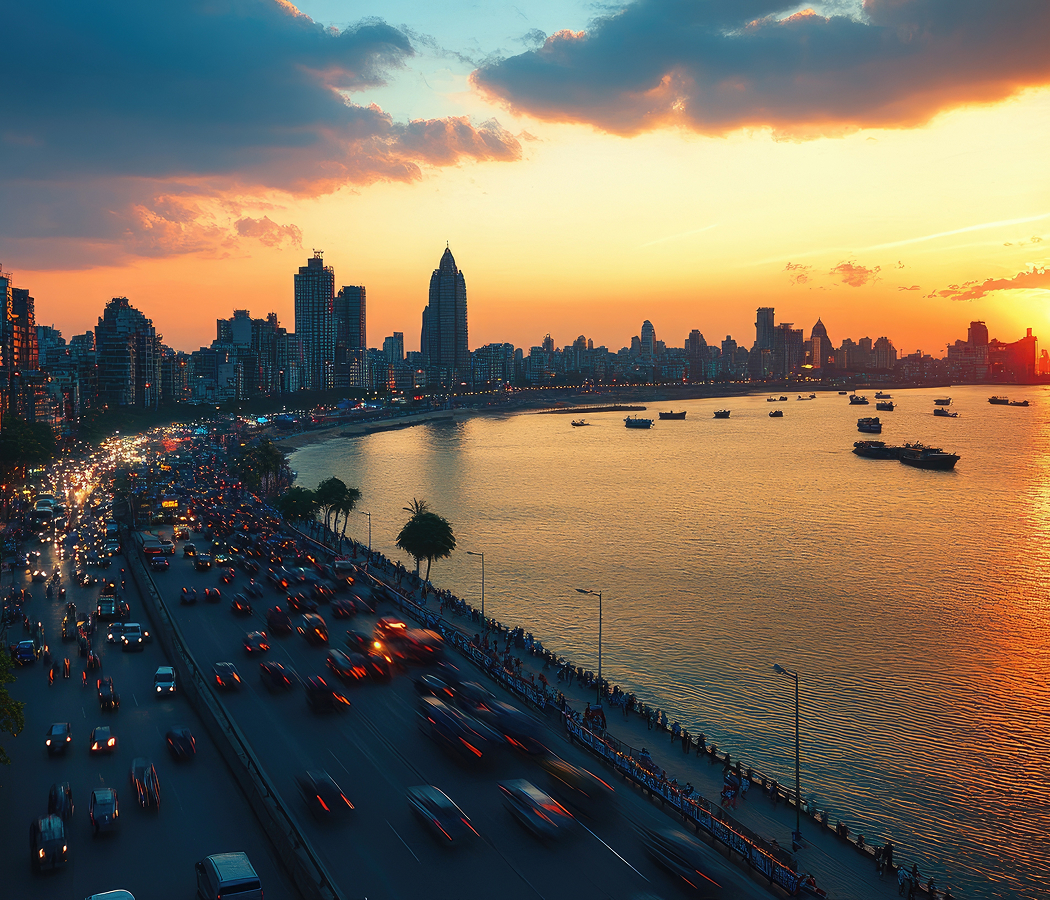
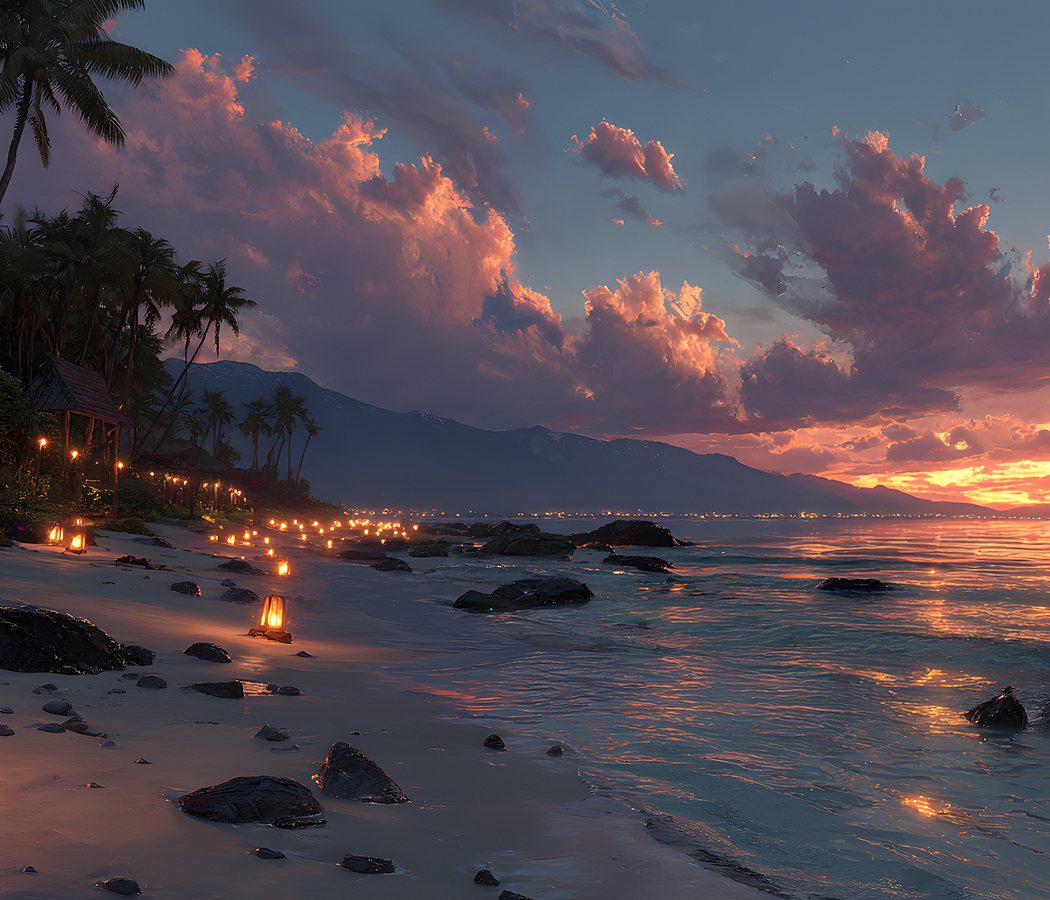
Marine Drive is best known for sweeping along Mumbai's Back Bay in a broad arc of reclaimed shoreline lined by one of the world's great concentrations of Art Deco architecture. Development accelerated during the interwar decades as reclamation pushed the city westward and created valuable frontage beside the Arabian Sea. Apartment buildings, cinemas, hotels, and clubs adopted streamlined facades, rounded balconies, geometric ornament, and nautical motifs associated with Bombay's distinctive interpretation of Art Deco. The promenade extends between Nariman Point and the Girgaon Chowpatty area, binding the southern business district to older residential neighborhoods farther north. Its illuminated curve produced the enduring Queen's Necklace association. Marine Drive captures the period when Bombay translated commercial prosperity, reclamation engineering, modern architecture, and coastal geography into a new metropolitan waterfront.
Day 1: Masque
Masque is best known for advancing modern Indian tasting-menu cuisine through an ingredient-led exploration of the subcontinent's regional products and culinary traditions. Entrepreneur Aditi Dugar founded the restaurant with chef Prateek Sadhu in a former textile mill in Mahalaxmi, connecting its physical setting with Mumbai's industrial history. The kitchen subsequently developed around extensive ingredient research, preservation, fermentation, regional sourcing, and multicourse compositions built from Indian products. Varun Totlani later assumed culinary leadership and extended that foundation through a deeply personal engagement with regional Indian food. The converted mill gives the restaurant a scale and architectural character distinct from conventional luxury-hotel dining. Masque reached number 15 on Asia's 50 Best Restaurants for 2026, placing it at the summit of Mumbai's contemporary tasting-menu culture.
Day 2: Gateway of India Mumbai
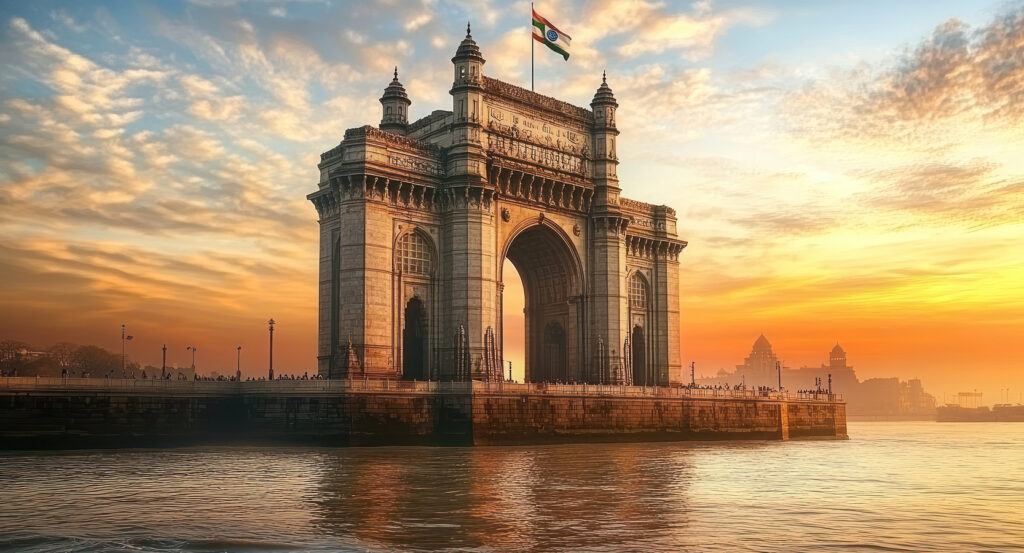
Gateway of India Mumbai is best known for monumentalizing Bombay's colonial maritime entrance through a basalt arch facing the harbor at Apollo Bunder. George Wittet designed the structure after the 1911 visit of King George V and Queen Mary, combining Indo-Saracenic architecture with forms derived from regional Gujarati traditions. Its foundation stone was laid in 1911, the final design received approval in 1914, and construction concluded in 1924. The monument subsequently functioned as a ceremonial point of arrival for British officials entering India by sea. History reversed its symbolism after independence when the last British troops departed through the waterfront in 1948. The Gateway occupies an unusual position in Mumbai, embodying both the ceremonial architecture of empire and the physical departure of British colonial power.
Day 2: Trishna
Trishna is best known for establishing Mangalorean coastal seafood as one of Mumbai's defining restaurant traditions. The kitchen is best known for India's western coastline, where crab, prawns, fish, coconut, chilies, spices, and regional preparations produce food of exceptional intensity. Butter-pepper-garlic crab became the restaurant's defining preparation, combining the richness of shellfish with a sauce powerful enough to become synonymous with the institution itself. Its location in the Fort and Kala Ghoda area embeds the restaurant within South Mumbai's historic commercial and cultural core. Decades of specialization have allowed seafood to remain the central subject of the kitchen. Trishna gives this lunch a distinctly western India character closely connected with Mumbai's maritime geography.
Day 2: Elephanta Caves
Elephanta Caves is best known for an extraordinary group of rock-cut temples whose expansive sculpture transformed a basalt island in Mumbai Harbour into one of India's great surviving centers of Shaivite art. The principal cave developed during the early medieval period around a vast pillared hall dedicated to Shiva. Sculptural panels represent manifestations and episodes associated with the deity, integrating religious theology directly into the architecture excavated from living rock. The colossal three-faced image commonly associated with Sadashiva dominates the sanctuary through a composition expressing multiple aspects of divine power. Portuguese occupation later brought damage to portions of the complex after the island entered European control. UNESCO inscribed Elephanta Caves as a World Heritage Site in 1987, recognizing an artistic achievement whose scale and iconography transcend its island setting.
Day 2: The Bombay Canteen
The Bombay Canteen is best known for recasting regional Indian cooking through a restaurant conceived around the diversity of the country's ingredients, communities, and domestic food traditions. Sameer Seth, Yash Bhanage, and chef Floyd Cardoz created the restaurant in Lower Parel, placing it within a former textile-mill district central to Mumbai's industrial development. Cardoz brought decades of culinary experience in India and New York to a project that treated familiar Indian dishes as material for inventive contemporary cooking. Regional vegetables, seafood, meats, grains, chutneys, breads, spices, and preserved ingredients allow the kitchen to move across the subcontinent without losing its Indian center of gravity. Subsequent culinary leadership extended that founding premise across changing menus and generations of cooks. The Bombay Canteen became one of the restaurants most responsible for redefining ambitious Indian dining in modern Mumbai.
Day 3: The Table
The Table is best known for helping introduce farm-driven cooking and a sophisticated small-plates format to Mumbai after Gauri Devidayal and Jay Yousuf established the restaurant in 2011. Produce from its own farm in Alibaug strengthened a direct relationship between the kitchen and the agricultural ingredients underlying its globally influenced cooking. Seafood, vegetables, eggs, breads, pasta, meat, and seasonal produce move through a repertoire shaped by European, American, and Asian techniques. A long Burma teak communal table anchors the Colaba dining room and gives the restaurant its physical and conceptual center. Sunday service developed into one of Mumbai's strongest à la carte brunches, preserving the kitchen's ingredient discipline in a daytime format. The Table ranked second among Mumbai restaurants in the 2026 Condé Nast Traveller x District awards.
Day 3: Chhatrapati Shivaji Terminus
Chhatrapati Shivaji Terminus is best known for transforming railway infrastructure into one of nineteenth-century Bombay's greatest architectural statements. Frederick William Stevens designed the terminus for the Great Indian Peninsula Railway, combining Victorian Gothic Revival planning with Indian architectural forms, carving, domes, turrets, pointed arches, and extensive sculptural decoration. The building emerged as Bombay's railway network expanded the movement of people and goods between the port city and the Indian interior. Its central dome, axial composition, elaborate stonework, and expansive facade turned a transportation hub into an expression of the city's commercial power. The terminus subsequently became inseparable from Mumbai's enormous suburban railway system. UNESCO World Heritage status recognizes an architectural synthesis created at the intersection of industrial transportation, colonial Bombay, and Indian craftsmanship.
Day 3: Shree Siddhivinayak Temple
Shree Siddhivinayak Temple is best known as one of Mumbai's most important centers of devotion to Ganesha, the Hindu deity associated with wisdom, prosperity, and the removal of obstacles. The temple originated in Prabhadevi in 1801 through the patronage of Deubai Patil and Laxman Vithu. Its central image depicts Siddhivinayak with the trunk curving to the right, a form carrying particular ritual significance within Ganesha worship. Expansion transformed the original modest shrine as the temple attracted worshippers from across Mumbai and beyond. Tuesday devotion became especially associated with large congregations seeking blessings from Siddhivinayak. Political leaders, film figures, athletes, businesspeople, and families have participated in the same devotional culture, giving the institution extraordinary visibility across social boundaries. Siddhivinayak Temple demonstrates the continuing force of religious practice within Mumbai's intensely modern metropolitan life.
Day 3: Indian Accent
Indian Accent is best known for translating India's regional food traditions through the modern culinary approach developed by chef Manish Mehrotra. The restaurant extends a project that reshaped contemporary Indian fine dining by placing familiar flavors, street foods, regional dishes, and nostalgic references inside meticulously constructed courses. Chaat, breads, lentils, meats, seafood, pickles, spices, and classical preparations supply recognizable Indian foundations before technique alters their form and presentation. Mehrotra's work established a model of modern Indian cooking whose sophistication derives from the depth of the underlying culinary traditions. The Mumbai restaurant occupies the Nita Mukesh Ambani Cultural Centre in Bandra Kurla Complex, linking the project with one of the city's major new cultural developments. Indian Accent gives the final dinner an explicitly Indian culinary thesis at a level appropriate to Mumbai's premier itinerary.
Where your story begins.
Foresyte Travel reveals places that feel extraordinary long before you arrive.
Enjoy editorial crafted for luxury travelers.
Foresyte may earn a commission when you book.