Why the Gateway of India matters.
Gateway of India Mumbai is an Indo-Saracenic ceremonial arch where Colaba's colonial waterfront heritage meets the British monarchy's imperial ambitions, the maritime history of Bombay Harbour and the symbolic departure of British troops following India's independence.
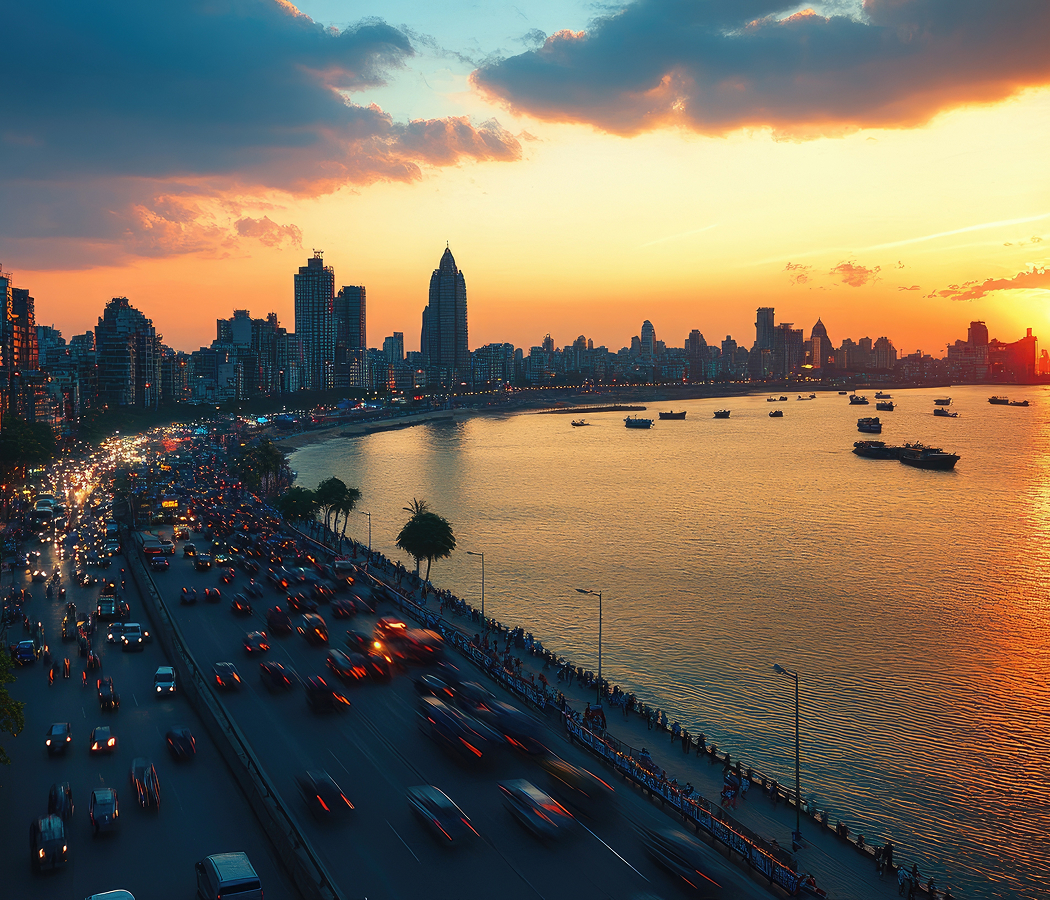
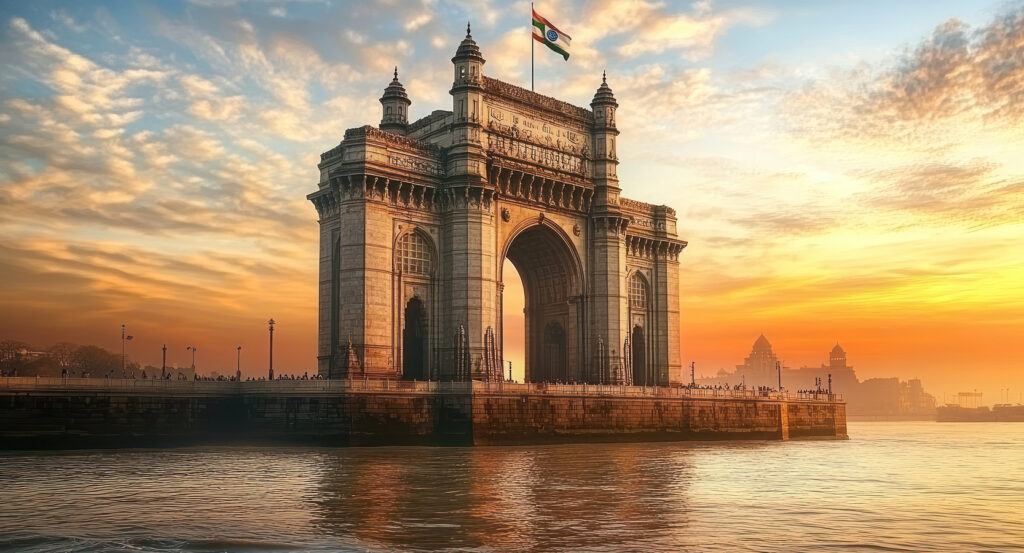
Set along Apollo Bunder near Chhatrapati Shivaji Maharaj Marg and directly opposite the Taj Mahal Palace Hotel, the monument occupies a waterfront plaza on Mumbai's eastern shoreline, overlooking the harbour between the historic streets of Colaba and the shipping channels extending toward Elephanta Island. Its basalt arch rises above a broad stone platform, with domed turrets and carved ornamentation defining the symmetrical composition. Steps descend toward the water, connecting the ceremonial structure with the harbour's maritime approaches. The surrounding plaza accommodates pedestrian circulation, public gatherings and passenger embarkation for excursions across the bay. The result is a waterfront monument whose architecture and geographical position preserve the ceremonial ambitions of British Bombay and the historical transition to Indian independence.
What defines the Gateway of India.
Gateway of India Mumbai is best known for commemorating the 1911 visit of King George V and Queen Mary to Bombay, its Indo-Saracenic architecture and its association with the departure of British military forces following Indian independence. The royal couple arrived in Bombay on December 2, 1911, during their journey to attend the Delhi Durbar, where George V was formally proclaimed Emperor of India. Their arrival generated plans for a ceremonial waterfront structure that would commemorate the visit and establish a formal entrance to the colonial port. The Government of Bombay approved the project, selecting Apollo Bunder as the site because of its established role in receiving passengers arriving by sea. Scottish architect George Wittet developed the design, drawing upon Indo-Islamic architectural precedents and elements associated with the expansive gateways of Gujarat. The foundation stone was laid on March 31, 1913, by Sir George Sydenham Clarke, Governor of Bombay. Construction required the preparation of the waterfront site and the development of foundations capable of supporting the substantial stone structure. Wittet's design incorporated a central arch, flanking halls and decorative elements intended to communicate imperial authority through a synthesis of Indian architectural forms. Building work proceeded during the First World War and the subsequent years of political and economic change across British India. The structure was completed in 1924, and its formal inauguration took place on December 4 of that year under Viceroy Rufus Isaacs, Earl of Reading. The monument became a principal ceremonial arrival point for governors, officials and distinguished passengers entering Bombay Harbour. During the independence movement, its association with British imperial authority acquired a changing political significance. India achieved independence on August 15, 1947, ending nearly two centuries of British colonial dominance over substantial portions of the subcontinent. On February 28, 1948, the First Battalion of the Somerset Light Infantry departed through the gateway during a ceremonial withdrawal, marking the departure of the last British Army unit from India. The event transformed the monument's public significance, connecting its original imperial purpose with the conclusion of British military rule.
George Wittet's architectural composition combines a central horseshoe arch with domed corner turrets, projecting balconies and ornamental stonework derived from Indian architectural traditions. The structure rises 26 meters above its base, establishing a substantial vertical presence along the waterfront. Its principal building material is yellow basalt, with reinforced-concrete elements incorporated into the construction. The central arch measures 15 meters in diameter, creating a broad opening framed by carved stone surfaces. Decorative latticework, projecting cornices and sculptural details contribute to the monument's Indo-Saracenic character. Four turrets frame the composition, each capped by a small dome that reinforces the symmetry of the principal elevation. The central dome incorporates an architectural form associated with Islamic and regional Indian building traditions. Interior passages and flanking halls establish a ceremonial arrangement around the main archway. The monument's inscriptions commemorate the royal visit, preserving the original purpose of the commission within its architectural fabric. Its waterfront platform establishes a direct relationship between the structure and the harbour, recalling the arrival of passengers by ship before the expansion of modern aviation. Stone steps descend toward the water, connecting the elevated plaza with the marine landing area. Passenger ferries operate from the adjoining waterfront, providing transport to destinations across Mumbai Harbour. The surrounding paved plaza contains open gathering areas that allow the monument to be viewed from multiple directions. Its western approach connects with the historic streets of Colaba, where colonial-era commercial buildings preserve the urban setting associated with the former port. The gateway's architectural form remains closely associated with the visual history of Mumbai, linking ceremonial colonial construction with the maritime geography of the city's eastern shoreline.
How the Gateway of India fits.
Gateway of India Mumbai works as the maritime and historical centerpiece for a Colaba itinerary connecting the city's colonial-era hospitality, Indo-Saracenic architectural development and the religious heritage of the islands surrounding Bombay Harbour.
Begin at Taj Mahal Palace Hotel, the historic waterfront property overlooking Apollo Bunder. Commissioned by industrialist Jamsetji Tata, the hotel opened in 1903 and became an important institution within Bombay's expanding commercial and social life. Its architectural composition combines Indo-Saracenic, Renaissance and other European influences, with a substantial central dome rising above the harbour-facing façade. The property developed as a destination for international travelers, business leaders and political figures during the twentieth century. Its interiors contain decorative craftsmanship associated with the hotel's early construction and successive periods of renovation. The building preserves the relationship between Bombay's maritime commerce and the development of international hospitality. Continue to Chhatrapati Shivaji Maharaj Vastu Sangrahalaya, the museum originally established as the Prince of Wales Museum of Western India. Founded in 1905, the institution occupies a substantial building designed by George Wittet and completed in 1914. Its architectural composition incorporates a central dome, arcaded galleries and decorative elements derived from Indian and Islamic building traditions. The museum's collections include Indian sculpture, miniature paintings, decorative arts, archaeological objects and natural history specimens. Its galleries present material associated with the artistic and cultural development of the Indian subcontinent. The surrounding gardens preserve an important landscaped setting within the dense commercial environment of South Mumbai. Conclude at Elephanta Caves, the rock-cut temple complex situated on Elephanta Island in Mumbai Harbour. The principal caves were excavated between the fifth and eighth centuries, developing as a major center of Hindu religious sculpture associated with Shiva. The Great Cave contains substantial carved pillars, shrine chambers and sculptural panels depicting episodes from Shaivite mythology. Its three-faced Trimurti sculpture represents a major achievement of early medieval Indian religious art. Portuguese colonial authorities subsequently gave the island its European name, derived from a large stone elephant discovered near the landing area. UNESCO inscribed the caves on the World Heritage List in 1987, recognizing their artistic and historical importance. The progression moves from colonial waterfront hospitality through Indian museum collections and culminates in early medieval religious sculpture, connecting Gateway of India Mumbai with the maritime and cultural history of Bombay Harbour.
Where your story begins.
Foresyte Travel reveals places that feel extraordinary long before you arrive.
Enjoy editorial crafted for luxury travelers.
Foresyte may earn a commission when you book.