Why the Elephanta Caves matters.
Elephanta Caves is a rock-cut Shaivite temple complex where Gharapuri Island's maritime heritage meets the religious patronage of early medieval western India, the sculptural traditions of Hinduism and the architectural transformation of basalt cliffs into sacred ceremonial spaces.
Set within the forested hills of Gharapuri Island in Mumbai Harbour, ten kilometers east of the Gateway of India, the cave complex occupies an elevated basalt outcrop above the island's western landing area, overlooking the waterways separating Mumbai's eastern shoreline from the mainland. A long stairway climbs from the waterfront through a wooded slope toward the principal excavations. Rock-cut entrances open into pillared halls, with sculptural panels and shrine chambers carved directly into the volcanic stone. Smaller caves and archaeological remains occupy adjoining sections of the hillside. The result is an island sanctuary whose architecture, religious imagery and maritime setting preserve a major achievement of early medieval Indian sculpture.
What defines the Elephanta Caves.
Elephanta Caves is best known for its expansive Hindu sculptures dedicated to Shiva, its rock-cut temple architecture and its inscription on the UNESCO World Heritage List in 1987. Gharapuri Island occupies a strategic position within Mumbai Harbour, a coastal region connected with maritime trade and political activity across western India. Archaeological remains indicate occupation during the early centuries of the Common Era, preceding the construction of the surviving temple complex. The principal Hindu excavations developed during the sixth century, when regional dynasties competed for influence over the western Deccan and Konkan coast. The precise political patronage of the principal cave remains disputed, with scholarly interpretations associating its construction with the Kalachuris and other regional powers. Its sculptural program belongs to the development of expansive Shaivite art during a period when Hindu temple architecture was expanding across the subcontinent. Craftsmen excavated the basalt hillside to create a substantial interior hall supported by columns carved from the surrounding rock. Sculptural panels were integrated into the architectural arrangement, presenting Shiva through multiple divine forms and episodes from Hindu mythology. The island subsequently passed through periods of changing political authority as regional kingdoms and maritime powers competed for control of the surrounding coastline. Portuguese forces established control over the region during the sixteenth century and gave the island the name Elephanta after encountering a large stone elephant near the shoreline. The sculpture was later removed from the island and eventually transferred to the grounds of the Bhau Daji Lad Museum in Mumbai. Portuguese occupation and subsequent centuries of exposure contributed to damage affecting portions of the caves' sculptural decoration. British colonial administrators and antiquarians developed increasing interest in the site during the nineteenth century, encouraging efforts to protect its surviving carvings. Following Indian independence, the Archaeological Survey of India assumed responsibility for the conservation of the monument. UNESCO recognition established the caves' international importance as an exceptional surviving ensemble of early medieval Hindu religious sculpture.
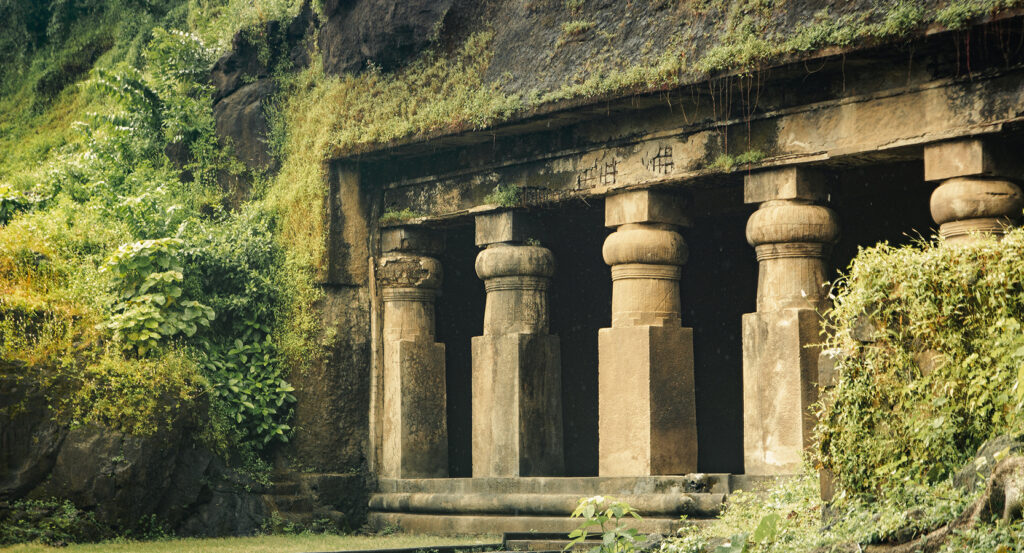
The Great Cave contains a substantial pillared hall whose architectural arrangement organizes worship around a central shrine dedicated to Shiva. Its principal entrance leads into an excavated chamber supported by rows of columns with carved capitals and substantial stone bases. The central sanctuary contains a Shiva linga, approached through entrances guarded by expansive sculpted figures. The surrounding walls contain large relief panels presenting episodes from Shaivite mythology and different manifestations of the deity. The most prominent sculpture is the three-faced Trimurti, a colossal bust six meters high representing aspects of Shiva's divine nature. Its central face conveys serenity, with adjoining profiles presenting contrasting expressions associated with the deity's complex theological character. The Gangadhara panel depicts Shiva receiving the descent of the Ganges, accompanied by Parvati and celestial figures. The Ardhanarishvara sculpture presents Shiva and Parvati united within a single form, expressing the relationship between masculine and feminine divine principles. The Nataraja panel portrays Shiva as the cosmic dancer, surrounded by figures participating in the divine performance. A substantial relief depicting the marriage of Shiva and Parvati incorporates ceremonial figures and architectural details associated with Hindu religious imagery. The Ravananugraha composition presents Ravana attempting to lift Mount Kailash, with Shiva and Parvati positioned above the demon king. Sculptors developed these compositions through variations in depth, projecting figures and carefully modeled surfaces within the excavated stone. The cave's columns and shrine entrances establish spatial divisions between ceremonial circulation, sculptural contemplation and worship. Smaller Hindu caves contain additional excavated chambers and architectural remains, extending the religious complex across the hillside. Buddhist remains elsewhere on the island preserve evidence of additional religious activity within the broader archaeological landscape. The ensemble's artistic importance rests in the integration of expansive sculpture, architectural space and Shaivite religious imagery within a single basalt excavation.
How the Elephanta Caves fits.
Elephanta Caves works as the archaeological centerpiece for a Mumbai Harbour itinerary connecting colonial maritime architecture, early medieval religious sculpture and the historical development of western India's coastal trading networks.
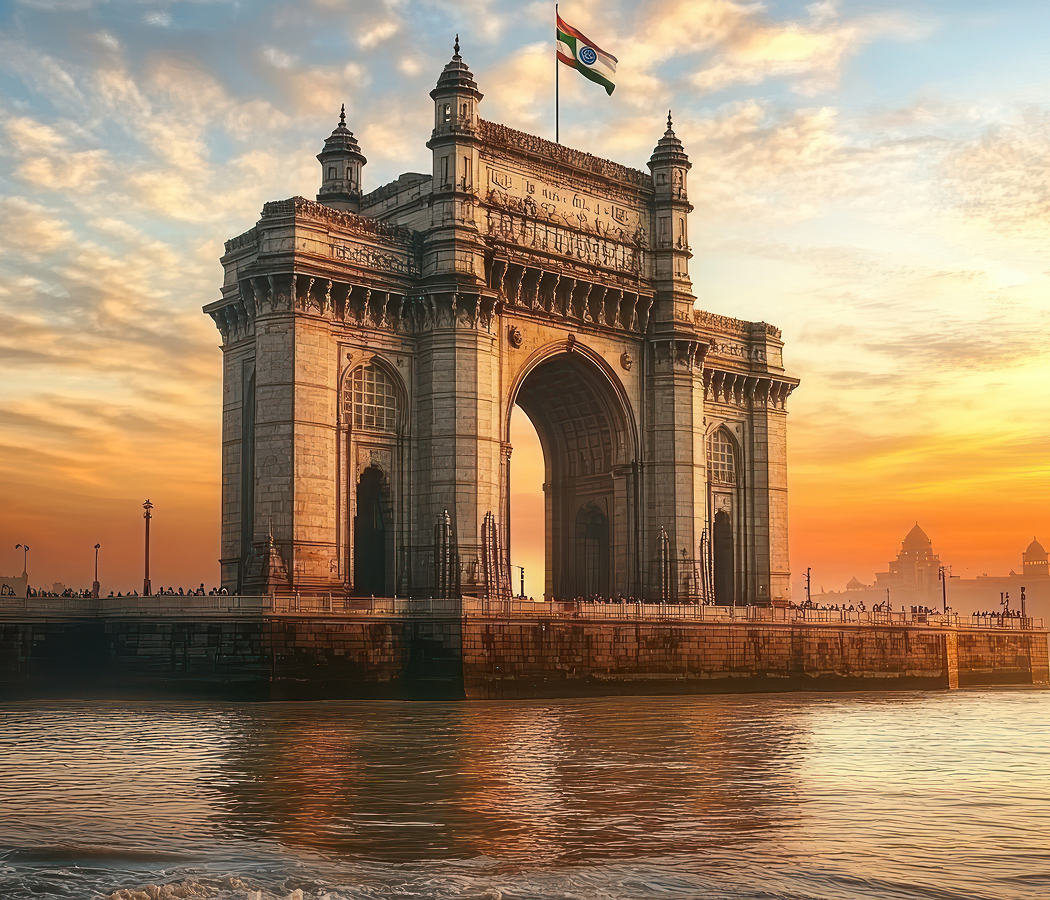
Begin at Gateway of India Mumbai, the ceremonial waterfront arch situated at Apollo Bunder in Colaba. Designed by Scottish architect George Wittet, the monument commemorates the 1911 visit of King George V and Queen Mary to Bombay. Its foundation stone was laid in 1913, and the structure was inaugurated in 1924. The Indo-Saracenic design incorporates a central arch, domed turrets and ornamental stonework constructed principally from yellow basalt. Its position beside the harbour established a formal maritime entrance to the colonial city. Passenger ferries departing from the adjoining waterfront provide the principal public connection to Gharapuri Island. Continue to Chhatrapati Shivaji Maharaj Vastu Sangrahalaya, the museum situated near the eastern waterfront of South Mumbai. Established in 1905 as the Prince of Wales Museum of Western India, the institution occupies a building designed by George Wittet and completed in 1914. Its central dome and arcaded galleries incorporate architectural elements associated with Indo-Saracenic design. The museum's collections include Indian sculpture, archaeological objects, miniature paintings and decorative arts representing different historical periods. Its archaeological galleries provide context for the religious sculpture and artistic traditions associated with early medieval western India. The surrounding gardens preserve a landscaped setting within the historic urban district. Conclude at Dr. Bhau Daji Lad Museum, the municipal museum situated within the Veermata Jijabai Bhosale Botanical Garden and Zoo in Byculla. Established in 1855, the institution developed as Bombay's principal museum devoted to the decorative and industrial arts. Its surviving Victorian building opened in 1872, incorporating cast-iron architectural elements and ornamental interiors associated with nineteenth-century exhibition design. The collections include historical photographs, maps, models and objects connected with Mumbai's urban and commercial development. The museum grounds contain the stone elephant sculpture originally associated with Gharapuri Island, preserving a direct connection with the island's later naming history. The progression moves from colonial maritime architecture through Indian archaeological collections and culminates in the preservation of an artifact associated with the island itself, connecting Elephanta Caves with the historical and cultural development of Mumbai Harbour.
Where your story begins.
Foresyte Travel reveals places that feel extraordinary long before you arrive.
Enjoy editorial crafted for luxury travelers.
Foresyte may earn a commission when you book.