Perfect weekend in Busan, South Korea.
Busan's history spans ancient Korean kingdoms, maritime commerce, Japanese colonial rule, and the Korean War, during which the southeastern port became a crucial refuge and temporary capital of the Republic of Korea. Situated along the Korea Strait at the southeastern extremity of the Korean Peninsula, the city extends across a dramatic coastal landscape of mountainous ridges, sheltered harbors, river estuaries, and densely settled valleys. Archaeological discoveries throughout the Nakdong River basin reveal extensive prehistoric settlement, including communities associated with fishing, agriculture, and early metalworking. During the Three Kingdoms period, the surrounding region formed part of the Gaya confederacy before its incorporation into the Silla Kingdom during the sixth century. The port developed through maritime exchanges connecting the Korean Peninsula with Japan, China, and other parts of East Asia. During the Joseon dynasty, Busan became an important center of regulated trade with Japan, particularly through the establishment of the waegwan, a designated Japanese trading settlement. The Treaty of Ganghwa in 1876 opened Busan to expanded international commerce, accelerating the construction of modern port facilities and the arrival of foreign merchants. Japanese colonial rule from 1910 to 1945 brought extensive industrial development, railway construction, and changes to the city's waterfront. Following Korea's liberation, Busan became a principal destination for refugees displaced by political instability and the division of the peninsula. The outbreak of the Korean War in 1950 transformed the city into a strategic center of military logistics and civilian survival. Busan served as South Korea's provisional capital during much of the conflict, accommodating government institutions and enormous numbers of displaced families. Postwar industrialization accelerated the expansion of shipbuilding, manufacturing, fisheries, and international shipping, establishing Busan as South Korea's principal commercial port. The 2002 Asian Games and the city's expanding international film industry subsequently strengthened its position as a major center of commerce, recreation, and contemporary Korean culture.
Korean cinema, literature, performing arts, and regional food culture have acquired international prominence through Busan's position as a maritime gateway and a center of postwar creative production. The Busan International Film Festival, established in 1996, became one of Asia's most influential cinematic gatherings, providing an important platform for Korean filmmakers and emerging directors throughout the region. Its development contributed to the international expansion of South Korean cinema, particularly during the period when directors such as Park Chan-wook, Bong Joon-ho, and Hong Sang-soo attracted growing attention beyond Korea. The Busan Cinema Center, designed by the Austrian architectural firm Coop Himmelb(l)au and completed in 2011, introduced an ambitious contemporary performance complex distinguished by its extensive cantilevered roof and outdoor screening facilities. Busan's literary history includes novelist Kim Jeong-han, whose writing examined rural communities, social injustice, and the experiences of ordinary Koreans during periods of political upheaval. The city's wartime history also contributed to the development of artistic communities, as displaced writers, painters, and musicians gathered in Busan during the early 1950s. The Busan Museum of Art supports the region's visual arts through exhibitions devoted to Korean modernism, contemporary artistic production, and international exchange. Traditional Korean performing arts retain a significant presence through pansori, percussion ensembles, and regional folk music associated with the southeastern provinces. Busan's culinary traditions developed through its fisheries, maritime commerce, and the agricultural resources of Gyeongsang Province. The city's celebrated dwaeji gukbap, a pork and rice soup, became closely associated with the postwar period, when inexpensive, nourishing meals supported displaced families and industrial workers. Other regional specialties include milmyeon, wheat noodles served in chilled broth; eomuk, fish cakes prepared from seasoned seafood paste; and ssiat hotteok, sweet pancakes filled with seeds, nuts, and brown sugar. The surrounding coastal waters contribute mackerel, anchovies, shellfish, and other seafood that support traditional markets and restaurant kitchens. Busan's contemporary dining establishments extend these foundations through Korean barbecue, refined seafood preparations, and international culinary techniques. A weekend in Busan connects the maritime history of the Korean Peninsula, the resilience of its postwar communities, the achievements of contemporary Korean cinema, and the distinctive food traditions of South Korea's southeastern coast.
Three day itinerary.
Day 1: Gamcheon Culture Village
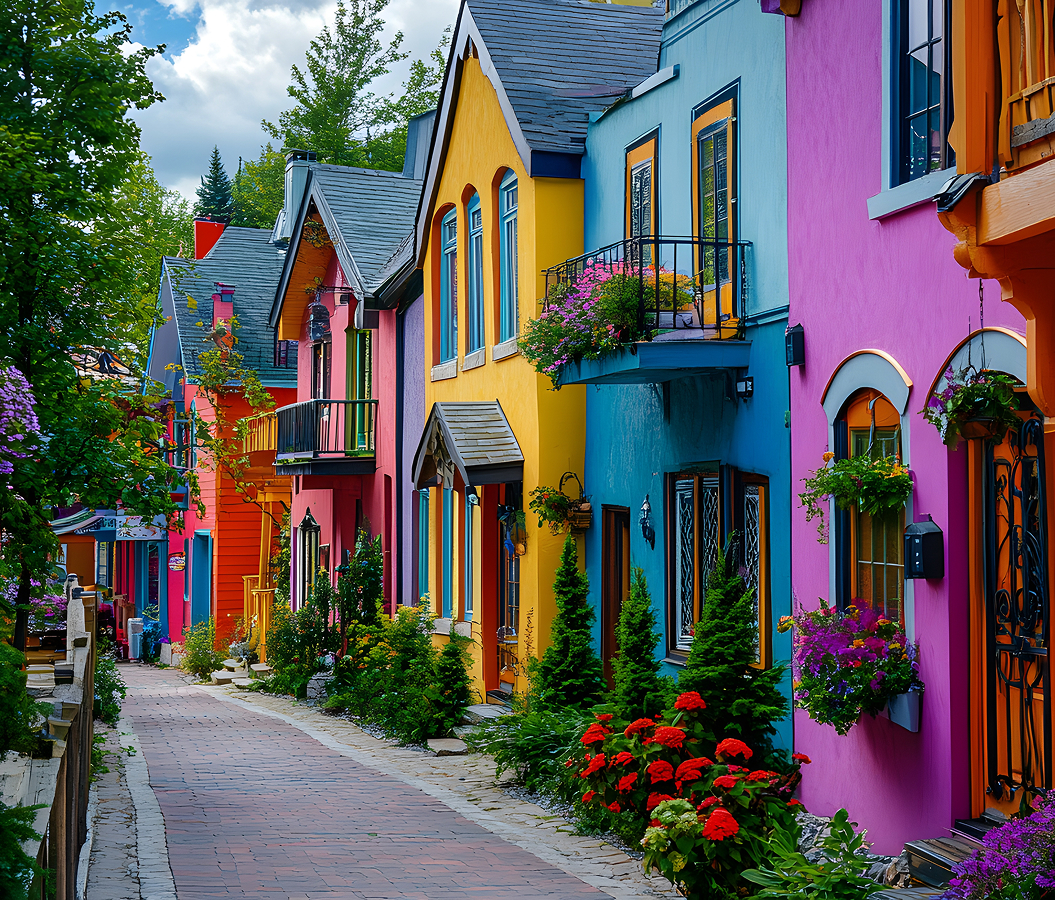
Gamcheon Culture Village is best known for its extraordinary hillside architecture, vividly painted residential buildings, and transformation from a Korean War refugee settlement into one of Busan's most distinctive cultural districts. The neighborhood developed substantially during the 1950s as displaced families sought shelter in Busan, which served as the provisional capital of South Korea during much of the Korean War. Members of the Taegukdo religious community subsequently established a significant presence on the steep slopes overlooking the city's southwestern districts. Houses were constructed in dense terraces along narrow pedestrian lanes, producing a distinctive urban arrangement shaped by the mountainous terrain and limited availability of residential land. The neighborhood's architectural character reflects the resourcefulness of communities rebuilding their lives during a period of profound national upheaval. A major cultural regeneration initiative launched in 2009 introduced public artworks, colorful murals, sculptural installations, and community exhibition spaces throughout the settlement. Its celebrated hillside viewpoints reveal an intricate landscape of brightly colored rooftops, winding staircases, and residential buildings descending toward the surrounding valleys. Gamcheon Culture Village represents an exceptional example of Korean urban heritage through its preservation of postwar settlement history and its transformation into a nationally significant center of community-based art.
Day 1: Baekhwa Yanggopchang
Baekhwa Yanggopchang is best known for its traditional Korean grilled beef intestines and its longstanding association with Busan's distinctive charcoal-grilling culture. Located in the Nampo-dong commercial district, the restaurant specializes in yanggopchang, a regional preparation centered on carefully cleaned and seasoned portions of beef tripe and intestines cooked over intense heat. The cooking process develops a crisp exterior and a rich interior texture, complemented by garlic, vegetables, and sauces associated with southeastern Korean barbecue traditions. Busan's grilled-intestine culture developed through the city's working-class food economy, particularly in commercial neighborhoods shaped by port activity, markets, and postwar migration. The restaurant's intimate grilling stations preserve the communal dining traditions associated with Korean barbecue establishments, where individual portions are prepared directly before diners. Baekhwa Yanggopchang represents an important expression of Busan's regional food heritage through its concentration on traditional offal preparations and the city's established charcoal-grilling culture.
Day 2: Haedong Yonggungsa Temple
Haedong Yonggungsa Temple is best known for its extraordinary seaside setting and its distinctive integration of Korean Buddhist architecture with the rocky coastline of the East Sea. Situated along the northeastern shoreline of Busan, the temple occupies a dramatic landscape of granite formations, steep coastal pathways, and religious structures overlooking the surrounding ocean. Its origins are traditionally associated with the Buddhist monk Naong Hyegeun, who established a temple at the site in 1376 during the Goryeo dynasty. The complex underwent substantial reconstruction during the twentieth century, preserving its association with the spiritual traditions of Korean coastal Buddhism. Its architectural ensemble incorporates ornate prayer halls, stone pagodas, guardian sculptures, and elaborately decorated shrines arranged along the natural contours of the shoreline. A grand staircase descends toward the principal sanctuary, establishing a ceremonial approach framed by coastal vegetation and expansive maritime views. The temple's religious traditions include devotion to Avalokiteshvara, the bodhisattva associated with compassion, whose worship has longstanding significance within Korean Buddhism. Haedong Yonggungsa Temple represents one of South Korea's most distinctive sacred landscapes through its combination of Buddhist religious heritage, elaborate architecture, and exceptional coastal geography.
Day 2: Geumsubokguk Haeundae
Geumsubokguk Haeundae is best known for its traditional Korean pufferfish soup and its preservation of a distinctive seafood specialty associated with Busan's maritime culinary heritage. Established in 1970, the restaurant developed a reputation for carefully prepared bokguk, a clear broth featuring pufferfish, vegetables, and aromatic seasonings. Pufferfish preparation requires specialized knowledge because certain organs contain tetrodotoxin, a powerful neurotoxin, making professional handling essential to the culinary tradition. The restaurant's principal soup emphasizes the delicate flavor and firm texture of the fish through a restrained broth that incorporates radish, bean sprouts, and carefully balanced seasonings. Spicier variations introduce red pepper and additional aromatics, reflecting the diversity of Korean seafood soup preparations. The restaurant's longstanding presence in Haeundae connects its culinary character with Busan's development as a major coastal dining destination. Geumsubokguk Haeundae represents an established institution in Korean seafood gastronomy through its specialization in traditional pufferfish preparations and its relationship with the fishing culture of southeastern Korea.
Day 2: Haeundae Blueline Park
Haeundae Blueline Park is best known for its striking coastal railway, colorful elevated Sky Capsules, and panoramic views along Busan's eastern shoreline. Developed along a former railway corridor, the attraction follows the coastline between Mipo, Cheongsapo, and Songjeong, connecting distinctive seaside communities through a carefully adapted transportation landscape. The original railway formed part of the Donghae Nambu Line, whose historical development strengthened transportation connections along Korea's southeastern coast. Following the relocation of conventional railway services, the coastal corridor was transformed into a recreational route that preserves elements of its transportation heritage. The Haeundae Beach Train travels along the shoreline, passing rocky headlands, fishing settlements, and expansive views of the East Sea. The elevated Sky Capsules operate along a separate section between Mipo and Cheongsapo, introducing compact individual vehicles whose colorful design has become closely associated with contemporary Busan tourism. The route's coastal geography reveals the relationship between the city's mountainous terrain, maritime communities, and modern resort development. Haeundae Blueline Park represents an inventive achievement in urban regeneration through its transformation of historic railway infrastructure into a distinctive coastal transportation attraction.
Day 2: Dining Room at Park Hyatt Busan
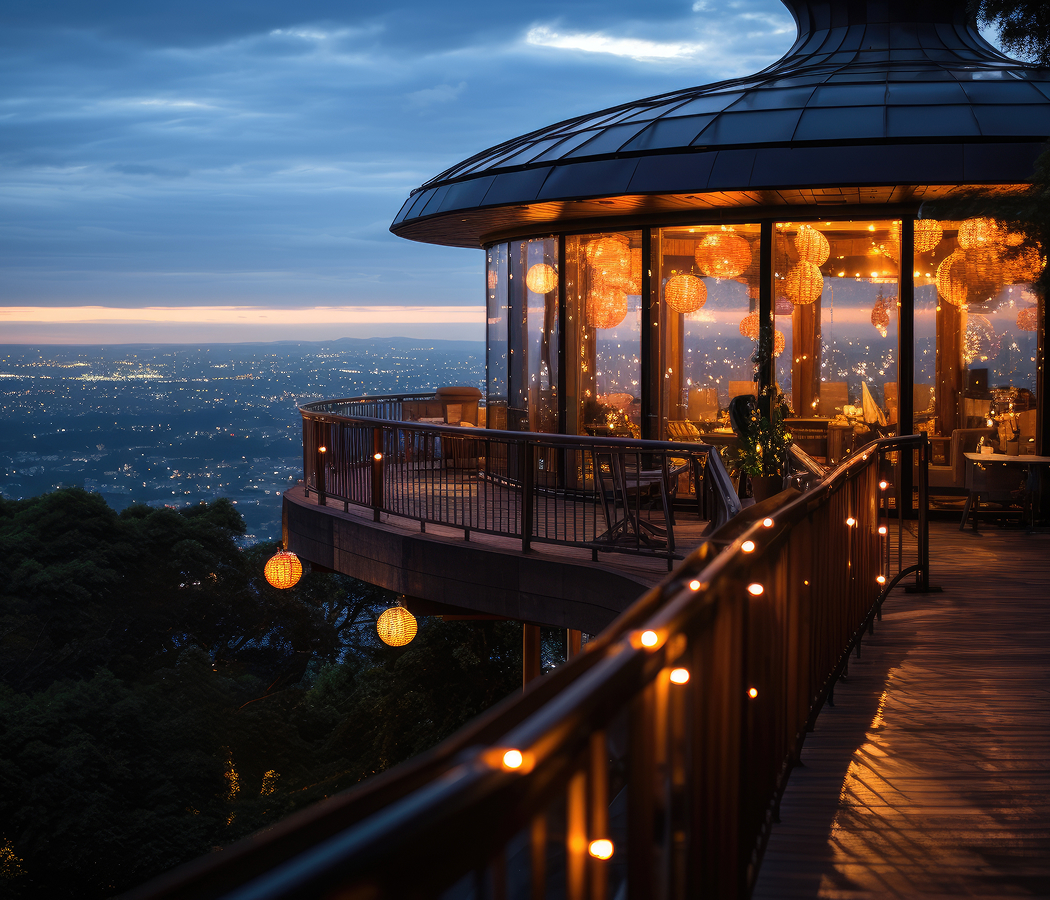
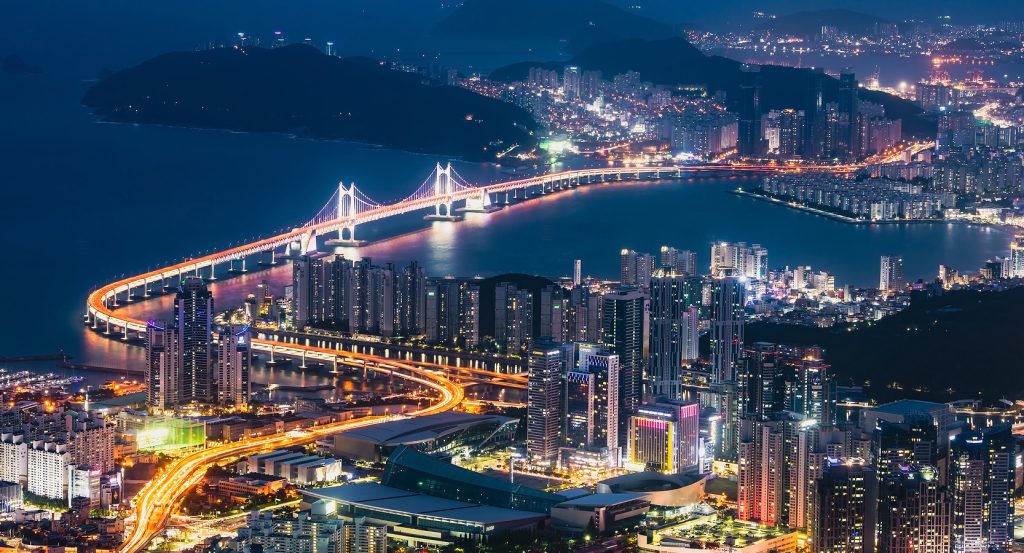
Dining Room at Park Hyatt Busan is best known for its refined steak and seafood cuisine and its exceptional panoramic setting overlooking the waterfront architecture of Marine City. Located within Park Hyatt Busan, the restaurant occupies an elevated dining space distinguished by expansive windows framing the surrounding coastline, yacht marina, and Gwangan Bridge. Its culinary program emphasizes premium grilled meats, fresh seafood, seasonal vegetables, and contemporary preparations informed by classical Western cooking techniques. The restaurant's open kitchen and carefully designed interior reflect the architectural sophistication associated with Busan's modern luxury hospitality industry. Marine City's dramatic concentration of residential towers and waterfront developments emerged through the transformation of Haeundae into one of South Korea's most prominent coastal urban districts. The restaurant's setting establishes a distinctive relationship between contemporary fine dining and the illuminated skyline of Busan's eastern waterfront. Dining Room at Park Hyatt Busan represents an established expression of international luxury gastronomy through its concentration on premium ingredients and exceptional maritime urban scenery.
Day 3: OPS Bakery Haeundae
OPS Bakery Haeundae is best known for its longstanding contribution to Busan's artisan baking culture and its distinctive selection of Korean and European-inspired pastries. Founded in Busan in 1989, OPS developed into one of the city's most recognizable independent bakery institutions through its concentration on carefully prepared breads, cakes, and traditional confectionery. Its celebrated hakwonjeon, a sweet baked specialty associated with the bakery's heritage, reflects the adaptation of European pastry techniques to Korean tastes and ingredients. The bakery's broader repertoire incorporates soft breads, cream-filled pastries, savory baked goods, and seasonal sweets shaped by contemporary Korean café traditions. Busan's bakery culture developed through the influence of international trade, urban commercial expansion, and the growing popularity of Western-style confectionery during the twentieth century. OPS preserves an important relationship between established neighborhood baking traditions and the city's contemporary café culture. OPS Bakery Haeundae represents a distinctive expression of Busan's independent culinary heritage through its longstanding craftsmanship and influential contribution to regional pastry culture.
Day 3: Beomeosa Temple
Beomeosa Temple is best known for its exceptional Korean Buddhist architecture, ancient religious heritage, and secluded mountain setting on the slopes of Geumjeongsan. Founded in 678 during the reign of King Munmu of the Silla dynasty, the temple became one of the most important Buddhist institutions in southeastern Korea. Its foundation is associated with the monk Uisang, whose religious activities contributed to the development of the Hwaeom school of Korean Buddhism. The temple's name refers to the legend of a golden fish descending from heaven into a mountain well, establishing a sacred association with the surrounding landscape. The complex suffered extensive destruction during the Japanese invasions of Korea in the late sixteenth century, prompting major reconstruction during the subsequent Joseon period. Its surviving architectural ensemble incorporates elaborately decorated wooden halls, traditional tiled roofs, stone pagodas, and ceremonial gateways reflecting centuries of Korean Buddhist craftsmanship. The celebrated Jogyemun Gate, supported by distinctive stone pillars, exemplifies the architectural refinement of traditional Korean temple entrances. Beomeosa Temple represents one of South Korea's most consequential mountain monasteries through its Silla-period origins, exceptional architectural heritage, and enduring religious significance.
Day 3: Gwangalli Beach
Gwangalli Beach is best known for its sweeping urban shoreline and extraordinary views of Gwangan Bridge, whose illuminated suspension structure forms one of Busan's most recognizable nighttime panoramas. Extending along the southern coastline of the Suyeong district, the beach occupies a broad crescent facing the waters of Gwangalli Bay. Its surrounding neighborhood developed into a major recreational and cultural district through the expansion of waterfront cafés, restaurants, residential buildings, and public coastal infrastructure. Gwangan Bridge, completed in 2002, extends 7.4 kilometers across the surrounding maritime corridor, connecting important districts of eastern Busan through a grand engineering structure. The bridge's elaborate nighttime lighting program transformed the surrounding waterfront into one of the city's principal evening destinations. Gwangalli also became associated with large-scale public events, including performances and festivals that draw substantial crowds to the shoreline. The beach's distinctive urban character reflects Busan's development as a major international port city whose contemporary architecture maintains a close relationship with its maritime geography. Gwangalli Beach represents a defining expression of modern Busan through its combination of coastal recreation, grand bridge engineering, and illuminated metropolitan scenery.
Day 3: Eonyang Bulgogi Busanjip
Eonyang Bulgogi Busanjip is best known for its traditional Korean grilled beef and its interpretation of the distinctive Eonyang bulgogi preparation associated with southeastern Korea. The dish originated in the Eonyang region near Ulsan, where cattle farming and established meat-processing traditions contributed to the development of a celebrated regional beef cuisine. Unlike the thinly sliced, heavily marinated bulgogi associated with other Korean regions, Eonyang-style preparations emphasize finely chopped or carefully arranged beef cooked over charcoal to develop a concentrated grilled flavor. The restaurant's culinary program preserves the relationship between premium beef, restrained seasoning, and traditional Korean barbecue techniques. Its dining format reflects the communal character of Korean grilled-meat culture, incorporating shared dishes and accompaniments that complement the richness of the principal preparation. Eonyang Bulgogi Busanjip represents an important expression of southeastern Korean meat cookery through its concentration on regional beef traditions and established charcoal-grilling methods.
Where your story begins.
Foresyte Travel reveals places that feel extraordinary long before you arrive.
Enjoy editorial crafted for luxury travelers.
Foresyte may earn a commission when you book.