Perfect weekend in South Carolina.
Hilton Head's history stretches from the Indigenous civilizations of the southeastern Atlantic coast through European colonial settlement, the American Civil War, and the twentieth-century transformation of South Carolina's Lowcountry into a celebrated coastal destination. Situated between the Atlantic Ocean and the tidal waterways of Port Royal Sound, the island forms part of the Sea Islands, a chain of barrier islands characterized by salt marshes, maritime forests, tidal creeks, and broad sandy shorelines. Indigenous communities inhabited the region for thousands of years, with the ancestors of the Escamacu and other coastal peoples developing settlements supported by fishing, shellfish harvesting, and agriculture. The Sea Pines Shell Ring, constructed 4,000 years ago, preserves evidence of ceremonial and communal activity associated with the island's earliest inhabitants. English explorer William Hilton encountered the island in 1663 during a voyage along the Carolina coast, and its name subsequently became associated with his expedition. British colonial settlement expanded during the eighteenth century, when plantations devoted to indigo, rice, and Sea Island cotton transformed the surrounding Lowcountry economy through the labor of enslaved Africans. Their agricultural knowledge, craftsmanship, and cultural traditions contributed to the development of the Gullah communities that became central to the region's history. Union forces captured Hilton Head following the Battle of Port Royal in November 1861, establishing an important military base during the Civil War. The island became associated with the Port Royal Experiment, an early effort to establish education, paid labor, and greater economic independence among formerly enslaved people. Mitchelville, established in 1862, developed into one of the first self-governing communities of formerly enslaved African Americans in the United States. Following the war, fishing, farming, timber production, and small-scale agriculture supported the island's residents for generations. The opening of the James F. Byrnes Bridge in 1956 accelerated connections to the mainland, preceding Charles Fraser's development of a master-planned resort community that emphasized landscape conservation and architectural integration with the island's maritime environment.
South Carolinian Gullah traditions form an essential part of Hilton Head's cultural history, connecting the descendants of enslaved West and Central Africans with distinctive practices in language, music, religion, craftsmanship, and food. Gullah communities developed throughout the Sea Islands during the plantation era, maintaining African linguistic and cultural influences through generations of relative geographical isolation and close community relationships. The Gullah language developed from English and several West and Central African languages, becoming an important means of preserving oral histories, religious expression, and communal knowledge. The annual Gullah Celebration on Hilton Head brings attention to these traditions through music, storytelling, visual arts, and historical programming. Sweetgrass basket weaving, practiced throughout the South Carolina Lowcountry, preserves techniques with deep West African roots, using natural grasses and palmetto leaves to produce intricately coiled baskets. The region's musical history includes spirituals, praise-house singing, and rhythmic traditions associated with African American religious communities. Nearby Beaufort contributed to the broader development of Lowcountry literature and historical scholarship, including the work of novelist Pat Conroy, whose writing explored family relationships, regional history, and the landscapes of coastal South Carolina. The island's culinary foundations developed through tidal fisheries, rice cultivation, coastal agriculture, and the cooking traditions of Gullah families. Shrimp, blue crab, oysters, flounder, and local fish became central ingredients in preparations shaped by the surrounding estuaries. Traditional specialties include shrimp and grits, she-crab soup, Lowcountry boil, red rice, and okra-based dishes whose ingredients and preparation methods preserve connections to African and European culinary influences. Carolina Gold rice played a significant role in the plantation economy and subsequently became associated with the preservation of heirloom grains and traditional southern cooking. The surrounding coastal farms contribute seasonal produce, including tomatoes, field peas, collard greens, and sweet potatoes, supporting restaurants devoted to regional ingredients. Hilton Head's contemporary dining culture incorporates these traditions alongside French techniques, modern American cooking, and seafood preparations influenced by the Atlantic coast. A weekend on Hilton Head connects the extraordinary history of the Gullah people, the maritime traditions of the Sea Islands, and the natural beauty of South Carolina's salt marshes and coastal forests.
Three day itinerary.
Day 1: Harbour Town Lighthouse
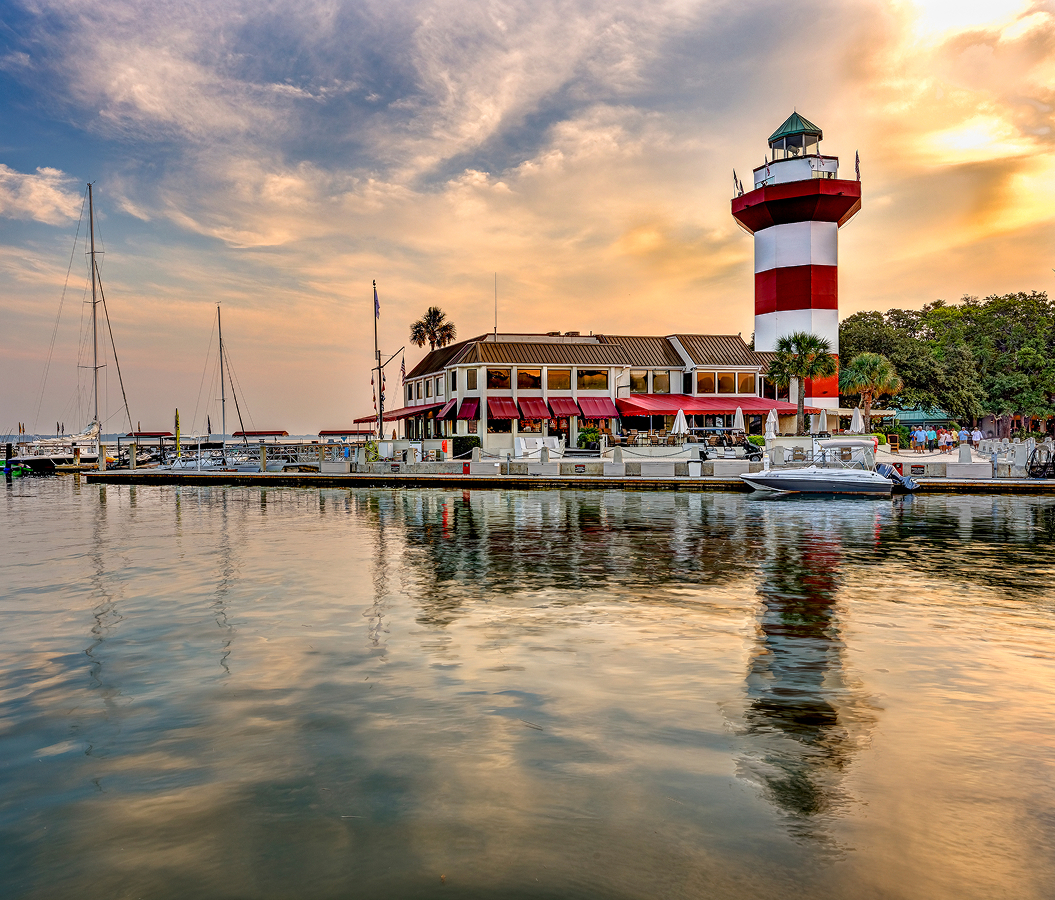
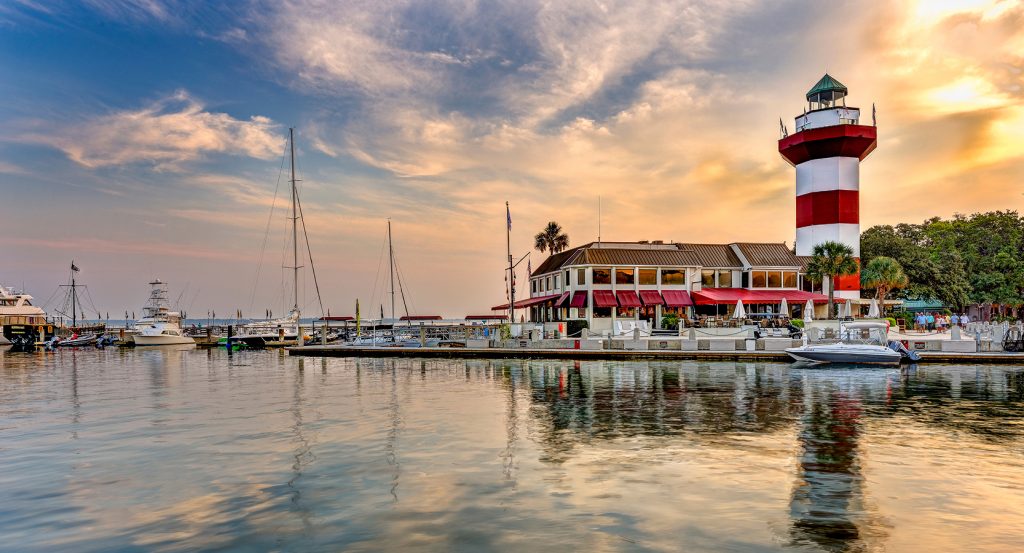
Harbour Town Lighthouse is best known for its distinctive red-and-white striped tower overlooking the Calibogue Sound and its central role in establishing Hilton Head as an internationally recognized resort destination. Developer Charles E. Fraser commissioned the lighthouse as part of his ambitious transformation of Sea Pines Plantation into a master-planned coastal community. Completed in 1970, the 90-foot tower became the architectural centerpiece of Harbour Town, a waterfront village designed around a yacht basin, pedestrian pathways, and carefully integrated commercial buildings. Fraser's development philosophy emphasized the preservation of maritime forests, coastal wetlands, and the island's natural topography, establishing a model for environmentally sensitive resort planning. The lighthouse's observation deck provides expansive views across the yacht basin, Calibogue Sound, and the surrounding Lowcountry waterways. Harbour Town subsequently became closely associated with the PGA Tour's Heritage golf tournament, first contested at Harbour Town Golf Links in 1969. The surrounding marina developed into one of Hilton Head's principal recreational centers, connecting the island's maritime traditions with its modern tourism economy. Harbour Town Lighthouse represents the defining architectural symbol of Hilton Head's transformation from a sparsely developed coastal landscape into a major American resort destination.
Day 1: CQ's Restaurant
CQ’s Restaurant is best known for its longstanding association with Harbour Town's dining culture and its refined interpretation of Lowcountry cuisine within a historic coastal setting. Established in 1973, the restaurant developed alongside the expansion of Sea Pines as Hilton Head emerged into a major resort destination. Its culinary character emphasizes fresh seafood, carefully prepared meats, seasonal vegetables, and traditional Southern ingredients shaped by the agricultural and maritime heritage of coastal South Carolina. Regional preparations reflect the influence of shrimping, fishing, rice cultivation, and the culinary traditions that developed throughout the surrounding Sea Islands. The restaurant's intimate dining rooms incorporate timber architectural elements, traditional furnishings, and decorative references to the Lowcountry's historic coastal residences. Its position within Harbour Town connects the restaurant with the marina district established through Charles Fraser's influential resort development. CQ's represents an enduring institution in Hilton Head's culinary history through its concentration on regional ingredients and its longstanding relationship with the island's early resort culture.
Day 2: Coastal Discovery Museum
Coastal Discovery Museum is best known for its interpretation of Hilton Head's natural history, Gullah Geechee cultural heritage, and the distinctive ecology of South Carolina's Lowcountry. Established in 1985, the museum developed into an important educational institution devoted to the environmental and cultural history of the surrounding Sea Islands. Its principal campus occupies the historic Honey Horn property, a 68-acre landscape incorporating maritime forests, salt marshes, open fields, and surviving agricultural structures. The property's history reflects successive periods of plantation agriculture, rural settlement, and coastal land use that shaped Hilton Head before its transformation into a resort community. The museum's exhibitions explore the region's maritime ecosystems, native wildlife, traditional crafts, and the cultural contributions of Gullah Geechee communities descended from enslaved West and Central Africans. Historic buildings and preserved landscape features illuminate the relationship between agriculture, coastal geography, and local social history. Coastal Discovery Museum represents an essential institution for understanding Hilton Head's development through its preservation of the natural and cultural heritage of the South Carolina Sea Islands.
Day 2: Hudson's Seafood House On the Docks
Hudson's Seafood House On the Docks is best known for its traditional Lowcountry seafood and its direct relationship with the commercial fishing industry of Hilton Head. Located along the waterfront of Port Royal Sound, the restaurant occupies a historic seafood-processing property associated with the island's maritime economy. Its culinary program emphasizes locally harvested shrimp, oysters, fish, and other seafood associated with the tidal estuaries and coastal waters of South Carolina. Traditional preparations include fried shrimp, steamed shellfish, seafood platters, and regional specialties shaped by generations of Lowcountry fishing and cooking traditions. The restaurant's working waterfront setting reflects the historical importance of commercial shrimping and seafood harvesting to the island's economy before the expansion of resort tourism. Its docks and surrounding tidal landscape establish a direct relationship between the kitchen and the maritime environment that supplies its principal ingredients. Hudson's represents a defining institution in Hilton Head's culinary heritage through its preservation of traditional seafood preparations and its connection with the island's working waterfront.
Day 2: Pinckney Island National Wildlife Refuge
Pinckney Island National Wildlife Refuge is best known for its exceptional coastal ecosystems and its preservation of important wildlife habitats within the tidal landscape separating Hilton Head from mainland South Carolina. The refuge encompasses 4,000 acres of salt marshes, maritime forests, freshwater ponds, and tidal creeks, creating an extensive protected environment within the Port Royal Sound watershed. The island's history includes plantation agriculture and private ownership before its transfer to federal conservation management during the twentieth century. Its freshwater impoundments and surrounding wetlands support substantial populations of wading birds, including great egrets, snowy egrets, herons, and wood storks. Seasonal migrations bring additional bird species through the refuge, reinforcing the ecological importance of the South Atlantic coastal corridor. The island's network of trails passes through distinctive habitats shaped by tidal fluctuations, coastal vegetation, and the interaction between freshwater and marine environments. Pinckney Island National Wildlife Refuge represents one of the Lowcountry's most significant protected landscapes through its contribution to coastal biodiversity and the conservation of South Carolina's maritime ecosystems.
Day 2: The Bluffton Room
The Bluffton Room is best known for its refined interpretation of contemporary Southern cuisine within the historic district of Bluffton, a Lowcountry town situated across the May River from Hilton Head. The restaurant's culinary character emphasizes carefully prepared steaks, fresh seafood, seasonal vegetables, and established American dishes executed through classical techniques. Its intimate dining room reflects the architectural and social traditions of Bluffton's historic commercial district, whose development was closely associated with the surrounding plantation economy and the May River's maritime geography. The kitchen incorporates regional ingredients and preparations connected with coastal South Carolina, including seafood harvested from nearby estuaries and agricultural products associated with the broader Lowcountry. The restaurant's approach combines traditional Southern hospitality with the service standards and culinary precision of contemporary American fine dining. The Bluffton Room represents an important expression of modern Lowcountry gastronomy through its concentration on regional ingredients and its relationship with the historic communities surrounding Hilton Head.
Day 2: Palmetto Bay Sunrise Café
Palmetto Bay Sunrise Café is best known for its established breakfast and brunch traditions within Hilton Head's coastal dining culture. Located near the island's southern waterways, the restaurant developed a culinary program emphasizing substantial breakfast preparations, fresh ingredients, and familiar Southern specialties. Its menu incorporates eggs, pancakes, French toast, seafood-inspired breakfast dishes, and other preparations associated with the region's longstanding morning dining traditions. The café's culinary character reflects the broader relationship between Southern home cooking and the casual hospitality culture of South Carolina's coastal communities. Its location within the Palmetto Bay marina area connects the restaurant with the island's recreational boating and waterfront traditions. Palmetto Bay Sunrise Café represents an established expression of Hilton Head's independent breakfast culture through its concentration on traditional morning dishes and relaxed coastal hospitality.
Day 3: Sea Pines Forest Preserve
Sea Pines Forest Preserve is best known for its extensive maritime forests, freshwater wetlands, and archaeological remains within Hilton Head's influential Sea Pines community. Established as part of Charles Fraser's environmentally oriented resort development, the preserve encompasses 605 acres of protected natural habitat. Its landscape incorporates mature live oaks, towering pines, freshwater lakes, marshes, and interconnected woodland trails that preserve important elements of the island's original coastal ecology. The preserve contains the Sea Pines Shell Ring, an archaeological site associated with Indigenous communities that occupied the island thousands of years before European settlement. These circular shell deposits reflect complex prehistoric relationships between coastal populations, marine resources, and ceremonial or communal activities. The preserve's wetlands support alligators, turtles, wading birds, and numerous other species associated with South Carolina's coastal plain. Its conservation history reflects the influence of environmentally sensitive land-use planning on Hilton Head's development during the twentieth century. Sea Pines Forest Preserve represents an exceptional surviving landscape of Lowcountry ecology and Indigenous archaeological heritage within one of America's most significant planned resort communities.
Day 3: Coligny Beach Park
Coligny Beach Park is best known for its broad Atlantic shoreline and its central role in Hilton Head's public beach culture. Located along the island's southeastern coast, the park provides access to the extensive sandy beaches that helped establish Hilton Head as a major American coastal resort. The surrounding shoreline developed through the interaction of Atlantic currents, tidal processes, and sediment movement along South Carolina's barrier-island coast. Its wide intertidal beach supports recreational walking, swimming, and other activities associated with the island's maritime environment. The park's landscaped public spaces, pedestrian pathways, and coastal vegetation reflect the island's longstanding commitment to integrating recreational infrastructure with its natural surroundings. The adjacent Coligny Plaza district developed into an important commercial and social center during Hilton Head's resort expansion. Coligny Beach Park represents a defining expression of the island's coastal recreational heritage through its accessible Atlantic shoreline and its relationship with the surrounding resort community.
Day 3: Charlie's L'Étoile Verte
Charlie’s L’Étoile Verte is best known for its French-inspired seafood cuisine and its longstanding reputation as one of Hilton Head's most distinguished independent restaurants. Founded by Charlie Golson, the restaurant developed a culinary character combining classical French technique with the exceptional seafood resources of the South Carolina coast. Its menu emphasizes fresh fish, shellfish, carefully prepared meats, and seasonal vegetables, incorporating sauces and preparations associated with traditional French gastronomy. The restaurant's approach reflects the historical influence of European culinary traditions on contemporary American coastal dining. Its intimate atmosphere and established culinary program contributed to Hilton Head's development beyond conventional resort dining into a destination with a substantial independent restaurant culture. Charlie's L'Étoile Verte represents an important institution in the island's gastronomic history through its combination of French culinary technique, regional seafood, and longstanding independent ownership.
Where your story begins.
Foresyte Travel reveals places that feel extraordinary long before you arrive.
Enjoy editorial crafted for luxury travelers.
Foresyte may earn a commission when you book.