Why Hudson's Seafood House On The Docks matters.
Hudson's Seafood House on the Docks is a working-waterfront seafood restaurant where North End's fishing heritage meets the transformation of a commercial oyster factory into a family-owned Lowcountry dining institution sustained by local shrimpers, oystermen and coastal aquaculture.
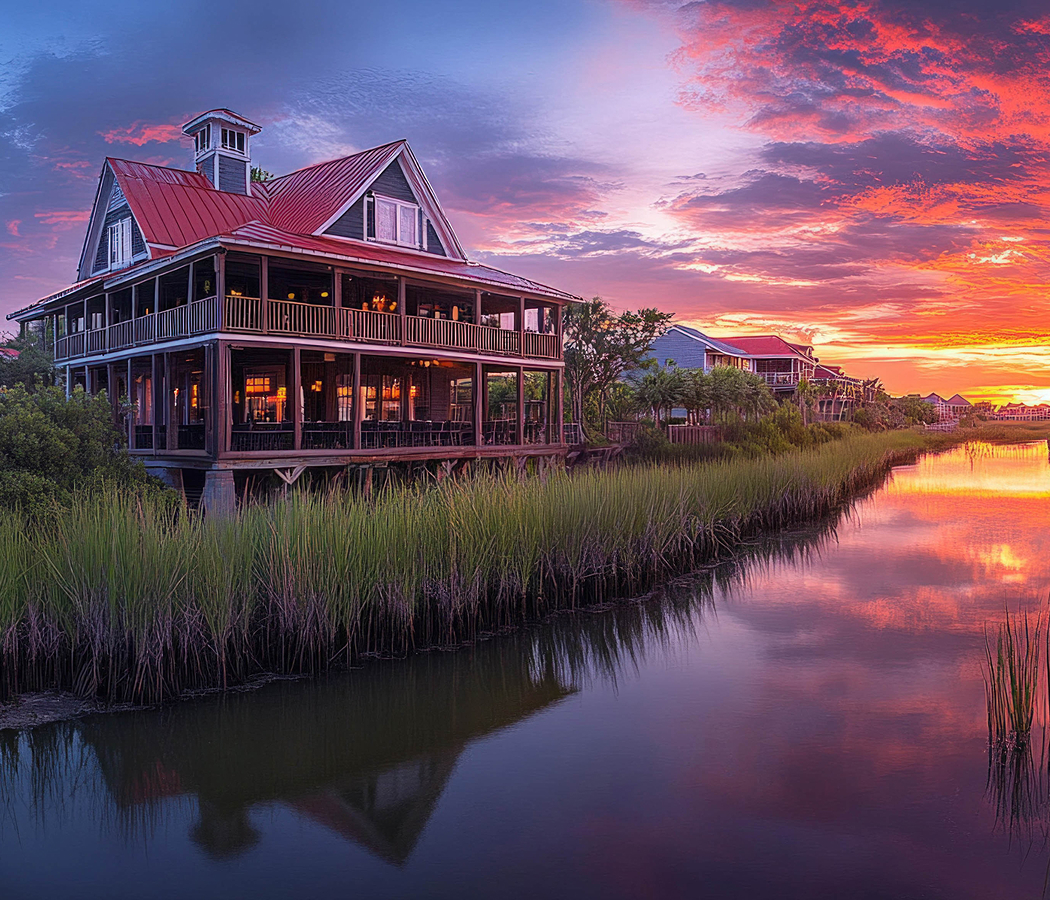
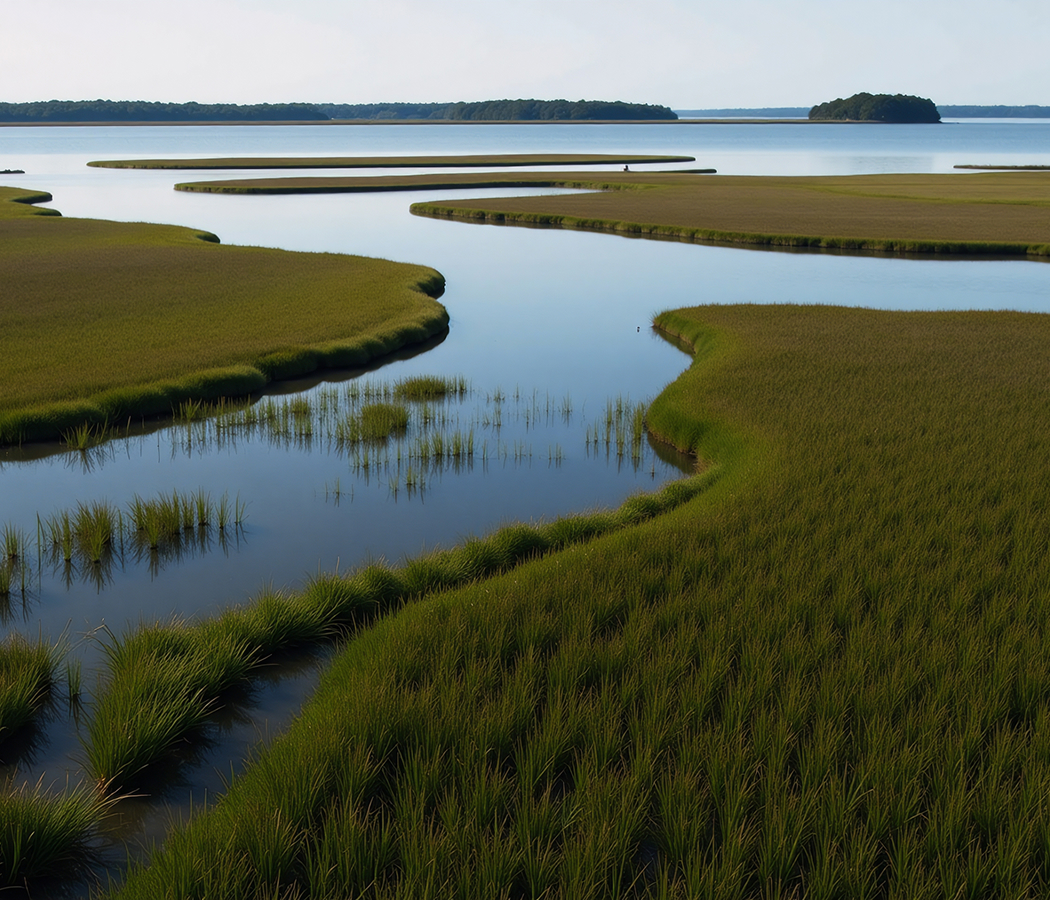
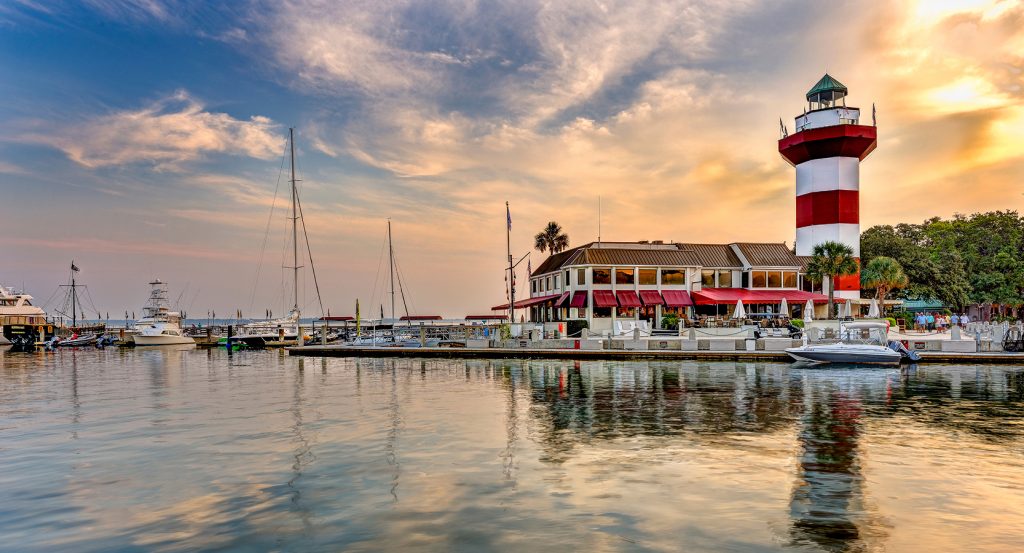
Set at the end of Hudson Road near Squire Pope Road and a short drive from the island's northern commercial corridor, the restaurant occupies a shell-built peninsula on Skull Creek, overlooking working fishing docks and the tidal waterways connecting the creek with Port Royal Sound. Broad windows frame the water from the principal dining rooms, placing fishing vessels and coastal marshes directly within view. An expansive outdoor deck extends toward the creek, with tables arranged beside the docks and sheltered shoreline. The adjoining seafood-handling facilities preserve a direct physical connection between the commercial fishing operation and the restaurant kitchen. The result is a waterfront establishment whose working docks, historic shell foundations and open-air dining preserve Hilton Head's commercial seafood heritage within its modern coastal restaurant industry.
What defines Hudson's Seafood House On The Docks.
Hudson's Seafood House on the Docks is best known for its origins as a commercial oyster-processing operation established in 1912 and its subsequent development into one of Hilton Head's longest-operating seafood restaurants. J. B. Hudson Sr. built the original oyster factory to process shellfish harvested from the surrounding tidal waterways. During the 1920s, local watermen transported oysters to the facility in shallow-draft, oar-powered boats called bateaux, navigating creeks and marsh channels to reach the processing docks. Workers shucked the oysters before shipping the meat by barge to markets in the northeastern United States. Discarded shells accumulated around the factory, gradually forming the peninsula that supports the restaurant buildings. The Hudson family expanded into locally caught shrimp during the 1950s, connecting the original oyster operation with the region's growing commercial shrimp industry. In 1967, the property developed into a 95-seat restaurant, establishing a dining business directly associated with its seafood-processing facilities. Brian and Gloria Carmines purchased Hudson's in 1975 after relocating from Long Island through Atlanta. Brian initially worked as the restaurant's chef, supported by family members responsible for serving tables and managing daily operations. Their ownership preserved the establishment's relationship with local fishing crews during Hilton Head's rapid development as a residential and vacation destination. Andrew Carmines subsequently joined the family operation, expanding its involvement in harvesting, seafood handling and direct relationships with commercial fishermen. In 2013, he established Shell Ring Oyster Company to cultivate oysters in Port Royal Sound, extending the business into aquaculture. The restaurant also developed an on-site soft-shell crab operation, allowing freshly molted crabs to enter the kitchen immediately after harvesting. These investments connected the family's original seafood-processing heritage with modern shellfish cultivation and restaurant service.
Andrew Carmines' seafood operation provides the kitchen with direct access to locally harvested oysters, shrimp, crabs and finfish through established relationships with coastal fishing crews. Shell Ring Oyster Company cultivates oysters in the high-salinity waters surrounding Hilton Head, producing shellfish distinguished by pronounced brininess and firm texture. Fresh oysters arrive at the restaurant for shucking, with raw half-shell service emphasizing their natural salinity and clean finish. Chargrilled oysters receive Cajun butter, garlic, thyme, smoked paprika, lemon and Parmesan, combining the shellfish's mineral character with a browned, seasoned topping. Oysters Rockefeller incorporate roasted fennel, tarragon, parsley, spinach and breadcrumbs, continuing a classical American seafood preparation. Oysters Hudson are wrapped in bacon and fried, combining crisp pork with the tender oyster beneath. Local white shrimp arrive in their shells for steaming with Old Bay seasoning, preserving the sweetness and texture of the catch. The Lowcountry Boil combines shrimp, smoked sausage, corn and potatoes in a seasoned preparation associated with coastal Carolina gatherings. Whole fish, including grouper, triggerfish, black sea bass and vermilion snapper, enter the kitchen for in-house filleting and changing daily preparations. The soft-shell crab operation uses circulating-water holding tanks to manage the final stages of molting, allowing cooks to prepare the delicate crabs shortly after their shells are shed. Hushpuppies follow a longstanding family recipe associated with Brian Carmines' search for traditional Carolina seafood accompaniments. The dining rooms retain the practical character of a former processing facility, with waterside seating oriented toward fishing activity. Outdoor tables provide views of vessels returning to the docks, connecting the meal with the commercial work supporting the menu. The restaurant's first-come, first-served operation accommodates lunch, dinner and Sunday brunch, maintaining an informal service structure suited to its working-waterfront setting.
How Hudson's Seafood House On The Docks fits.
Hudson's Seafood House on the Docks works as the culinary centerpiece for a northern Hilton Head itinerary connecting the preservation of Lowcountry coastal habitats, the island's plantation-era history and the development of African American communities during the Civil War.
Begin at Pinckney Island National Wildlife Refuge, situated between Hilton Head and the mainland beside the northern bridge crossing. The protected island contains salt marshes, maritime forests, freshwater impoundments and former agricultural fields associated with its plantation history. Walking and cycling trails connect the principal habitats, providing access to tidal creeks and shallow freshwater ponds. Ibis Pond supports nesting colonies of herons, egrets and other wading birds during the breeding season. The surrounding marshes contain oyster beds, tidal channels and feeding grounds essential to the region's coastal wildlife. Continue to Coastal Discovery Museum, situated on the historic Honey Horn property along the island's northern commercial corridor. Founded in 1985, the institution relocated to the 70-acre estate in 2007, preserving nineteenth-century buildings and an extensive coastal landscape. Its exhibitions examine Indigenous settlement, plantation agriculture, Gullah heritage and the natural history of South Carolina's barrier islands. Gardens contain culturally important plants, including sweetgrass associated with traditional basketmaking. Boardwalks extend toward Jarvis Creek, connecting historical interpretation with functioning salt-marsh habitats. Conclude at Historic Mitchelville Freedom Park, the preserved site of an early self-governing community established by formerly enslaved African Americans. Union occupation of Hilton Head in 1861 created the conditions for the settlement's development. General Ormsby M. Mitchel supported its formal organization in 1862, enabling residents to construct homes and establish schools, churches and civic institutions. Archaeological interpretation examines the community's domestic arrangements and social development during the Civil War. The site preserves an important chapter in the history of emancipation and African American self-government along the South Carolina coast. The progression moves from protected estuarine habitats through the interpretation of island history and culminates in the preservation of a community founded during emancipation.
Where your story begins.
Foresyte Travel reveals places that feel extraordinary long before you arrive.
Enjoy editorial crafted for luxury travelers.
Foresyte may earn a commission when you book.