Fun facts about Budapest, Hungary.
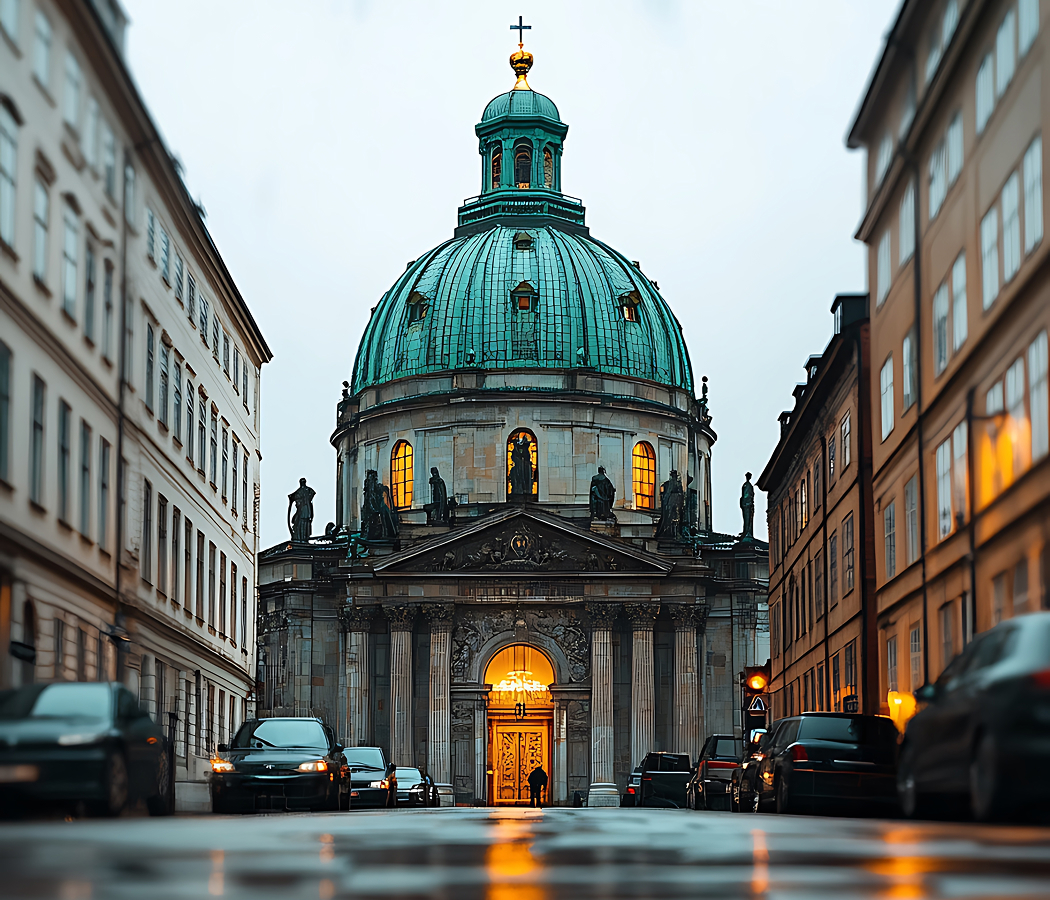
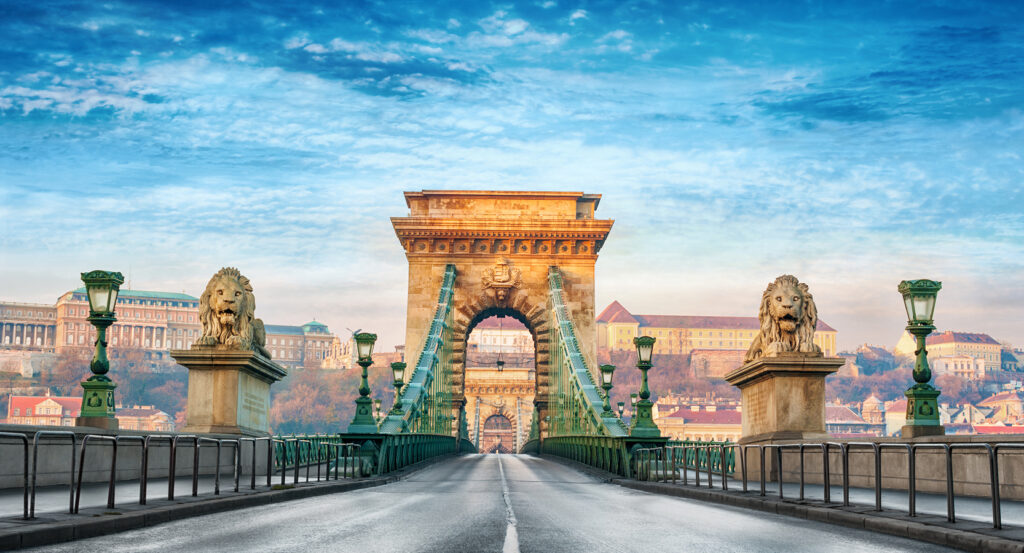
Budapest unfolds along one of the Danube's most commanding urban passages, where the steep limestone hills of Buda rise opposite the broad avenues and expansive public buildings of Pest, creating a distinctive metropolitan composition shaped by topography, engineering, and imperial ambition. The western bank preserves the historic heights of Castle Hill, whose fortified plateau contains the Buda Castle complex, Matthias Church, and the Fisherman's Bastion. The royal palace developed through successive medieval, Baroque, and modern rebuilding campaigns, with its expansive terraces overlooking the river and the densely developed districts of Pest. Matthias Church, whose medieval origins reach back to the thirteenth century, acquired its elaborate Neo-Gothic appearance through nineteenth-century restoration under architect Frigyes Schulek. Nearby, the Fisherman's Bastion introduces a scenic sequence of towers, arcades, and viewing terraces constructed around the turn of the twentieth century, reflecting the romantic historicism of Hungary's national architectural revival. South of Castle Hill, Gellért Hill rises dramatically above the river, its rocky slopes and elevated Citadella establishing another defining element of the city's skyline. The Széchenyi Chain Bridge, completed in 1849, provided the first permanent bridge linking Buda and Pest, transforming movement between the two settlements and encouraging the economic integration that preceded their political unification. Designed by English engineer William Tierney Clark, the suspension bridge became an enduring symbol of Hungarian modernization through its expansive stone towers and iron chains. On the eastern bank, the Hungarian Parliament Building extends along the Danube through an immense Neo-Gothic composition of pointed arches, sculptural ornament, and a central dome. Designed by Imre Steindl and completed in 1904, the building expresses the political aspirations of nineteenth-century Hungary through its imposing scale and elaborate craftsmanship. Nearby, St. Stephen's Basilica introduces a contrasting Neo-Renaissance monument, its great dome rising above the commercial streets of Central Pest. Andrássy Avenue forms a principal ceremonial axis through the city, connecting the historic center with Heroes' Square and City Park. Developed during the nineteenth century, the boulevard is lined with grand apartment buildings, palaces, and cultural institutions, including the Hungarian State Opera House, designed by Miklós Ybl and inaugurated in 1884. Heroes' Square presents an expansive ensemble celebrating Hungarian history through the Millennium Monument and surrounding colonnades, with the Museum of Fine Arts and Kunsthalle framing the public space. Beneath Andrássy Avenue, the Millennium Underground Railway opened in 1896 as continental Europe's first underground electric railway, demonstrating the technological ambition of the rapidly expanding capital. Budapest's historic thermal baths introduce another distinctive architectural tradition, particularly through the Széchenyi Thermal Bath's Neo-Baroque pavilions and the Ottoman-era domed bathing chambers of the Rudas Baths. The city's Jewish Quarter preserves a dense network of nineteenth-century residential buildings and religious institutions, including the Dohány Street Synagogue, whose Moorish Revival design reflects the cultural confidence of Budapest's historic Jewish community. Margaret Island occupies a landscaped stretch of the Danube between the principal riverbanks, providing extensive gardens, recreational grounds, and surviving medieval religious ruins. Budapest's expansive riverfront, historic hills, and carefully planned boulevards preserve the physical legacy of a capital whose development brought together medieval fortification, Ottoman engineering, Habsburg urbanism, and Hungarian national ambition.
Hungarian cultural life acquired a remarkable intellectual and artistic concentration in Budapest, where literary nationalism, classical music, Jewish intellectual traditions, and a distinctive café society contributed to some of Central Europe's most influential creative movements. The nineteenth-century Hungarian national revival strengthened the role of literature and public performance in political life, particularly through the poetry of Sándor Petőfi, whose revolutionary verse became inseparable from the events of 1848. The development of Hungarian-language theater, journalism, and publishing encouraged a broader cultural transformation, establishing Budapest as the principal center of modern Hungarian intellectual expression. Music acquired exceptional international significance through the work of Franz Liszt, whose compositions and performances helped establish a distinctive Hungarian presence within European Romanticism. Liszt founded the institution that became the Liszt Ferenc Academy of Music in 1875, contributing to the development of a musical tradition that subsequently produced influential composers, performers, and educators. Béla Bartók and Zoltán Kodály transformed twentieth-century musical thought through their systematic engagement with Hungarian and neighboring folk traditions, incorporating complex rhythms, modal structures, and innovative harmonic approaches into their compositions. Their work connected the musical inheritance of rural communities with the experimental ambitions of European modernism. Budapest's operatic and orchestral institutions sustained this artistic environment, supporting internationally recognized performances and musical education. The city's literary culture flourished through writers including Endre Ady, whose poetry challenged conventional social and artistic values, and Dezső Kosztolányi, whose fiction explored language, identity, and the psychological complexities of modern urban life. The literary journal Nyugat, founded in 1908, became an influential forum for modern Hungarian writing and criticism, bringing together authors whose work reshaped the country's intellectual landscape. Budapest's historic cafés provided essential settings for these exchanges, particularly establishments such as the New York Café and Centrál Café, where journalists, poets, and artists gathered amid elaborate interiors and lively political discussion. The city's Jewish community contributed profoundly to its commercial, scientific, and artistic development, producing internationally influential figures in mathematics, physics, cinema, and literature. Mathematician John von Neumann, born in Budapest in 1903, became a foundational figure in modern computing and mathematical science, reflecting the city's exceptional intellectual environment during the early twentieth century. Hungarian cinema developed through filmmakers and producers whose careers extended into international film industries, including Michael Curtiz, the Budapest-born director of Casablanca. Budapest's culinary traditions preserve the flavors of the Carpathian Basin through dishes including gulyás, pörkölt, paprikás csirke, and layered pastries associated with the city's historic confectionery culture. Paprika became a defining ingredient of Hungarian cooking, contributing color, aroma, and distinctive regional flavor to stews, soups, and meat preparations. The Great Market Hall, opened in 1897, preserves an important setting for food commerce through its vast iron structure, decorative brickwork, and stalls selling regional produce and specialties. Budapest's contemporary cultural environment extends through independent theaters, contemporary art institutions, music festivals, and the distinctive ruin bars that developed within neglected historic buildings of the Jewish Quarter. These establishments introduced new forms of nightlife and creative reuse, transforming former residential courtyards into unconventional gathering places. The city's thermal bathing culture adds another dimension to everyday social life, sustaining a tradition that connects Ottoman influences with modern recreational practices. Budapest's enduring cultural importance lies in the intellectual intensity of its writers and composers, the resilience of its artistic institutions, and the distinctive social traditions that developed within one of Europe's great Danubian capitals.
Five fascinations.
5. Budapest was created by joining three separate cities.
Budapest officially came into existence in 1873 through the unification of Buda, Óbuda, and Pest. Buda occupied the hilly western bank of the Danube, Pest spread across the flatter eastern side, and Óbuda preserved an older settlement farther north. Their merger created a single capital at a moment of extraordinary growth within the Austro-Hungarian Empire. Bridges, boulevards, public buildings, transit systems, and new neighborhoods subsequently bound the former cities together, yet their contrasting geography remains immediately visible today. Budapest's fundamental character begins with a remarkable fact: one of Europe's great capitals was originally three cities.
4. Budapest built continental Europe's first underground railway.
Budapest opened the Millennium Underground Railway in 1896 as part of the celebrations marking a thousand years of Hungarian statehood. Running beneath Andrássy Avenue, the compact electric railway connected the city center with City Park and became the first underground railway on continental Europe. Engineers constructed much of the line using shallow cut-and-cover methods, allowing stations to sit just beneath street level. Now incorporated into Metro Line M1, the original route still carries passengers beneath Budapest, making an innovative nineteenth-century transportation project part of the city's everyday infrastructure more than a century later.
3. The Hungarian Parliament was built from a competition-winning design.
As Budapest emerged as the capital of a unified Hungary, the country sought an expansive parliament worthy of its growing national identity. Architect Imre Steindl won an international design competition for the project, producing an immense Gothic Revival building along the Danube crowned by a Renaissance-inspired dome. Construction began in 1885 and involved thousands of workers as well as vast quantities of Hungarian stone, brick, decorative carving, and gold. Completed around the turn of the twentieth century, the Parliament transformed the Pest riverfront and became an architectural expression of Hungary's political ambitions within the Austro-Hungarian era.
2. Budapest's thermal baths are powered by geology beneath the city.
Budapest sits above an extraordinary system of thermal springs created as groundwater circulates through fractured limestone and returns to the surface heated by the Earth. Romans exploited thermal waters around ancient Aquincum, and Ottoman rulers later constructed bathing complexes during their occupation of Buda. The tradition continued into expansive establishments including Széchenyi and Gellért, making communal bathing part of the city's character across radically different political eras. Budapest's reputation as a spa capital is rooted in something deeper than architecture or custom: the geological structure beneath the city continuously supplies naturally heated mineral water.
1. Budapest's Chain Bridge physically united Buda and Pest before the cities officially merged.
Before permanent bridges crossed the Danube at Budapest, travel between Buda and Pest depended on boats and temporary crossings vulnerable to weather and seasonal conditions. Count István Széchenyi championed construction of a permanent connection, and English engineer William Tierney Clark designed the suspension bridge that opened in 1849. Its stone towers and iron chains created a dependable physical link between the communities on opposite banks more than two decades before their political unification. The Chain Bridge anticipated Budapest itself: engineering joined Buda and Pest in the landscape before government joined them into a single city.
Where your story begins.
Foresyte Travel reveals places that feel extraordinary long before you arrive.
Enjoy editorial crafted for luxury travelers.
Foresyte may earn a commission when you book.