Fun facts about New Zealand.
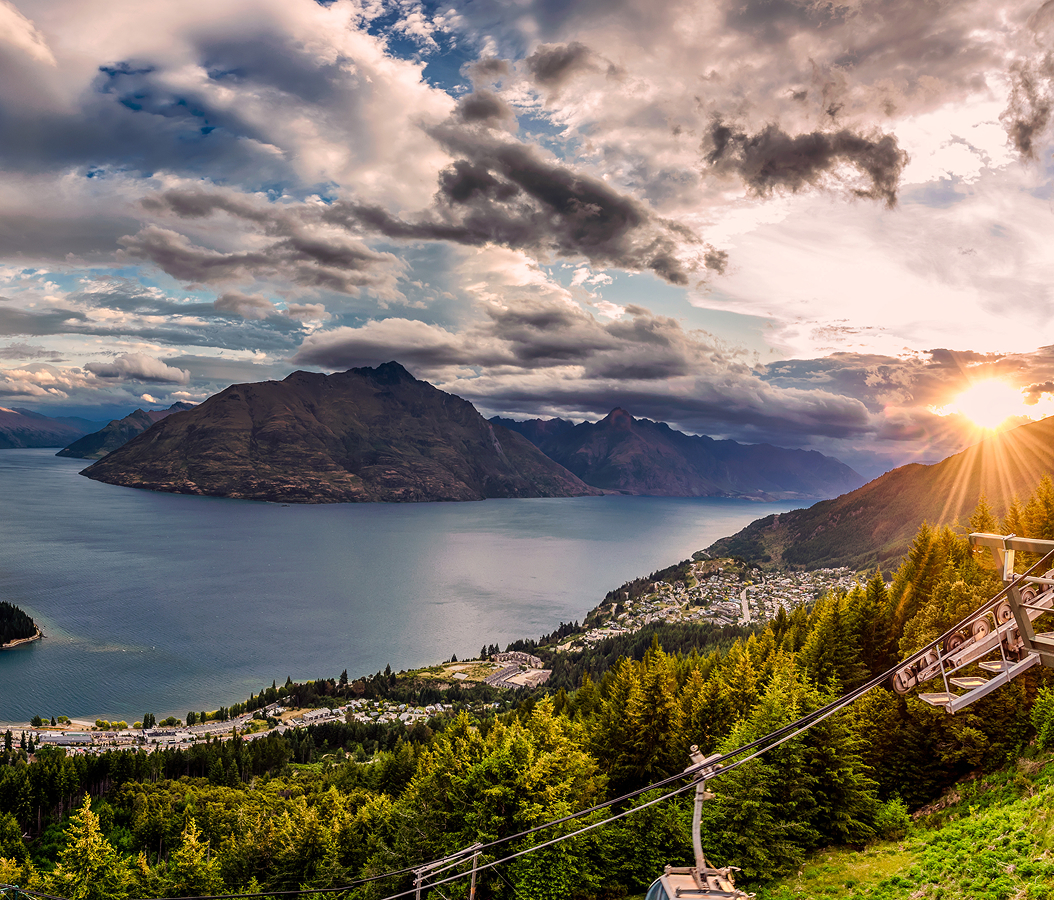
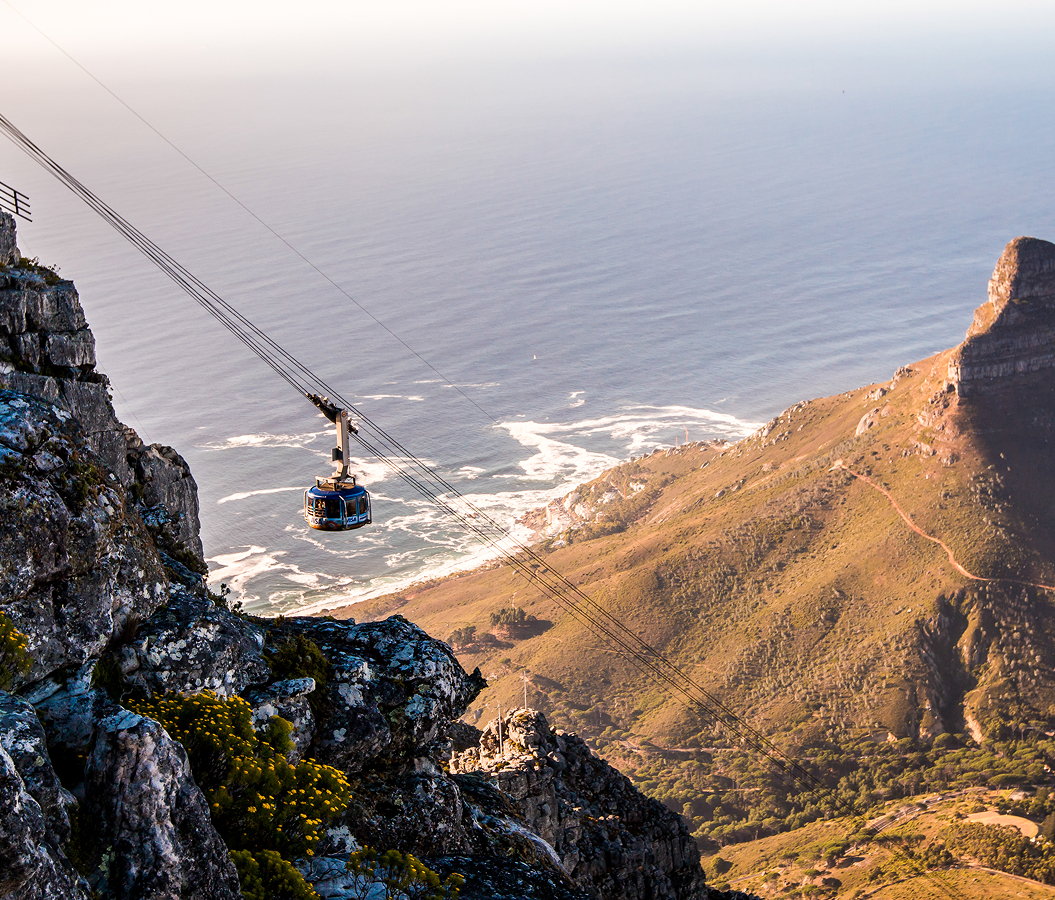
Queenstown occupies a striking setting on the northeastern shore of Lake Wakatipu, where steep mountain ranges, glacial valleys, and winding waterways form one of New Zealand's most dramatic alpine landscapes. The town lies within the Southern Alps region of the South Island, surrounded by mountains whose exposed rock faces, alpine grasslands, and seasonal snowfields reflect a complex history of tectonic uplift and glacial erosion. Lake Wakatipu extends eighty kilometers through a distinctive zigzag-shaped basin, making it New Zealand's longest lake and establishing the principal geographic axis of the surrounding settlements. Its deep waters occupy a glacially carved valley enclosed by steep ridgelines, with the Remarkables rising prominently along the lake's southeastern shore. The mountain range presents a striking sequence of serrated peaks and exposed rock slopes, including Double Cone, whose distinctive profile dominates views from Queenstown's waterfront. Immediately northwest of the town, Ben Lomond rises above a network of forested slopes and alpine ridges, providing an elevated perspective across the lake and surrounding mountains. The central waterfront follows the edge of Queenstown Bay, where landscaped gardens, pedestrian promenades, and commercial streets connect the town's compact urban center with the lake. Queenstown Gardens occupies a wooded peninsula extending into the water, preserving mature trees, ornamental plantings, and sheltered pathways overlooking the surrounding mountains. The historic town center developed along streets including Shotover Street, Camp Street, and Beach Street, where commercial buildings, restaurants, and visitor facilities reflect successive periods of settlement and tourism development. Above the town, the Skyline gondola ascends Bob's Peak, connecting the waterfront district with elevated recreational facilities and panoramic viewpoints. Eastward, the Frankton area occupies a broader valley near the outlet of Lake Wakatipu, where the Kawarau River begins its journey toward the Clutha River system. The Kawarau Falls Bridge crosses this narrow waterway, linking Queenstown with the southern shore and the road toward the Remarkables ski area. The surrounding Frankton Flats support Queenstown Airport and substantial residential and commercial development, reflecting the region's rapid metropolitan expansion. Farther east, the Kawarau Gorge cuts through rugged terrain shaped by river erosion and historic gold mining, with the Kawarau Bridge preserving an important nineteenth-century transportation landmark. North of Queenstown, the Shotover River flows through steep canyons and gravel terraces associated with the region's mining history. Skippers Canyon introduces an especially dramatic landscape of narrow roads, exposed cliffs, and historic mining remains carved into the mountain terrain. Westward, the road to Glenorchy follows Lake Wakatipu beneath steep forested slopes, connecting Queenstown with a smaller lakeside settlement surrounded by the Humboldt and Richardson mountain ranges. Glenorchy provides access to the Dart and Rees river valleys, whose braided waterways and alpine landscapes form important approaches to Mount Aspiring National Park. The nearby Routeburn Track traverses mountain passes, forests, and alpine basins between the Southern Lakes and Fiordland regions, establishing one of New Zealand's celebrated long-distance walking routes. Northeast of Queenstown, Arrowtown occupies a sheltered valley beside the Arrow River, preserving a compact historic streetscape associated with the gold rush. Its nineteenth-century cottages, commercial buildings, and tree-lined avenues introduce a contrasting architectural environment within the broader alpine region. Queenstown's physical distinction arises from the concentration of a compact lakeside town, immense glacial landforms, historic mining valleys, and accessible mountain terrain within a remarkably interconnected landscape.
New Zealand's outdoor culture finds one of its most influential expressions in Queenstown, where Māori traditions, alpine recreation, adventure sports, contemporary hospitality, and regional food and wine have developed around the distinctive environment of the Southern Lakes. The cultural foundations of the region remain connected to Ngāi Tahu, whose ancestral relationships with Lake Wakatipu and the surrounding mountains preserve important traditions of place, travel, and environmental knowledge. Māori narratives associated with the lake contribute to its cultural identity, including the story of the giant Matau, whose body became connected with the lake's formation and its unusual periodic fluctuations in water level. The region's modern recreational culture developed through skiing, mountaineering, and wilderness exploration, supported by generations of New Zealand outdoor enthusiasts. Coronet Peak and the Remarkables ski area established Queenstown as an important winter sports destination, attracting recreational skiers and competitive athletes from across the Southern Hemisphere. The development of commercial bungy jumping at the Kawarau Bridge introduced another defining element of local culture, helping popularize an adventure activity that subsequently spread internationally. Queenstown's reputation for high-adrenaline recreation expanded through jet boating, skydiving, paragliding, and mountain biking, with the surrounding rivers and mountains providing natural settings for technical innovation and competitive events. The Shotover River became particularly associated with commercial jet boating, an activity made possible by the jet propulsion technology developed in New Zealand during the twentieth century. The region also supports a substantial hiking and trail-running community, with alpine routes and long-distance tracks connecting recreational traditions to the protected landscapes of the Southern Alps. Queenstown's international sporting calendar includes the Queenstown Marathon, whose course follows sections of the surrounding lake and river valleys. The town's cultural environment extends beyond outdoor recreation through galleries, festivals, and performance events reflecting the creative communities of Central Otago. The Queenstown Winter Festival, established in 1975, developed into an important seasonal celebration combining mountain activities, entertainment, and community gatherings. Regional artistic traditions include landscape painting, photography, and contemporary visual work inspired by the Southern Alps, with galleries throughout Queenstown and Arrowtown supporting New Zealand artists and craftspeople. The Lakes District Museum in Arrowtown preserves the history of gold mining, settlement, and regional communities, including the experiences of Chinese miners who contributed to the nineteenth-century goldfields. Queenstown's culinary character reflects the agricultural resources of Central Otago and the wider South Island, particularly through lamb, venison, freshwater fish, seasonal produce, and ingredients associated with New Zealand's pastoral economy. The surrounding region has developed an internationally recognized wine industry, with Central Otago particularly celebrated for Pinot Noir cultivated in a cool continental climate. Vineyards around Gibbston, often called the Valley of the Vines, occupy a narrow landscape between rugged hills and the Kawarau River, producing wines distinguished by the region's pronounced seasonal temperature variations. The area's wine culture has encouraged the development of cellar doors, vineyard restaurants, and culinary experiences connecting regional agriculture with contemporary hospitality. Queenstown's dining environment also reflects the influence of international visitors and a diverse resident population, supporting restaurants that combine New Zealand ingredients with global cooking traditions. The town's cultural significance lies in the interaction between Indigenous heritage, alpine sporting innovation, historic goldfield communities, and a contemporary food and wine culture shaped by the landscapes of New Zealand's Southern Lakes.
Five fascinations.
5. Queenstown began as a gold-rush settlement before becoming an adventure capital.
Queenstown's transformation began after gold was discovered in the nearby Arrow River in 1862, drawing thousands of prospectors into the Wakatipu district. A settlement rapidly developed beside Lake Wakatipu as miners, merchants, hotels, and transport services followed the rush. Much of the easily accessible gold was exhausted within a few years, yet the town survived as the surrounding region shifted toward farming and tourism. The extraordinary transition ultimately carried Queenstown from a remote nineteenth-century mining settlement to an internationally recognized mountain destination, with nearby Arrowtown preserving one of the clearest architectural legacies of the original rush.
4. Lake Wakatipu rises and falls in a mysterious natural rhythm.
The long, narrow lake beside Queenstown experiences a regular oscillation in water level known as a seiche. Changes in atmospheric pressure and wind disturb the lake, causing water to move back and forth through its immense basin and producing measurable fluctuations along the shoreline. Māori tradition gives the phenomenon a dramatically different explanation through the story of the giant Matau, whose burning body formed the lake and whose surviving heart continues to beat beneath its waters. Queenstown's defining lake combines a striking physical phenomenon with an Indigenous narrative that connects the movement of the water to the landscape's cultural history.
3. Queenstown helped turn commercial bungy jumping into a global adventure industry.
A. J. Hackett and Henry van Asch launched commercial bungy jumping from the Kawarau Gorge Suspension Bridge near Queenstown in 1988. Hackett had already attracted international attention by illegally jumping from the Eiffel Tower the previous year, but the Kawarau operation transformed the activity into an organized tourism experience. Participants began plunging 43 meters toward the river from the historic bridge, establishing a model subsequently exported around the world. The venture became fundamental to Queenstown's modern identity, helping shift the destination beyond conventional alpine tourism and toward the high-adrenaline experiences for which it became internationally famous.
2. Queenstown's most famous mountain range was named for its resemblance to a saw blade.
The Remarkables rise dramatically from the southeastern shore of Lake Wakatipu, forming the jagged mountain backdrop visible across Queenstown. Their English name reflects the range's serrated profile, which early European observers associated with the teeth of a saw. The mountains belong to a much larger geological landscape shaped by tectonic uplift and repeated glaciation, processes that also carved the deep basin occupied by Lake Wakatipu. Their steep slopes later became home to a major ski area. Queenstown's celebrated scenery is the visible product of enormous geological forces that created an unusually dramatic meeting of alpine peaks and deep inland water.
1. Queenstown still sails a steamship launched more than a century ago.
The TSS Earnslaw was launched on Lake Wakatipu in 1912 after its prefabricated components were transported by rail to Kingston and assembled beside the lake. The coal-fired steamship originally carried passengers, livestock, mail, and supplies between isolated communities around Wakatipu, functioning as essential infrastructure in an era when road connections remained limited. As transportation patterns changed, the vessel found a new role carrying visitors across the same waters. More than a century after entering service, the Earnslaw still operates from Queenstown, preserving a working piece of the transport system that once connected communities throughout the surrounding alpine landscape.
Where your story begins.
Foresyte Travel reveals places that feel extraordinary long before you arrive.
Enjoy editorial crafted for luxury travelers.
Foresyte may earn a commission when you book.