Fun facts about Barcelona, Spain.
Barcelona has become one of Europe's most captivating cities by combining extraordinary architecture, Mediterranean coastlines, and a spirited Catala character into a destination unlike any other. Iconic landmarks including the Sagrada Família, Park Güell, Casa Batlló, and La Rambla have become enduring symbols of the city, while neighborhoods such as the Gothic Quarter, El Born, Eixample, and Barceloneta each reveal a distinct chapter of Barcelona's remarkable history. Every district contributes to a city where Roman foundations, medieval streets, and bold modernist masterpieces exist in remarkable harmony.
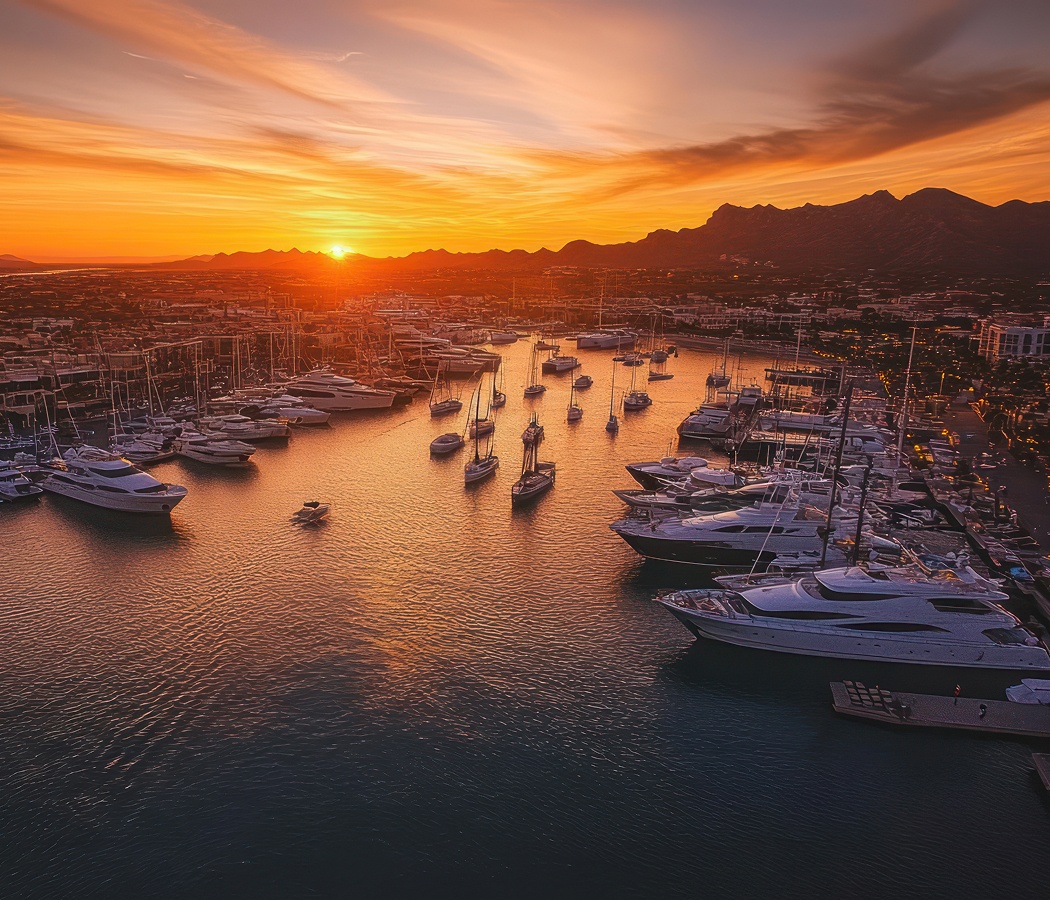
Beyond its celebrated skyline, Barcelona fascinates through an exceptional blend of artistic achievement, culinary tradition, and urban design. Visitors can admire Antoni Gaudí's creations throughout the city, explore the lively stalls of La Boqueria, stroll the waterfront surrounding Port Vell, or discover masterpieces at the Museu Picasso and the National Art Museum of Catalonia (MNAC). Panoramic viewpoints from Montjuïc, the thriving promenades of Passeig de Gràcia, and the golden sands of Barceloneta Beach showcase how Barcelona effortlessly balances world-renowned cultural attractions with an unmistakably relaxed Mediterranean lifestyle.
Perhaps Barcelona's greatest fascination is its remarkable ability to preserve its Catalan heritage while continually reinventing itself as one of Europe's leading cultural capitals. Historic plazas, centuries-old churches, and traditional markets exist alongside innovative architecture, contemporary art, and internationally acclaimed cuisine that continue to shape the city's global reputation. Whether wandering the narrow lanes of the Gothic Quarter, taking in panoramic views from Bunkers del Carmel, watching the Magic Fountain of Montjuïc, or exploring the grand grounds of the Sagrada Família, visitors quickly discover that Barcelona's enduring appeal lies in the seamless way it unites history, creativity, and Mediterranean energy.
Five fascinations.
5. Barcelona's most famous basilica has been under construction across three centuries.
Construction of the Sagrada Família began in 1882, with Antoni Gaudí assuming responsibility for the project the following year and radically transforming its design. Gaudí devoted the final phase of his life to the basilica, developing an extraordinary architectural language based on geometry, natural forms, structural experimentation, and Christian symbolism. He died in 1926 with only a fraction completed. Subsequent generations continued the project through civil war, changing technologies, and evolving construction methods, turning the Sagrada Família into a rare monument whose creation directly connects nineteenth-century Barcelona with the present city.
4. Barcelona's Eixample was designed as an enormous urban experiment.
Engineer Ildefons Cerdà developed the Eixample during the nineteenth century as Barcelona expanded beyond the walls that had constrained the old city. His plan organized growth around a vast grid of blocks distinguished by chamfered corners, creating the characteristic octagonal intersections visible throughout the district. Cerdà envisioned broad streets, sunlight, ventilation, greenery, and improved circulation as essential components of healthier urban life. Development eventually became denser than his original social vision, yet the underlying geometry endured. Barcelona's celebrated street pattern is the surviving structure of one of the nineteenth century's most ambitious experiments in city planning.
3. Barcelona built an entire grand landscape for the 1929 International Exposition.
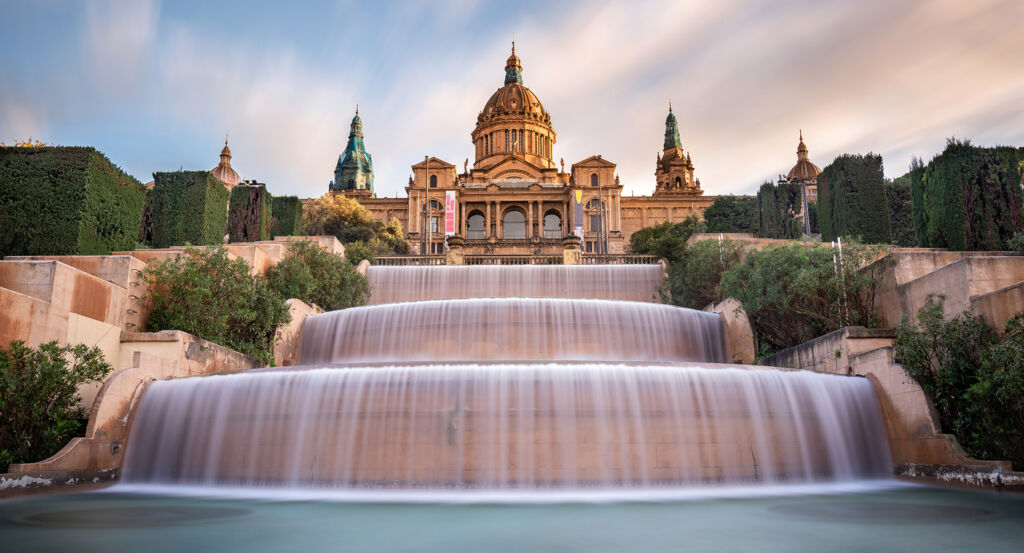
The 1929 Barcelona International Exposition transformed Montjuïc through an enormous program of architecture, landscaping, infrastructure, and public space. Palau Nacional rose above the city, grand stairways and plazas reshaped the hillside, and the Magic Fountain introduced an elaborate performance of water and light. Ludwig Mies van der Rohe and Lilly Reich created the radically modern German Pavilion nearby, producing a building that became one of the canonical works of twentieth-century architecture. Much of the exposition landscape survived, leaving Barcelona with an entire grand district born from a temporary international event.
2. Barcelona rebuilt one of modern architecture's greatest buildings decades after demolishing it.
The German Pavilion designed by Ludwig Mies van der Rohe and Lilly Reich for the 1929 International Exposition was conceived as a temporary structure and dismantled after the event. Its flowing spaces, slender columns, reflective pools, and luxurious stone surfaces subsequently became enormously influential within modern architecture, even though the physical building no longer existed. Barcelona reconstructed the pavilion on its original Montjuïc site during the 1980s using surviving photographs and plans. The extraordinary project turned an architectural idea back into a physical building more than half a century after the original disappeared.
1. Barcelona's Gothic Quarter contains a bridge that is younger than the Empire State Building.
The ornate covered bridge spanning Carrer del Bisbe looks perfectly at home among the medieval streets surrounding Barcelona Cathedral, yet it dates only to 1928. Architect Joan Rubió i Bellver designed the neo-Gothic structure during a period when the historic center was being reshaped to emphasize its medieval character. Its carved stonework, tracery, and enclosed passage deliberately evoke a much older Barcelona, making the bridge one of the city's most convincing architectural illusions. The landmark reveals that part of the Gothic Quarter's ancient atmosphere is itself a product of twentieth-century urban design.
Where your story begins.
Foresyte Travel reveals places that feel extraordinary long before you arrive.
Enjoy editorial crafted for luxury travelers.
Foresyte may earn a commission when you book.