Fun facts about Busan, South Korea.
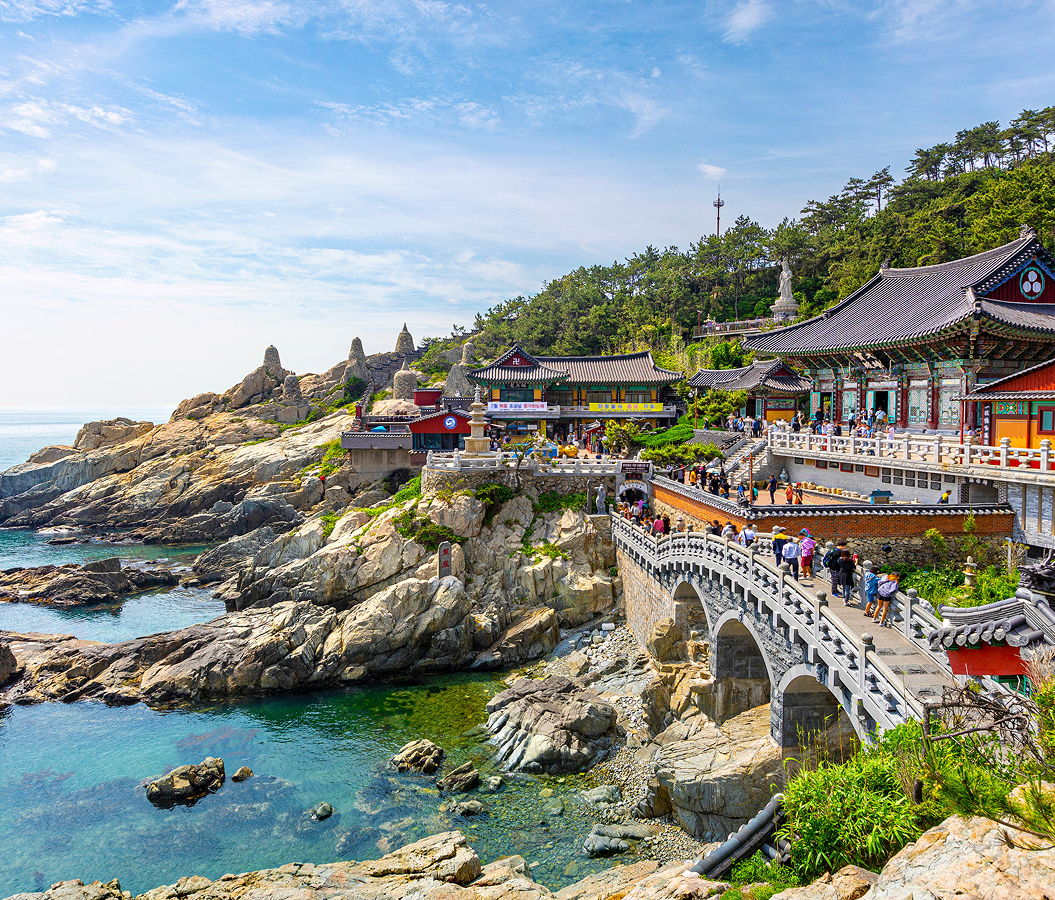
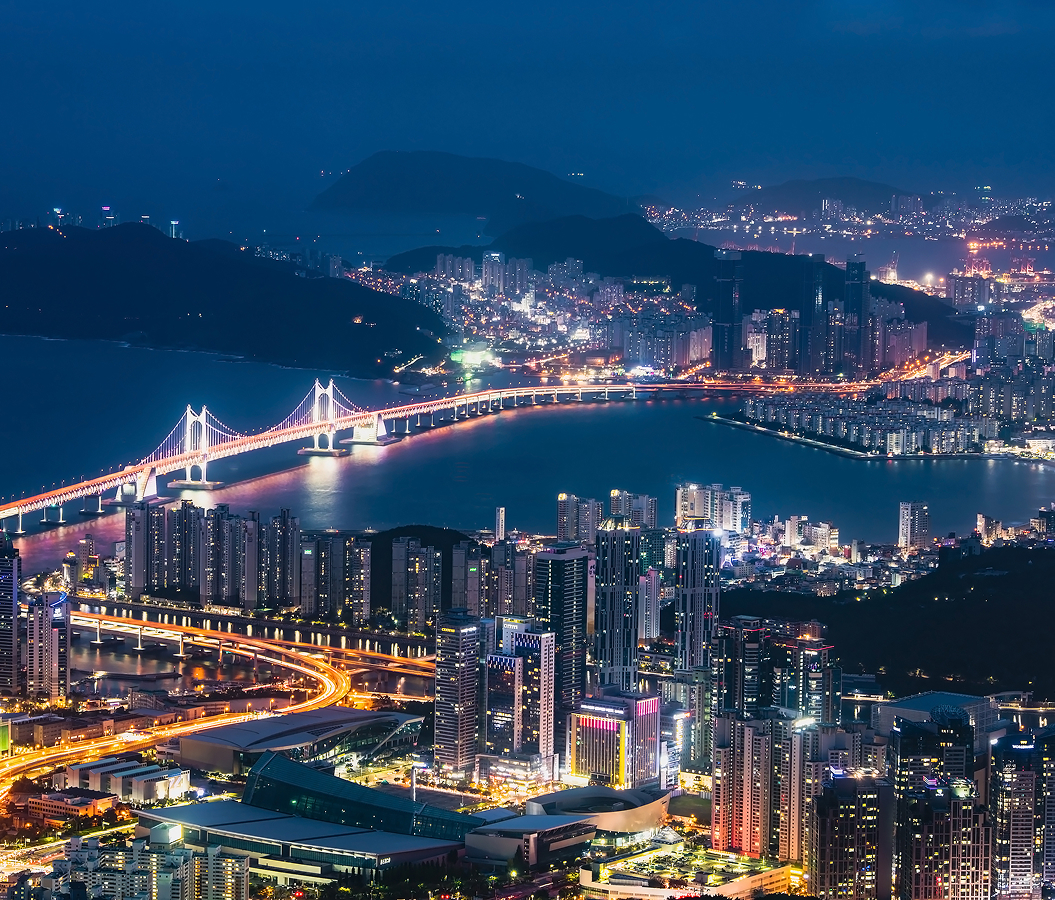
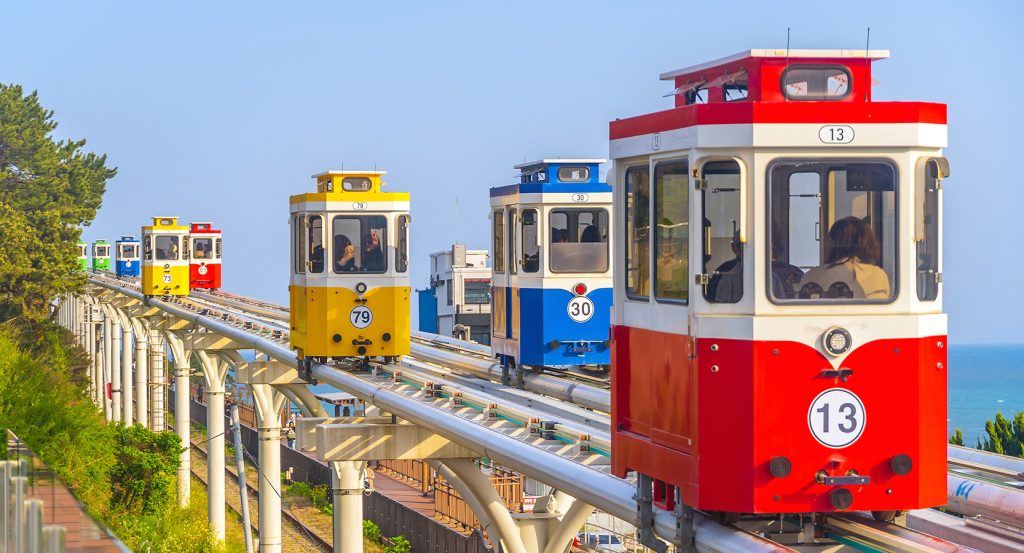
Busan extends along South Korea's southeastern coastline, where steep mountains descend toward the Korea Strait through narrow valleys, sheltered bays, rocky headlands, and sandy beaches. Its dramatic topography creates a fragmented urban landscape, with residential neighborhoods climbing hillsides above densely developed commercial districts and industrial waterfronts. The Nakdong River forms a broad estuarine system along the city's western edge, supporting extensive wetlands and migratory bird habitats before entering the sea. The historic harbor occupies a sheltered coastal basin near the central districts of Jung-gu and Dong-gu, where maritime commerce established the foundations of the modern city. Nampo-dong forms one of Busan's principal traditional commercial neighborhoods, distinguished by shopping streets, markets, cinemas, and restaurants extending toward the waterfront. Nearby, Jagalchi Market occupies a major seafood trading district where fishmongers, restaurants, and wholesale merchants maintain close connections with the surrounding fishing industry. Gukje Market preserves another important commercial landscape, originating in the postwar period when refugees and merchants established stalls selling imported goods, household products, and food. The adjoining BIFF Square connects this historic trading environment with the city's cinematic heritage through theaters, street food vendors, and public spaces associated with the film festival. Above the harbor, Yongdusan Park contains Busan Tower, a prominent observation landmark overlooking the port and surrounding hills. Farther west, Gamcheon Culture Village spreads across a steep hillside through tightly arranged houses, stairways, narrow lanes, and brightly colored façades. Originally associated with displaced communities during the Korean War, the neighborhood later became known for public art, murals, and cultural regeneration projects. Southward, the coastal district of Yeongdo occupies an island connected to the mainland by bridges, with industrial shipyards, fishing facilities, and residential neighborhoods extending across its rugged terrain. Taejongdae, at the island's southern end, protects a landscape of forested cliffs and rocky coastal viewpoints overlooking the Korea Strait. East of the historic center, the city expands through major residential and commercial districts toward Haeundae, where a broad sandy beach fronts a dense concentration of hotels, apartment towers, and entertainment facilities. The nearby Marine City district presents a striking skyline of contemporary high-rise buildings overlooking the waterfront. Dongbaekseom, a wooded peninsula at the western end of Haeundae Beach, contains coastal paths and the Nurimaru APEC House, constructed for the 2005 APEC summit. Farther east, the Haedong Yonggungsa temple complex occupies a rocky coastal setting, distinguished by Buddhist structures overlooking the open sea. Gwangalli Beach forms another major waterfront district, facing the illuminated span of Gwangan Bridge, whose long suspension structure crosses the surrounding bay. The bridge has become one of Busan's most recognizable contemporary landmarks, particularly after dark. Inland, Seomyeon functions as a major transportation, shopping, and entertainment center, connecting the city's eastern and western districts through extensive subway and railway networks. The surrounding mountains contain temples, forests, and hiking trails, including Geumjeongsan, where the historic Geumjeongsanseong Fortress follows elevated ridgelines above the metropolitan area. Busan's physical landscape combines working port infrastructure, mountain neighborhoods, major beaches, and contemporary coastal architecture within a city whose terrain continually brings urban development into contact with the sea.
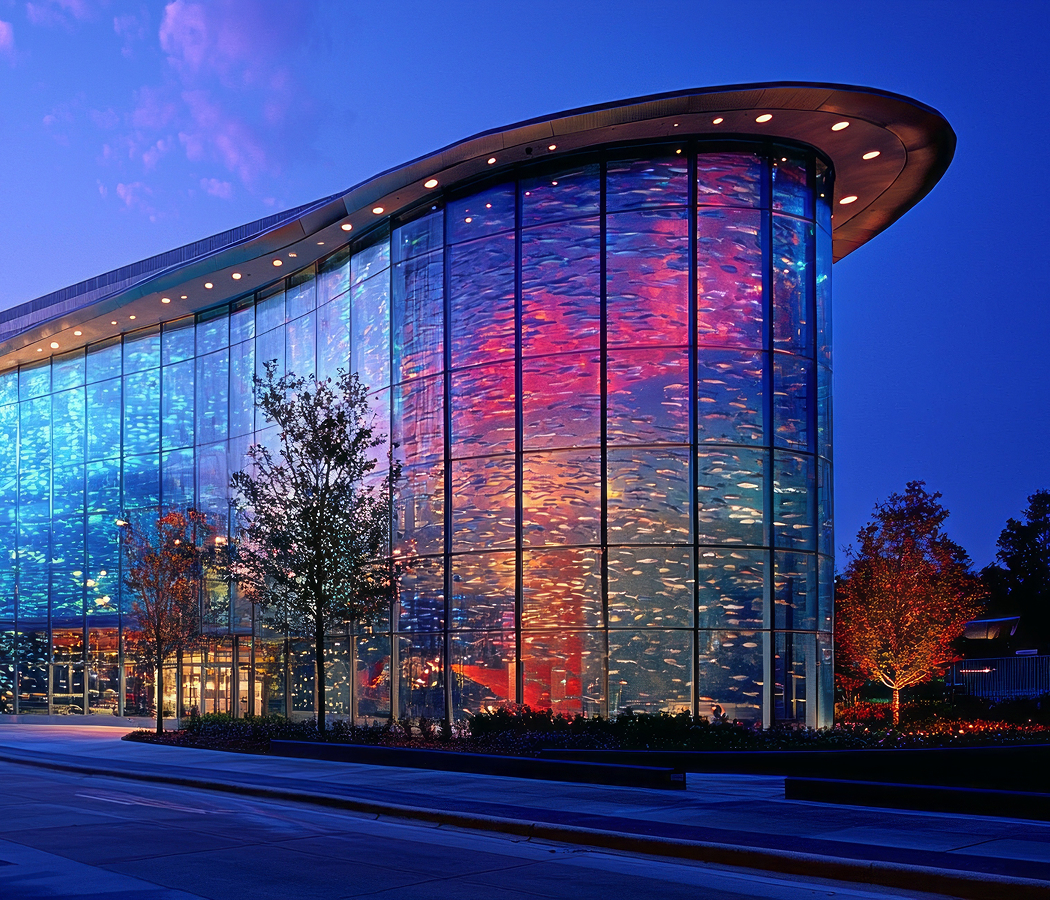
Korean maritime culture has a particularly strong presence in Busan, where fishing communities, port commerce, wartime migration, and contemporary creative industries have produced a distinctive urban character. The city's culinary traditions draw upon seafood harvested from the Korea Strait and the wider southern coast, with fish markets and waterfront restaurants sustaining longstanding relationships between local fishing fleets and urban households. Jagalchi Market remains a focal point of this culture, offering live seafood, dried fish, shellfish, and regional specialties prepared in surrounding restaurants. Busan is especially associated with dwaeji gukbap, a pork-and-rice soup that gained prominence during the Korean War as displaced populations adapted available ingredients to create inexpensive, nourishing meals. Milmyeon, a chilled wheat-noodle dish influenced by northern Korean noodle traditions, reflects another culinary inheritance associated with wartime migration. Eomuk, Korean fish cakes prepared from minced seafood, became a defining local specialty through the city's fishing and food-processing industries. The Bupyeong Kkangtong Market and surrounding commercial streets preserve important examples of Busan's street food culture, with vendors preparing traditional snacks and contemporary variations. The city's artistic prominence is closely associated with the Busan International Film Festival, among Asia's leading cinematic events. Established in 1996, the festival became an influential platform for emerging Asian filmmakers, independent cinema, and international film exchange. The Busan Cinema Center in Centum City, designed by Austrian architectural firm Coop Himmelb(l)au, provides a major venue for screenings, exhibitions, and cultural events. Its enormous cantilevered roof and illuminated exterior establish a distinctive contemporary landmark within the city's expanding cultural district. The Busan Museum of Art presents Korean and international modern and contemporary art, supporting the region's visual arts community through exhibitions and educational programs. The Museum of Contemporary Art Busan, situated near the Nakdong River estuary, contributes another important institution through exhibitions exploring contemporary artistic practice and environmental themes. Busan's performing arts heritage includes traditional Korean music, dance, and theatrical forms associated with the southeastern region. The Busan National Gugak Center supports the preservation and presentation of traditional Korean performing arts, including court music, folk music, and regional dance. The city also maintains significant Buddhist traditions through temples such as Beomeosa, founded during the Silla period and situated on the slopes of Geumjeongsan. Its religious architecture, ceremonial practices, and mountain setting connect Busan with the wider history of Korean Buddhism. Annual celebrations such as the Busan Fireworks Festival bring large public gatherings to the waterfront, with elaborate pyrotechnic displays illuminating Gwangan Bridge and the surrounding bay. The Busan Sea Festival contributes concerts, performances, and recreational events across the city's principal beaches during the summer season. Contemporary music venues, galleries, cafés, and independent cultural spaces have expanded throughout neighborhoods including Jeonpo and the former industrial districts near the waterfront. Busan's cultural importance rests upon the relationship between its maritime economy, the social history of wartime displacement, and the creative institutions that have made it a major center of contemporary Korean film, art, and performance.
Five fascinations.
5. Busan became South Korea's temporary capital during the Korean War.
When North Korean forces captured Seoul in 1950, Busan became the principal refuge for South Korea's government and enormous numbers of civilians displaced by the war. The city remained within the defensive perimeter held by United Nations and South Korean forces, allowing governmental, military, and commercial activity to continue there during the conflict. Refugee settlements spread across steep hillsides as the population surged, permanently altering Busan's urban form and social history. From 1950 to 1953, the city served as South Korea's provisional capital. Modern Busan carries a national significance forged during one of the most precarious periods in Korean history.
4. Gamcheon Culture Village grew from a hillside community shaped by war and displacement.
Gamcheon developed dramatically as refugees settled on Busan's steep terrain during and after the Korean War. Houses climbed the mountainside in dense tiers connected by narrow alleys, stairways, and footpaths, producing an unusual urban landscape overlooking the port. Decades later, community regeneration projects introduced murals, installations, galleries, workshops, and vividly painted façades while retaining much of the neighborhood's underlying physical structure. The resulting landscape became one of Busan's most recognizable destinations. Beneath its colorful contemporary appearance lies a much deeper history of displacement, adaptation, and working-class settlement created by people rebuilding their lives on difficult terrain.
3. Busan contains one of the world's largest department stores.
Shinsegae Centum City opened in 2009 within a former airfield redevelopment in eastern Busan and achieved international recognition for the extraordinary scale of its retail floor area. The complex incorporates shopping with dining, entertainment, cultural facilities, and an elaborate Korean-style spa, turning the traditional department-store model into an immense mixed-use destination. Its surrounding Centum City district represents an equally dramatic transformation: land once associated with Suyeong Airport became a high-density center of commerce, media, exhibitions, residences, and contemporary architecture. Busan converted obsolete aviation territory into an entirely new urban center built around twenty-first-century metropolitan consumption and culture.
2. Busan's Jagalchi Market grew from the city's extraordinary relationship with the sea.
Jagalchi developed beside Busan Harbor into South Korea's most famous seafood market, with merchants selling fish, shellfish, octopus, seaweed, and countless other products arriving through the surrounding maritime economy. Women known as Jagalchi ajumma became particularly associated with the market and its postwar commercial culture, operating stalls and sustaining households during decades of rapid social change. Restaurants and vendors allow seafood to move rapidly from tanks and displays to the table, compressing wholesale trade, retail commerce, and dining into the same waterfront environment. Jagalchi expresses Busan's character as a working port through one of its most distinctive everyday institutions.
1. Busan built a striking coastal temple where most Korean Buddhist temples would traditionally be found in the mountains.
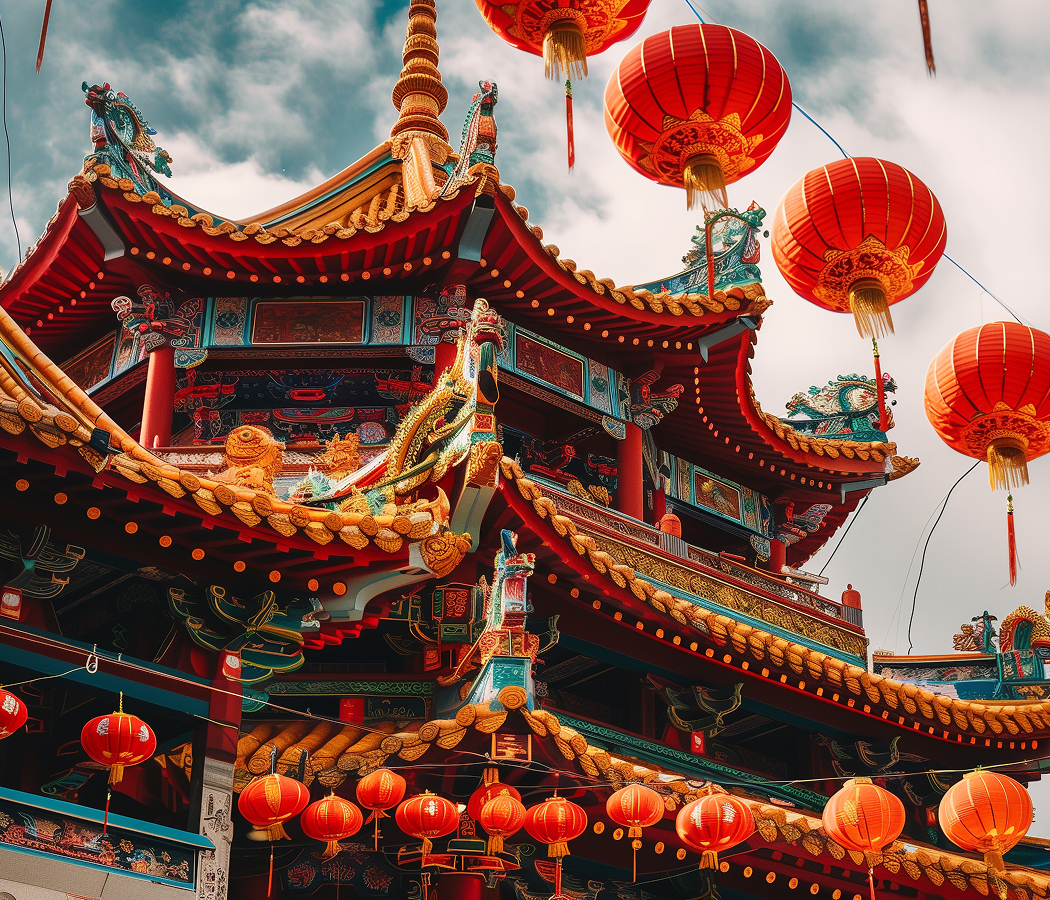
Haedong Yonggungsa occupies rocky shoreline northeast of Central Busan, creating an unusual relationship between Buddhist architecture and the open sea. The temple traces its origins to the fourteenth century, although destruction during the Japanese invasions of Korea and later reconstruction profoundly shaped the complex visible today. Stone stairways descend toward halls, pagodas, statues, and terraces positioned immediately above crashing waves. Its coastal setting distinguishes it from the mountain environments associated with many of Korea's major Buddhist temples. Busan contains a religious landscape where the architecture, cliffs, horizon, and sound of the sea become inseparable parts of the experience.
Where your story begins.
Foresyte Travel reveals places that feel extraordinary long before you arrive.
Enjoy editorial crafted for luxury travelers.
Foresyte may earn a commission when you book.