Fun facts about Cape Town, South Africa.
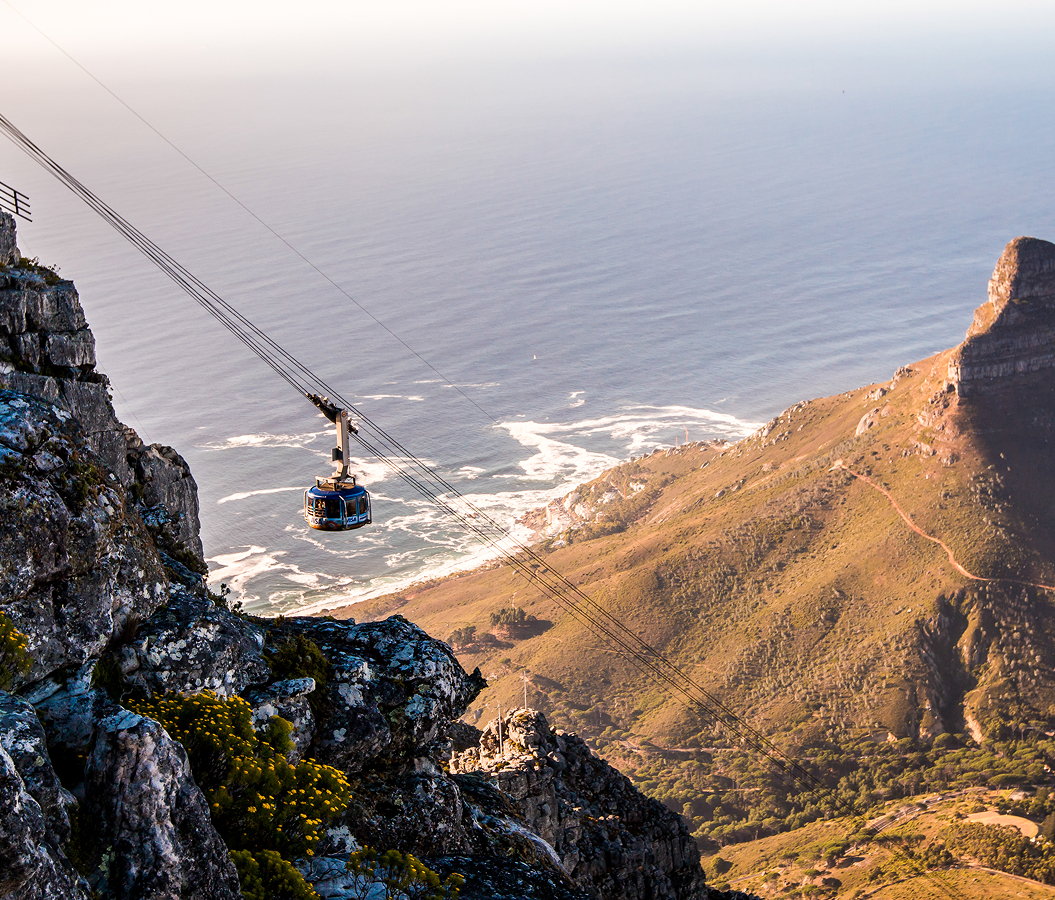
Cape Town spreads around Table Bay beneath the immense sandstone plateau of Table Mountain, whose nearly level summit rises 1,086 meters above sea level and dominates the city's skyline. The mountain forms the northern end of the Cape Peninsula, a rugged landscape of steep ridges, sheltered valleys, coastal cliffs, and contrasting Atlantic and False Bay shorelines. Table Mountain National Park protects much of this terrain, including extensive areas of fynbos vegetation within the Cape Floristic Region, among the world's richest centers of plant diversity. Lion's Head and Signal Hill rise west of the central city, providing panoramic views across the harbor, surrounding neighborhoods, and Atlantic coastline. The historic urban center occupies the lower slopes between Table Mountain and Table Bay, where the Company's Garden preserves part of the agricultural grounds established during the Dutch colonial period. Nearby, the Castle of Good Hope, constructed between 1666 and 1679, remains an important example of seventeenth-century military architecture, distinguished by its pentagonal plan and fortified stone walls. The adjoining central districts contain Victorian commercial buildings, civic institutions, and substantial examples of nineteenth- and twentieth-century architecture. St. George's Cathedral presents a Gothic Revival landmark associated with the Anglican Church and the anti-apartheid leadership of Archbishop Desmond Tutu. The Bo-Kaap neighborhood climbs the lower slopes of Signal Hill through steep cobbled streets lined with brightly painted houses, mosques, and historic residential buildings associated with Cape Town's Muslim communities. Along the northern waterfront, the Victoria & Alfred Waterfront incorporates restored docks, warehouses, commercial spaces, and public promenades within the working harbor. The Zeitz Museum of Contemporary Art Africa occupies a converted grain silo complex, whose sculptural interior reflects an ambitious adaptation of industrial architecture. Westward, the Atlantic Seaboard extends through Green Point, Sea Point, Clifton, and Camps Bay, where dense residential districts and sandy beaches occupy narrow coastal terraces beneath the Twelve Apostles mountain range. Camps Bay is distinguished by its broad beach and dramatic mountain backdrop, and Clifton contains a series of sheltered coves separated by granite boulders. South of the city center, the affluent residential district of Constantia occupies a green valley associated with some of South Africa's oldest wine estates. The eastern slopes of Table Mountain contain Kirstenbosch National Botanical Garden, whose extensive indigenous plant collections and landscaped grounds connect the city with the surrounding mountain ecosystem. Beyond the central peninsula, the Cape Flats extend across low-lying sandy terrain toward False Bay, containing extensive residential districts shaped by twentieth-century urban expansion and apartheid-era planning. Along the eastern shoreline, Muizenberg and Kalk Bay preserve historic seaside buildings, fishing harbors, and commercial streets associated with the development of coastal recreation. Farther south, Simon's Town occupies a sheltered naval harbor beneath steep hillsides, and Boulders Beach supports a well-known colony of African penguins. The peninsula continues toward Cape Point and the Cape of Good Hope, where rugged cliffs overlook the Atlantic and the meeting of coastal currents creates a distinctive marine environment. Cape Town's geography brings together expansive mountain landscapes, historic harbor districts, cultivated valleys, and an exceptionally varied coastline within a metropolitan region whose natural setting remains central to its character.
South African literature, music, and visual art have drawn international attention to Cape Town through works examining colonialism, racial injustice, migration, and the complex social relationships of the Western Cape. The city's intellectual heritage includes the University of Cape Town, whose origins reach to the South African College established in 1829. Its upper campus occupies the slopes of Devil's Peak, providing a prominent institutional setting beneath Table Mountain. Writers associated with Cape Town include J. M. Coetzee, whose novels Disgrace and Waiting for the Barbarians examine power, moral responsibility, and the legacies of colonial society. Coetzee received the Nobel Prize in Literature in 2003, strengthening international recognition of South African literary achievement. Poet and activist Dennis Brutus contributed another influential voice through writings confronting apartheid and political imprisonment. Cape Town's musical history includes the distinctive tradition of Cape jazz, which combines influences from American jazz, African musical forms, and the city's multicultural performance heritage. Pianist Abdullah Ibrahim, born in Cape Town in 1934, became one of South Africa's most internationally celebrated jazz musicians, incorporating local melodies and township musical traditions into his compositions. The city's Cape Malay choir tradition and the annual Tweede Nuwe Jaar celebrations preserve another important musical inheritance through street parades, elaborate costumes, and performances associated with the Cape Town Minstrel Carnival. These festivities developed through the experiences of enslaved and working-class communities and remain closely connected to the city's social history. The Artscape Theatre Centre supports opera, ballet, drama, and musical productions, and the Cape Town Philharmonic Orchestra contributes to the city's classical performance institutions. Visual arts institutions include the Iziko South African National Gallery, whose collections encompass historical and contemporary South African art, and Zeitz MOCAA, which presents contemporary artistic practices from Africa and its diaspora. The District Six Museum preserves the history of the neighborhood's forced removals through photographs, oral histories, and community exhibitions, connecting cultural memory with the continuing consequences of apartheid. Robben Island, designated a UNESCO World Heritage Site in 1999, contributes another essential institution through its preserved prison buildings and interpretation of South Africa's liberation struggle. Cape Town's culinary heritage reflects Indigenous ingredients, Dutch colonial cooking, enslaved communities, and the substantial influence of Cape Malay foodways. Bobotie, a spiced minced-meat dish topped with a savory egg custard, represents a familiar preparation associated with the Cape's multicultural culinary history. Denningvleis combines slow-cooked meat with aromatic spices and a distinctive sweet-sour balance, and koesisters are spiced, syrup-coated pastries closely associated with Cape Malay households. The surrounding Winelands contribute another major regional tradition, with historic estates in Constantia, Stellenbosch, and Franschhoek producing internationally recognized wines. The Constantia wine district developed during the seventeenth century and gained particular prominence for sweet wines exported to European markets. Contemporary Cape Town restaurants increasingly emphasize seafood, locally grown produce, regional wines, and ingredients drawn from the Western Cape's varied agricultural landscapes. The city's cultural significance is inseparable from its artistic responses to political struggle, its distinctive musical and culinary inheritance, and the continuing contributions of communities whose histories connect southern Africa with the wider Atlantic and Indian Ocean worlds.
Five fascinations.
5. Cape Town was founded around a refreshment station for ships traveling between Europe and Asia.
The Dutch East India Company established a permanent settlement at Table Bay in 1652 under Jan van Riebeeck. Its immediate purpose was practical: supplying passing ships with fresh food, water, and other provisions during the long voyage between Europe and the company's Asian trading network. Farms, fortifications, workshops, and a growing settlement developed around this maritime function, drawing Cape Town into an expanding system of global commerce. Indigenous Khoikhoi communities already inhabited and traded throughout the region, and colonial expansion produced profound conflict and dispossession. Modern Cape Town grew from a strategic stopping point positioned beside one of the great maritime routes of the early modern world.
4. Table Mountain is dramatically older than the Himalayas.
The sandstone formations that define Cape Town originated hundreds of millions of years before the Himalayan mountain-building process began. Geological uplift and immense periods of erosion ultimately produced Table Mountain's famous flat summit and precipitous cliffs, creating a landmark that rises more than a kilometer above sea level directly beside the city. Its distinctive “tablecloth” of cloud forms when moisture-bearing air is forced upward across the mountain, cools, and condenses near the summit. Cape Town's defining skyline is shaped by extraordinarily ancient geology, with the city occupying a narrow landscape between an eroded mountain massif and the Atlantic Ocean.
3. Robben Island served radically different purposes across nearly four centuries.
Robben Island lies in Table Bay within sight of Central Cape Town, yet its isolation repeatedly made it useful for separating people from the mainland. From the seventeenth century onward, the island served at different periods as a prison, place of banishment, hospital complex, military installation, and leper colony. Under apartheid it became internationally notorious as a maximum-security prison for political prisoners. Nelson Mandela spent 18 of his 27 years of imprisonment there before becoming South Africa's first democratically elected president. The island compresses centuries of colonialism, segregation, political repression, resistance, and democratic transformation into one extraordinary landscape.
2. Cape Town contains an entire neighborhood whose color became part of its cultural identity.
Bo-Kaap developed on the slopes above Central Cape Town and became closely associated with the Cape Muslim community, whose history encompasses enslaved and exiled people brought to the Cape from parts of Africa and Asia under colonial rule. Mosques, cobbled streets, compact houses, and steep terrain give the neighborhood a distinctive physical character. Many façades are now painted in intense combinations of pink, turquoise, yellow, green, blue, and purple, creating one of Cape Town's most recognizable streetscapes. Beneath that visual exuberance lies a far deeper history of slavery, faith, family life, cultural survival, and community formation spanning generations.
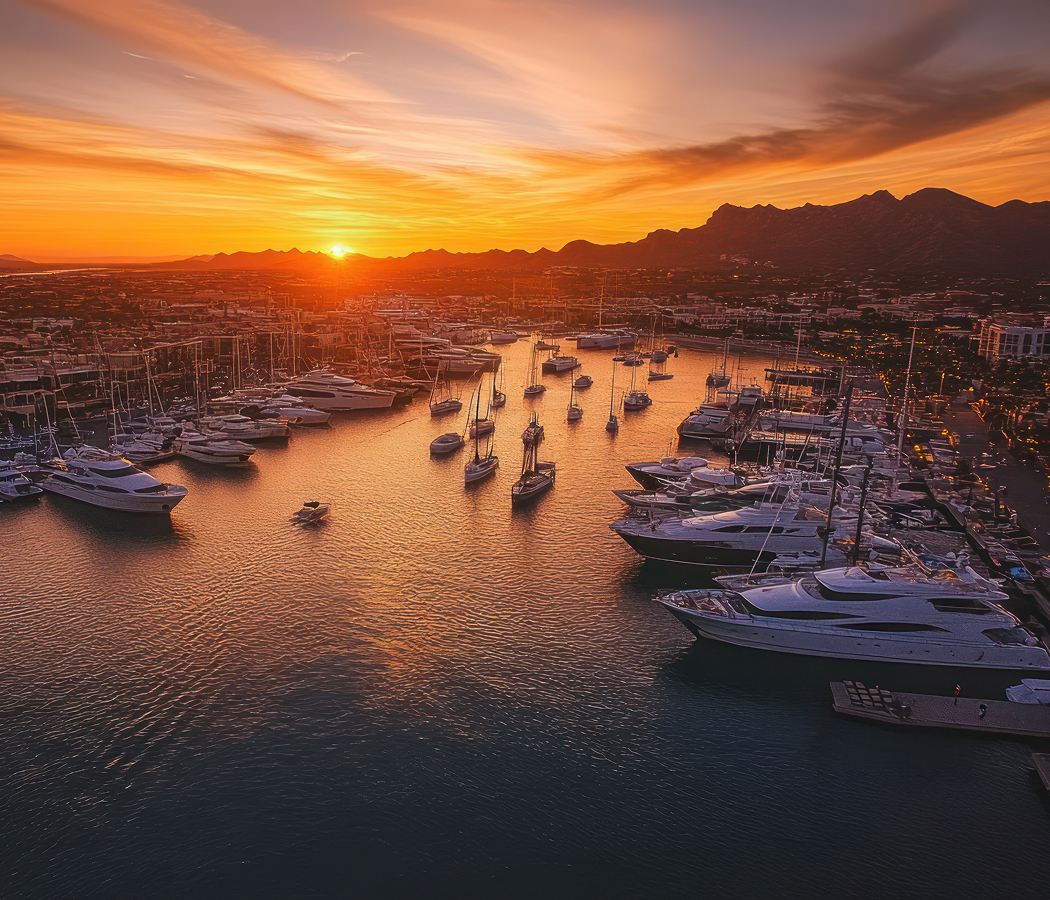
1. Cape Town transformed a working harbor into one of Africa's most ambitious waterfront districts.
The Victoria & Alfred Waterfront occupies historic harbor territory whose development accelerated after Prince Alfred ceremonially began construction of Cape Town's first modern harbor basin in 1860. Docks, warehouses, workshops, breakwaters, and maritime industries subsequently expanded along Table Bay as the port grew. Late twentieth-century redevelopment integrated this industrial fabric with public spaces, cultural institutions, shops, restaurants, hotels, residences, and working harbor functions. Historic structures survived alongside contemporary construction, preserving visible layers of maritime engineering. Cape Town turned infrastructure once dominated by shipping and freight into a dense urban waterfront that still operates within an active port.
Where your story begins.
Foresyte Travel reveals places that feel extraordinary long before you arrive.
Enjoy editorial crafted for luxury travelers.
Foresyte may earn a commission when you book.