Fun facts about Atlanta, Georgia.
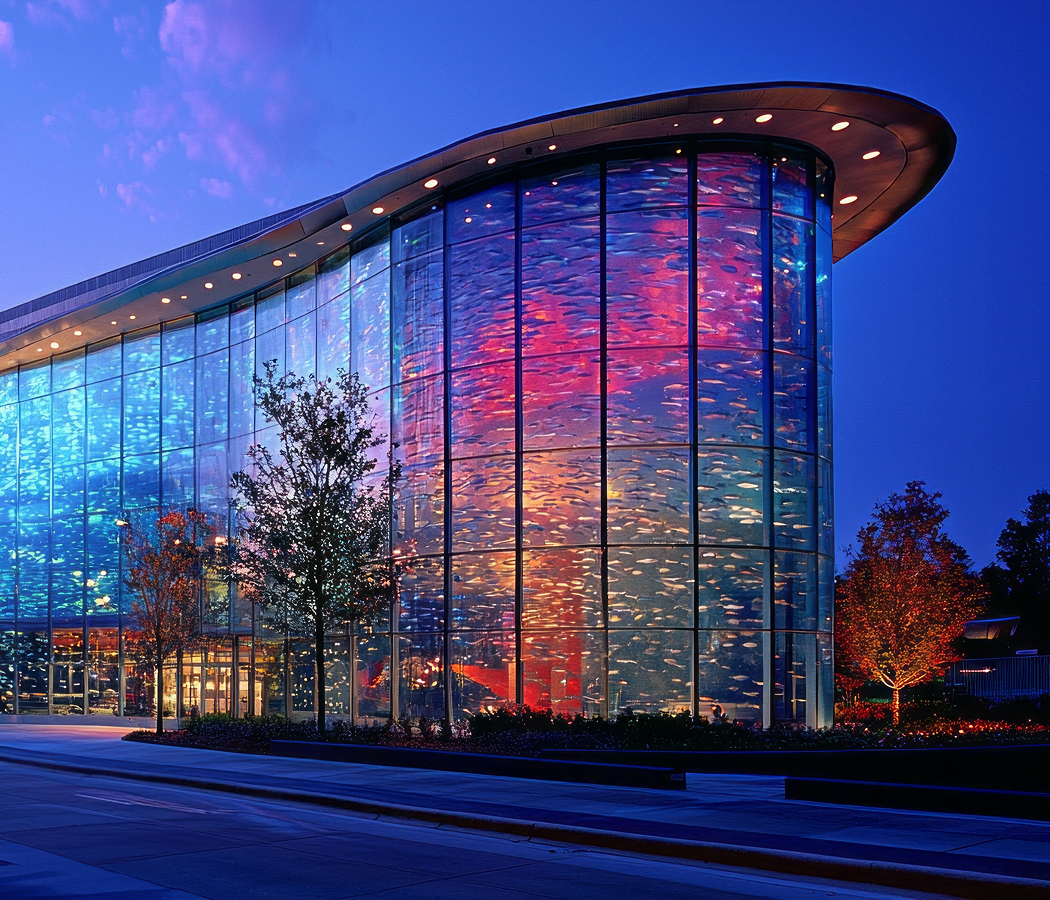
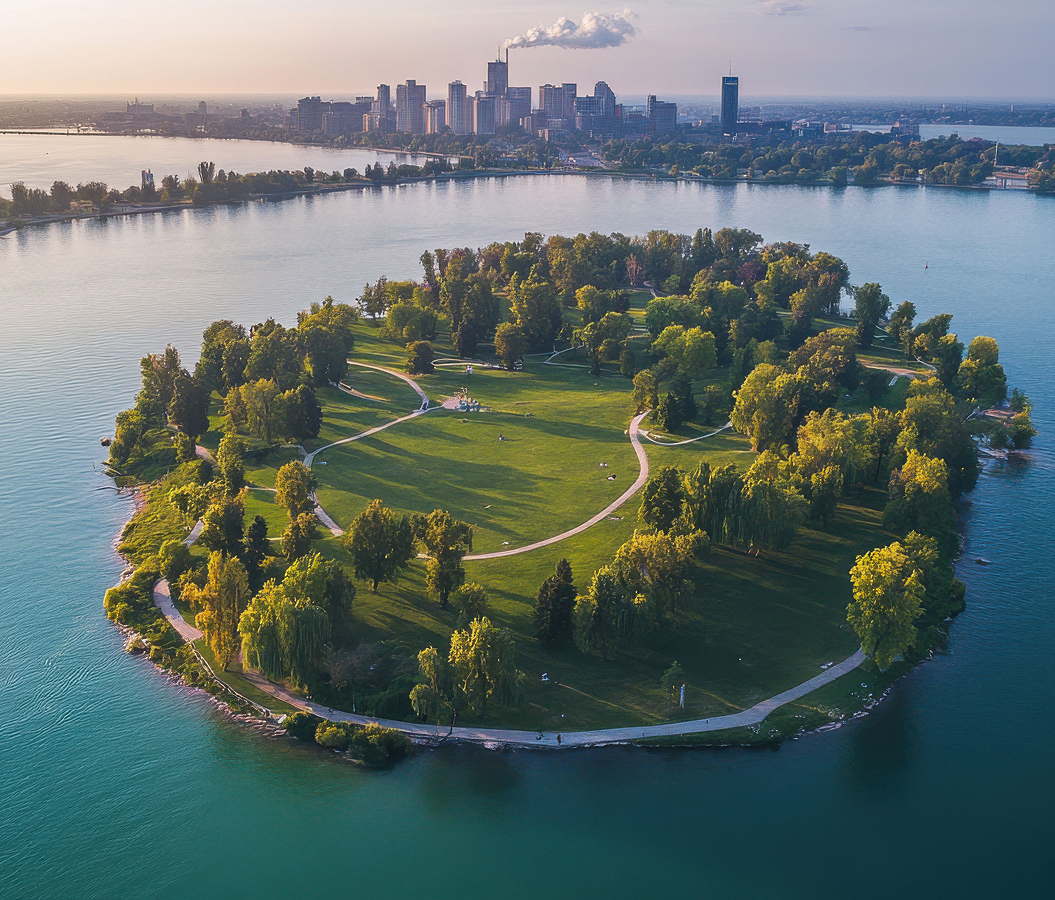
Atlanta extends across the rolling uplands of the Georgia Piedmont, where wooded ridges, granite formations, and numerous streams shape a metropolitan landscape distinguished by historic neighborhoods, extensive tree cover, and modern commercial districts. The city stands 1,000 feet above sea level, near the Eastern Continental Divide, which separates watersheds draining toward the Atlantic Ocean and the Gulf of Mexico. Downtown developed around the historic railroad junction known as Five Points, where transportation infrastructure established the foundation of the central business district. The surrounding streets contain government buildings, commercial towers, entertainment venues, and surviving nineteenth-century structures. The Georgia State Capitol, completed in 1889, presents a neoclassical composition crowned by a gilded dome, establishing a prominent landmark within the governmental district. Nearby, Underground Atlanta preserves historic commercial spaces associated with the city's early railway infrastructure. Centennial Olympic Park occupies a substantial downtown site developed for the 1996 Games, surrounded by major cultural attractions and contemporary commercial buildings. The Georgia Aquarium and World of Coca-Cola form part of this institutional concentration, reflecting Atlanta's investment in large-scale public attractions. North of downtown, Midtown contains a dense collection of residential towers, corporate buildings, cultural institutions, and landscaped streets. Peachtree Street serves as a principal metropolitan corridor, connecting historic commercial districts with successive generations of modern development. The Fox Theatre, opened in 1929, presents an elaborate architectural composition inspired by Islamic and Middle Eastern design, with richly decorated interiors and a distinctive domed exterior. Nearby, the High Museum of Art occupies an architectural complex incorporating Richard Meier's original white-clad building and later additions designed by Renzo Piano. Piedmont Park extends across an expansive landscape of lawns, wooded areas, and recreational grounds, with the Midtown skyline rising beyond its eastern and southern edges. The adjoining Atlanta Botanical Garden contains specialized plant collections, conservatories, and landscaped exhibitions. East of the central districts, the neighborhoods of Inman Park, Old Fourth Ward, and Virginia-Highland preserve substantial concentrations of Victorian residences, Craftsman bungalows, and early twentieth-century commercial streets. The Atlanta BeltLine follows former railway corridors through a developing network of trails, parks, and public spaces, connecting neighborhoods historically divided by industrial infrastructure. Ponce City Market occupies the former Sears, Roebuck & Co. distribution complex, whose expansive brick architecture has been adapted for contemporary commercial use. Farther north, Buckhead combines established residential neighborhoods, major retail districts, and a substantial concentration of office towers. The Atlanta History Center preserves historic houses, gardens, and exhibitions exploring the region's development. West of downtown, the Atlanta University Center brings together historically Black educational institutions within a district central to the city's intellectual and political history. Beyond the urban core, Stone Mountain rises through a massive granite dome east of the city, forming one of the Piedmont's most recognizable geological landmarks. Atlanta's physical landscape brings together railway-era streets, historic residential districts, modern commercial towers, and an extensive urban forest across the rolling terrain of northern Georgia.
Georgian music, literature, and political thought have gained international influence through Atlanta's African American institutions, independent creative communities, and expanding entertainment industries. The city's cultural development is inseparable from its historically Black colleges and universities, whose scholars, writers, musicians, and activists helped shape national debates over race, education, and democracy. The Atlanta University Center includes Morehouse College, Spelman College, and Clark Atlanta University, institutions associated with generations of influential intellectuals and civic leaders. W. E. B. Du Bois taught at Atlanta University and conducted pioneering sociological research examining African American life in the post-Reconstruction South. The Martin Luther King Jr. National Historical Park preserves important sites connected to the civil rights leader's early life and ministry, including his birthplace and Ebenezer Baptist Church. Atlanta's musical history encompasses gospel, blues, soul, hip-hop, and contemporary R&B, supported by churches, recording studios, independent labels, and performance venues. During the 1990s, artists including Outkast, Goodie Mob, and Organized Noize established a distinctive Southern hip-hop sound, challenging the dominance of New York and Los Angeles within American rap. Outkast's ATLiens and Aquemini helped establish Atlanta as a major center of musical innovation through their inventive production, regional storytelling, and experimental approach to the genre. Subsequent generations of artists, including T.I., Gucci Mane, Future, and Migos, contributed to the development and international influence of trap music. Atlanta's R&B heritage includes producers and performers whose recordings shaped mainstream popular music, particularly through the work of Jermaine Dupri and the So So Def label. The city's literary associations include Margaret Mitchell, whose novel Gone with the Wind, published in 1936, became a major cultural phenomenon and remains central to debates surrounding romanticized portrayals of the antebellum South. Alice Walker, born in nearby Eatonton, contributed another influential literary perspective through works examining race, gender, and Southern life. Atlanta's contemporary visual arts community includes the High Museum of Art, whose collections encompass American, European, African, and contemporary art. The Hammonds House Museum supports the presentation and study of African American visual culture, and the National Center for Civil and Human Rights explores historical struggles for equality and their international significance. The city's film and television industries have expanded through Georgia's production incentives, attracting major studios and establishing the metropolitan region as a significant center of screen production. Tyler Perry Studios occupies an extensive former military property in Southwest Atlanta, contributing to the city's prominence within African American filmmaking and entertainment. Atlanta's culinary traditions reflect the agricultural inheritance of the American South and the influence of successive generations of migration. Fried chicken, collard greens, cornbread, barbecue, and peach desserts remain associated with regional cooking, alongside dishes developed through African American culinary traditions. Historic restaurants including Paschal's played important roles in the Civil Rights Movement, providing gathering places for activists and political leaders. Contemporary dining incorporates substantial influences from the city's Korean, Vietnamese, Ethiopian, Caribbean, and Latin American communities. Atlanta's cultural importance rests upon its sustained contributions to civil rights leadership, American popular music, Southern literature, and an entertainment economy whose influence extends far beyond Georgia.
Five fascinations.
5. Atlanta was built around a railroad terminus before it was called Atlanta.
Atlanta's origins lie in the expansion of Georgia's railroad network during the nineteenth century. Surveyors selected the area as the southeastern endpoint of the Western and Atlantic Railroad, and the settlement that developed there became known first as Terminus. It was later renamed Marthasville before receiving the name Atlanta in the 1840s. Rail connections subsequently turned the young settlement into an important transportation and commercial center linking the interior South with distant markets. The city's emergence began with infrastructure: Atlanta grew around the geographic point where planners intended a railroad to end, then expanded as additional lines transformed that endpoint into a regional transportation crossroads.
4. Atlanta rebuilt from extraordinary destruction during the Civil War.
The Atlanta Campaign made the city a critical military objective in 1864 because its railroads supplied Confederate armies and connected major portions of the South. Union forces under William Tecumseh Sherman captured Atlanta in September, and extensive destruction followed before Sherman began his March to the Sea. Railroad facilities, industrial sites, warehouses, and numerous other structures were demolished or burned. Atlanta nevertheless recovered rapidly after the war, rebuilding transportation networks and commercial districts as its population expanded. The phoenix subsequently became an enduring civic symbol, representing a city whose modern character was profoundly shaped by destruction followed by reconstruction.
3. Atlanta became a central arena of the American civil rights movement.
Martin Luther King Jr. was born in Atlanta in 1929 and grew up within the Black community surrounding Auburn Avenue, where Ebenezer Baptist Church became inseparable from his family and ministry. The surrounding Sweet Auburn district developed into a major center of Black business, religion, journalism, and civic organization during segregation. Atlanta also produced influential institutions and leaders whose work extended throughout the national civil rights movement. The city contains an exceptional concentration of places connected to the struggle for racial equality, linking King's childhood, religious life, organizing networks, and national leadership within a relatively compact historic landscape.
2. Atlanta turned the world's largest passenger airport into one of its defining pieces of infrastructure.
Hartsfield-Jackson Atlanta International Airport grew from a former automobile racetrack called the Atlanta Speedway, which the city leased for aviation use in 1925. Commercial service expanded rapidly, and successive terminals and runways transformed the site into an enormous global transportation hub. Atlanta's geographic position and development as a connecting center made the airport fundamental to the expansion of Delta Air Lines and to the city's broader economic reach. Its immense passenger volumes eventually placed it among the busiest airports on Earth. Atlanta's original railroad character evolved into another form of transportation dominance, with aviation reinforcing the city's role as a major national crossroads.
1. Atlanta used the 1996 Olympics to remake a major section of its downtown.
The Centennial Olympic Games brought athletes and visitors from around the world to Atlanta in 1996 and accelerated major changes across the city. Centennial Olympic Park transformed former blocks of downtown into a large public gathering space that became a lasting centerpiece of the redevelopment. Olympic-related investment also produced new athletic facilities, transportation improvements, and construction across the metropolitan area. Several competition venues subsequently acquired entirely new purposes, including the Olympic stadium that was converted for professional baseball after the Games. Atlanta treated a temporary global sporting event as an urban-development catalyst whose physical legacy continued reshaping the city long after the closing ceremony.
Where your story begins.
Foresyte Travel reveals places that feel extraordinary long before you arrive.
Enjoy editorial crafted for luxury travelers.
Foresyte may earn a commission when you book.