Why World of Coca-Cola matters.
World of Coca-Cola is a corporate history museum where Downtown's commercial heritage meets the invention of Coca-Cola by pharmacist John Stith Pemberton, the advertising campaigns that established an international consumer brand, and the evolution of American beverage manufacturing.
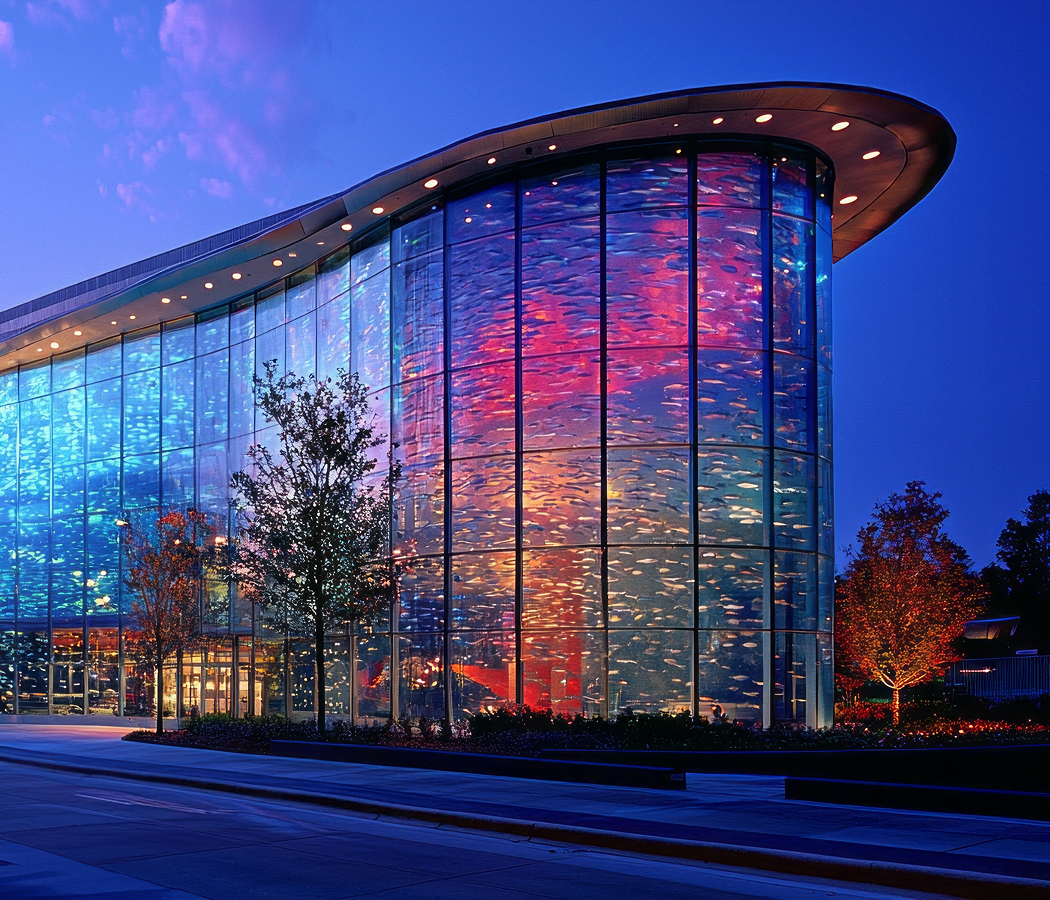
Set along Baker Street near Centennial Olympic Park Drive and just steps from the Luckie Street entertainment corridor, the museum occupies Pemberton Place's southern frontage, where Downtown's convention district gives way to landscaped pedestrian grounds extending toward Ivan Allen Jr. Boulevard. The contemporary building combines expansive glass façades, polished metal surfaces, and a prominent cylindrical entrance structure crowned by the familiar Coca-Cola emblem. Interior exhibition spaces incorporate theatrical lighting, large-scale audiovisual installations, historical advertising displays, and interactive galleries arranged around a central circulation hall. A substantial collection of commercial artifacts connects the museum's contemporary exhibition architecture with the company's nineteenth-century origins and the development of its international bottling operations. The result is a corporate museum whose historical collections, immersive exhibition design, and position within Atlanta's principal visitor district connect the city's commercial development with one of the world's most widely distributed consumer products.
What defines World of Coca-Cola.
World of Coca-Cola is best known for preserving the history of Coca-Cola, the carbonated beverage invented in Atlanta in 1886 and subsequently developed into one of the most recognizable commercial products in the world. Pharmacist John Stith Pemberton created the original syrup in May 1886, developing a beverage intended for sale through the soda fountains that served as important gathering places in nineteenth-century American cities. The first serving took place at Jacobs' Pharmacy in Downtown on May 8, where the beverage sold for five cents a glass. Pemberton's bookkeeper, Frank M. Robinson, suggested the name Coca-Cola and developed the distinctive Spencerian-script lettering that became central to the company's visual presentation. Pemberton sold portions of his business interests during the following years, and Atlanta businessman Asa Griggs Candler consolidated control of the formula and associated commercial rights. Candler incorporated The Coca-Cola Company in 1892, establishing the corporate organization that would direct the beverage's expansion through increasingly sophisticated distribution and advertising operations. Early marketing campaigns distributed branded calendars, serving trays, clocks, and other promotional objects, placing the company's name throughout American commercial and domestic environments. The development of independent bottling franchises transformed the business after 1899, when Chattanooga businessmen Benjamin F. Thomas and Joseph B. Whitehead secured rights to bottle and distribute Coca-Cola across much of the United States. This arrangement created a decentralized production system that expanded the beverage's availability beyond soda fountains and established a commercial structure capable of supporting extensive geographic growth. The company's advertising department subsequently developed campaigns incorporating demonstrated posters, painted signs, magazine advertisements, and distinctive packaging, strengthening the relationship between the beverage and American consumer culture. In 1915, the Root Glass Company of Terre Haute, Indiana, developed the contour bottle design that became one of the company's most recognizable commercial assets. Earl R. Dean contributed to the bottle's development, creating a fluted glass form intended to distinguish Coca-Cola from competing beverages through its physical shape. The company introduced the six-bottle carton in 1923, extending the product's distribution into grocery stores and household consumption. International expansion accelerated during the twentieth century, particularly during World War II, when Coca-Cola committed to supplying American military personnel with affordable beverages overseas. The establishment of bottling facilities near military installations created distribution infrastructure that subsequently supported the company's growth in international markets. World of Coca-Cola originally opened in 1990 near Underground Atlanta, introducing a permanent public exhibition devoted to the company's commercial history, advertising collections, and beverage production. The museum relocated to Pemberton Place in 2007, occupying a purpose-built facility developed as part of the revitalization of Downtown's northern cultural district.
The Coca-Cola Company's historical collections form the foundation of the museum's exhibition program, incorporating original advertising objects, packaging, manufacturing equipment, and commercial memorabilia from successive periods of the brand's development. The Milestones of Refreshment gallery presents the company's history through chronological displays of early promotional objects, bottling technology, advertising campaigns, and international commercial expansion. Original soda fountain equipment demonstrates the preparation and dispensing methods associated with the beverage's nineteenth-century origins, connecting the company's early operations to the broader history of American pharmacies and public refreshment establishments. Historical bottles and packaging demonstrate changes in glass manufacturing, product standardization, and the development of the contour bottle's distinctive proportions. The museum's advertising collections incorporate promotional illustrations, illuminated signs, vending machines, and branded merchandise associated with the company's extensive marketing operations. A gallery devoted to the secret formula explores the commercial importance of the proprietary syrup recipe, including the elaborate security arrangements and public fascination surrounding its preservation. The formula's historical association with a secured vault became an important element of Coca-Cola's corporate mythology, connecting industrial secrecy with the development of consumer recognition. The museum's Vault of the Secret Formula exhibition uses audiovisual installations and interactive displays to examine the history of the recipe and the commercial significance of its confidentiality. A separate bottling exhibition demonstrates the industrial processes involved in filling, sealing, and packaging Coca-Cola products, connecting the company's historical manufacturing methods with contemporary production technology. The museum's tasting area incorporates beverages distributed across international markets, presenting regional formulations and specialty products associated with different countries. Visitors encounter variations in sweetness, acidity, carbonation, and flavor profiles, revealing the extensive product development underlying the company's international beverage portfolio. The exhibition program also incorporates the history of Coca-Cola advertising characters, including the company's long association with Santa Claus imagery developed through illustrations by Haddon Sundblom beginning in 1931. Sundblom's paintings contributed to the popularization of a warm, red-suited depiction of Santa Claus, establishing one of the most enduring relationships between commercial advertising and American holiday imagery. The museum's historical collections preserve these advertising developments alongside the industrial and commercial artifacts associated with the company's growth. Its exhibition program connects the history of an Atlanta beverage manufacturer with broader developments in American advertising, industrial production, packaging design, and international consumer commerce.
How World of Coca-Cola fits.
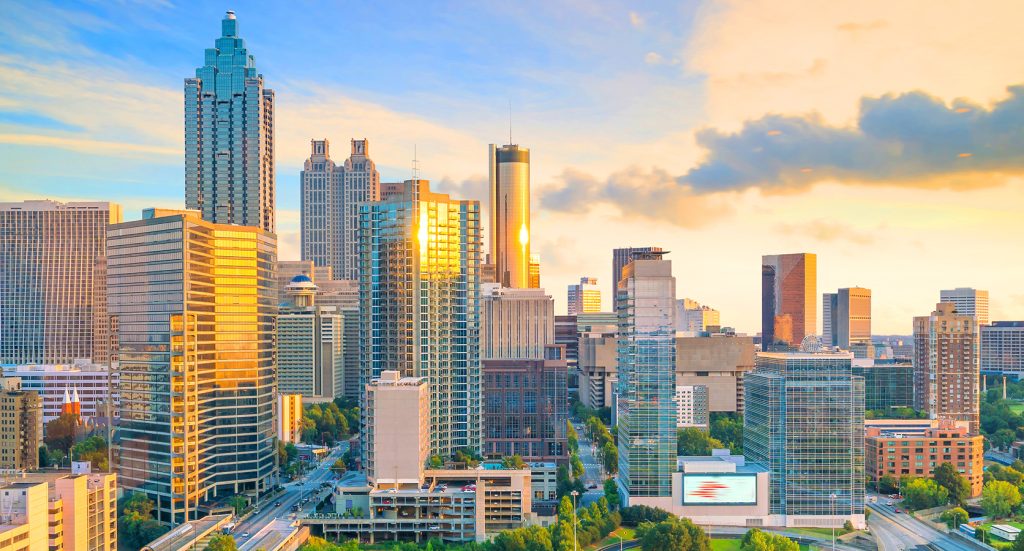
World of Coca-Cola works as the commercial history centerpiece for an outing connecting Downtown's Olympic-era redevelopment, the scientific institutions developed within its cultural district, and the civil rights history preserved through the city's public museums.
Begin at Centennial Olympic Park, the 22-acre public landscape developed for the 1996 Summer Olympic Games and subsequently incorporated into Downtown's permanent civic infrastructure. The park originated through the leadership of Billy Payne and the Atlanta Committee for the Olympic Games, transforming a collection of underutilized commercial blocks into a central gathering place for the international event. Landscape architects incorporated broad lawns, pedestrian promenades, commemorative plazas, and the Fountain of Rings, an interactive water installation arranged in the form of the five Olympic rings. The park's development accelerated the transformation of the surrounding district, attracting major cultural institutions, hotels, and entertainment facilities during the decades following the Games. Its commemorative features preserve the history of Atlanta's Olympic preparations and the city's emergence as an international destination for sporting and cultural events. Continue to Georgia Aquarium, the marine science institution whose extensive aquatic collections occupy a major facility immediately north of the park. The aquarium opened in November 2005 following a substantial philanthropic commitment from Home Depot cofounder Bernard Marcus and his wife, Billi, whose funding supported the creation of one of the world's largest public aquariums. Its Ocean Voyager exhibition incorporates an enormous aquatic habitat designed to accommodate whale sharks, manta rays, and other large marine species, creating a major center for public education concerning ocean ecosystems. The aquarium's research and conservation programs encompass marine animal medicine, breeding initiatives, habitat protection, and scientific collaboration with institutions across the world. Its educational exhibits extend beyond marine environments to incorporate freshwater ecosystems, coastal habitats, and the biological diversity of aquatic environments. Conclude at National Center for Civil and Human Rights, the museum and cultural institution devoted to the American civil rights movement and the international struggle for human rights. The center opened in June 2014 following years of planning and philanthropic support from Atlanta's civic and business communities. Its principal exhibitions examine the history of segregation, the leadership of Martin Luther King Jr., and the political campaigns that challenged racial discrimination across the United States. The museum incorporates historical photographs, documentary recordings, personal artifacts, and interactive installations examining the experiences of civil rights activists and the social conditions surrounding their campaigns. A substantial collection of papers and personal objects associated with King connects the institution to Atlanta's central role in the movement. The progression moves from Centennial Olympic Park's international sporting heritage through Georgia Aquarium's marine science collections and culminates at National Center for Civil and Human Rights' examination of American and international human rights history, connecting World of Coca-Cola to the institutions that shaped Downtown's cultural redevelopment.
Where your story begins.
Foresyte Travel reveals places that feel extraordinary long before you arrive.
Enjoy editorial crafted for luxury travelers.
Foresyte may earn a commission when you book.