Top places to stay in Charlotte, North Carolina.
Charlotte developed at the intersection of Piedmont trading routes, America's first gold rush, and the industrial expansion that transformed the Carolina interior into a major commercial region. Founded in 1768 and named for Queen Charlotte of Mecklenburg-Strelitz, the settlement occupied territory traditionally inhabited by the Catawba people, whose trading relationships extended across the Southeast. The discovery of gold at Reed Gold Mine in 1799 attracted prospectors and merchants, and the establishment of a federal branch mint in 1835 strengthened the town's financial importance. Railroad construction during the 1850s connected Charlotte with Atlantic ports and regional markets, encouraging commercial inns and boardinghouses near the railway depots. Following the Civil War, textile manufacturing and banking became the foundations of a prosperous New South economy. Industrialists, traveling salesmen, and investors increasingly required sophisticated establishments for business and social gatherings. The Selwyn Hotel opened in 1907, establishing an important address near the commercial center. The Hotel Charlotte followed in 1924, designed by William Lee Stoddart during a period of ambitious downtown construction. Its ballroom and public spaces reflected the growing importance of conventions, business entertainment, and civic celebrations. The Hotel Barringer opened in 1940, adding another substantial property to the central lodging market. Postwar suburbanization dispersed retail and residential activity, although banking institutions continued concentrating their headquarters downtown. The expansion of Charlotte Douglas International Airport strengthened national business connections, and financial consolidation during the 1980s and 1990s brought unprecedented investment into the metropolitan center. The 1998 merger of NationsBank and BankAmerica established Bank of America as a major national institution headquartered in Charlotte. The Charlotte Convention Center opened in 1995, supporting an expanding meetings economy. The Ritz-Carlton, Charlotte debuted in 2009, introducing contemporary luxury hospitality to the financial district. Subsequent redevelopment brought boutique properties into restored commercial buildings and emerging residential neighborhoods. Today, the hospitality economy reflects successive periods of mineral extraction, railroad commerce, textile manufacturing, and financial expansion, with a modern metropolitan skyline expressing the commercial ambitions that have shaped the city for more than two centuries.
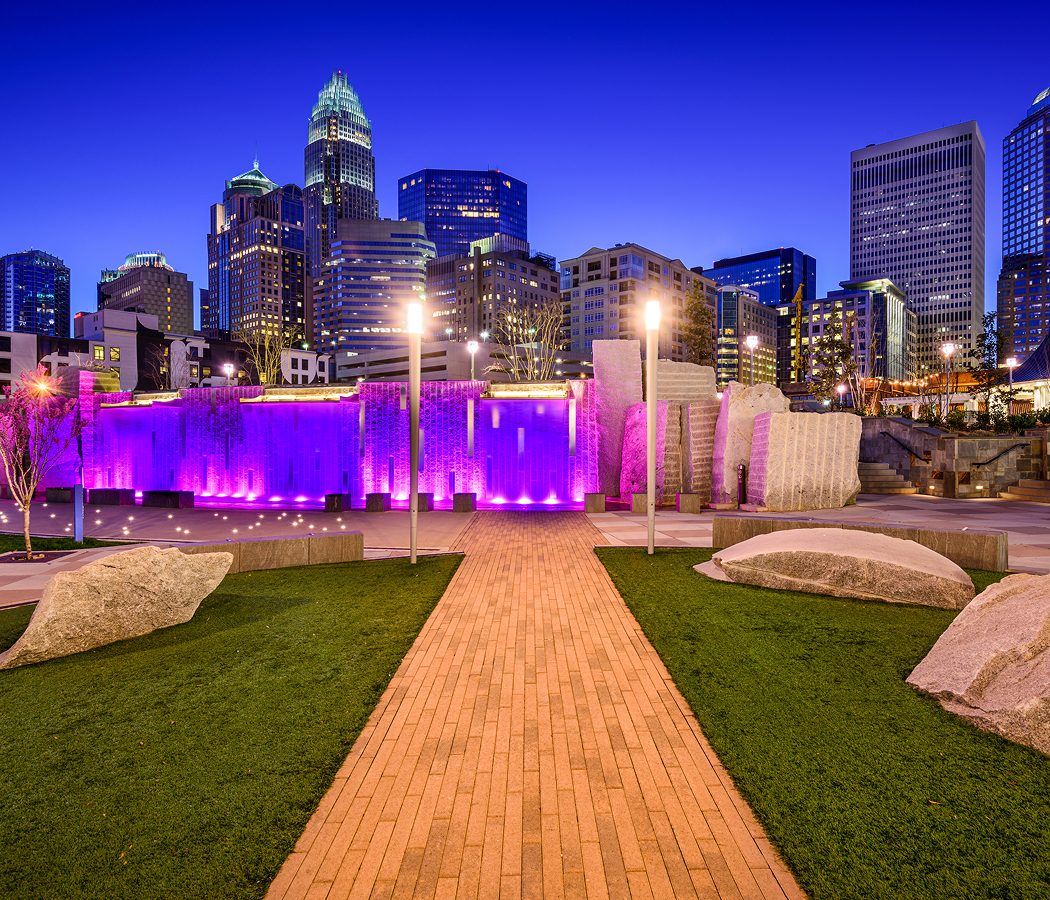
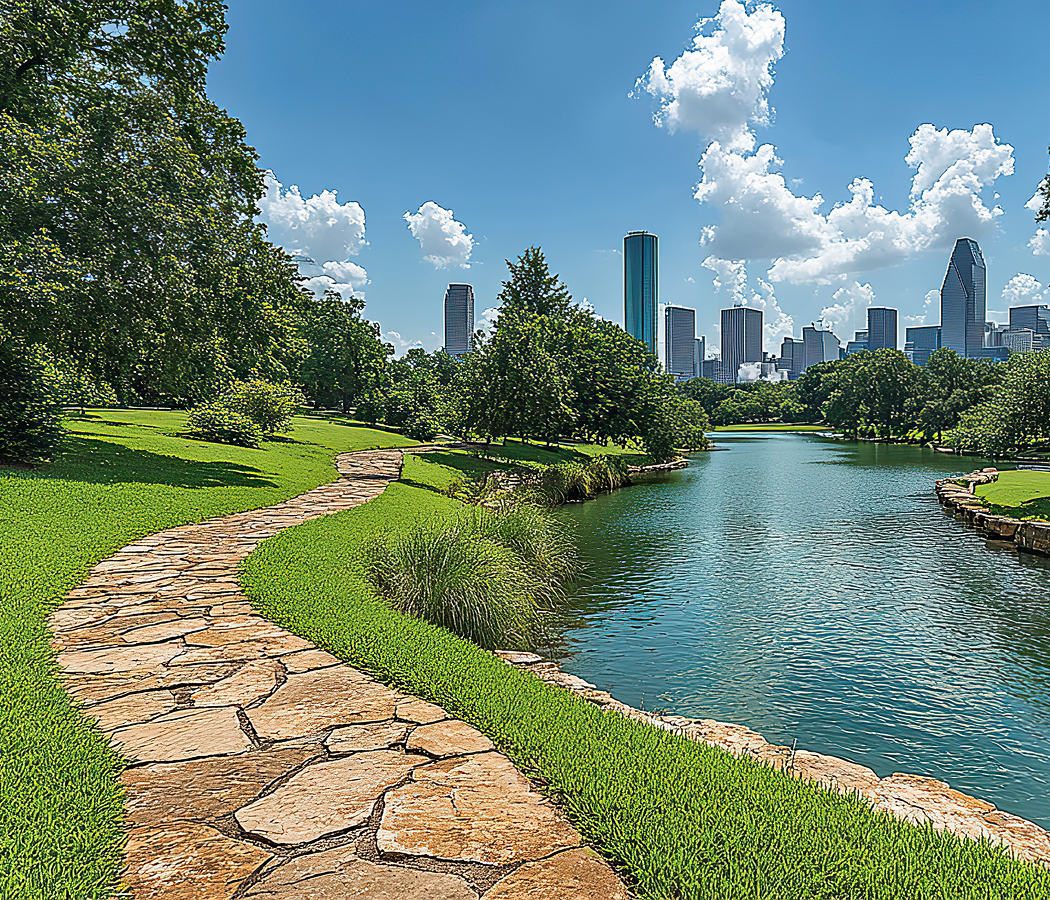
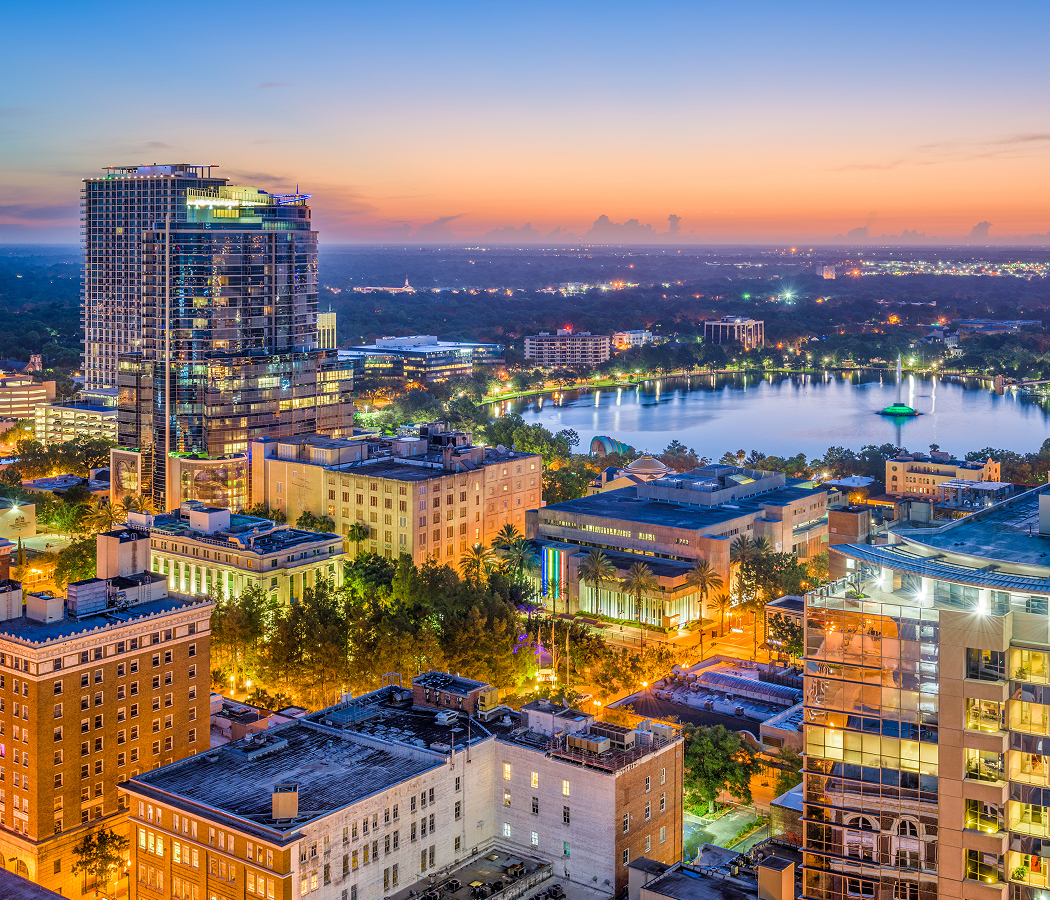
Charlotte occupies the rolling Carolina Piedmont, where wooded residential neighborhoods surround a concentrated skyline of contemporary towers, historic masonry buildings, and landscaped public spaces. Uptown forms the principal hospitality center, organized into four wards around the intersection of Trade and Tryon streets. Luxury properties occupy prominent sites near corporate headquarters, cultural institutions, and restaurants, with expansive glazing and elevated terraces overlooking the central business district. The streets surrounding Romare Bearden Park provide a particularly attractive setting through landscaped gathering spaces, pedestrian routes, and views of the surrounding towers. Northwest of the commercial center, Fourth Ward preserves a contrasting residential landscape of Victorian houses, brick sidewalks, mature trees, and intimate neighborhood parks. Smaller guest properties and residential accommodation offer a quieter setting within walking distance of Uptown. Southward, South End occupies a former industrial corridor transformed into a lively district of converted warehouses, contemporary apartment buildings, and design-oriented commercial spaces. Modern boutique properties provide convenient access to restaurants, galleries, and the Rail Trail, a pedestrian route following the light-rail corridor through the neighborhood. The adjoining Dilworth district preserves substantial early twentieth-century houses, broad front porches, and shaded residential streets. Its established restaurants and intimate neighborhood atmosphere create an appealing alternative to the commercial center. Northeast of Uptown, NoDa retains the architectural character of a former textile-manufacturing district through brick mill buildings, traditional workers' houses, and colorful storefronts. Independent galleries, music venues, and contemporary restaurants contribute to its creative identity, with smaller accommodation options providing access to the surrounding neighborhood. Eastward, Elizabeth presents substantial historic residences, traditional apartment buildings, and tree-lined avenues near major medical institutions. The neighborhood's quiet streets and established commercial corridors offer a relaxed urban setting. Farther southeast, Myers Park occupies one of the city's most distinguished residential landscapes, with curving avenues, mature oak canopies, and substantial historic homes surrounded by carefully maintained gardens. Nearby hotels provide access to refined shopping streets and cultural attractions. SouthPark presents a more contemporary luxury environment through substantial retail complexes, modern office buildings, and sophisticated properties arranged along broad commercial avenues. Its concentration of upscale restaurants and shopping destinations attracts visitors seeking an established suburban setting. Westward, the airport corridor contains substantial business hotels and contemporary accommodation serving travelers using the region's principal aviation gateway. Beyond the central neighborhoods, Lake Norman offers a contrasting recreational environment through wooded shorelines, marinas, waterfront residences, and resort-style properties. Across Charlotte, accommodation ranges from sophisticated financial-district towers and contemporary neighborhood hotels to intimate residential retreats and lakeside properties, reflecting the varied architecture and landscapes of North Carolina's largest metropolitan center. Foresyte may earn a commission when you book.
Foresyte Travel's top five choices.
5. Kimpton Tryon Park Hotel
Kimpton Tryon Park Hotel opened in 2017 beside Romare Bearden Park as part of the Third Ward development surrounding Truist Field in Uptown Charlotte. The hotel occupies a contemporary tower developed by Spectrum Companies during a period of substantial residential, hospitality, and commercial investment on the western side of the central business district. Gensler shaped the interiors with references to Charlotte's textile heritage, connecting the property with an industry that drove the Piedmont economy long before banking came to define the city. Its location beside the ballpark and 2013 park places the hotel within a district substantially reconstructed through major civic and private projects during the twenty-first century. Kimpton Tryon Park captures Third Ward's progression from an underdeveloped edge of downtown into an integrated entertainment, residential, and hospitality district.
4. The Ivey's Hotel
The Ivey's Hotel occupies a historic North Tryon Street building associated with the J.B. Ivey & Company department store, founded in Charlotte by Joseph Benjamin Ivey in 1900. Ivey's became one of the city's principal retailers as Charlotte grew from a regional textile center into the leading commercial city of the Carolinas. The surviving building later entered a new phase when MRK Investments transformed part of the former retail property into a boutique hotel that opened in 2017. Designer Nick Alain developed interiors through European antiques, custom furniture, rich textiles, and preserved architectural elements that deliberately reference the building's mercantile past. The Ivey's gives Charlotte's early twentieth-century retail history a new function on the same Uptown corridor that subsequently became dominated by corporate and financial towers.
3. JW Marriott Charlotte
JW Marriott Charlotte opened in 2021 beside the Charlotte Convention Center, adding a major hotel to the southern edge of Uptown during an extensive redevelopment of the surrounding blocks. The property forms part of the Ally Charlotte Center development, which combined hospitality, offices, public spaces, and street-level activity within a new high-rise complex. Stonehill Taylor shaped the interiors with references to North Carolina materials and craft traditions, grounding the contemporary tower in regional artistic production. Its opening coincided with substantial public investment in the convention center and nearby infrastructure intended to strengthen Charlotte's position in the national meetings market. JW Marriott Charlotte represents the continued vertical expansion of Uptown beyond its banking towers into a denser district of hospitality, offices, entertainment, and convention facilities.
2. The Ballantyne, a Luxury Collection Hotel, Charlotte
The Ballantyne, a Luxury Collection Hotel, Charlotte opened in 2001 as the hospitality centerpiece of Ballantyne, the vast master-planned development created on former farmland in southern Mecklenburg County. Developer Johnny Harris transformed the area through offices, residences, retail, and recreational facilities, establishing a major suburban business district far from Charlotte's traditional Uptown core. The hotel emerged within that plan as a substantial resort property whose architecture drew from traditional Carolinas and European country-estate precedents. Ballantyne subsequently became one of the region's most consequential concentrations of corporate development, demonstrating the southward expansion of Charlotte's economic geography toward the South Carolina border. The hotel captures the master-planned growth that turned rural land beyond the historic city into a major center of metropolitan Charlotte.
1. The Ritz-Carlton, Charlotte
The Ritz-Carlton, Charlotte opened in 2009 at Trade and College streets in the heart of Uptown, directly within the banking district that transformed Charlotte into a major American financial center. The hotel was developed by Bank of America as part of the 1 Bank of America Center project, extending the institution's enormous physical presence across the central business district. Its tower achieved LEED Gold certification, making environmental engineering a consequential element of a luxury development created during an era of increasing attention to energy performance in commercial construction. The property stands near the corporate towers associated with Bank of America and other institutions that reshaped Charlotte's skyline during the city's rise as a banking capital. The Ritz-Carlton embeds high-end hospitality directly within the financial geography responsible for modern Uptown Charlotte.
Where your story begins.
Foresyte Travel reveals places that feel extraordinary long before you arrive.
Enjoy editorial crafted for luxury travelers.
Foresyte may earn a commission when you book.