
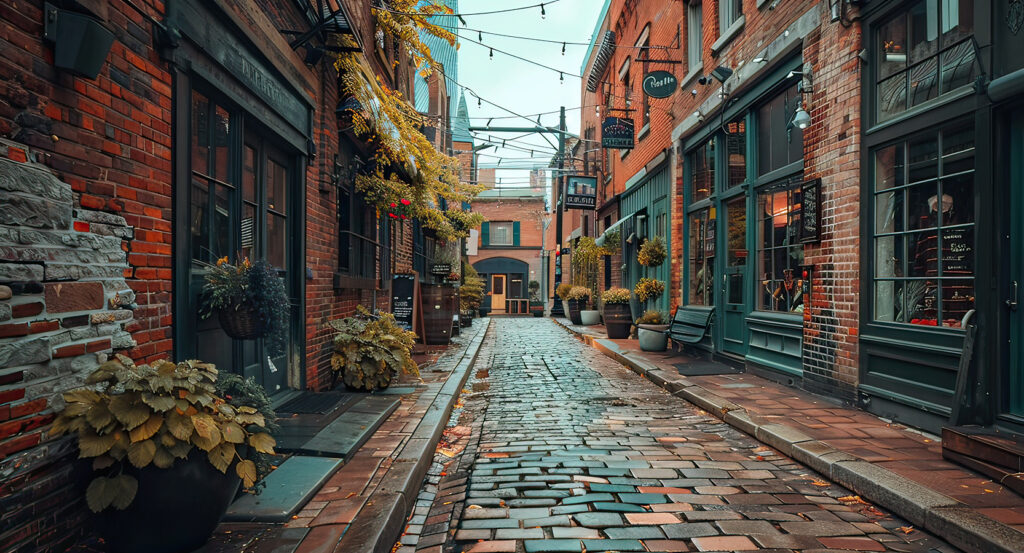
Top places to stay in Toronto, Ontario.
Toronto established its hospitality foundations along the commercial shores of Lake Ontario, where British colonial administration, Great Lakes shipping, and the expansion of Canadian railways fostered a prosperous urban center whose subsequent growth in finance, immigration, and international culture brought new sophistication to the traditions of Canadian hospitality. The British established the town of York in 1793 on lands long inhabited and traversed by Indigenous peoples, including the Mississaugas of the Credit. Its sheltered harbor supported shipping across the Great Lakes, and early inns accommodated travelers conducting business with the colonial government. The town became Toronto in 1834, entering a period of commercial expansion supported by banking, manufacturing, and immigration. Railway construction during the 1850s transformed access to the city, increasing demand for lodging near the waterfront terminals and commercial streets. The opening of the original Queen's Hotel in 1862 established an important institution near the railway district, serving prominent travelers during Toronto's emergence as an industrial metropolis. The completion of the Canadian Pacific Railway's transcontinental connection in 1885 strengthened the movement of people and goods across the country, expanding the market for prestigious urban accommodation. Toronto's growing prosperity supported elaborate hotels, private clubs, and formal dining establishments associated with its business elite. The opening of the King Edward Hotel in 1903 introduced a grand establishment whose Edwardian interiors and substantial public rooms expressed the ambitions of Canada's expanding commercial society. The completion of Union Station in 1927 reinforced the importance of the central railway corridor. Two years later, the Royal York opened opposite the station, becoming an expansive railway hotel distinguished by its Château-style architecture and sophisticated facilities. The Great Depression and Second World War interrupted hotel investment, followed by decades of metropolitan growth driven by immigration, finance, and corporate expansion. The opening of the Toronto International Centre in 1972 strengthened the region's convention economy, supporting demand for substantial business hotels. The development of the Metro Toronto Convention Centre in 1984 established another important institution near the downtown railway and entertainment districts. The city's international profile expanded through the growth of its film industry, professional sports, and cultural institutions, attracting increasingly diverse visitors. The opening of the Shangri-La Toronto in 2012 introduced a prominent luxury tower combining hotel accommodation with prestigious residences. Subsequent development brought additional international brands and sophisticated boutique properties into restored commercial buildings and contemporary high-rises. Toronto's hospitality heritage reflects the evolution of a Great Lakes trading center into a cosmopolitan metropolis whose hotels serve the intersecting worlds of finance, culture, international business, and urban leisure.
Toronto's hotel districts follow the relationship between Lake Ontario, the downtown commercial core, and the established residential neighborhoods extending northward from the waterfront. The Financial District forms the principal concentration of metropolitan luxury, with substantial hotels occupying prominent positions among office towers, historic banking halls, and major commercial institutions. Its architectural character combines expansive early twentieth-century buildings with contemporary glass skyscrapers, creating a dense urban landscape connected by the PATH pedestrian network. Southward, the streets surrounding Front Street and the central railway corridor contain prestigious hotels near major transportation connections and cultural attractions. The neighboring Entertainment District extends westward through substantial commercial buildings, theaters, and contemporary residential towers, supporting hotels near performance venues and the city's principal nightlife destinations. King Street West provides a particularly lively setting through restored warehouses, modern condominiums, and sophisticated restaurants occupying former industrial and commercial properties. Northward, the Queen Street West corridor introduces a more intimate environment through historic storefronts, independent galleries, and established creative businesses. Boutique accommodation occupies restored buildings near distinctive shopping streets and cultural institutions. The adjoining Fashion District preserves substantial brick warehouses and former manufacturing buildings, many adapted for contemporary hospitality and residential use. East of the Financial District, the historic St. Lawrence neighborhood retains an exceptional concentration of nineteenth-century commercial architecture, with substantial brick buildings, traditional market halls, and intimate streets surrounding the celebrated St. Lawrence Market. Boutique hotels occupy restored properties within walking distance of the waterfront and downtown institutions. Farther east, the Distillery Historic District presents a remarkable industrial landscape through preserved Victorian-era brick buildings, cobbled pedestrian streets, and former manufacturing complexes transformed into galleries, restaurants, and cultural spaces. North of the central commercial districts, Yorkville occupies one of Toronto's most prestigious residential and shopping environments, with luxury hotels concentrated near Bloor Street and the surrounding tree-lined avenues. The neighborhood's architectural character combines elegant historic houses, contemporary towers, and sophisticated retail buildings, offering access to major museums and distinguished restaurants. The adjoining Annex district preserves substantial Victorian and Edwardian residences along established residential streets, creating a quieter urban atmosphere near the University of Toronto. Westward, the neighborhoods surrounding Trinity Bellwoods and Ossington Avenue introduce a more residential hospitality environment through historic rowhouses, independent businesses, and intimate commercial corridors. Boutique properties and guesthouses offer access to restaurants, galleries, and neighborhood parks. Along the southern edge of downtown, the Harbourfront district provides a contrasting setting through contemporary condominium towers, landscaped promenades, and hotels overlooking Lake Ontario. The waterfront's public spaces connect visitors with ferry terminals serving the Toronto Islands, whose beaches, gardens, and recreational landscapes create a distinctive coastal escape within the metropolis. These districts present a varied accommodation landscape extending from expansive financial district hotels and restored industrial buildings to sophisticated residential neighborhoods and contemporary waterfront properties. Foresyte may earn a commission when you book.
Foresyte Travel's top five choices.
5. Hotel X Toronto
Hotel X Toronto occupies the Exhibition Place waterfront, embedding a contemporary resort property within grounds shaped by more than a century of exhibitions, public architecture, and major civic events. Library Hotel Collection developed the hotel with architecture by NORR, introducing a glass tower beside the Stanley Barracks, the surviving structure from the nineteenth-century New Fort York military complex. Stephen B. Jacobs Group and Andi Pepper developed interiors that connect the building's modern scale with extensive photography documenting Toronto's urban and natural landscapes. The property opened in 2018 as Exhibition Place continued its evolution beyond its historic fairground role into a year-round entertainment and hospitality district. Hyatt added Hotel X to the Destination by Hyatt portfolio in 2023, extending the property's international affiliation while preserving its independent origins.
4. The St. Regis Toronto
The St. Regis Toronto occupies a 65-story tower at Bay and Adelaide streets whose history reflects a turbulent chapter in Toronto's twenty-first-century luxury development. The project originated with developer Alex Shnaider as Trump International Hotel and Tower Toronto, with Zeidler Partnership Architects designing a slender mixed-use skyscraper for the Financial District. Construction survived financing complications before the tower opened in 2012, and the Trump affiliation ended in 2017 following a change in ownership. Marriott subsequently introduced the St. Regis brand in 2018, making the property the marque's first hotel in Canada. Its succession from ambitious independent development through two international luxury flags encapsulates the transformation of Toronto's Financial District into a major residential and hospitality center.
3. Shangri-La Toronto
Shangri-La Toronto rises along University Avenue within a mixed-use tower developed by Westbank and designed by James K.M. Cheng, connecting the hotel to the wave of high-rise development that reshaped Central Toronto during the early twenty-first century. The building opened in 2012 with a sculptural composition of glass and steel that introduced Shangri-La's Asian hospitality lineage to Toronto. Artist Zhang Huan created Rising, the expansive stainless-steel sculpture positioned outside the property, extending the building's artistic program directly into the University Avenue streetscape. Interior materials and artworks draw extensively on Asian design traditions, establishing a cultural connection with the Hong Kong-based company's origins. Shangri-La Toronto became a major expression of the international investment and architectural ambition that transformed the corridor between the Financial District and Queen's Park.
2. The Ritz-Carlton, Toronto
The Ritz-Carlton, Toronto occupies a 53-story tower developed by Graywood and Cadillac Fairview near Roy Thomson Hall and the Toronto International Film Festival's principal downtown venues. Kohn Pedersen Fox designed the building as a sharply articulated glass tower, adding a major residential and hotel component to the Entertainment District during a period of intense high-rise development. The property opened in 2011 as Toronto accelerated its transformation into a global center for film, finance, and large-scale urban development. Canadian materials and artistic references became central to the interiors, connecting the international Ritz-Carlton marque with the country in which the hotel operates. Its arrival helped consolidate the Entertainment District's evolution from a predominantly commercial and cultural precinct into one of Downtown's principal luxury residential and hospitality districts.
1. Four Seasons Hotel Toronto
Four Seasons Hotel Toronto occupies a 55-story tower in Yorkville, among the city's most distinguished luxury shopping, dining, and residential districts. Developed by Menkes Developments and Lifetime Developments, the property was designed by architectsAlliance, with interiors by Yabu Pushelberg and landscape architecture by Claude Cormier. The hotel opened in 2012, replacing the original Four Seasons Toronto on Avenue Road and establishing a new flagship for the Canadian hospitality company in its founding city. Its contemporary architecture, sophisticated interiors, and extensive residential component reflect Yorkville's evolution into an internationally recognized center of luxury urban living. The property's arrival reinforced Toronto's position as a major destination for international hospitality, combining the brand's Canadian heritage with the architectural ambitions of the city's expanding luxury residential market.
Where your story begins.
Foresyte Travel reveals places that feel extraordinary long before you arrive.
Enjoy editorial crafted for luxury travelers.
Foresyte may earn a commission when you book.







































































































