Top places to stay in Nice, France.
Nice transformed as a Mediterranean port into a fashionable winter retreat for aristocrats, wealthy expatriates, and international travelers. For centuries, the settlement belonged to the County of Nice, which passed under Savoyard rule in 1388 and maintained commercial relationships across the Ligurian coast. Its sheltered harbor and mild climate gradually attracted visitors seeking the restorative qualities of Mediterranean winters. During the eighteenth century, British aristocrats began spending extended seasons in Nice, establishing a pattern of residential tourism that reshaped the city's economy. Wealthy visitors rented villas and apartments near the shoreline, encouraging the development of boardinghouses, landscaped promenades, and establishments serving an increasingly cosmopolitan clientele. The construction of the coastal walkway that became the Promenade des Anglais began in the 1820s, supported by members of the British community. Nice's annexation by France in 1860 accelerated investment in infrastructure and strengthened connections with the expanding French railway network. The arrival of the railway in 1864 brought a new generation of visitors from Paris and northern Europe, stimulating ambitious hotel construction. The Hôtel Westminster opened along the seafront in 1881, becoming part of the developing concentration of prestigious accommodation overlooking the Baie des Anges. The Belle Époque introduced an extraordinary period of architectural extravagance, as palatial hotels competed to attract royalty, industrialists, and fashionable society. The Hôtel Régina opened in Cimiez in 1897, associated with Queen Victoria's winter visits and the prestige of the elevated residential district. The Hôtel Negresco followed in 1913, founded by Romanian hotelier Henri Negresco and designed by architect Édouard-Jean Niermans. Its expansive pink dome and elaborate interiors established an enduring symbol of Riviera luxury. During the interwar years, Nice evolved into a destination for summer leisure as Mediterranean bathing gained popularity alongside its established winter season. The Second World War interrupted international tourism, but postwar aviation and expanding European prosperity brought renewed growth. The development of Nice Côte d'Azur Airport strengthened access to the entire French Riviera, supporting both resort travel and international conferences. Contemporary hospitality has diversified through restored historic palaces, independent boutique properties, and sophisticated waterfront hotels. Nice's hotel history preserves the legacy of aristocratic winter tourism and the architectural ambitions that made the Riviera synonymous with Mediterranean elegance.
Nice occupies a dramatic crescent of Mediterranean coastline beneath the foothills of the Maritime Alps, with hotel districts extending from the historic harbor through elegant nineteenth-century boulevards to residential hillsides overlooking the sea. The Promenade des Anglais forms the city's most recognizable accommodation corridor, following the Baie des Anges through an uninterrupted sequence of grand façades, landscaped public spaces, and substantial waterfront hotels. Prestigious properties occupy prominent positions above the pebble beaches, with ornate balconies, decorative stonework, and expansive terraces framing views across the Mediterranean. The adjoining Carré d'Or district extends inland through refined streets containing elegant apartment buildings, luxury boutiques, and sophisticated restaurants. Boutique hotels and established luxury properties provide convenient access to the seafront and the central shopping avenues. Eastward, the streets surrounding Place Masséna introduce an expansive urban setting through arcaded buildings, formal public spaces, and pedestrian connections linking the modern city with its historic center. Accommodation here offers access to major cultural attractions, restaurants, and transportation routes. Beyond the square, Vieux Nice occupies a compact labyrinth of narrow streets, colorful façades, and intimate public spaces beneath the slopes of Castle Hill. Small hotels and guesthouses occupy restored historic buildings, with shuttered windows, stone staircases, and enclosed courtyards contributing to the neighborhood's distinctive atmosphere. The nearby Cours Saleya provides an animated setting through its market stalls, restaurants, and established café terraces. East of the historic center, the Port district surrounds a sheltered harbor lined with substantial residential buildings, waterfront restaurants, and maritime facilities. Boutique accommodation occupies streets extending toward Place Garibaldi, where elegant arcades and historic architecture create a refined urban environment. Northward, Cimiez presents a quieter residential landscape through landscaped gardens, substantial villas, and prestigious apartment buildings occupying elevated terrain above the central city. Its accommodation emphasizes architectural character, mature greenery, and proximity to important cultural institutions. West of the central shopping districts, the Musiciens neighborhood contains elegant residential streets distinguished by decorative façades and substantial nineteenth-century buildings. Intimate hotels occupy restored properties near the railway station and established commercial corridors. Farther west, the Gambetta and Baumettes areas extend toward the coast through residential streets and substantial apartment buildings, with accommodation offering access to quieter sections of the promenade. The adjoining Fabron district occupies elevated slopes overlooking the western bay, where contemporary hotels and residential properties benefit from expansive sea views and landscaped grounds. Across Nice, accommodation ranges from ceremonial waterfront palaces and refined central boutiques to intimate historic guesthouses and secluded hillside properties, each reflecting the city's exceptional combination of Mediterranean scenery and architectural sophistication. Foresyte may earn a commission when you book.
Foresyte Travel's top five choices.
5. Hôtel La Pérouse Nice
Hôtel La Pérouse Nice occupies a steep site beneath Castle Hill at the eastern end of the Promenade des Anglais, where the old city meets the Mediterranean and the Quai des États-Unis. The property is built into the hillside beside the nineteenth-century Tour Bellanda, giving its terraces and elevations an unusually direct relationship with the rock face above the waterfront. Its architecture follows the constrained terrain through multiple levels, stairways, planted terraces, and sea-facing openings integrated into the surrounding urban fabric. A major renovation by Friedmann & Versace reworked the interiors through references to Riviera villas, Mediterranean color, ceramics, and decorative traditions associated with southern France. La Pérouse derives its character from one of Nice's most geographically distinctive sites, suspended between the dense streets of Vieux Nice, Castle Hill, and the Baie des Anges.
4. Hotel Boscolo Exedra Nice
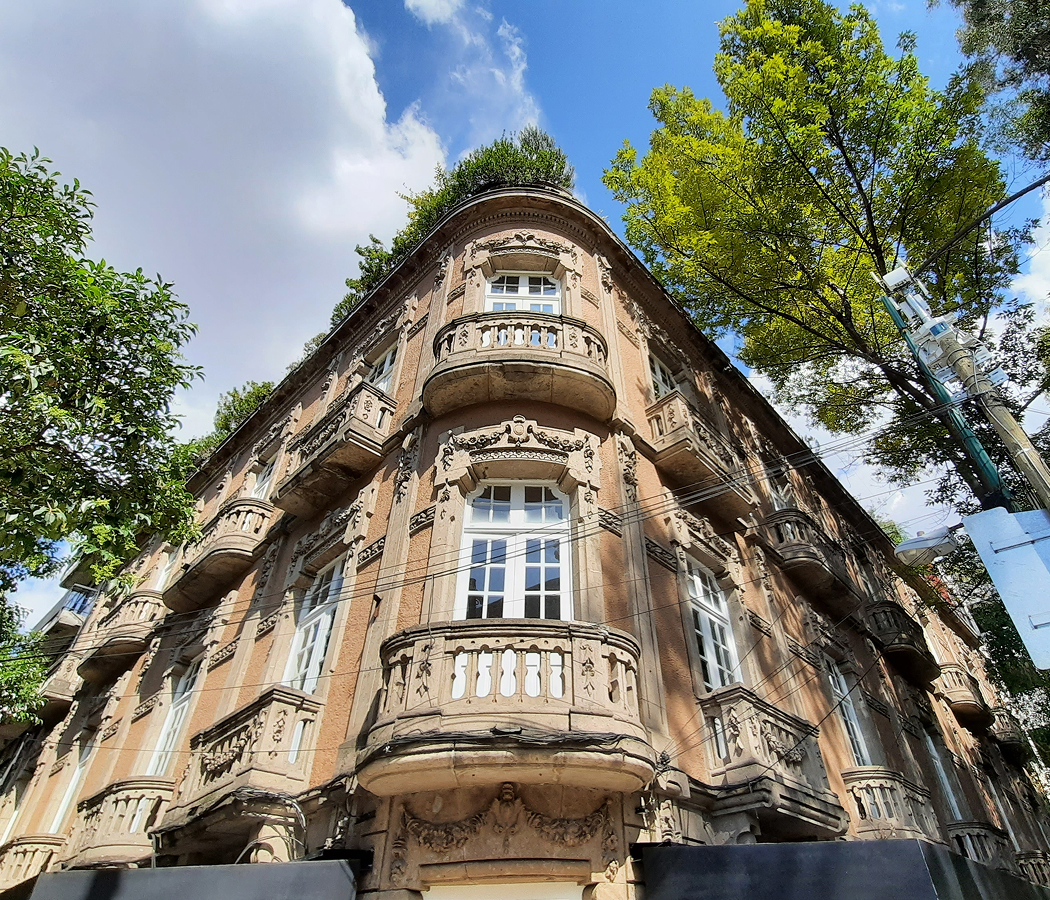
Boscolo Nice Hôtel & Spa occupies a Belle Époque building on Boulevard Victor Hugo, part of the nineteenth-century urban expansion that extended Central Nice beyond the older quarters near the Mediterranean. The hotel originated as the Hôtel Atlantic, whose grand facade, symmetrical composition, and elaborate stone ornament reflected the resort architecture created for the international winter society drawn to the Riviera. Italy's Boscolo family transformed the property during its expansion into high-end European hospitality, introducing a contemporary interior dominated by white surfaces, marble, sculptural forms, and abundant natural light. The building's restoration preserved the ceremonial scale of its exterior while establishing a distinctly modern architectural world behind the historic facade. Boscolo Nice captures the continuing reinvention of the grand hotels that accompanied Nice's rise as an international resort city.
3. Anantara Plaza Nice Hotel
Anantara Plaza Nice Hotel traces its history to 1848, when the Hôtel de France opened near the Jardin Albert 1er during Nice's emergence as a fashionable Mediterranean destination. The property later became the Hôtel Plaza, occupying a prominent position between the old city, Place Masséna, and the waterfront as the surrounding district developed into the civic and commercial heart of modern Nice. An extensive transformation restored the Belle Époque facade and reorganized the interiors before the building reopened under Anantara in 2022. David Collins Studio shaped major interior spaces around stone, pale woods, botanical motifs, and colors drawn from the Côte d'Azur, connecting the historic structure with the landscape beyond it. The hotel links more than a century and a half of Riviera hospitality with the architectural renewal of Central Nice.
2. Hyatt Regency Nice Palais de la Méditerranée
Hyatt Regency Nice Palais de la Méditerranée occupies the site of the Palais de la Méditerranée, the vast entertainment complex opened on the Promenade des Anglais in 1929. American architects Charles and Marcel Dalmas designed its celebrated Art Deco facade, whose expansive arches became one of the defining architectural compositions of Nice's interwar waterfront. The original complex combined a casino, theater, restaurants, and gathering spaces during an era when the Riviera drew an increasingly international leisure culture. Much of the building was demolished after decades of decline, but its protected facade survived and became the architectural centerpiece of the redevelopment completed in 2004. The hotel preserves a major fragment of the interwar Promenade des Anglais and the entertainment culture that reshaped Nice between the world wars.
1. Hotel Le Negresco
Hôtel Le Negresco opened on the Promenade des Anglais in 1913 as the creation of Romanian-born hotelier Henri Negresco, who sought to build a palace hotel for the aristocrats and industrial fortunes wintering on the Côte d'Azur. Architect Édouard-Jean Niermans, already associated with major Belle Époque entertainment buildings, designed its vivacious facade and distinctive domed corner overlooking the Baie des Anges. Jeanne Augier acquired the hotel with her family in 1957 and spent decades assembling an extraordinary collection of French art, furniture, sculpture, and decorative objects spanning several centuries. The Royal Salon centers on an expansive Baccarat chandelier created for Tsar Nicholas II, embedding imperial craftsmanship within the building's ceremonial heart. Le Negresco unites the Belle Époque creation of the Riviera, Augier's distinctive collecting program, and more than a century of Nice's cultural history within one of the city's defining buildings.
Where your story begins.
Foresyte Travel reveals places that feel extraordinary long before you arrive.
Enjoy editorial crafted for luxury travelers.
Foresyte may earn a commission when you book.