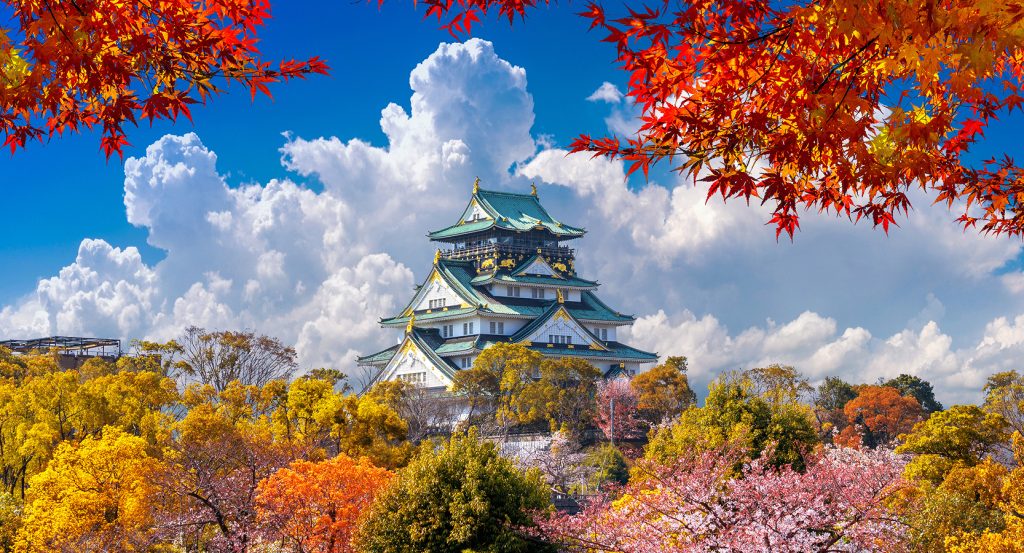
Top places to stay in Osaka, Japan.
Osaka grew from its position at the center of the country's commercial economy, where river transport, merchant wealth, and international exchange sustained successive generations of travelers. The city emerged as an important political and religious center around Naniwa, an ancient port connected to Japan's inland waterways. During the late sixteenth century, Toyotomi Hideyoshi established Osaka Castle and encouraged the growth of a substantial castle town. Under the Tokugawa shogunate, Osaka became the nation's principal rice-trading center, earning its enduring reputation as Japan's kitchen. Merchants traveling between regional domains found accommodation in traditional inns and commercial lodging houses near warehouses, markets, and canal landings. The opening of Osaka to foreign trade in 1868 introduced new international commercial relationships, and industrialization subsequently transformed the city into a major manufacturing metropolis. The arrival of railway services connecting Osaka and Kobe in 1874 strengthened regional mobility and encouraged hotel development near transportation centers. The Osaka Hotel, established in the late nineteenth century, served the expanding community of commercial travelers and international visitors. The opening of the Osaka Station Hotel in 1935 reflected the growing importance of railway-centered accommodation within the modern city. Following the destruction of extensive urban districts during the Second World War, reconstruction encouraged the development of larger business hotels and modern commercial infrastructure. The Osaka Royal Hotel opened in 1965, establishing a prestigious hospitality institution associated with international guests and major public events. Expo '70, held in nearby Suita, brought unprecedented international attention to the region and accelerated investment in transportation and visitor facilities. The opening of the Hotel New Otani Osaka in 1986 introduced another substantial luxury property overlooking Osaka Castle Park. During the economic expansion of the late twentieth century, major international hotel brands entered the market, strengthening Osaka's reputation as a commercial and convention destination. The opening of Kansai International Airport in 1994, on an artificial island in Osaka Bay, transformed international access to the metropolitan region. Universal Studios Japan opened in 2001, broadening the city's appeal to international leisure travelers and families. More recently, luxury hotels have occupied landmark towers and major mixed-use developments, reflecting the continued evolution of Osaka's commercial center. The city's contemporary accommodation industry combines traditional Japanese inns, sophisticated business hotels, and prestigious international properties, preserving a distinctive relationship between mercantile history, transportation infrastructure, and metropolitan hospitality.
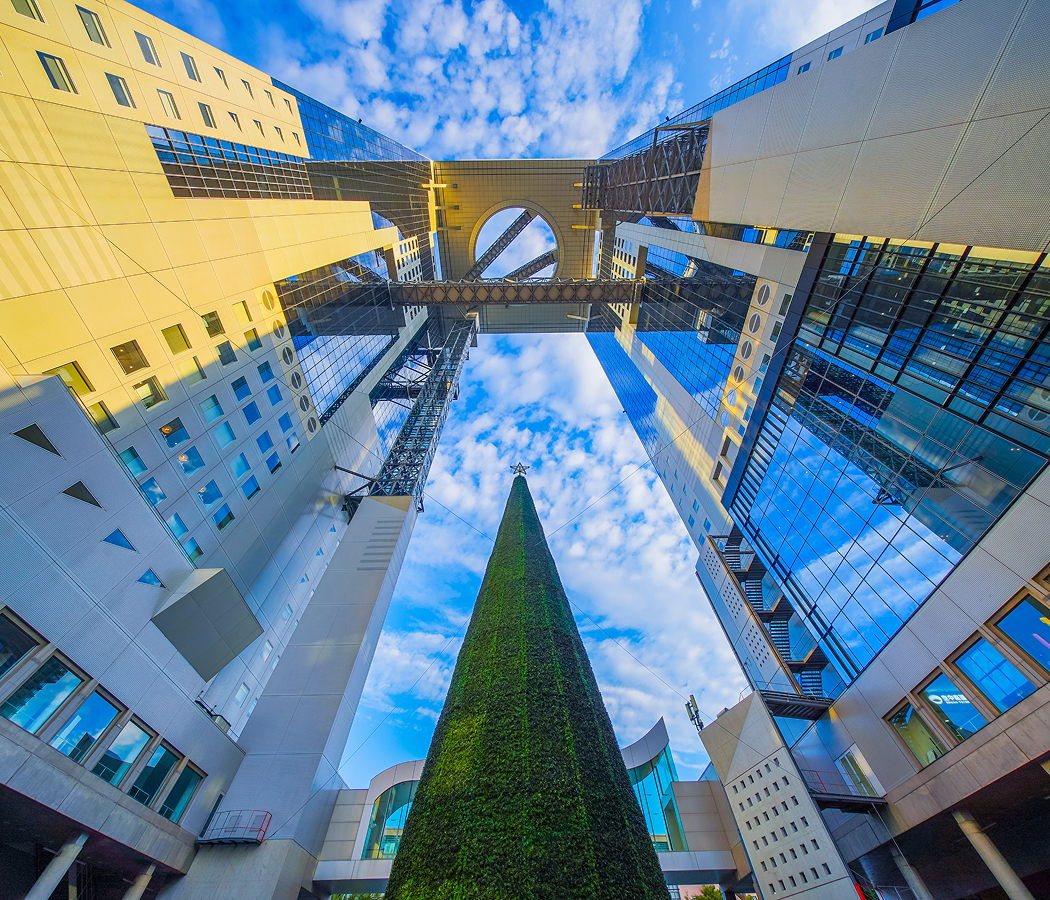
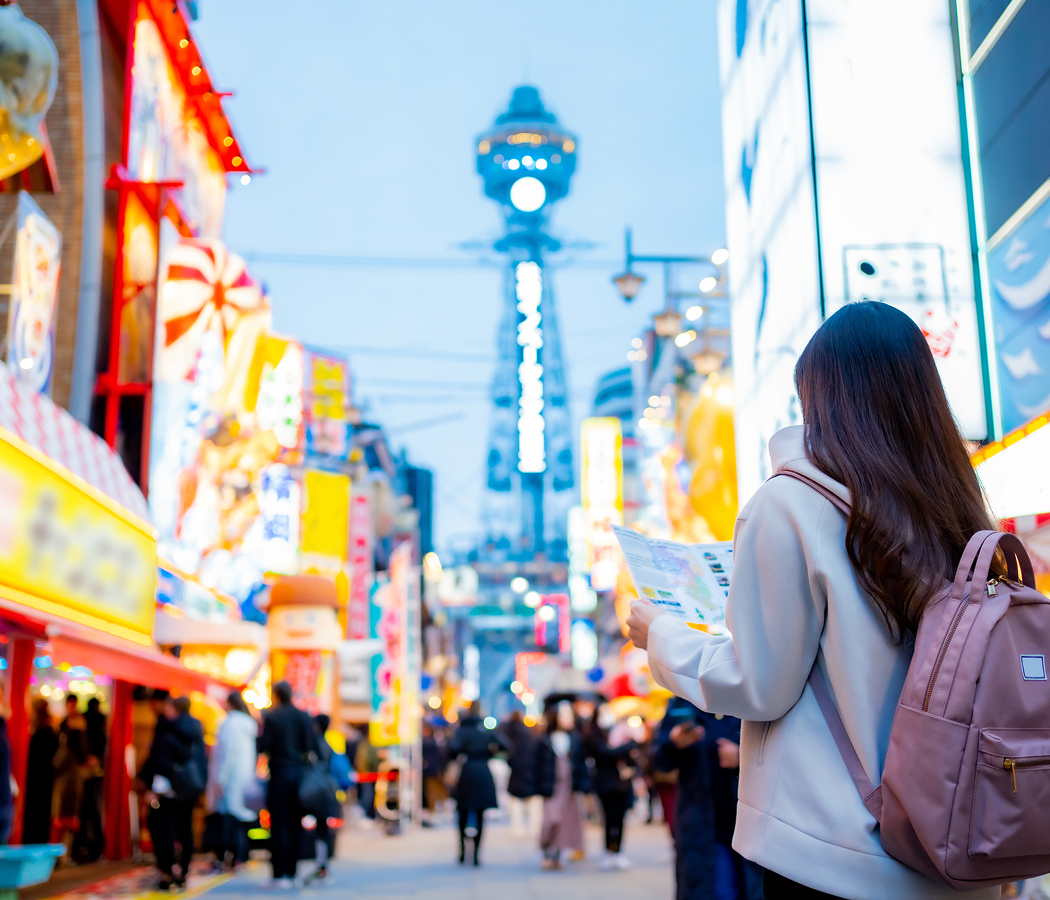
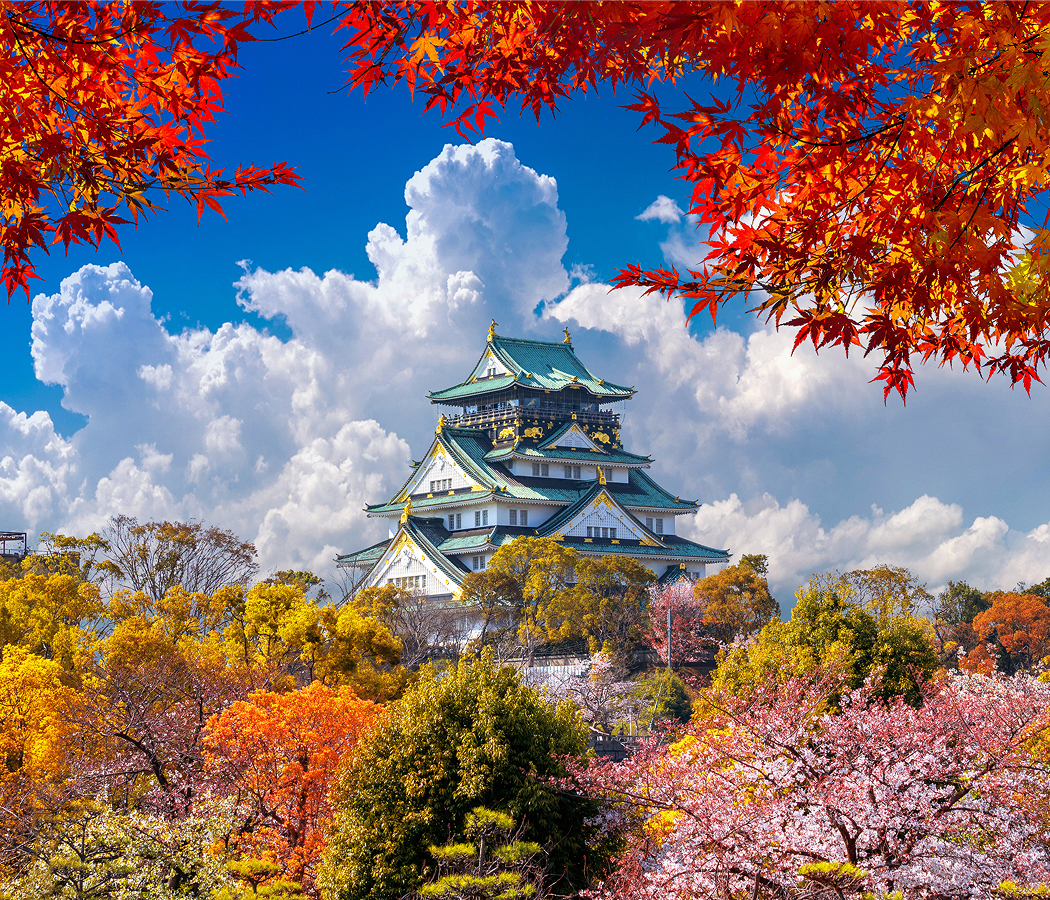
Osaka's hotel geography follows the city's extensive railway network and the waterways that historically organized its commercial districts, creating distinct accommodation environments across a densely developed metropolitan landscape. Umeda forms the principal northern commercial center, where major railway terminals connect extensive shopping complexes, office towers, and luxury hotels. Contemporary properties occupy substantial high-rise buildings with panoramic views across the surrounding skyline, and pedestrian connections provide convenient access to regional transportation. The neighboring Nakanoshima district occupies a narrow island between the Dōjima and Tosabori rivers, offering a more formal architectural environment through expansive civic buildings, landscaped riverfront promenades, and prestigious hotels. Accommodation here combines sophisticated contemporary interiors with views across the surrounding waterways. Southward, Yodoyabashi and Honmachi form an important business corridor through broad avenues, substantial office buildings, and established commercial streets. Hotels emphasize convenient access to corporate offices, restaurants, and major transit connections. Farther south, Shinsaibashi introduces a livelier urban setting through extensive shopping arcades, luxury boutiques, and contemporary commercial developments. Boutique hotels and sophisticated urban properties occupy sites near the district's pedestrian streets and nightlife venues. The adjoining Dōtonbori area provides one of Osaka's most energetic accommodation environments, with illuminated signs, canal-side restaurants, and dense entertainment streets surrounding its celebrated waterway. Hotels near the canal offer immediate access to the city's distinctive dining and entertainment culture. Southward, Namba forms another major transportation and hospitality center, with substantial hotels surrounding railway terminals, department stores, and pedestrian shopping districts. The nearby Nipponbashi area contains smaller accommodation properties amid electronics shops, specialty businesses, and established commercial streets. Eastward, the Osaka Castle district offers a quieter setting through extensive parkland, historic fortifications, and substantial cultural institutions. Hotels near the park benefit from landscaped surroundings and expansive views toward the castle grounds. Farther east, Kyōbashi provides a more residential commercial environment through neighborhood restaurants, shopping streets, and convenient railway connections. Westward, the Osaka Bay area introduces an entirely different landscape through reclaimed waterfront districts, substantial convention facilities, and contemporary entertainment developments. Universal City contains large international hotels oriented toward theme park visitors, with pedestrian plazas and major transport connections creating a concentrated leisure environment. Nearby Tempozan occupies a waterfront setting overlooking harbor channels, with substantial attractions and coastal promenades. South of the central city, Tennōji combines major railway facilities with extensive parkland, historic temples, and contemporary commercial towers. Hotels near Abeno Harukas occupy one of the city's most prominent high-rise districts, offering expansive metropolitan views. Across Osaka, accommodation ranges from prestigious luxury towers and efficient business hotels to intimate boutique properties and waterfront resorts, with the city's extensive rail infrastructure connecting its diverse commercial, cultural, and entertainment neighborhoods. Foresyte may earn a commission when you book.
Foresyte Travel's top five choices.
5. W Osaka
W Osaka opened in 2021 on Midosuji, the expansive north-south boulevard whose twentieth-century expansion became central to Osaka's modern commercial development. Tadao Ando conceived the building as a restrained black monolith, creating an intentionally austere exterior along a street lined with major corporate and retail architecture. Concrete Architectural Associates developed the interiors around vivid lighting, geometric forms, and references to Osaka's neon-lit entertainment culture, producing a deliberate contrast with Ando's exterior. The project brought the W brand to Japan for the first time and placed its most vivacious design language within the disciplined architecture of one of Japan's most celebrated architects. W Osaka uses that tension between exterior restraint and interior intensity to express two sharply different dimensions of the city.
4. The Ritz-Carlton, Osaka
The Ritz-Carlton, Osaka opened in 1997 within the Herbis Osaka complex in Umeda, becoming the first Ritz-Carlton hotel in Japan. Its arrival brought the expanding American luxury brand into Osaka during the transformation of the Umeda district around major railway terminals, offices, department stores, and high-rise development. The interiors adopted the atmosphere of an eighteenth-century European residence through dark woods, paintings, fireplaces, decorative moldings, and traditionally proportioned rooms, establishing an unusually explicit Western historical style within contemporary Osaka. The property subsequently became an important foundation for Ritz-Carlton's growth across Japan, preceding hotels in Tokyo, Kyoto, Okinawa, and other destinations. The Ritz-Carlton, Osaka marks an early stage in the internationalization of Japan's highest hospitality tier and the continuing rise of Umeda as Osaka's northern commercial center.
3. InterContinental Osaka by IHG
InterContinental Osaka opened in 2013 within Grand Front Osaka, the enormous mixed-use redevelopment immediately north of Osaka Station. The project transformed part of the former Umeda freight rail yard into towers, public spaces, retail, offices, residences, and hospitality, reconnecting land long dominated by railway infrastructure with the surrounding city. InterContinental occupies the upper levels of one of the development's towers, integrating the hotel directly into a district organized around Japan's busiest forms of metropolitan rail transportation. Grand Front became a major stage in the continuing redevelopment of Umeda, a process subsequently extended across additional portions of the former freight-yard site. InterContinental Osaka captures the conversion of obsolete railway land into a new high-density urban center at the northern gateway to Central Osaka.
2. Conrad Osaka
Conrad Osaka opened in 2017 within Festival Tower West on Nakanoshima, the narrow island between the Dojima and Tosabori rivers that developed into one of Osaka's principal institutional and commercial districts. Nikken Sekkei designed the tower as the western counterpart to Festival Tower, completing a major redevelopment associated with the Asahi Shimbun company and the historic Festival Hall complex. The hotel occupies the building's highest levels, turning Nakanoshima's river geography and Osaka's dense skyline into fundamental elements of its spatial organization. Contemporary art runs throughout the property, including installations that draw on the city's history, movement, and relationship with water. Conrad Osaka places international hospitality at the summit of a redevelopment that renewed one of Nakanoshima's most important postwar cultural and media sites.
1. The St. Regis Osaka
The St. Regis Osaka opened in 2010 on Midosuji, becoming the first St. Regis hotel in Japan and placing the Astor-founded brand within Osaka's historic commercial core. The hotel occupies the upper floors of Honmachi Garden City, positioned along the boulevard widened under mayor Hajime Seki's transformative urban program during the 1920s and 1930s. Midosuji subsequently became Osaka's defining corporate avenue, reinforced by a subway line beneath it and rows of ginkgo trees that established a distinctive metropolitan axis between Umeda and Namba. The property's design incorporates references to traditional Japanese motifs alongside the ceremonial style inherited from the original St. Regis New York. The St. Regis Osaka connects the international expansion of an American grand-hotel lineage with the boulevard that most clearly expresses Osaka's twentieth-century modernization.
Where your story begins.
Foresyte Travel reveals places that feel extraordinary long before you arrive.
Enjoy editorial crafted for luxury travelers.
Foresyte may earn a commission when you book.