Top places to stay in Mexico.
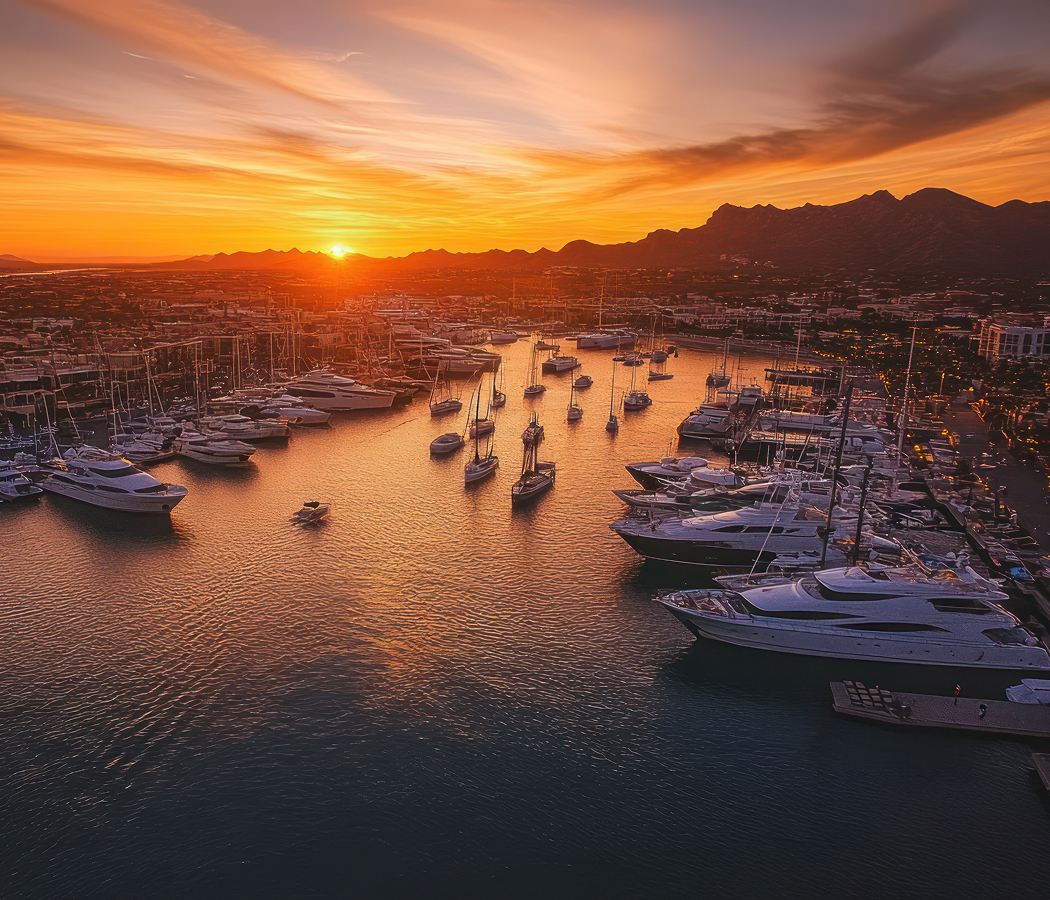
Cabo San Lucas owes its hospitality heritage to the maritime traditions of the Baja California peninsula, where the meeting of the Pacific Ocean and the Gulf of California, the growth of sportfishing, and the expansion of international tourism established a celebrated resort culture distinguished by dramatic coastal scenery, secluded luxury retreats, and Mexican seaside hospitality. Long before European arrival, the Pericú people inhabited the southern peninsula, drawing sustenance from its coastal waters and adapting to the arid landscape surrounding the Gulf of California. Spanish maritime expeditions reached the region during the sixteenth century, and the cape subsequently became a landmark for vessels navigating between New Spain and the Pacific. The Manila galleon trade brought ships along the peninsula's coast, where isolated anchorages and limited freshwater supplies made navigation demanding. During the nineteenth century, small fishing communities developed around the cape, supported by abundant marine resources and occasional commercial shipping. Cabo San Lucas remained geographically isolated well into the twentieth century, with access largely dependent upon boats and difficult overland journeys. Commercial fishing expanded during the early 1900s, particularly through the development of tuna-processing facilities that supported the settlement's modest economy. Its transformation into a leisure destination accelerated after the Second World War, when American sportsmen began visiting Baja California Sur for deep-sea fishing. The opening of the Hotel Palmilla in 1956, along the coastal corridor near San José del Cabo, established an influential model of secluded hospitality for affluent travelers. Founded by Abelardo Rodríguez Montijo, the property attracted prominent guests seeking privacy, exceptional fishing, and the peninsula's dramatic scenery. The completion of the Transpeninsular Highway in 1973 fundamentally changed regional accessibility, connecting the southern cape with communities throughout Baja California. Mexico's federal tourism development strategy subsequently encouraged infrastructure investment and international resort construction. The opening of the Hotel Finisterra in 1971 introduced a prominent property overlooking the Pacific and the harbor, strengthening Cabo San Lucas's appeal as a destination for substantial resort accommodation. The expansion of Los Cabos International Airport during the following decades accelerated arrivals from the United States and Canada. The development of championship golf courses, luxury residential communities, and large beachfront resorts transformed the coastline between the cape and San José del Cabo. The opening of Las Ventanas al Paraíso in 1997 introduced another influential expression of Mexican luxury hospitality through intimate architectural design and highly personalized service. During the twenty-first century, international hotel groups and independent luxury operators expanded into increasingly secluded coastal settings. Cabo San Lucas's hospitality history reflects the extraordinary commercial transformation of a fishing outpost into a sophisticated Pacific resort, shaped by maritime recreation, transportation investment, and the appeal of its desert-meets-ocean landscape.
Cabo San Lucas occupies a striking coastal setting where the granite formations of Land's End rise above the meeting waters of the Pacific Ocean and the Gulf of California. The town's principal hotel districts extend from its protected marina through sandy bays, rocky headlands, and the increasingly secluded coastline of the Los Cabos Tourist Corridor. The Marina district forms the energetic commercial heart of Cabo San Lucas, with substantial hotels and condominium properties overlooking yacht berths, excursion vessels, and waterfront promenades. Its pedestrian routes connect restaurants, shopping areas, and maritime activities within a compact environment suited to visitors seeking immediate access to the town's nightlife and recreational facilities. Southward, the streets approaching the harbor entrance rise toward Pedregal, an exclusive residential enclave built into steep granite hillsides above the Pacific. Luxury villas and intimate resort properties occupy dramatic terraced sites, with expansive windows, private pools, and outdoor spaces framing uninterrupted ocean views. The neighborhood's winding roads and rugged topography create a secluded atmosphere despite its proximity to the central waterfront. East of the marina, Médano Beach provides the town's principal swimmable beachfront, with a broad crescent of sand overlooking the bay and the distinctive rock formations beyond. Hotels along the shoreline range from substantial contemporary resorts to sophisticated beachfront residences, offering direct access to restaurants, water sports, and lively coastal gathering places. The surrounding El Médano district extends inland through modern commercial streets and condominium developments, providing convenient access to the central resort environment. Northward, the El Tezal neighborhood occupies rising terrain behind the coastal highway, where residential communities and vacation properties command elevated perspectives across the bay. Its setting emphasizes the contrasting landscapes of arid hillsides, desert vegetation, and distant ocean views. Beyond the central town, the Tourist Corridor follows the southeastern coastline toward San José del Cabo, connecting a succession of prestigious resort enclaves. The Cabo del Sol area occupies a dramatic stretch of shoreline characterized by rocky coves, substantial golf landscapes, and luxury properties overlooking the open sea. Farther east, the Chileno Bay district offers a sheltered coastal environment surrounding one of the region's most attractive beaches, with contemporary luxury resorts and private residences positioned among carefully landscaped grounds. The adjoining Santa María Bay introduces another intimate setting through a protected cove framed by rocky headlands, supporting secluded accommodation near exceptionally clear water. Continuing along the corridor, the Palmilla area occupies an established luxury residential landscape near a sweeping sandy beach, with elegant villas and refined resort properties distributed across gently rising coastal terrain. The neighboring Costa Azul district presents a livelier coastal atmosphere through surfing beaches, contemporary hotels, and residential communities overlooking the Gulf. Near the eastern end of the corridor, San José del Cabo offers a contrasting urban environment through historic streets, intimate courtyards, and traditional architecture surrounding its central plaza. Boutique hotels occupy restored buildings near galleries and restaurants, providing access to a more established cultural setting. These distinct environments allow visitors to experience Los Cabos through the animated waterfront of Cabo San Lucas, the privacy of hillside retreats, or the expansive luxury resorts distributed along its extraordinary coastal corridor. Foresyte may earn a commission when you book.
Foresyte Travel's top five choices.
5. Esperanza, Auberge Collection
Esperanza, Auberge Collection occupies Punta Ballena, a rocky headland along the Tourist Corridor where the Baja California desert meets the Pacific. Auberge Resorts opened the property in 2002, extending the hospitality company that originated with Auberge du Soleil in Napa Valley into one of Mexico's fastest-growing resort regions. Architect Howard J. Backen shaped the resort through low-rise structures, broad terraces, stone walls, and open-air spaces integrated with the headland's natural contours. Hurricane Odile caused extensive damage across Los Cabos in 2014, and Esperanza underwent a major reconstruction before reopening the following year with interiors by Mary Alice Palmer. The property became an important expression of the intimate, site-driven resort model that Auberge subsequently expanded across international destinations.
4. Montage Los Cabos
Montage Los Cabos occupies Santa Maria Bay, a protected horseshoe-shaped cove along the Tourist Corridor between Cabo San Lucas and San José del Cabo. The resort forms part of the Twin Dolphin development, whose name reaches back to the celebrated Hotel Twin Dolphin that helped establish this coastline as an exclusive retreat during the twentieth century. Montage opened its resort in 2018 with architecture by Gensler and interiors by BAMO, organizing low-rise stone buildings around the bay's desert terrain and unusually sheltered water. The project returned large-scale luxury hospitality to a site closely associated with an earlier generation of Los Cabos tourism. Montage Los Cabos connects the region's formative resort history with the extensive residential and hospitality development that subsequently reshaped the Corridor.
3. Grand Velas Los Cabos
Grand Velas Los Cabos occupies the Tourist Corridor overlooking the Sea of Cortez, extending the Mexican-owned Velas Resorts portfolio into Baja California Sur. The Vela family developed the property as part of a hospitality company founded by Eduardo Vela Ruiz and subsequently expanded through major resorts in Puerto Vallarta, Riviera Nayarit, Riviera Maya, and Los Cabos. The resort opened in 2016 with an expansive curved structure oriented toward the sea, using stepped terraces and extensive glazing to give a large building direct visual command of the coastline. Its arrival brought the Grand Velas all-inclusive model into a destination historically dominated by conventional luxury resorts and private residential communities. The property represents the growth of a Mexican family enterprise into one of the country's most ambitious domestically controlled luxury resort groups.
2. Waldorf Astoria Los Cabos Pedregal
Waldorf Astoria Los Cabos Pedregal occupies the Pacific edge of the Pedregal, the mountainside community developed above Cabo San Lucas by Don Manuel Díaz Rivera. Access runs through the privately carved Dos Mares tunnel, which penetrates the granite mountain separating the resort from the town and creates one of Los Cabos' defining pieces of hospitality infrastructure. The property opened in 2009 as Capella Pedregal before becoming The Resort at Pedregal and subsequently joining Hilton's Waldorf Astoria portfolio in 2019. Its architecture uses stone, stucco, timber, courtyards, and cliffside terraces to integrate substantial construction into the rugged terrain at the southern end of the Baja California Peninsula. The resort transformed Pedregal's dramatic geology into an architectural sequence that begins inside the mountain and terminates against the open Pacific.
1. One&Only Palmilla
One&Only Palmilla traces its history to 1956, when Don Abelardo Rodríguez developed a secluded retreat overlooking the Sea of Cortez during the formative years of tourism on the Baja California Peninsula. The original property attracted Hollywood figures and other prominent travelers arriving when Los Cabos remained remote and air access played a central role in reaching the region. Palmilla later became part of Kerzner International's One&Only portfolio, reopening under the brand in 2004 after an extensive transformation. Hurricane Odile severely damaged the resort in 2014, prompting another major reconstruction before its 2015 return. Palmilla's evolution from isolated mid-century retreat to international resort makes it one of the foundational properties in the history of luxury tourism in Los Cabos.
Where your story begins.
Foresyte Travel reveals places that feel extraordinary long before you arrive.
Enjoy editorial crafted for luxury travelers.
Foresyte may earn a commission when you book.