Top places to stay in Mexico.
Tulum's transformation from a fortified Maya port into one of Mexico's most influential coastal retreats grew from its extraordinary position between the Caribbean Sea and the limestone landscapes of the Yucatán Peninsula. During the Late Postclassic period, the settlement flourished as a maritime trading center, connecting communities along the Caribbean coast with commercial networks extending into Central America. Its temples and defensive walls occupied a commanding limestone bluff above the water, where seaborne merchants exchanged commodities including salt, textiles, and valuable coastal resources. Spanish expeditions encountered the settlement during the early sixteenth century, and the subsequent collapse of regional Maya political networks altered its commercial importance. The surrounding territory remained closely connected to Maya communities through centuries of colonial rule and resistance. During the nineteenth-century Caste War of Yucatán, much of eastern Quintana Roo remained beyond sustained Mexican government control. Modern tourism developed gradually after the construction of improved roads and the expansion of Cancún's international airport connections during the 1970s. Visitors initially arrived to explore the archaeological site, swim along the undeveloped coastline, and experience the region's exceptional natural environment. Small beachfront cabins and family-operated guesthouses appeared along the coastal road, establishing a modest lodging culture shaped by palm-thatched structures and immediate access to the sea. The creation of the Sian Ka'an Biosphere Reserve in 1986 strengthened international awareness of the region's ecological importance. During the 1990s, independent entrepreneurs developed intimate beach retreats that attracted travelers interested in yoga, wellness, and secluded coastal experiences. The emergence of properties such as Ana y José helped establish a distinctive boutique hospitality market. During the following decades, architects and developers introduced increasingly ambitious resorts incorporating natural materials, open-air spaces, and contemporary Mexican design. The opening of Azulik in its modern incarnation contributed to Tulum's international reputation for experimental architecture and immersive wellness experiences. Rapid tourism growth brought substantial investment in restaurants, transportation, and residential development, fundamentally changing the scale of the former coastal settlement. The opening of Tulum International Airport in 2023 established a new aviation gateway to the southern Riviera Maya. Tulum's contemporary hospitality economy reflects the convergence of Maya heritage, Caribbean tourism, ecological awareness, and an influential approach to barefoot luxury.
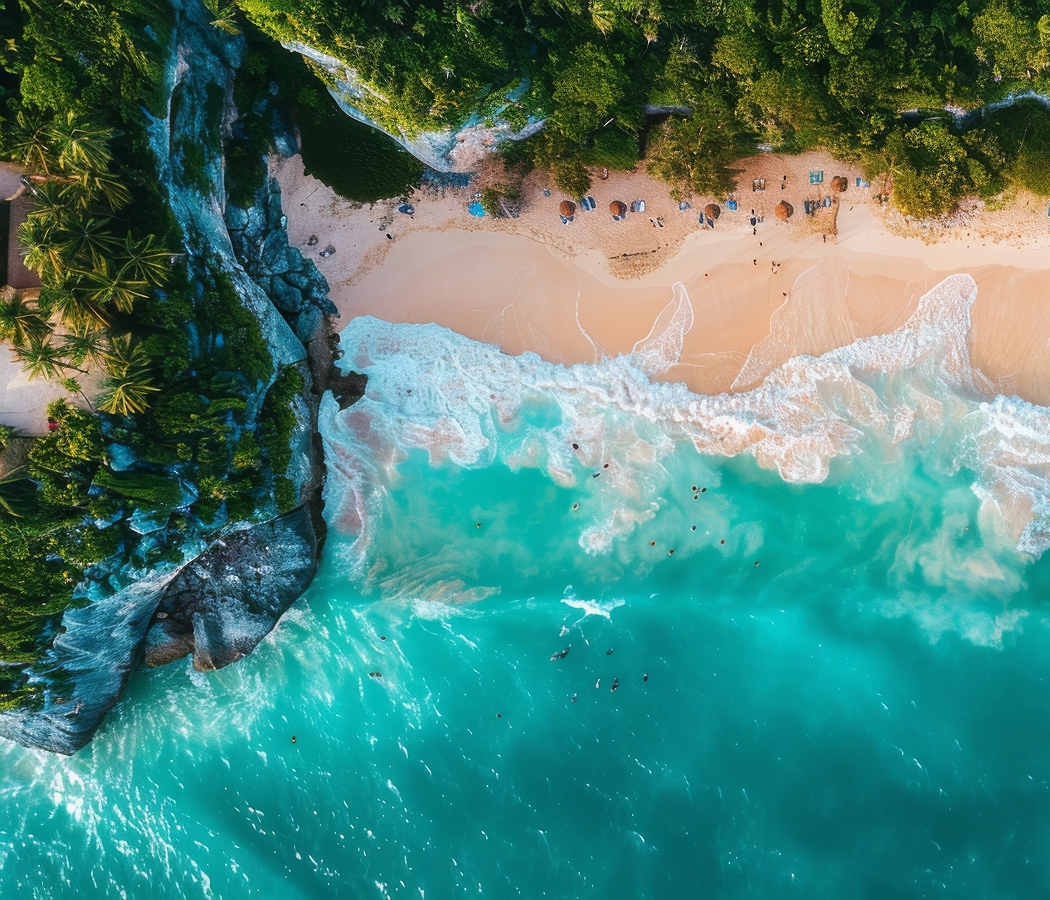
Tulum occupies a low-lying Caribbean coastline where white limestone beaches meet turquoise water, dense tropical vegetation, and an extensive underground network of freshwater caverns. Its accommodation geography is unusually linear, following the coastal road south from the archaeological zone before extending inland toward the established town and surrounding jungle. The northern beach area near Playa Paraíso offers broad stretches of pale sand, relatively open coastal scenery, and convenient access to the ancient clifftop ruins. Smaller beachfront properties occupy landscaped parcels among palms and coastal vegetation, creating a relaxed atmosphere near the water. Farther south, the principal Zona Hotelera forms Tulum's most recognizable luxury corridor, with boutique resorts distributed along a narrow strip between the Caribbean and protected wetlands. Architecture frequently incorporates timber, limestone, thatched roofing, and sculptural forms integrated into the surrounding vegetation. Intimate courtyards, shaded pathways, and open-air dining spaces connect accommodation with the tropical landscape. The central beach corridor around the restaurants and boutiques near kilometer markers six through eight presents a livelier environment, where sophisticated hospitality properties stand among beach clubs, galleries, and carefully designed retail spaces. Narrow roads and dense foliage create a distinctive sense of enclosure, with the sea often revealed through secluded entrances and landscaped passageways. Southward, the coastline approaches the Sian Ka'an Biosphere Reserve, where development becomes more limited and the surrounding landscape grows increasingly secluded. Small retreats occupy remote beachfront settings near mangroves, lagoons, and protected coastal habitats. Inland, Tulum Pueblo provides a contrasting urban environment through low-rise commercial buildings, residential streets, neighborhood restaurants, and contemporary boutique properties. Accommodation here offers access to local markets and the town's everyday social life. West of the center, La Veleta has developed into a substantial residential and hospitality district, with modern villas, apartment-style properties, and smaller design-oriented hotels arranged among tropical vegetation. Its architecture combines concrete, natural stone, timber screens, and interior gardens, reflecting contemporary approaches to climate-responsive construction. Northward, Aldea Zama presents a more formally planned environment through landscaped avenues, contemporary residential buildings, and sophisticated vacation properties. The district's broad streets and extensive greenery create a quieter setting between the town center and the coastal corridor. Beyond these developed areas, jungle retreats occupy secluded parcels near cenotes and forest tracks, offering intimate accommodation surrounded by limestone terrain and tropical woodland. The region's natural architecture is especially distinctive: porous bedrock channels rainfall into subterranean aquifers, creating the freshwater sinkholes that define much of the peninsula's landscape. Across Tulum, accommodation ranges from intimate beachfront cabanas and ambitious architectural resorts to contemporary inland villas and secluded forest retreats, each shaped by the close relationship between Caribbean shoreline and Yucatán jungle. Foresyte may earn a commission when you book.
Foresyte Travel's top five choices.
5. La Valise Tulum, Member of Small Luxury Hotels of the World
La Valise Tulum occupies a narrow beachfront site along the Caribbean coast south of the archaeological zone, within the low-rise hotel corridor that developed between the sea and the Sian Ka'an Biosphere Reserve. The property belongs to Namron Hospitality, the Mexico-based group created by entrepreneur Yves Naman around a collection of small, design-focused hotels. La Valise integrates palapa roofs, timber, local stone, woven materials, and open-air spaces into architecture scaled closely to the surrounding tropical vegetation. Its development reflects Tulum's transition from a backpacker destination of simple beach cabanas into an international center of small-scale hospitality and design. La Valise preserves the intimate physical style of Tulum's earlier beachfront development within the substantially more sophisticated hotel economy that subsequently emerged along the coast.
4. Nômade Temple Tulum
Nômade Temple Tulum occupies the Caribbean shoreline near the southern end of Tulum's beach corridor, where dense tropical vegetation separates a narrow ribbon of development from the interior. Entrepreneur Macario Jiménez created Nômade around a hospitality concept strongly connected with communal spaces, music, wellness practices, and architecture built from natural materials. Palapa structures, timber walkways, canvas, stone, sand, and open-air gathering areas organize the property through forms rooted in the lightweight construction long associated with the Yucatán coast. The hotel became part of a broader Nômade hospitality project that subsequently expanded beyond Tulum into additional Mexican destinations. Nômade Temple represents the strand of Tulum's twenty-first-century development that transformed the elemental architecture of the beach corridor into a highly stylized form of contemporary hospitality.
3. Be Destination Tulum
Be Destination Tulum occupies the southern beach corridor near the edge of the Sian Ka'an Biosphere Reserve, placing the property within one of the narrowest developed stretches between Caribbean water and protected tropical landscape. The hotel grew from the work of brothers Sebastian and Jeronimo Sas, whose hospitality projects became closely associated with the architectural transformation of Tulum's beachfront. Buildings use timber, stone, thatch, elevated decks, and dense vegetation to break the property into small structures embedded within the coastal landscape. The development became part of a wider collection that helped establish the southern beach road as a concentration of independently conceived hotels, restaurants, and gathering spaces. Be Tulum captures the low-rise architectural model that became internationally associated with Tulum during its rapid emergence as a design-focused destination.
2. Azulik Resort
Azulik Resort developed along Tulum's Caribbean coast under the direction of Eduardo Neira, known as Roth, whose work expanded from hospitality into architecture, art, and the surrounding AZULIK Uh May complex in the jungle. The resort rejects conventional rectilinear construction through elevated timber structures, curving walkways, woven surfaces, organic forms, and spaces shaped around existing vegetation. Its architecture relies on locally sourced wood and artisanal building techniques, producing structures that appear to grow through the forest canopy above the shoreline. Roth extended the same architectural language into SFER IK, an arts foundation whose sculptural interiors became an important component of the wider project. Azulik transformed Tulum's rustic tradition of timber and thatch construction into one of the destination's most recognizable experiments in organic architecture.
1. Casa Malca
Casa Malca occupies a beachfront estate near the Sian Ka'an Biosphere Reserve that New York-based art dealer Lio Malca transformed into a hotel and setting for his contemporary art collection. Malca acquired the property in the early 2010s and expanded the original house through additional structures embedded among palms and tropical vegetation along the Caribbean shoreline. Works associated with artists including Keith Haring, KAWS, and Jean-Michel Basquiat have appeared throughout the property, integrating major contemporary art directly into guest spaces, gardens, and communal interiors. Heavy textiles, sculptural furniture, large-scale artworks, and unconventional installations create a deliberate tension with the elemental sand, jungle, and sea surrounding the estate. Casa Malca turned a secluded coastal residence into one of Tulum's defining intersections of contemporary art, collecting, and beachfront hospitality.
Where your story begins.
Foresyte Travel reveals places that feel extraordinary long before you arrive.
Enjoy editorial crafted for luxury travelers.
Foresyte may earn a commission when you book.