
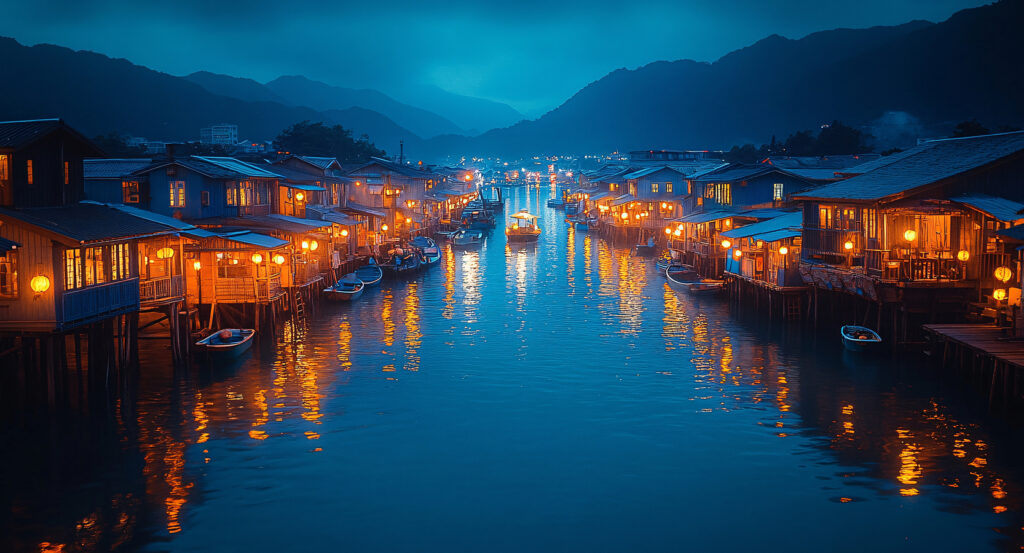
Top places to stay in Hong Kong.
Hong Kong established its reputation for international hospitality through the maritime commerce of Victoria Harbour, the expansion of British colonial trade, and the growth of a powerful financial center, creating a cosmopolitan tradition of grand waterfront establishments, sophisticated Cantonese service, and luxury travel at the crossroads of East and West. The establishment of British colonial administration on Hong Kong Island in 1841 accelerated the development of Victoria Harbour as a commercial gateway between China and the expanding networks of European shipping. Merchants, naval officers, diplomats, and travelers arrived through a harbor increasingly connected to Shanghai, Singapore, Bombay, and London. Early lodging houses served this transient population, and the growth of banking and shipping enterprises created demand for accommodation suited to international business. The opening of the Hongkong Hotel in 1868 introduced a prominent establishment overlooking the waterfront, bringing European grand-hotel conventions into the developing colonial city. The subsequent expansion of the Star Ferry service strengthened connections between Hong Kong Island and Kowloon, encouraging commercial development on both shores. The opening of The Peninsula Hong Kong in 1928 established a defining institution of Asian luxury hospitality, attracting international travelers arriving by ocean liner and rail. Its grand public rooms, ceremonial service, and prominent position in Tsim Sha Tsui expressed the cosmopolitan ambitions of the port. Japanese occupation between 1941 and 1945 interrupted the city's commercial development, followed by a period of reconstruction and rapid population growth. Manufacturing, finance, and expanding international trade subsequently supported a new generation of metropolitan hotels. The Mandarin Oriental opened in Central in 1963, establishing a distinctive model of sophisticated urban hospitality associated with international business and refined dining. The opening of the Regent Hong Kong in 1980 introduced a major luxury landmark overlooking the harbor from Kowloon, strengthening the waterfront's reputation for prestigious accommodation. Hong Kong's emergence as a leading financial center during the 1980s and 1990s accelerated investment in substantial commercial towers and internationally operated hotels. The transfer of sovereignty from Britain to China in 1997 marked a profound political transition, with the city continuing under its special administrative structure. The opening of the Four Seasons Hotel Hong Kong in 2005 reinforced the importance of Central's waterfront as a destination for international luxury travel. The completion of the International Commerce Centre and the arrival of The Ritz-Carlton, Hong Kong in 2011 introduced a dramatic expression of high-rise hospitality above West Kowloon. Hong Kong's hotel heritage reflects successive eras of maritime commerce, colonial administration, industrial expansion, and global finance, with prestigious establishments occupying prominent positions along one of the world's most recognizable urban harbors.
Hong Kong's accommodation geography is organized around Victoria Harbour, whose deep natural waters separate the dense commercial districts of Hong Kong Island from the metropolitan neighborhoods of Kowloon. Central occupies the principal financial core on the island's northern shore, where expansive office towers rise above historic streets and prestigious hotels command views across the harbor. The district's steep topography creates a dramatic relationship between waterfront developments, elevated pedestrian walkways, and the densely built slopes approaching the Mid-Levels. Luxury accommodation occupies substantial contemporary towers near the International Finance Centre, providing access to prominent business institutions and the ferry terminals connecting the city's principal waterfront districts. Westward, Sheung Wan preserves an older commercial landscape through traditional shopfronts, narrow streets, and substantial nineteenth-century buildings associated with the city's trading heritage. Boutique hotels occupy restored commercial properties and contemporary structures near established markets and cultural institutions. Eastward, Admiralty introduces another concentration of prestigious accommodation through substantial commercial towers and landscaped public spaces near Hong Kong Park. The surrounding architectural environment combines expansive office buildings with the wooded slopes rising toward Victoria Peak. Farther east, Wan Chai presents a more varied metropolitan setting through historic commercial streets, substantial convention facilities, and contemporary waterfront development. Hotels occupy prominent positions near the Hong Kong Convention and Exhibition Centre, with harbor-facing properties offering views toward Kowloon's skyline. Causeway Bay extends the accommodation corridor through one of the city's principal shopping districts, where substantial retail complexes, commercial towers, and intimate neighborhood streets support an extensive range of metropolitan hotels. Across Victoria Harbour, Tsim Sha Tsui forms Kowloon's most distinguished waterfront hotel district, with prestigious properties overlooking the water toward the towers of Central. The promenade surrounding the Hong Kong Cultural Centre and the Avenue of Stars establishes an exceptional setting for accommodation near major museums, shopping streets, and ferry connections. Northward, the streets surrounding Nathan Road preserve a dense commercial environment of historic buildings, department stores, and established restaurants, supporting hotels within Kowloon's energetic metropolitan center. The neighboring Jordan and Yau Ma Tei districts introduce a more intimate urban character through traditional markets, narrow streets, and substantial residential buildings. West Kowloon presents a contrasting landscape of contemporary towers and major cultural institutions, with luxury hotels occupying elevated positions above the developing waterfront. The district's broad promenades and modern architecture create expansive views across the harbor and toward the surrounding mountains. Beyond the principal metropolitan core, Repulse Bay and the southern coast of Hong Kong Island offer a quieter residential environment through sandy beaches, wooded hillsides, and substantial waterfront properties. The island's southern shoreline provides a distinctive coastal setting associated with established residential communities and recreational leisure. Farther west, Lantau Island introduces a separate hospitality landscape through forested mountains, traditional villages, and substantial resort properties near the international airport and major recreational attractions. These environments establish a varied accommodation geography extending from prestigious harborfront hotels and high-rise financial district properties to intimate commercial neighborhoods and secluded coastal retreats. Foresyte may earn a commission when you book.
Foresyte Travel's top five choices.
5. Mandarin Oriental, Hong Kong
Mandarin Oriental, Hong Kong opened in 1963 as The Mandarin, establishing the institution that ultimately gave Mandarin Oriental Hotel Group half of its name and one of its two foundational properties. The hotel rose in Central during an extraordinary period of commercial expansion, with its location beside the headquarters of major banks and trading houses placing it directly within Hong Kong's developing financial center. A transformative corporate merger in 1985 joined The Mandarin with Bangkok's historic Oriental Hotel under the Mandarin Oriental name, turning the Hong Kong property into the origin point of a hospitality group that subsequently expanded worldwide. Its continuing presence on Connaught Road connects more than six decades of Hong Kong hotel history with the emergence of one of Asia's most internationally influential luxury-hospitality companies.
4. Upper House Hong Kong
Upper House Hong Kong opened in 2009 above Pacific Place in Admiralty as part of Swire Hotels' newly created House Collective, giving the Hong Kong conglomerate a design-focused hospitality platform rooted in the city where its history stretches into the nineteenth century. Hong Kong architect André Fu conceived the interiors early in his career, organizing the property around natural timber, limestone, bamboo and an extensive collection of Asian contemporary art. Fu developed a deliberately residential spatial language that became central to the hotel's character and subsequently helped establish him as one of Asia's most influential hospitality designers. Upper House links Swire's long relationship with Hong Kong to the rise of a homegrown international design practice and the creation of a hotel concept later extended to other major Asian cities.
3. Four Seasons Hotel Hong Kong
Four Seasons Hotel Hong Kong opened in 2005 as part of International Finance Centre, the immense Central waterfront development created above Hong Kong Station during the city's continuing reclamation and expansion along Victoria Harbour. César Pelli's IFC complex established a new vertical center for finance, commerce and hospitality beside the terminals of the Airport Express, tying the hotel directly to infrastructure connecting Central with Hong Kong International Airport. The property subsequently developed extraordinary culinary significance through Lung King Heen, where chef Chan Yan Tak became the first Chinese chef to receive three MICHELIN stars. Four Seasons combines one of Hong Kong's defining twenty-first-century commercial developments with a restaurant whose achievement became a milestone in the international recognition of Chinese fine dining.
2. The Peninsula Hong Kong
The Peninsula Hong Kong opened in 1928 beside the Kowloon terminus of the railway linking Hong Kong with mainland China, positioning the hotel at the arrival point for passengers traveling through Asia by rail and sea. The Kadoorie family's Hongkong and Shanghai Hotels developed the property as the centerpiece of a hospitality enterprise whose history in the city reaches into the nineteenth century. Japanese forces occupied the hotel after the fall of Hong Kong in December 1941, and Governor Mark Young formally surrendered the colony there, embedding the building within one of the darkest chapters of Hong Kong's wartime history. A substantial tower added in 1994 extended the property vertically while preserving the original neoclassical building, carrying the Kadoorie family's flagship through nearly a century of profound political, architectural and economic change.
1. Rosewood Hong Kong
Rosewood Hong Kong occupies the Victoria Dockside development on the former New World Centre site in Tsim Sha Tsui, land controlled by the Cheng family's New World Development along one of Kowloon's most consequential waterfront parcels. Kohn Pedersen Fox designed the slender tower as the vertical anchor of a multibillion-dollar redevelopment encompassing culture, commerce and public waterfront space beside Victoria Harbour. Rosewood's 2019 opening carried particular significance for the Cheng family: New World Hospitality had acquired Rosewood Hotels & Resorts in 2011, making the Hong Kong property a homecoming flagship for an international hotel company under Hong Kong ownership. The hotel unites the Cheng family's real-estate history, KPF's reshaping of the Kowloon skyline and the redevelopment of Tsim Sha Tsui's waterfront within Rosewood's most symbolically important Asian property.
Where your story begins.
Foresyte Travel reveals places that feel extraordinary long before you arrive.
Enjoy editorial crafted for luxury travelers.
Foresyte may earn a commission when you book.







































































































