Top places to stay in Ottawa, Ontario.
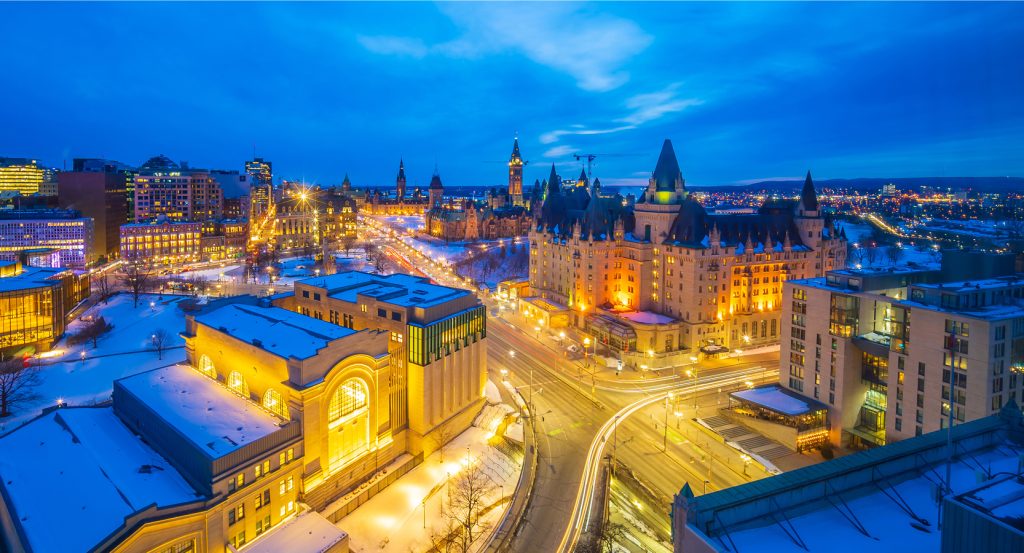
Ottawa's hotel history grew from its transformation from a timber-trading settlement on the Ottawa River into Canada's federal capital, where parliamentary government, railway travel, and international diplomacy created a distinctive hospitality economy. The confluence of the Ottawa, Rideau, and Gatineau waterways had long supported Algonquin Anishinaabe communities and their trading networks. European settlement expanded during the nineteenth century as the timber industry brought merchants, laborers, and commercial travelers into the region. The construction of the Rideau Canal, completed in 1832 under Lieutenant Colonel John By, established an important transportation connection between the Ottawa River and Lake Ontario. Bytown developed around the canal works, with taverns and boardinghouses accommodating contractors, timber merchants, and visiting officials. Incorporated as Ottawa in 1855, the settlement entered a new era when Queen Victoria selected it as the capital of the Province of Canada in 1857. Construction of the Parliament Buildings attracted politicians, architects, administrators, and business travelers, strengthening demand for established lodging. Confederation in 1867 confirmed Ottawa's position as the national capital. Railway expansion subsequently connected the city with Montréal, Toronto, and other Canadian commercial centers. The Russell House, established in the nineteenth century, became a prominent gathering place for politicians and visiting dignitaries. The Château Laurier opened in 1912 beside the Rideau Canal, commissioned by railway magnate Charles Melville Hays and designed by Ross and MacFarlane. Its expansive Châteauesque architecture introduced a grand railway hotel overlooking the parliamentary precinct. Hays died aboard the Titanic shortly before its opening, adding a poignant chapter to the property's origins. The Lord Elgin Hotel opened in 1941 along Confederation Boulevard, strengthening accommodation near federal institutions during the Second World War. Postwar expansion of the civil service, diplomatic missions, and national cultural organizations supported substantial business hotel development. The opening of the National Arts Centre in 1969 further strengthened the capital's cultural visitor economy. Ottawa's growing international convention industry encouraged contemporary hotel construction near government offices and transportation facilities. More recently, restored heritage buildings and sophisticated boutique properties have diversified the downtown market. Ottawa's hospitality industry now reflects the enduring influence of federal government, railway investment, international diplomacy, and the ceremonial responsibilities of Canada's capital.
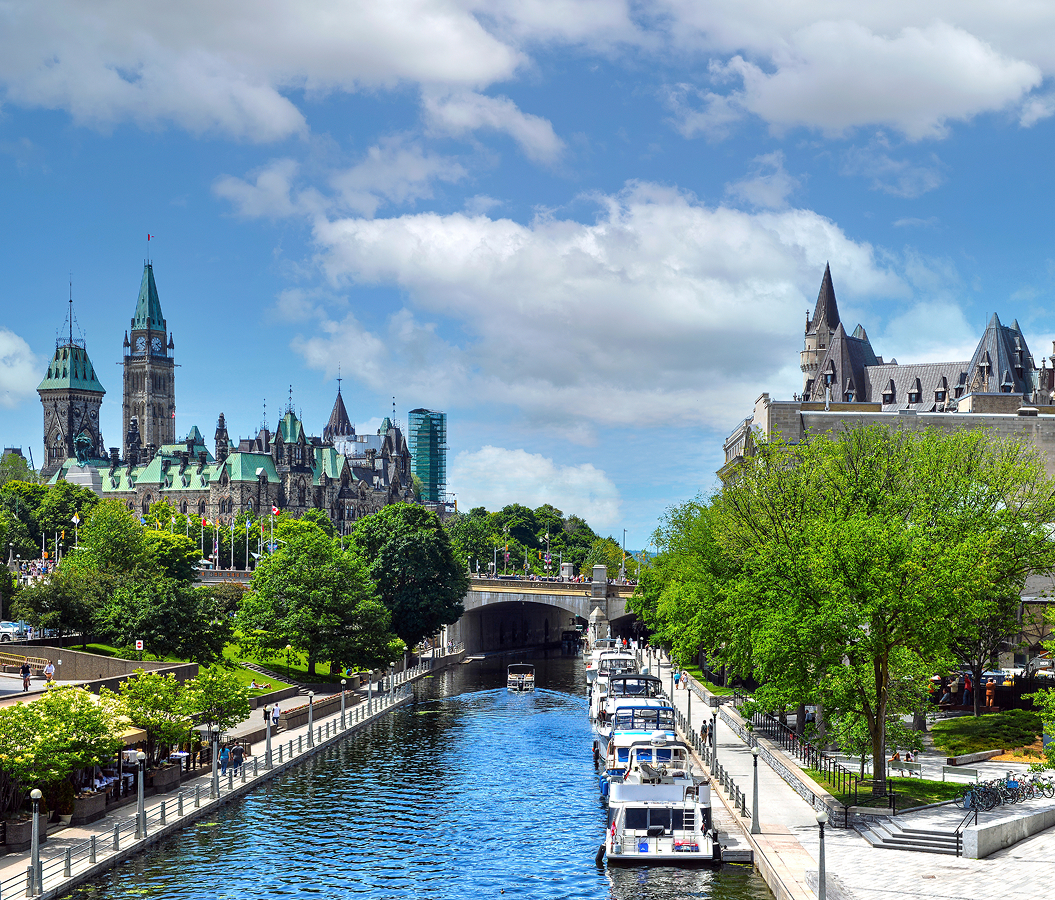
Ottawa occupies a distinctive riverfront landscape where limestone escarpments, wooded parklands, and historic waterways frame a compact metropolitan center. Downtown forms the principal accommodation district, with substantial hotels concentrated along major commercial streets near federal offices, cultural institutions, and established shopping corridors. Contemporary towers stand alongside nineteenth-century commercial buildings, creating an architectural environment shaped by successive periods of national development. The parliamentary precinct occupies an elevated position above the Ottawa River, where expansive Gothic Revival buildings and landscaped grounds provide a dramatic setting for nearby luxury accommodation. Hotels along Wellington Street and the surrounding avenues offer convenient access to the capital's principal civic landmarks. Eastward, the ByWard Market district introduces a livelier urban atmosphere through historic market buildings, narrow commercial streets, independent restaurants, and contemporary residential developments. Boutique hotels occupy adapted heritage properties and modern buildings within walking distance of galleries and entertainment venues. The adjoining Lowertown neighborhood preserves a varied residential landscape through traditional houses, religious buildings, and established community institutions. Southward, Sandy Hill offers a quieter environment through substantial historic residences, mature trees, and proximity to the University of Ottawa. Smaller accommodation properties and guesthouses provide an intimate neighborhood setting near the central city. West of the Rideau Canal, Centretown extends through established residential streets and commercial corridors containing traditional brick houses, apartment buildings, and contemporary urban hotels. The area's restaurants and independent businesses contribute to a walkable metropolitan atmosphere. The nearby Golden Triangle occupies a particularly attractive position between the canal and Elgin Street, with elegant residential architecture and landscaped streets near major cultural venues. Farther west, the Glebe introduces a distinctive neighborhood environment through substantial early twentieth-century houses, independent shops, and proximity to the Rideau Canal's landscaped pathways. Accommodation here emphasizes smaller properties and residential stays. North of the central city, the Ottawa River waterfront provides expansive views toward Gatineau and the surrounding hills, with pedestrian routes connecting parkland, cultural institutions, and major public spaces. Across the river, Gatineau offers additional hotels near federal offices, museums, and the forested slopes of the Gatineau Hills. Westward, Westboro presents a contemporary neighborhood setting through independent boutiques, restaurants, and established residential streets near the river. Its accommodation provides convenient access to cycling routes and outdoor recreation. Farther south, the airport corridor contains substantial contemporary hotels serving business travelers and visitors seeking convenient transportation connections. Across Ottawa, accommodation ranges from prestigious heritage hotels and sophisticated downtown towers to intimate neighborhood inns and contemporary business properties, with the city's waterways and landscaped public spaces shaping its distinctive architectural character. Foresyte may earn a commission when you book.
Foresyte Travel's top five choices.
5. Lord Elgin Hotel
Lord Elgin Hotel opened in 1941 on Elgin Street facing Confederation Park, placing the property within Ottawa's ceremonial core during a decisive period of national development. The Ford Hotels company commissioned architect W.L. Somerville to design the limestone building in the Châteauesque tradition that had already shaped several of Canada's great railway hotels and civic structures. Its name honors James Bruce, 8th Earl of Elgin, the governor general whose nineteenth-century tenure included the establishment of responsible government in the Province of Canada. The hotel's position near the National War Memorial, Parliament Hill, and the Rideau Canal embedded it within the capital's evolving collection of federal institutions and commemorative spaces. Lord Elgin preserves a major expression of mid-twentieth-century Canadian hotel architecture at the center of Ottawa's governmental landscape.
4. Le Germain Hotel Ottawa
Le Germain Hotel Ottawa opened in 2018 as part of the transformation of the former Ottawa Arts Court precinct into a larger cultural and mixed-use complex. The development brought hospitality directly into a downtown cluster containing the Ottawa Art Gallery, performance spaces, and historic structures associated with the city's former courthouse. Canadian architecture firm Régis Côté et Associés and interior designers LemayMichaud shaped the hotel within a contemporary tower rising above the surrounding institutional fabric. Le Germain Hotels emerged from the Germain family's Quebec hospitality business, which became an influential Canadian proponent of design-driven independent hotels after opening its first property in Quebec City in 1997. The Ottawa property connects that homegrown hotel company with the architectural renewal of a longstanding civic and cultural site.
3. Metcalfe Hotel Ottawa by Gray Collection
The Metcalfe occupies a historic downtown building on Metcalfe Street within the compact commercial grid extending south from Parliament Hill. The property incorporates the former Ottawa YMCA building, whose early twentieth-century architecture gave the later hotel substantial masonry facades and an internal spatial structure distinct from conventional purpose-built accommodations. Gray Collection acquired the hotel and undertook a major transformation before reopening it in 2022, extending the Montreal-based family hospitality company into the Canadian capital. The redevelopment retained the building's historic fabric while reorganizing its interior around a soaring central atrium that exposes multiple levels of the original structure. The Metcalfe gives a longstanding civic building a new role within the government and commercial district that developed around Ottawa's parliamentary core.
2. Andaz Ottawa ByWard Market, by Hyatt
Andaz Ottawa ByWard Market opened in 2016 as the first Andaz hotel in Canada, placing Hyatt's design-focused brand within one of Ottawa's oldest commercial districts. ByWard Market originated under Lieutenant-Colonel John By during construction of the Rideau Canal in the 1820s, developing beside the waterway that stimulated the settlement of the future national capital. The hotel occupies a contemporary tower on Dalhousie Street, rising above the low historic market blocks and creating broad sightlines toward Parliament Hill, the Gatineau Hills, and the surrounding city. Canadian art and regionally inspired interiors tie the building to Ottawa and neighboring Quebec across the river. Andaz Ottawa inserts twenty-first-century hospitality into a district whose commercial history reaches back to the foundational construction of the Rideau Canal and Bytown.
1. Fairmont Château Laurier
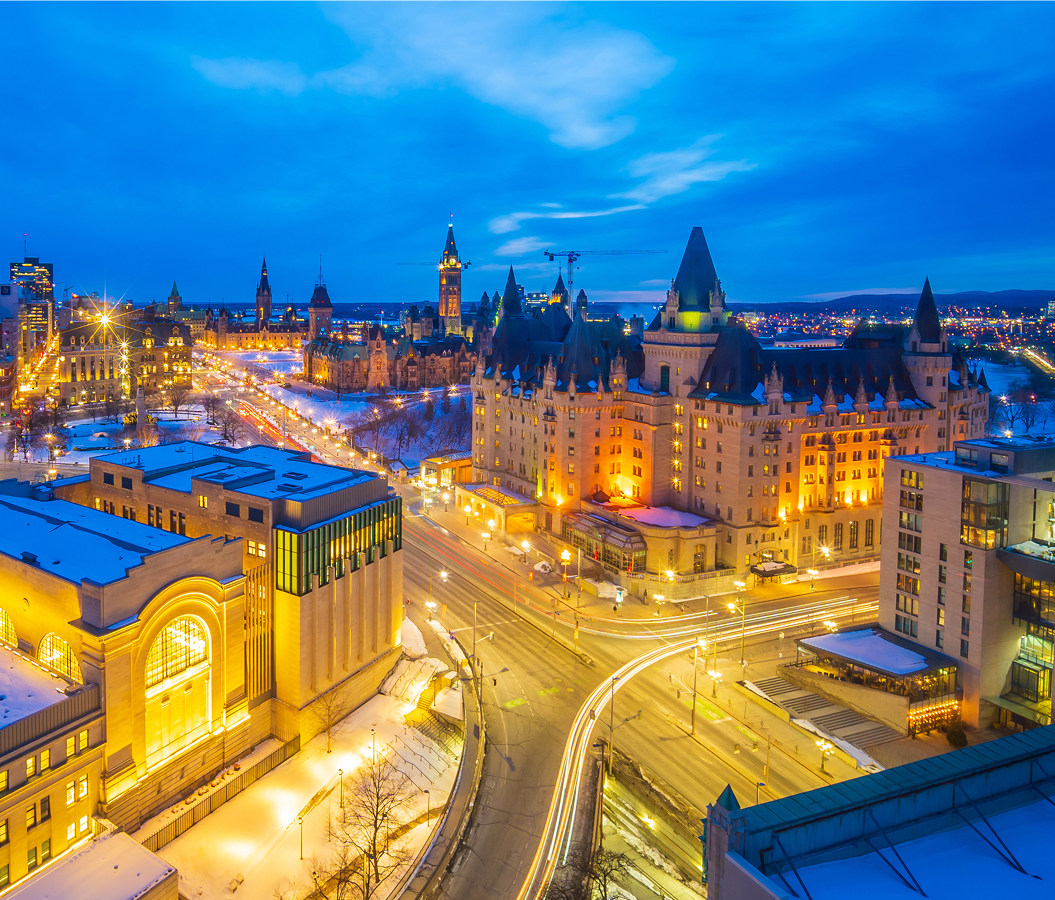
Fairmont Château Laurier opened in 1912 beside the Rideau Canal as a project of the Grand Trunk Railway under its influential president Charles Melville Hays. Architects Ross and Macfarlane designed the limestone hotel in a Châteauesque style of steep roofs, dormers, turrets, and Gothic detailing that visually connected it with Parliament Hill across the canal. Hays died aboard the Titanic only days before the hotel's scheduled opening, giving the culmination of his Ottawa project an extraordinary connection to one of the defining disasters of the era. The Canadian National Railways later inherited the property after the collapse and nationalization of the Grand Trunk system, carrying Château Laurier into the broader tradition of Canada's railway hotels. Its position between Parliament, the canal, the former Union Station, and Confederation Square made Château Laurier an enduring architectural component of the ceremonial heart of the Canadian capital.
Where your story begins.
Foresyte Travel reveals places that feel extraordinary long before you arrive.
Enjoy editorial crafted for luxury travelers.
Foresyte may earn a commission when you book.