Top places to stay in Hawaii.
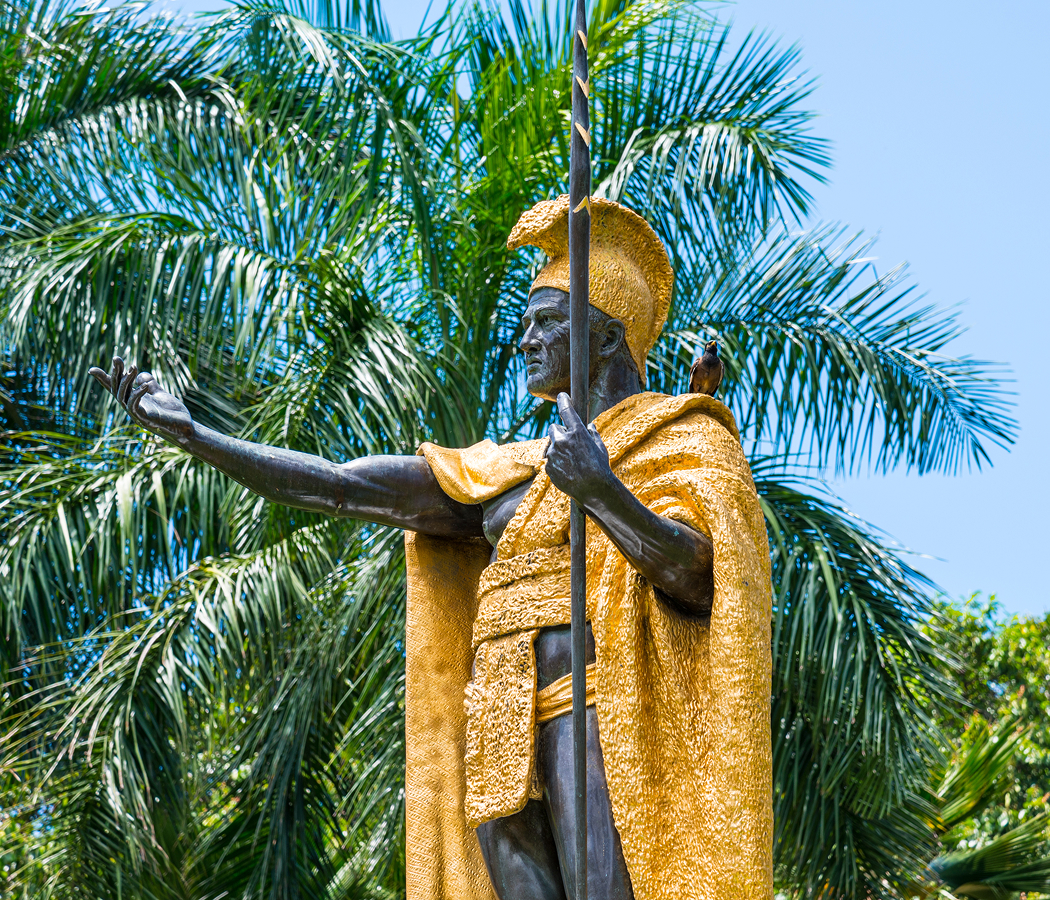
Honolulu's emergence as one of the Pacific's great hotel destinations grew from the transformation of a Hawaiian royal capital into an international crossroads of maritime commerce, luxury travel, and tropical resort culture. Long before Western ships entered its harbor, Oʻahu sustained sophisticated Hawaiian communities organized around agricultural districts, fishing grounds, and the political authority of hereditary chiefs. Honolulu Harbor became increasingly important during the early nineteenth century as sandalwood traders, whaling vessels, and merchant ships connected the Hawaiian Islands with commercial networks across the Pacific. King Kamehameha III established Honolulu as the permanent capital of the Hawaiian Kingdom in 1845, concentrating government, diplomacy, and commercial activity near the waterfront. Boardinghouses and early hotels accommodated foreign merchants, naval officers, and travelers arriving by sea. The Hawaiian Hotel opened in 1872, introducing a grand establishment supported by the kingdom's ambitions to attract international visitors. The overthrow of Queen Liliʻuokalani in 1893 and American annexation in 1898 fundamentally altered Hawaiʻi's political and economic development. Steamship tourism subsequently expanded, bringing affluent mainland travelers seeking tropical scenery and an unfamiliar island culture. The Moana Hotel opened at Waikīkī in 1901, becoming the district's first major resort hotel and establishing beachfront hospitality as a defining feature of Honolulu's visitor economy. The Royal Hawaiian followed in 1927, its distinctive pink Spanish-Moorish architecture creating an enduring symbol of Pacific luxury. Commercial aviation gradually transformed access to the islands, and the introduction of regular transpacific passenger service during the 1930s broadened Honolulu's international connections. The attack on Pearl Harbor in 1941 brought wartime restrictions and extensive military activity, profoundly disrupting civilian travel. Hawaiʻi achieved statehood in 1959, coinciding with the arrival of commercial jet service and a period of extraordinary tourism expansion. High-rise hotels reshaped Waikīkī during the following decades, accommodating growing numbers of visitors from North America and Asia. Japanese investment and international hotel development strengthened Honolulu's position as a major Pacific resort center. Later projects introduced luxury residences, contemporary boutique properties, and substantial renovations of established beachfront institutions. Honolulu's hospitality history reflects the profound political transformations of the Hawaiian Islands and the development of a resort economy whose global appeal rests upon an extraordinary oceanfront setting.
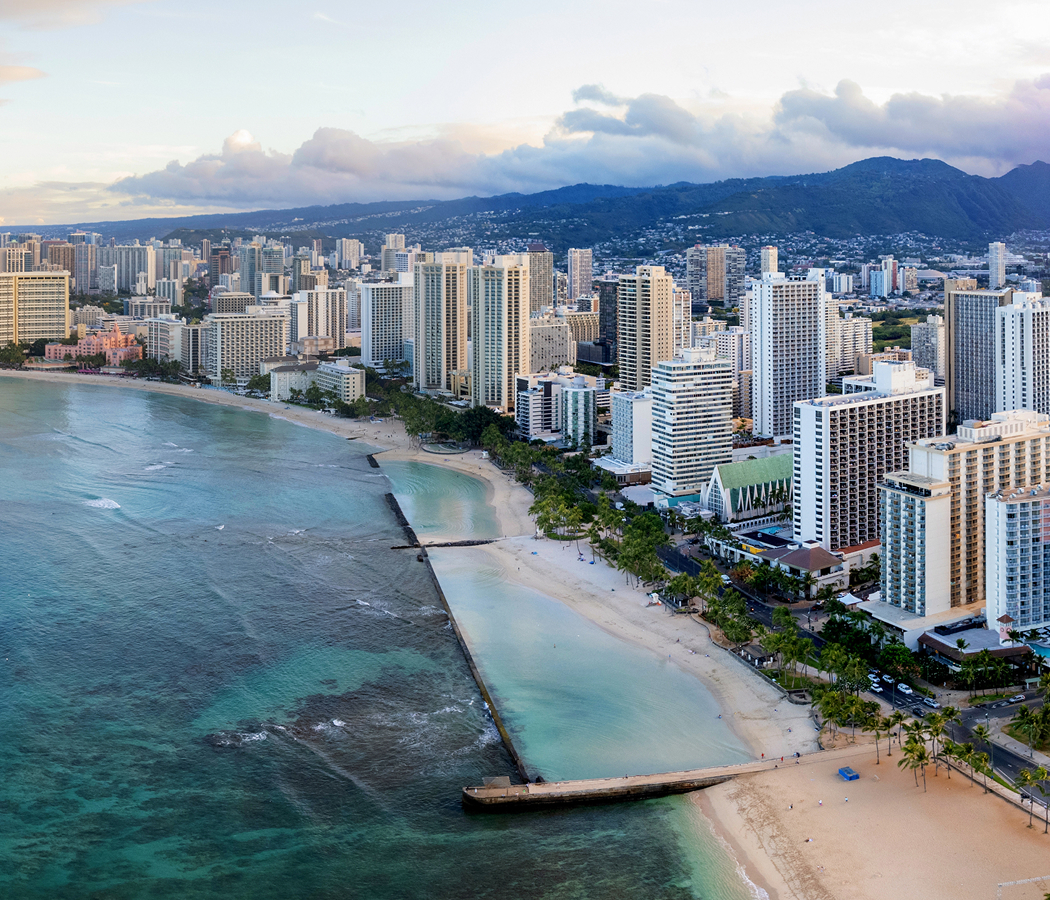
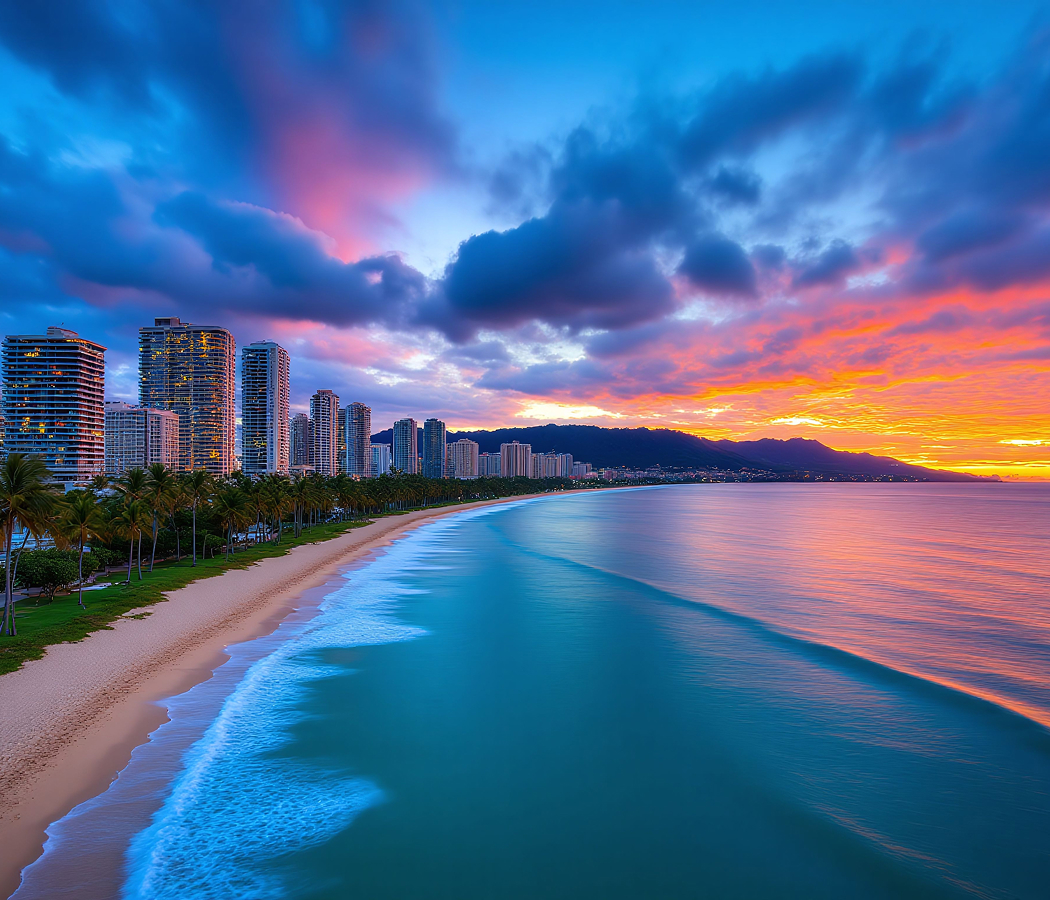
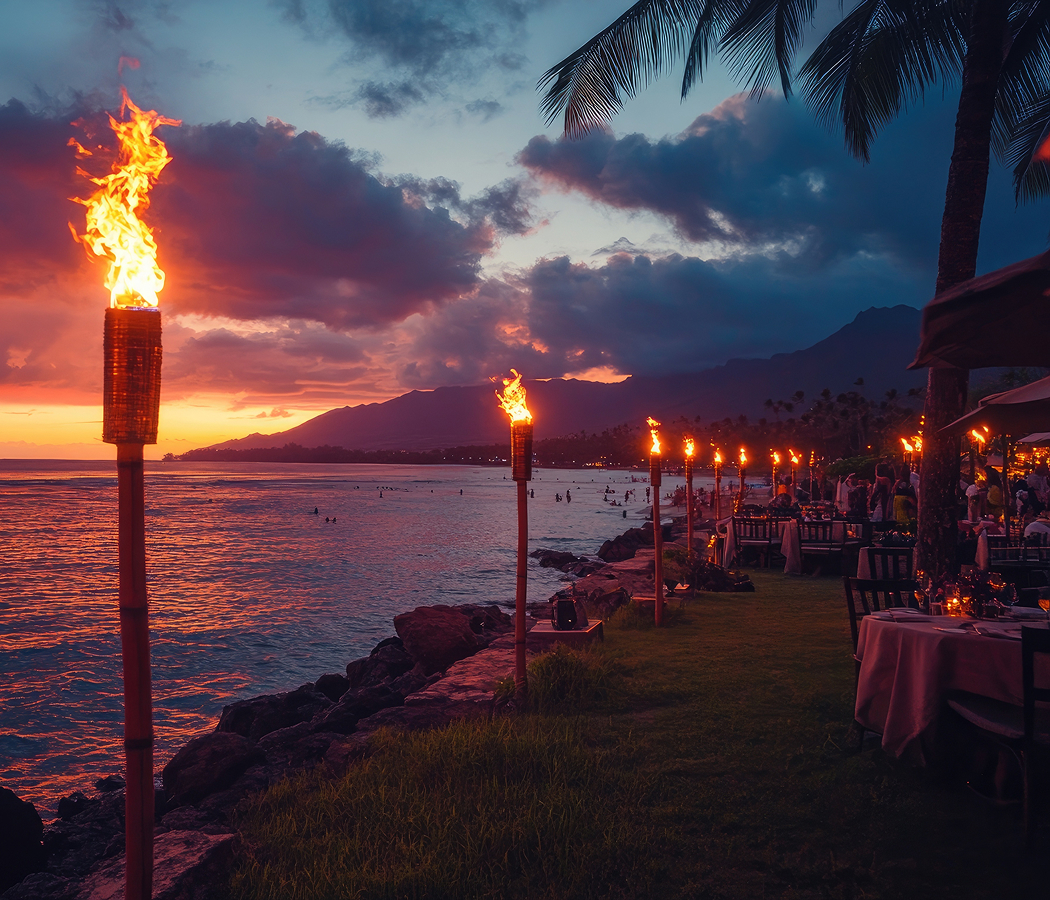
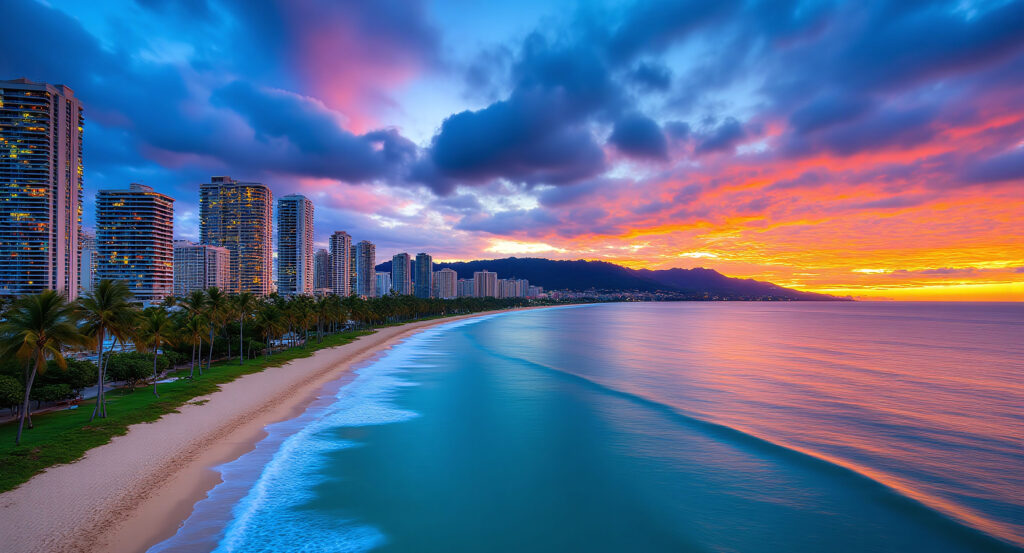
Honolulu's hotel districts occupy a narrow coastal plain between the Pacific Ocean and the steep volcanic ridges of southeastern Oʻahu, creating a striking contrast between dense urban development, sheltered beaches, and dramatic mountain scenery. Waikīkī forms the principal resort district, extending along a celebrated shoreline beneath the unmistakable profile of Lēʻahi, commonly known as Diamond Head. Kalākaua Avenue provides its principal beachfront corridor, where prestigious hotels occupy prominent oceanfront positions among luxury boutiques, restaurants, and landscaped public spaces. Towering contemporary properties stand beside established resort buildings, with expansive balconies and open-air terraces overlooking the surf. The surrounding streets contain smaller boutique hotels and apartment-style accommodation, offering convenient access to beaches, shopping, and evening entertainment. At the eastern end of Waikīkī, the neighborhoods surrounding Kapiʻolani Park provide a greener setting through broad lawns, mature trees, and quieter residential streets. Hotels near the park benefit from proximity to coastal walking routes and expansive views toward the volcanic headland. Westward, the Ala Wai Canal separates the resort district from established residential neighborhoods and introduces a calmer waterfront environment along its landscaped banks. Beyond Waikīkī, Ala Moana occupies a substantial commercial and residential district centered on shopping complexes, contemporary towers, and an extensive beachfront park. Hotels here offer convenient access to urban amenities and the sheltered swimming areas of Ala Moana Beach Park. Farther west, Kakaʻako presents a rapidly evolving metropolitan landscape through contemporary residential buildings, restored commercial properties, and ambitious mixed-use developments. Boutique accommodation and modern hotels provide access to galleries, restaurants, and waterfront promenades near the developing urban shoreline. Downtown Honolulu forms the historic commercial and governmental center, with substantial office towers standing alongside nineteenth-century civic buildings and established financial institutions. Hotels near Bishop Street and the surrounding commercial corridors serve business travelers and visitors interested in the capital's architectural heritage. The adjoining Chinatown district offers a more intimate urban atmosphere through historic commercial buildings, covered markets, galleries, and independent restaurants. Its compact streets preserve an important chapter of Honolulu's multicultural commercial history. East of Waikīkī, the neighborhoods surrounding Kāhala introduce a more secluded coastal landscape through substantial residential properties, mature tropical gardens, and prestigious beachfront accommodation. Luxury resorts occupy landscaped grounds beside sheltered stretches of shoreline, creating an atmosphere of privacy near the city's principal attractions. Farther east, the coastline toward Hawaiʻi Kai extends through residential communities, rocky headlands, and scenic bays beneath the Koʻolau Mountains. Accommodation becomes more limited along this stretch, emphasizing intimate properties and access to outdoor recreation. Across Honolulu, travelers encounter everything from celebrated oceanfront resorts and contemporary urban hotels to intimate neighborhood properties, each shaped by the close relationship between tropical landscape and metropolitan life. Foresyte may earn a commission when you book.
Foresyte Travel's top five choices.
5. Four Seasons Resort Oahu at Ko Olina
Four Seasons Resort Oahu at Ko Olina occupies the western coast of Oahu within a resort district created from lands historically associated with the Campbell Estate. Developer Herbert Horita and financier Takeshi Sekiguchi began shaping Ko Olina as a master-planned resort community in the 1980s, using engineered lagoons to establish a protected recreational coastline. The hotel originated as the JW Marriott Ihilani before extensive redevelopment introduced Four Seasons to Oahu in 2016. Honolulu-based de Reus Architects directed the transformation, integrating Hawaiian materials, artwork, and landscape references into the existing oceanfront complex. Four Seasons at Ko Olina represents the multidecade development that established leeward Oahu as a major resort destination beyond Honolulu and Waikiki.
4. ESPACIO The Jewel of Waikiki
ESPACIO The Jewel of Waikiki opened in 2019 on Kalakaua Avenue as the flagship hospitality project of Japanese company Kowa, placing an unusually small-scale property within Waikiki's dense concentration of high-rise hotels. Honolulu architecture firm Group 70 International designed the narrow vertical structure to occupy a constrained parcel directly across from Waikiki Beach. The building organizes its accommodations as individual residential-scale floors, using private elevator access and broad ocean-facing openings to create a physical arrangement closer to stacked residences than a conventional hotel. Its rooftop level crowns the tower with a pool and gathering spaces overlooking the Pacific and the surrounding urban coastline. Espacio demonstrates how Waikiki's limited land and extraordinary property values have produced increasingly vertical and specialized forms of hospitality development.
3. The Ritz-Carlton Residences, Waikiki Beach
The Ritz-Carlton Residences, Waikiki Beach introduced a major residential-hospitality complex to the western edge of Waikiki through two towers developed by PACREP. Guerin Glass Architects designed the first tower, completed in 2016, with its broad facade oriented toward the Pacific across Fort DeRussy and the low-rise foreground separating the property from the shoreline. A second tower followed in 2018, expanding the project into a paired vertical composition connected by common spaces at their base. The development brought the Ritz-Carlton residential model into a district historically dominated by conventional beachfront hotels and condominium towers. Its two-stage construction reflects Waikiki's continuing evolution through high-value vertical development on parcels set inland from the beach itself.
2. The Kahala Hotel & Resort
The Kahala Hotel & Resort opened in 1964 as the Kahala Hilton on a secluded shoreline east of Diamond Head, establishing a resort district physically separated from the dense hotel corridor of Waikiki. Conrad Hilton joined developer Charles Pietsch in creating the property, with architect Edward Killingsworth designing a modernist complex that placed a slender tower beside low-rise structures and tropical grounds. Its distance from Central Waikiki attracted heads of state, entertainers, and other prominent visitors seeking a more secluded Honolulu setting, making the hotel an important social address during Hawaii's post-statehood tourism expansion. The property later operated as the Kahala Mandarin Oriental before adopting the Kahala name under new ownership. The Kahala preserves a distinct chapter of Honolulu resort development shaped by midcentury modernism, geographic seclusion, and Hawaii's emergence as an international Pacific destination.
1. Halekulani Hotel
Halekulani traces its origins to a modest beachfront property established in the early twentieth century on land whose Hawaiian name, Halekulani, translates as “house befitting heaven.” Robert and Louise Lewers acquired the property in 1917 and developed it into a hotel that became closely associated with Waikiki's emergence as an international resort destination. The surviving Hau Tree setting recalls the property's early decades, when the shoreline district retained a far lower scale and more residential character than the high-rise Waikiki that followed. A sweeping redevelopment completed in 1984 established the architectural form of the modern Halekulani around open courtyards, landscaped grounds, and direct frontage on the Pacific. Halekulani connects the formative era of Waikiki hospitality with the extraordinary urban transformation that made the district one of the world's most recognized resort centers.
Where your story begins.
Foresyte Travel reveals places that feel extraordinary long before you arrive.
Enjoy editorial crafted for luxury travelers.
Foresyte may earn a commission when you book.