Why The Ritz-Carlton Residences, Waikiki Beach matters.
The Ritz-Carlton Residences, Waikiki Beach is a vertical residential resort where Waikiki's royal shoreline and surf culture meet Guerin Glass's mauka-to-makai design, Irongate's high-rise development, and a major shift in Honolulu's luxury lodging model.
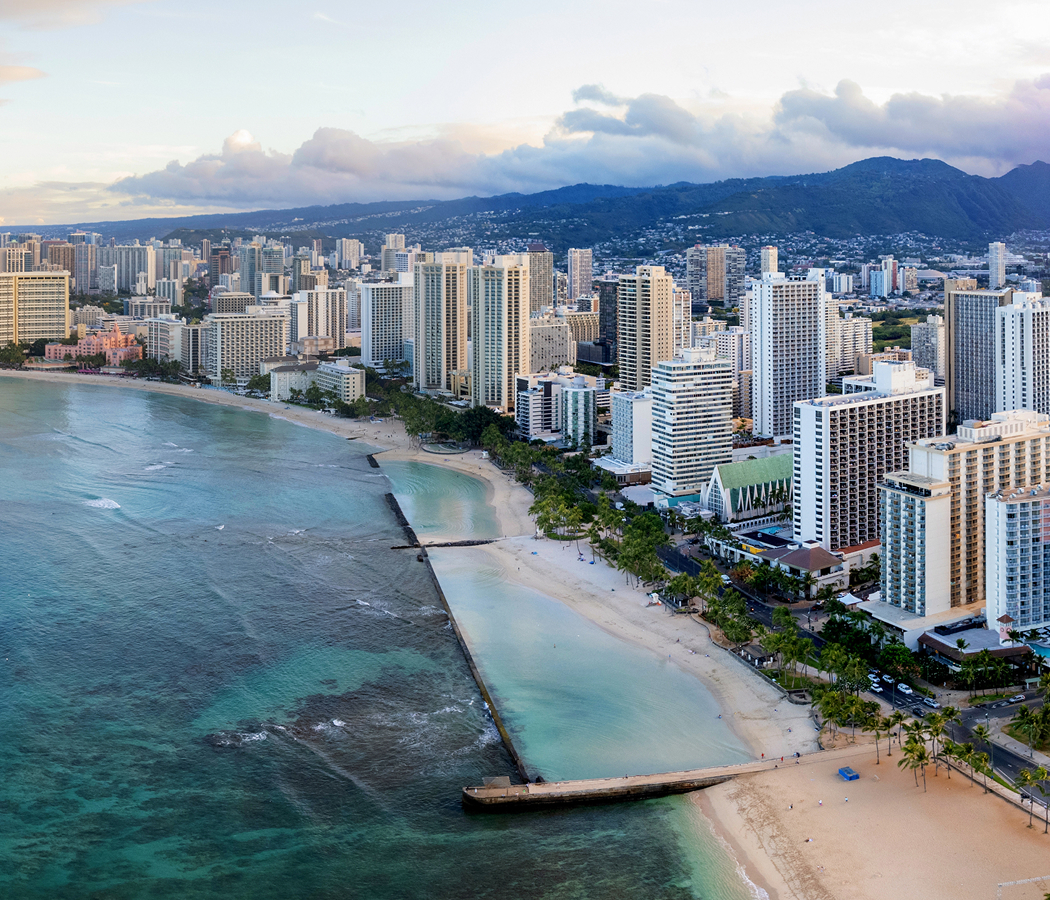
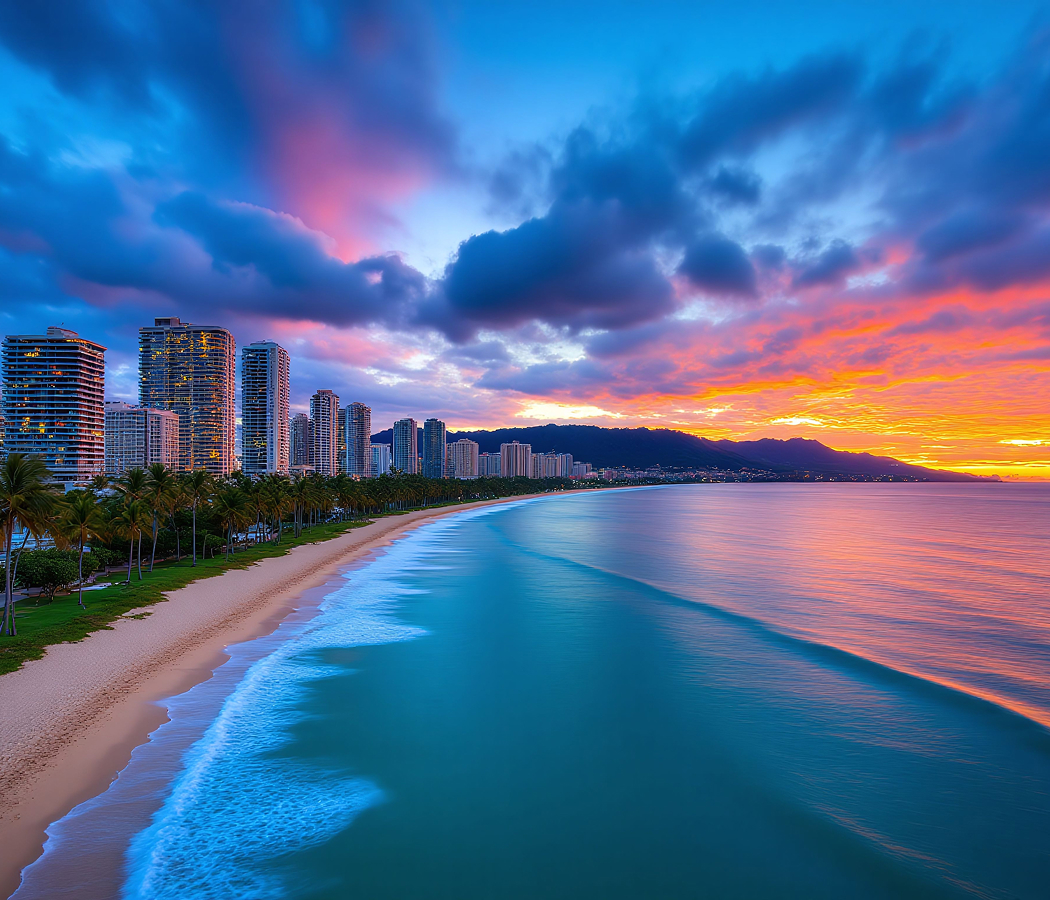
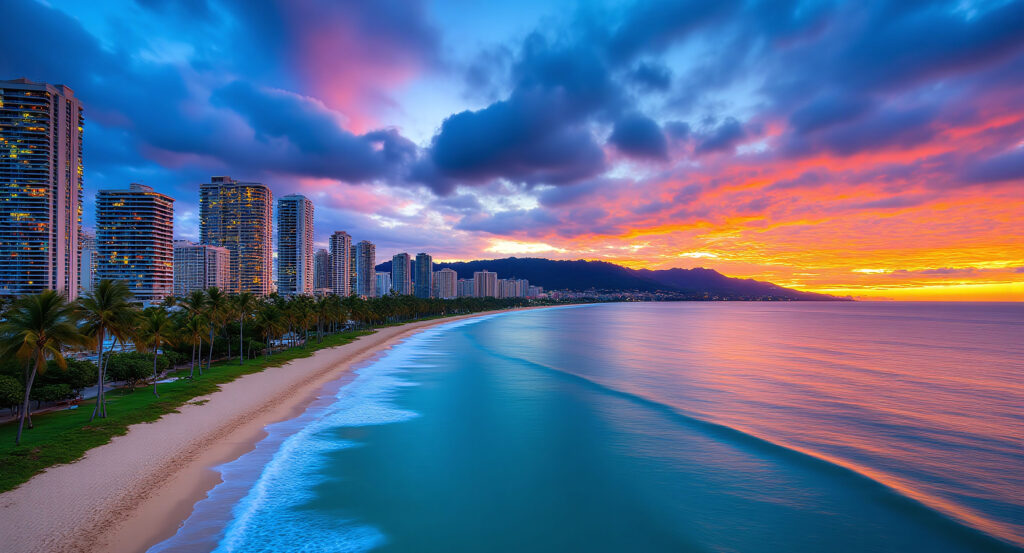
Positioned on Kalaimoku Street near Kalakaua Avenue, a short walk from Waikiki Beach, the residence towers stand between Fort DeRussy, Kahanamoku Lagoon, Ala Wai Canal, Ala Moana Regional Park, and the Pacific Ocean, with Honolulu's urban grid extending inland. The twin towers rise above a dense coastal district shaped by hotels, retail corridors, public beaches, and the broad volcanic slopes of Oʻahu. Vertical residences, elevated pools, and open balconies make height the primary means of encountering Waikiki, placing the city, ocean, and mountains across a layered skyline. Hawaiian design references, water gardens, and the mauka-to-makai orientation create a secondary relationship with the island's geography and cultural memory. The result is a high-rise property where urban density, royal Hawaiian history, and resort development converge at Waikiki's western gateway.
What defines The Ritz-Carlton Residences, Waikiki Beach.
The Ritz-Carlton Residences, Waikiki Beach is best known for introducing a major Ritz-Carlton-branded residential development to Waikiki through two high-rise towers designed around a mauka-to-makai vision. Developed by Irongate, the project brought a vertically organized luxury residence model to a district historically shaped by beachfront hotels and low coastal recreation. Architect Guerin Glass designed the first 38-storey tower with exterior details inspired by Hawaii's natural elements, translating mountain-to-sea geography into a contemporary glass and concrete structure. The development opened in 2016 as a new form of branded residential hospitality in Honolulu, combining privately owned residences with Ritz-Carlton management and hotel operations. Its location at the gateway to Waikiki placed the project between Luxury Row, Kalakaua Avenue, Fort DeRussy, and the Pacific shoreline. The tower's height created a new visual relationship between urban Honolulu, the ocean, and the volcanic interior of Oʻahu. The project's importance rests on real estate structure and architectural scale, not simply on luxury branding. It represented a major shift in Waikiki's development pattern by placing a full residential ownership model within a globally recognized hotel structure.
How The Ritz-Carlton Residences fits.
The Ritz-Carlton Residences, Waikiki Beach works as a base for tracing Waikiki from Polynesian healing traditions through Hawaiian monarchy to the volcanic and military landscape surrounding Honolulu.
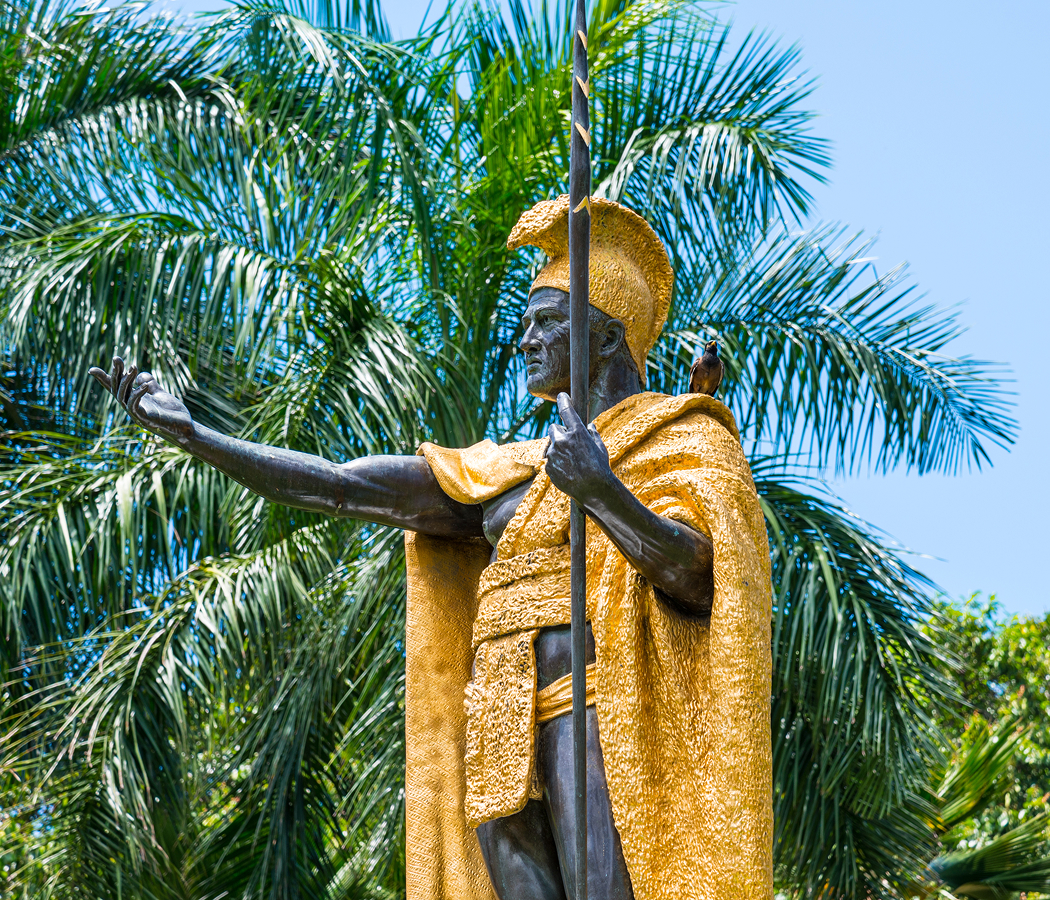
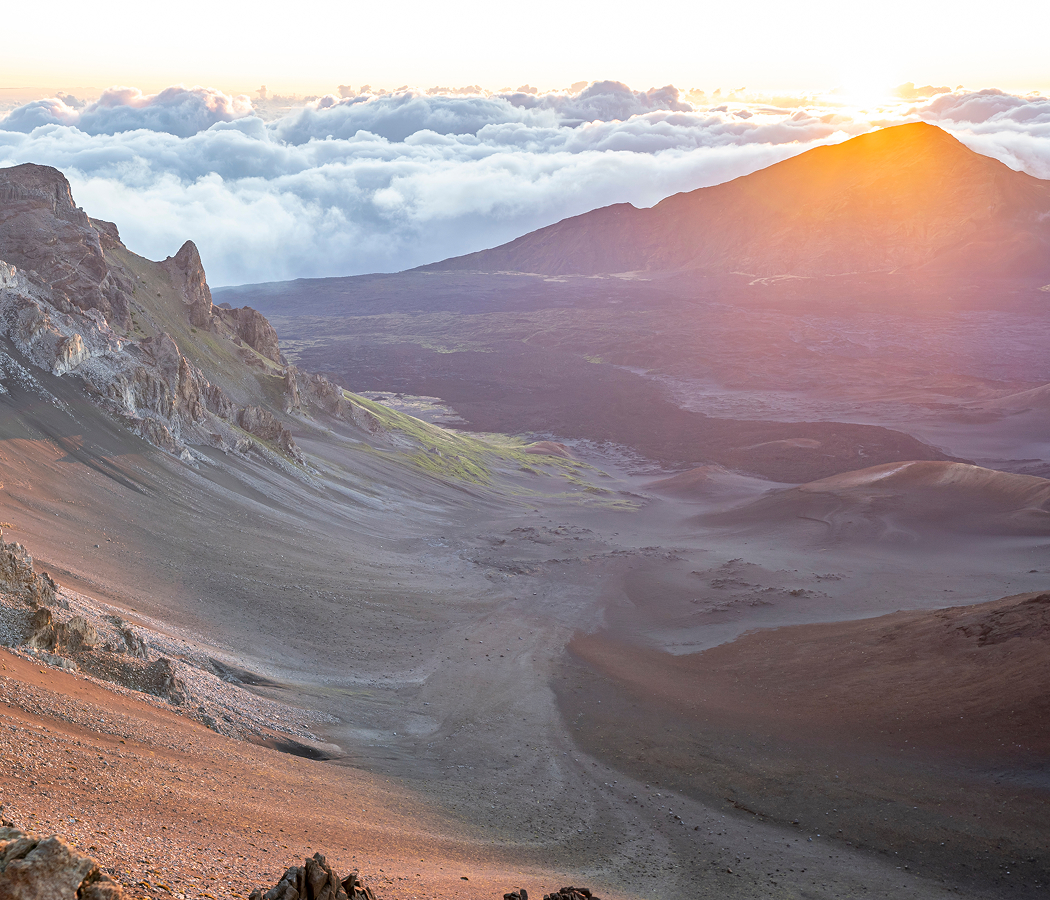
Begin at Kapaemahu, the four healing stones on Waikiki Beach associated with Tahitian healers who brought healing arts to Hawaiʻi long before the reign of Oʻahu chief Kākuhihewa. The stones honor Kapaemahu, Kahaloa, Kapuni, and Kinohi, four māhū healers whose story remains part of Waikiki's sacred cultural geography. A 1997 cultural site restored the stones as Nā Pōhaku Ola Kapaemāhū a Kapuni, or the Stones of Life, with caretakers preserving their relationship to healing, gender diversity, and Hawaiian tradition. The site provides a direct encounter with Waikiki's indigenous history beneath the surrounding high-rise skyline. Continue to ʻIolani Palace, the official residence of King Kalākaua and Queen Liliʻuokalani from its completion in 1882 until the overthrow of the Hawaiian Kingdom. The palace combines Hawaiian royal authority with electricity, telephones, imported furnishings, koa wood, portraits, featherwork, and ceremonial interiors. Queen Liliʻuokalani's imprisonment there after the overthrow gives the building a direct connection to the collapse of the Hawaiian monarchy. Its preservation places Honolulu's political history inside a surviving royal residence and civic setting. Conclude at Diamond Head State Monument, the volcanic crater known in Hawaiian as Lēʻahi and a defining geological presence along Oʻahu's southeastern coast. The monument encompasses more than 475 acres across the crater interior and outer slopes, preserving evidence of volcanic formation and military use. A trail through the crater leads past wartime structures and elevated views across Waikiki, the Pacific Ocean, and Honolulu's coastal plain. Diamond Head gives the residence towers a geological scale, placing their vertical urban form against one of Oʻahu's oldest visible volcanic landmarks. The progression moves from Polynesian healing traditions through Hawaiian royal history and culminates in volcanic terrain, giving the property a precise route through Waikiki's cultural, political, and geological development.
Where your story begins.
Foresyte Travel reveals places that feel extraordinary long before you arrive.
Enjoy editorial crafted for luxury travelers.