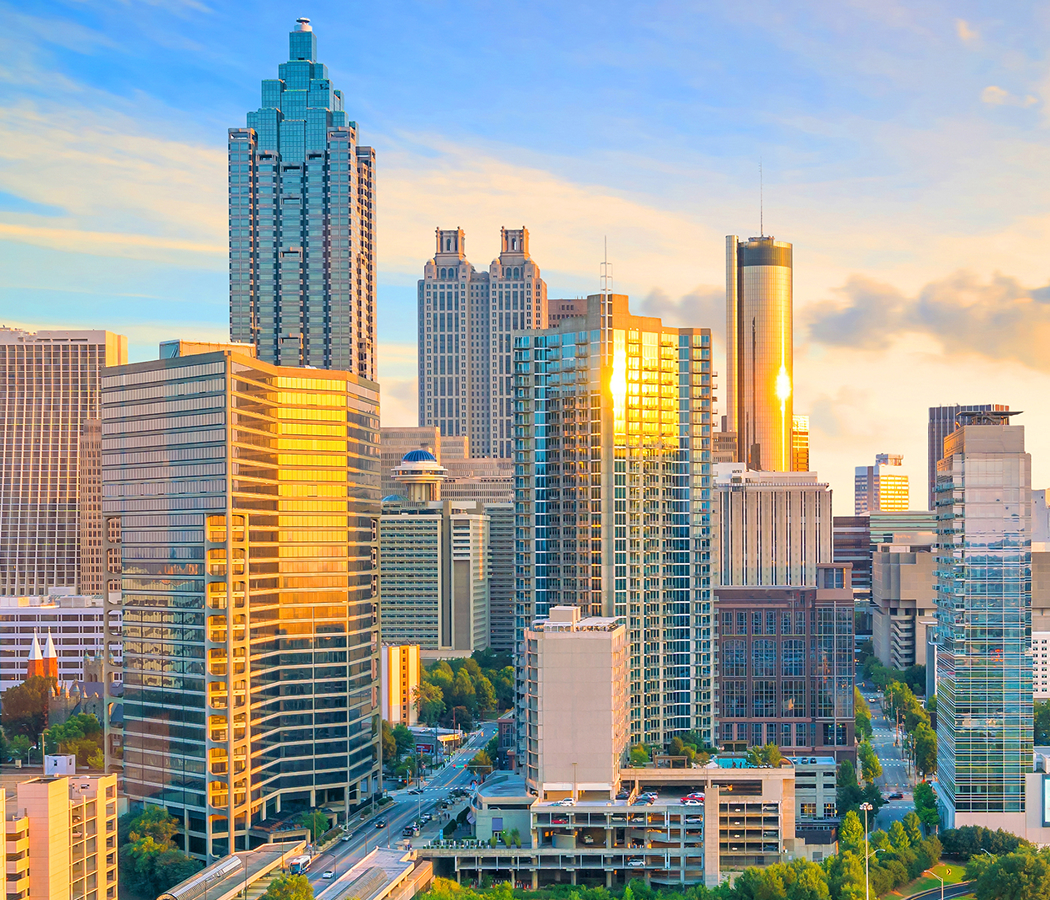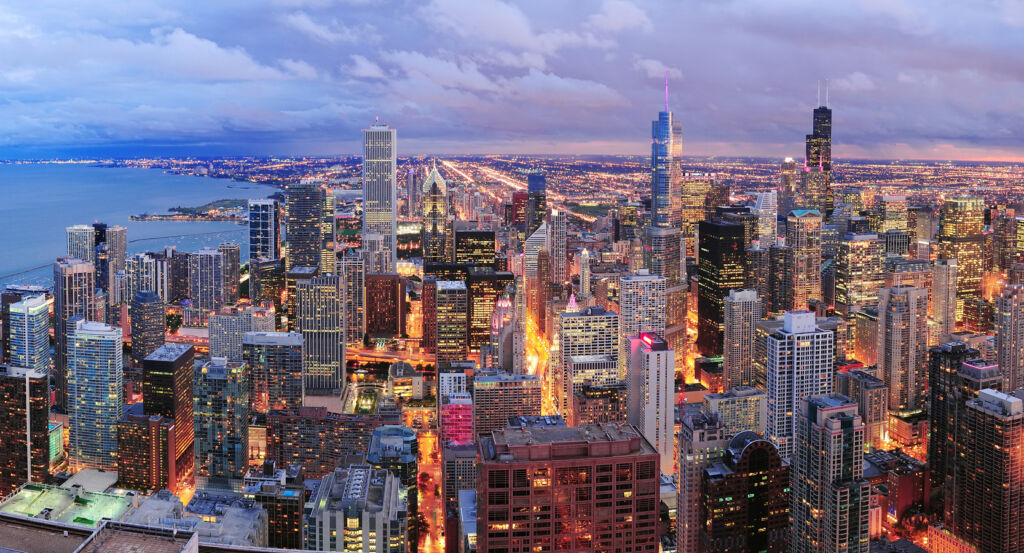
Perfect weekend in Chicago, Illinois.
Chicago's commanding position between the Great Lakes and the Mississippi River watershed transformed a modest trading settlement into one of America's foremost centers of industry, architecture, transportation, and commerce. Situated along the southwestern shore of Lake Michigan, the city developed around a strategic portage connecting the Chicago River with waterways leading toward the Illinois River. Indigenous communities, including the Potawatomi, maintained longstanding relationships with the region's wetlands, prairies, and trading routes before European settlement. French explorers Jacques Marquette and Louis Jolliet traveled through the area in 1673, recognizing the commercial significance of the passage between the Great Lakes and the continental interior. Jean Baptiste Point du Sable, a trader of African descent, established a permanent trading enterprise near the mouth of the Chicago River during the late eighteenth century. The United States constructed Fort Dearborn in 1803, and Chicago incorporated as a city in 1837. Completion of the Illinois and Michigan Canal in 1848 strengthened connections between the Great Lakes and the Mississippi watershed, accelerating the movement of grain, lumber, livestock, and manufactured goods. Railroad expansion subsequently established Chicago as a principal transportation center, attracting industrial investment and workers from across the United States and Europe. The Great Chicago Fire of 1871 destroyed extensive portions of the central city, initiating an extraordinary period of reconstruction. Architects including William Le Baron Jenney, Daniel Burnham, and John Wellborn Root pioneered structural innovations that contributed to the development of the modern skyscraper. The World's Columbian Exposition of 1893 brought international attention to Chicago's architectural ambitions and industrial prosperity. During the twentieth century, the Great Migration brought hundreds of thousands of African Americans from the South, profoundly influencing the city's political institutions, labor movements, and cultural achievements. Chicago subsequently developed into a major center of finance, manufacturing, higher education, and international commerce, retaining an architectural landscape shaped by industrial innovation and successive generations of urban ambition.
American blues underwent a profound transformation in Chicago, where musicians arriving from the Mississippi Delta developed an amplified urban sound that influenced rock, soul, and popular music across the world. Muddy Waters settled in Chicago during the 1940s, combining Delta blues traditions with electric guitar, harmonica, and amplified ensemble arrangements. Howlin' Wolf, Willie Dixon, and Little Walter contributed to the development of Chicago blues, with Chess Records becoming one of the country's most influential recording companies during the postwar period. The city's musical achievements also encompass jazz, gospel, house, and experimental composition. House music developed during the late 1970s and early 1980s through DJs including Frankie Knuckles, whose performances at the Warehouse helped establish the genre's foundations. Chicago's literary history includes writers such as Carl Sandburg, whose poetry explored industrial labor and metropolitan life, and Gwendolyn Brooks, whose work examined the experiences of African American communities. Brooks received the Pulitzer Prize for Poetry in 1950, becoming the first African American recipient of the award. The Museum of Contemporary Art Chicago, founded in 1967, contributed to the city's artistic institutions through exhibitions devoted to experimental and contemporary visual art. The Chicago Symphony Orchestra, founded in 1891, developed into one of America's foremost orchestral ensembles under conductors including Frederick Stock, Fritz Reiner, and Georg Solti. Chicago's culinary traditions grew through the agricultural resources of the Midwest and the cooking practices of successive immigrant communities. The city's meatpacking industry contributed to the development of substantial steakhouse traditions, and Italian American communities established enduring specialties including Italian beef sandwiches and Chicago-style pizza. Polish immigrants introduced pierogi, kielbasa, and traditional baked goods, and Mexican communities strengthened the city's food culture through regional preparations including birria, tamales, and carnitas. Chicago's South Side barbecue traditions developed distinctive preparations featuring rib tips, hot links, and aquarium smokers. The city's contemporary restaurant culture incorporates Midwestern produce, freshwater fish, regional meats, and techniques drawn from international fine dining. A weekend in Chicago brings the architectural achievements of the American skyscraper together with the musical innovations, literary accomplishments, and neighborhood food traditions that established the city as a cultural capital of the Midwest.
Three day itinerary.
Day 1: Willis Tower
Willis Tower is best known for transforming skyscraper engineering through Fazlur Rahman Khan's bundled-tube structural system. Sears, Roebuck and Company commissioned Skidmore, Owings & Merrill to create a headquarters capable of consolidating thousands of employees as the retailer dominated American commerce. Khan organized nine square structural tubes into a clustered system that allowed individual sections to terminate at different heights, producing the tower's distinctive stepped silhouette and exceptional resistance to wind loads. Architect Bruce Graham translated that engineering logic into the building's architectural form, and the completed Sears Tower reached 1,450 feet in 1973. It surpassed New York's World Trade Center as the world's tallest building and established structural principles that profoundly influenced subsequent generations of supertall construction.
Day 1: Oriole
Oriole is best known for Noah Sandoval's intensely controlled tasting menus inside an inconspicuous West Loop setting. Sandoval developed his career through major Chicago kitchens before opening Oriole in 2016 with Cara Sandoval, building the restaurant around an intimate format that concentrates attention on individual ingredients and tightly sequenced courses. His cooking combines contemporary American foundations with Japanese and European techniques, using seafood, fermentation, pristine produce, complex sauces, and restrained presentation to build unusually precise compositions. A substantial redesign later expanded the restaurant's physical and culinary ambitions. Two MICHELIN stars established Oriole among Chicago's highest-ranked restaurants and made Sandoval one of the defining chefs of the city's contemporary fine-dining generation.
Day 2: Cloud Gate
Cloud Gate is best known for Anish Kapoor's transformation of polished stainless steel into an expansive reflection of Chicago's skyline and public life. Kapoor conceived the sculpture for Millennium Park as a seamless elliptical form whose curved surface would distort the city, sky, and people moving around it. Engineers and fabricators assembled 168 stainless-steel plates over an internal structural structure before grinding and polishing the exterior until the seams disappeared. The resulting 110-ton sculpture measures 66 feet long and creates a concave chamber beneath its center where reflections multiply and invert. Completed during Millennium Park's emergence as a major civic landscape, Cloud Gate became Kapoor's first permanent outdoor public work in the United States and one of Chicago's defining achievements in contemporary public art.
Day 2: Kasama
Kasama is best known for Tim Flores and Genie Kwon's integration of Filipino culinary heritage with an ambitious pastry and tasting-menu program. The chefs opened the Ukrainian Village restaurant in 2020 after careers in acclaimed Chicago kitchens, developing a daytime operation around Filipino dishes, sandwiches, breads, and Kwon's technically exact pastries. An evening tasting menu subsequently expanded the project through Flores's exploration of Filipino ingredients, family memory, and culinary traditions within a contemporary fine-dining structure. The restaurant's dual character gave everyday Filipino preparations and elaborate multicourse cooking equal institutional weight. MICHELIN awarded Kasama a star, making it the world's first MICHELIN-starred Filipino restaurant and establishing the project as a consequential moment in the international recognition of Filipino cuisine.
Day 2: Chicago Riverwalk
Chicago Riverwalk is best known for transforming the Chicago River from industrial infrastructure into a continuous civic landscape through the heart of downtown. The river historically supported the transportation, manufacturing, warehousing, and commercial systems that drove Chicago's explosive nineteenth-century growth. Engineers reversed its flow in 1900 through the Chicago Sanitary and Ship Canal, among the most consequential infrastructure projects in the city's history. Later improvements to water quality and declining industrial use created new possibilities along the riverbanks. Sasaki and Ross Barney Architects developed the major twenty-first-century Riverwalk expansion as a sequence of distinct public spaces extending along the south bank. The project reoriented Central Chicago toward the water that had originally determined the city's location and economic importance.
Day 2: Ever Restaurant
Ever Restaurant is best known for Curtis Duffy's return to Chicago fine dining through an exacting tasting-menu restaurant conceived with Michael Muser. Duffy developed his career through kitchens including Charlie Trotter's and Alinea before earning three MICHELIN stars at Grace, whose abrupt 2017 closure ended one of Chicago's most celebrated dining institutions. Duffy and Muser subsequently created Ever in Fulton Market, opening the restaurant in 2020 amid extraordinary disruption to the hospitality industry. The kitchen builds sculptural compositions from seafood, vegetables, meats, concentrated sauces, and intricate technical preparations, with the dining room designed around the same disciplined visual control. Two MICHELIN stars restored Duffy to the highest tier of Chicago gastronomy and established Ever as the second major institution of his independent career.
Day 3: Lula Cafe
Lula Cafe is best known for Jason Hammel's role in establishing farm-driven neighborhood cooking as a durable part of Chicago restaurant culture. Hammel and Lea Tshilds opened the Logan Square restaurant in 1999, years before the neighborhood became one of the city's major dining districts. Relationships with Midwestern farmers shaped a kitchen organized around seasonality, vegetables, whole-animal cooking, and a frequently changing menu. The Monday Night Farm Dinner became an enduring laboratory for new dishes and reinforced the restaurant's connection to regional agriculture. More than two decades of continuous evolution turned Lula Cafe into an influential training ground and neighborhood institution, and Hammel's James Beard Award for Outstanding Hospitality strengthened its position within the national history of independent American restaurants.
Day 3: The Art Institute of Chicago
The Art Institute of Chicago is best known for combining one of the United States' great encyclopedic art collections with a museum institution rooted in Chicago's nineteenth-century cultural expansion. The organization originated in 1879 and moved into its Michigan Avenue building for the World's Columbian Exposition in 1893. Shepley, Rutan and Coolidge designed the Beaux-Arts structure, whose bronze lions subsequently became enduring symbols of the museum. The collection grew to encompass extraordinary holdings in Impressionism, Post-Impressionism, American art, European painting, Asian art, photography, architecture, and design, including works by Georges Seurat, Claude Monet, Vincent van Gogh, and Grant Wood. Renzo Piano's Modern Wing expanded the institution in 2009, adding a major contemporary architectural layer to its historic Grant Park campus.
Day 3: Navy Pier
Navy Pier is best known for transforming a Progressive Era municipal pier into one of Chicago's largest public waterfront destinations. Architect Charles Sumner Frost designed Municipal Pier Number 2 as part of Daniel Burnham and Edward Bennett's broader vision for Chicago's lakefront, and the structure opened in 1916 for shipping, recreation, and public use. It received the name Navy Pier in 1927 in recognition of naval personnel who served during World War I. The U.S. Navy later used the pier as a training center during World War II, with aviators practicing carrier operations on Lake Michigan. Subsequent educational and civic uses preceded a major redevelopment into cultural, entertainment, exhibition, and recreational space, preserving a vast piece of Chicago infrastructure on the shoreline that shaped the city's development.
Day 3: Smyth
Smyth is best known for John and Karen Urie Shields's transformation of Midwestern ingredients into one of Chicago's most ambitious tasting-menu restaurants. The couple developed their careers together before opening Smyth in the West Loop in 2016, drawing heavily on relationships with farmers and producers to shape an evolving cuisine rooted in the region. John Shields built the kitchen around fermentation, preservation, seafood, vegetables, grains, and ingredients cultivated specifically for the restaurant, creating unusually close links between agricultural production and culinary technique. Karen Urie Shields developed the pastry program as an integrated component of the same experience. MICHELIN awarded Smyth three stars, placing it among the small group of Chicago restaurants to achieve the guide's highest distinction.
Where your story begins.
Foresyte Travel reveals places that feel extraordinary long before you arrive.
Enjoy editorial crafted for luxury travelers.
Foresyte may earn a commission when you book.