Why The Art Institute of Chicago matters.
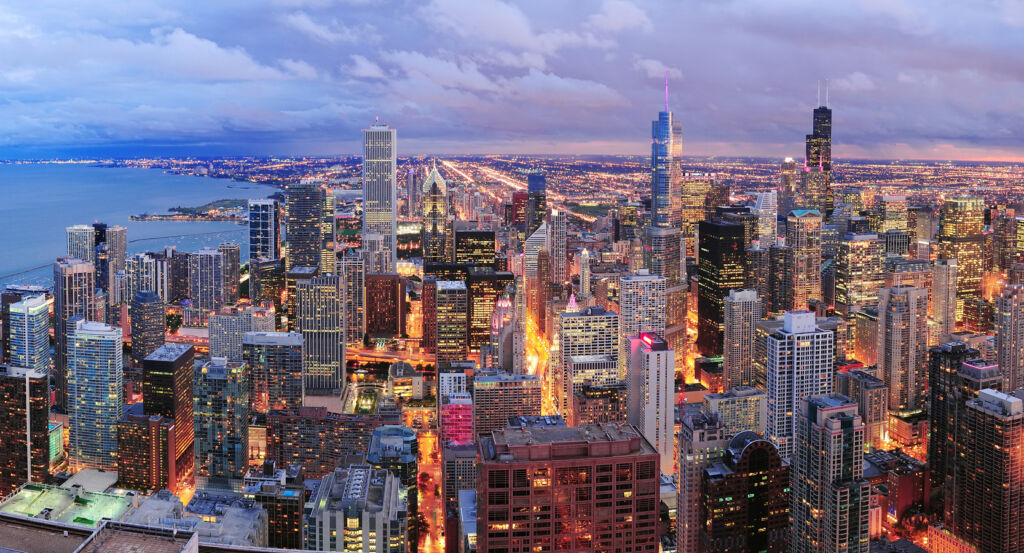
The Art Institute of Chicago is an expansive art museum where Chicago Loop's architectural grandeur meets one of the world's most distinguished encyclopedic art collections, the legacy of the city's nineteenth-century cultural ambitions and an extraordinary concentration of masterpieces spanning centuries of human creativity.
Set along South Michigan Avenue near East Adams Street and just steps from Millennium Park, the museum occupies an expansive campus overlooking Grant Park, extending west toward the Loop's commercial streets and east through landscaped courtyards toward the modern galleries of the Lake Michigan waterfront. The original Beaux-Arts building presents a commanding limestone façade whose symmetrical composition, Corinthian columns and broad entrance staircase establish a formal architectural presence along Michigan Avenue. Two bronze lions flank the principal entrance, with their elevated positions and carefully modeled forms creating one of Chicago's most recognizable civic thresholds. Interior galleries unfold through expansive staircases, skylit exhibition halls and interconnected architectural wings, culminating in the glass and steel spaces of the Modern Wing. The result is a museum whose classical architecture, extensive gallery system and extraordinary relationship with Grant Park give Chicago's artistic inheritance a physical presence equal to the ambition of its collections.
What defines The Art Institute of Chicago.
The Art Institute of Chicago is best known for its extraordinary collection of Impressionist, Post-Impressionist and American art, developed through more than a century of collecting, philanthropy and institutional expansion. The museum originated in 1879 as the Chicago Academy of Fine Arts, an institution established to advance artistic education and public access to the visual arts in a rapidly expanding industrial city. Its founders included influential Chicago businessmen and cultural advocates who sought to establish a permanent artistic institution capable of supporting both professional training and public exhibitions. The organization adopted the Art Institute of Chicago name in 1882, reflecting an expanding institutional ambition that combined museum collecting with formal artistic instruction. Architects Shepley, Rutan and Coolidge designed the museum's permanent Michigan Avenue building for the 1893 World's Columbian Exposition, creating an expansive Beaux-Arts structure originally used for the fair's World's Congress Auxiliary. The building subsequently became the museum's permanent home, establishing a major cultural institution along the eastern edge of Chicago's developing downtown. Sculptor Edward Kemeys created the two bronze lions installed at the entrance in 1894, giving the building an enduring artistic symbol associated with the city's civic culture. Early collecting expanded through major private donations, including the 1922 bequest of Bertha Honoré Palmer's Impressionist paintings, which helped establish Chicago as an important American center for French nineteenth-century art. The museum acquired Georges Seurat's A Sunday on La Grande Jatte in 1924, securing one of the defining masterpieces of Pointillism and a central work in the history of modern painting. Grant Wood's American Gothic entered the collection in 1930 after winning a prize at the museum's annual exhibition of American paintings, establishing one of the most recognizable images in American art within Chicago's permanent holdings. Edward Hopper's Nighthawks joined the collection in 1942, bringing another defining American painting into the institution's galleries. The museum's holdings subsequently expanded across European painting, American decorative arts, Asian art, ancient Mediterranean objects, photography, textiles and contemporary artistic practice, establishing an encyclopedic collection of exceptional international significance.
How The Art Institute of Chicago fits.
The Art Institute of Chicago works as the cultural centerpiece for an outing connecting Chicago's expansive civic planning, its internationally influential public art and the architectural transformation of the downtown lakefront into one of America's most celebrated urban landscapes.
Begin at Millennium Park, the extraordinary public landscape developed above railroad infrastructure and parking facilities at the northern edge of Grant Park. The project emerged from Mayor Richard M. Daley's 1997 initiative to transform an underused downtown site into a major civic destination, bringing together private philanthropy, public investment and internationally prominent designers. Frank Gehry designed the Jay Pritzker Pavilion, whose sweeping stainless steel forms and advanced acoustic system created an expansive outdoor performance venue within the park. British artist Anish Kapoor contributed Cloud Gate, the reflective stainless steel sculpture whose seamless elliptical surface transforms the surrounding skyline into a continuously changing visual composition. Landscape architect Kathryn Gustafson designed Lurie Garden with Piet Oudolf and Robert Israel, introducing a carefully structured planting environment that interprets Chicago's transformation from marshland into a major metropolitan center. Continue to Chicago Cultural Center, the expansive former public library whose architecture expresses the civic ambitions of Chicago's late nineteenth-century cultural development. Architects Shepley, Rutan and Coolidge designed the building, completed in 1897, with separate entrances serving the Chicago Public Library and the Grand Army of the Republic. Its interiors contain elaborate marble staircases, mosaic decoration and exceptional stained-glass domes, including the vast Tiffany dome above Preston Bradley Hall. The building became a municipal cultural institution after the library relocated in 1991, accommodating exhibitions, concerts and public programs within its preserved architectural spaces. Conclude at Buckingham Fountain, the expansive centerpiece of Grant Park designed by architect Edward H. Bennett and sculptor Marcel Loyau. Philanthropist Kate Sturges Buckingham commissioned the fountain in memory of her brother Clarence, and the completed structure was dedicated in 1927. Its design draws on the Latona Fountain at the Palace of Versailles, translating French formal garden traditions into an immense American civic water feature. Four bronze sea horses represent the states bordering Lake Michigan, connecting the fountain's elaborate sculptural program to the geography of the Great Lakes. The progression moves from Millennium Park's contemporary landscape and public art through the Chicago Cultural Center's expansive civic interiors and culminates in Buckingham Fountain's grand expression of lakefront planning, placing The Art Institute of Chicago within the architectural and cultural achievements that define Chicago's historic downtown.
Where your story begins.
Foresyte Travel reveals places that feel extraordinary long before you arrive.
Enjoy editorial crafted for luxury travelers.