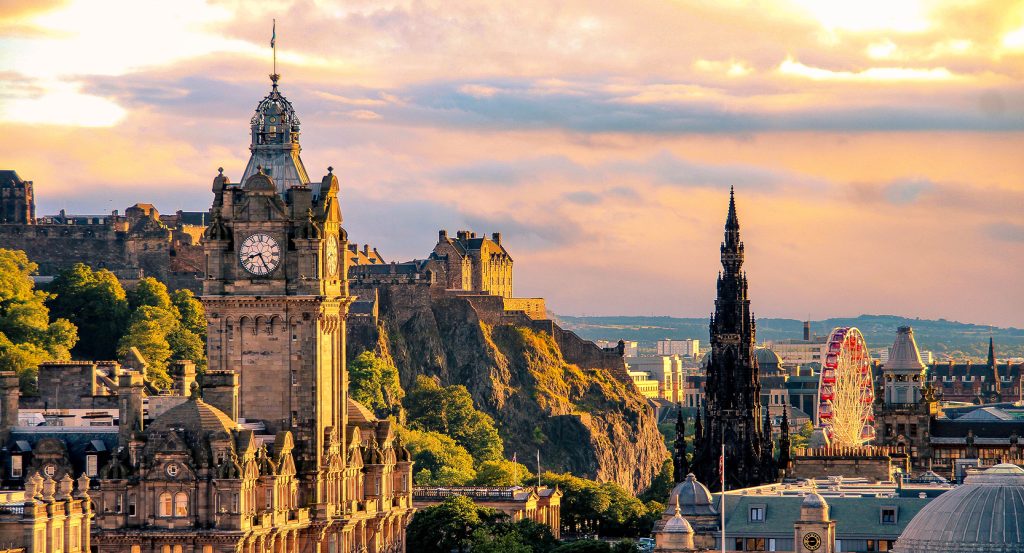
Perfect weekend in Edinburgh, Scotland.
Edinburgh's historical importance emerged through its position as Scotland's royal capital, its influence upon the Protestant Reformation, and its extraordinary achievements during the Scottish Enlightenment. The city developed around a volcanic ridge overlooking the Firth of Forth, where natural defensive advantages encouraged settlement and the concentration of royal authority. By the twelfth century, Edinburgh had become an established royal burgh under David I, whose reign strengthened Scotland's commercial institutions and encouraged the development of medieval towns. The establishment of the Scottish Parliament as a permanent institution during the fifteenth century reinforced Edinburgh's political importance, and the reign of James IV brought significant investment in royal administration, education, and Renaissance culture. The Scottish Reformation of 1560 transformed the city's religious institutions, with John Knox emerging as a central figure in the establishment of Presbyterian Protestantism. The Union of the Crowns in 1603 transferred the royal court to London, and the Acts of Union in 1707 united the Scottish and English parliaments under the Kingdom of Great Britain. Edinburgh subsequently became an intellectual center of eighteenth-century Europe through the work of David Hume, Adam Smith, and other philosophers whose ideas influenced economics, political thought, and modern science. The city's expansion during this period produced an ambitious program of Georgian construction that transformed its physical appearance and established an enduring architectural distinction between its medieval and neoclassical districts.
Three day itinerary.
Day 1: Calton Hill
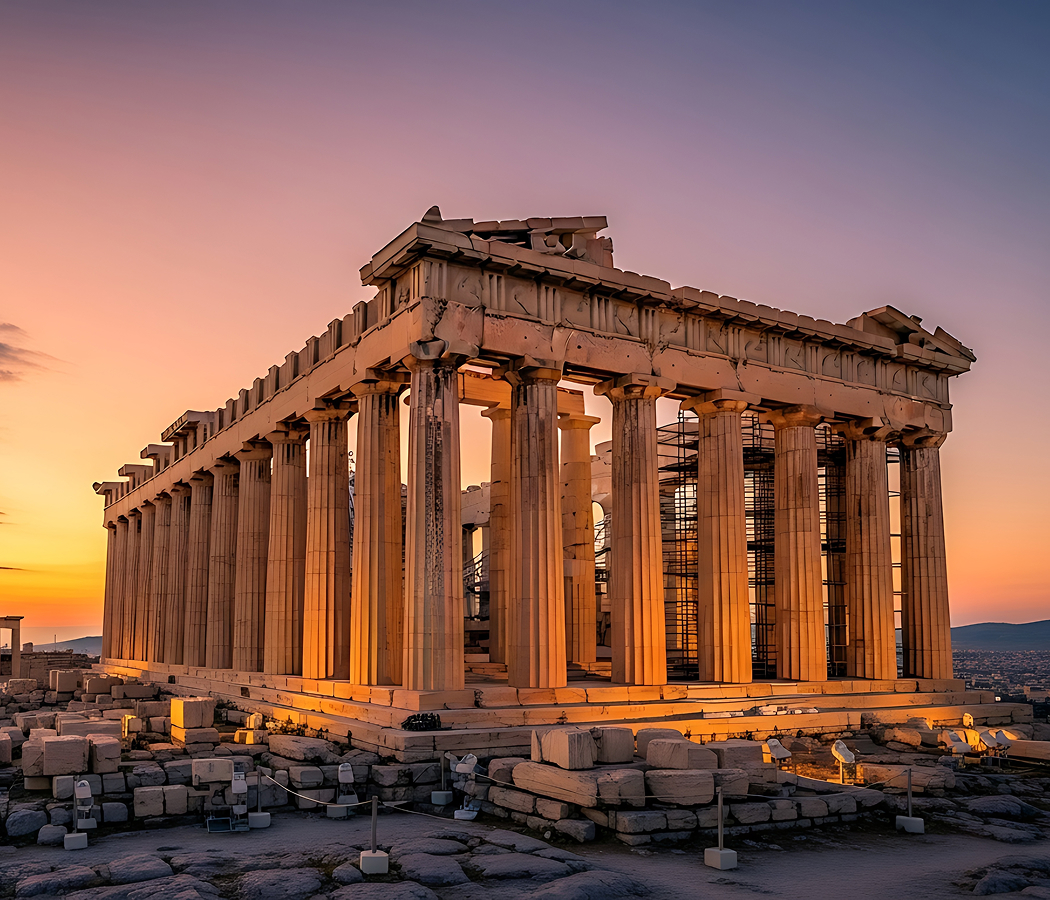
Calton Hill is best known for concentrating Edinburgh's Enlightenment-era monuments on a volcanic summit overlooking the historic city and the Firth of Forth. William Henry Playfair designed the National Monument as a memorial to Scots who died during the Napoleonic Wars, drawing directly from the Parthenon before funding shortages left the structure unfinished. Playfair also designed the City Observatory complex, strengthening the hill's association with scientific inquiry and neoclassical architecture. Robert Burn created the Nelson Monument after Admiral Horatio Nelson's victory and death at Trafalgar, and its time ball later provided a visual signal for ships in the Firth of Forth. The ensemble helped establish Edinburgh's nineteenth-century reputation as the “Athens of the North,” joining topography, science, commemoration, and Greek Revival architecture above the New Town.
Day 1: LYLA
LYLA is best known for Stuart Ralston's seafood-centered tasting menus built around exceptional products from Scottish waters. Ralston developed his career through professional kitchens in Britain and the United States before establishing a group of influential independent restaurants in Edinburgh. LYLA occupies a Georgian townhouse on Royal Terrace, placing its dining rooms within the neoclassical architecture extending east from the New Town toward Calton Hill. Hand-dived scallops, langoustines, fish, shellfish, and other Scottish products form the principal foundation of a menu shaped by precise sauces and restrained contemporary technique. MICHELIN recognition established LYLA among Edinburgh's leading restaurants, giving Ralston an ambitious platform devoted to the extraordinary marine resources surrounding Scotland.
Day 2: Scott Monument
Scott Monument is best known for commemorating Sir Walter Scott through one of the most elaborate Gothic Revival monuments constructed for a literary figure. George Meikle Kemp won the design competition with a soaring structure whose architecture drew from medieval Scottish churches and Gothic tracery. Construction began after Scott's death had intensified his status as the author most closely associated with Scotland's historical imagination. A seated marble figure of Scott by John Steell occupies the central arch with his dog Maida, surrounded by sculpted characters drawn from the writer's works. The monument rises above Princes Street Gardens as a vertical counterpoint to Edinburgh Castle and the Old Town skyline, translating Scott's enormous nineteenth-century cultural influence into the architecture of the city he helped make internationally famous.
Day 2: Timberyard
Timberyard is best known for the Radford family's ingredient-driven interpretation of modern Scottish cooking within a former warehouse near Edinburgh Castle. Andrew and Lisa Radford established the restaurant with their family, creating a culinary institution in which sourcing, preservation, fermentation, smoking, and seasonal change shape the sequence of the kitchen. Scottish vegetables, seafood, game, meat, herbs, and foraged products provide the material foundation for compositions distinguished by concentrated flavors and disciplined presentation. The former theatrical-props warehouse retains timber, brick, courtyard space, and industrial proportions that reinforce the restaurant's connection to craft and materiality. MICHELIN recognition placed Timberyard among Edinburgh's foremost restaurants and strengthened the city's contemporary expression of Scotland's agricultural and natural landscape.
Day 2: Edinburgh Castle
Edinburgh Castle is best known for embodying nearly a millennium of Scottish monarchy, warfare, state formation, and military power from the summit of Castle Rock. The volcanic crag provided a naturally defensible position whose strategic importance long predates the surviving buildings. St. Margaret's Chapel, constructed during the twelfth century, is the oldest surviving building in Edinburgh and preserves the castle's medieval royal history. The fortress changed hands repeatedly during conflicts between Scotland and England, including the Wars of Scottish Independence. The Crown Room houses the Honours of Scotland, among the oldest surviving crown jewels in Europe, alongside the Stone of Destiny associated with Scottish coronations. Palace buildings, batteries, gates, barracks, and defensive works preserve the castle's transformation from royal residence into a formidable military stronghold dominating Edinburgh's skyline.
Day 2: The Kitchin
The Kitchin is best known for Tom Kitchin's rigorous application of classical French technique to Scotland's seasonal ingredients. Kitchin trained under chefs including Pierre Koffmann, Alain Ducasse, and Guy Savoy before returning to Scotland and opening the restaurant in Leith with Michaela Kitchin in 2006. His cooking developed around the principle of moving “from nature to plate,” placing Scottish seafood, game, meat, vegetables, and wild products within preparations grounded in the technical discipline of French haute cuisine. The restaurant's Leith location connects this approach to Edinburgh's historic port, where maritime commerce shaped the city's relationship with imported and local food for centuries. MICHELIN recognition established The Kitchin as one of the defining institutions in Scotland's modern culinary development.
Day 3: The Edinburgh Larder
The Edinburgh Larder is best known for building its breakfast cooking around Scottish produce and direct relationships with regional suppliers. Eggs, bread, bacon, sausages, smoked fish, dairy, preserves, vegetables, and baked goods place familiar morning preparations within the agricultural geography surrounding Edinburgh. The restaurant developed in the Old Town, embedding this emphasis on local sourcing within the dense historic streets descending from the Royal Mile. Scottish breakfast traditions provide the foundation for a daytime format that gives regional ingredients greater prominence than elaborate culinary technique. The Edinburgh Larder provides a particularly grounded expression of the capital's contemporary food culture through the farms, fisheries, bakeries, and producers that supply the city.
Day 3: The Scotch Whisky Experience
The Scotch Whisky Experience is best known for interpreting Scotland's national spirit beside Edinburgh Castle through the production methods and regional traditions that distinguish Scotch whisky. Malted barley, mashing, fermentation, copper pot distillation, maturation in oak, and blending form the technical sequence behind a drink whose legal character is inseparable from production in Scotland. The principal whisky regions developed recognizable traditions shaped by geography, water, raw materials, distillery practice, and maturation. Blended Scotch subsequently transformed whisky into a major international industry by combining malt and grain spirits at enormous commercial scale. The attraction's extensive collection of Scotch whisky places individual bottles within that broader history of distillation, maturation, commerce, and regional production, giving Edinburgh a concentrated introduction to one of Scotland's most consequential exports.
Day 3: Surgeons' Hall Museums
Surgeons’ Hall Museums are best known for preserving the history of surgery, anatomy, pathology, and medical education within an institution whose origins reach into Edinburgh's extraordinary scientific tradition. The Royal College of Surgeons of Edinburgh traces its institutional history to a royal charter granted in 1505, making it among the world's oldest surgical organizations. William Henry Playfair designed the expansive Surgeons' Hall during the nineteenth century as Edinburgh's medical reputation expanded internationally. Anatomical preparations, pathological specimens, instruments, artworks, and objects associated with surgical practice trace the transformation of medicine from early anatomical study through anesthesia, antisepsis, and increasingly sophisticated operative techniques. The collections give physical form to Edinburgh's role in the development of modern medical education and the professionalization of surgery.
Day 3: Restaurant Martin Wishart
Restaurant Martin Wishart is best known for Martin Wishart's role in establishing MICHELIN-level fine dining in modern Edinburgh through classical French technique and exceptional Scottish ingredients. Wishart trained in influential British and European kitchens before opening his restaurant in Leith in 1999, when the port district was undergoing profound economic and physical renewal. Seafood from Scottish waters, game, meat, vegetables, and meticulously constructed sauces became foundations of a cuisine shaped by French technical discipline. The restaurant earned a MICHELIN star in 2001, becoming an important turning point in Edinburgh's emergence as a serious fine-dining city. Wishart subsequently trained chefs who developed significant careers of their own, extending the restaurant's influence through Scotland's expanding culinary culture.
Where your story begins.
Foresyte Travel reveals places that feel extraordinary long before you arrive.
Enjoy editorial crafted for luxury travelers.