Why The Edinburgh Larder matters.
The Edinburgh Larder is an independent Scottish café where Old Town's medieval commercial heritage meets Eleanor Cunningham's commitment to regional food producers, bringing traditional breakfasts, seasonal cooking and Edinburgh-roasted coffee to a longstanding establishment just off the Royal Mile.
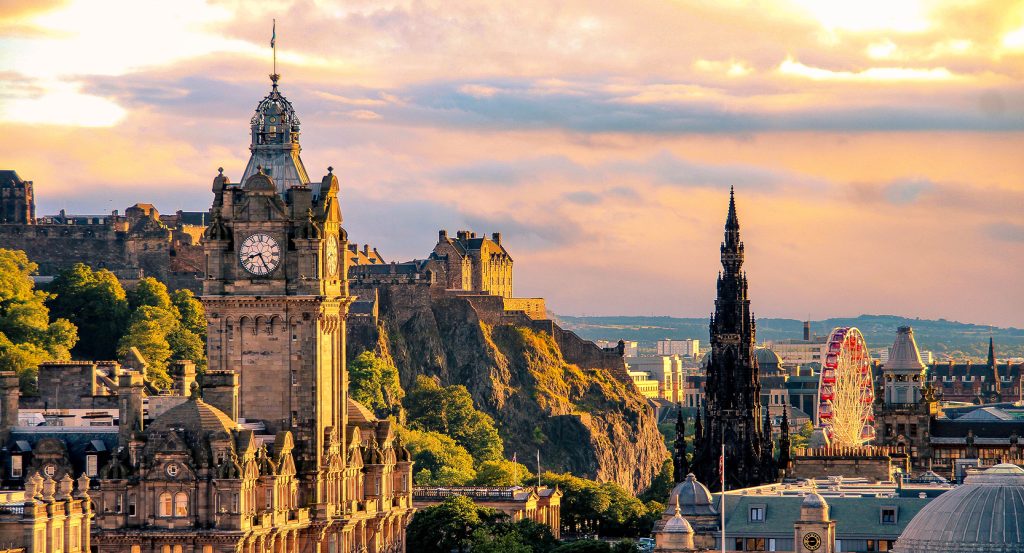
Positioned on Blackfriars Street between the Royal Mile and Cowgate, near St. Mary's Street and the historic closes descending toward the Lower Old Town, the café occupies a central position within Edinburgh's medieval street network, close to major cultural institutions. Its compact dining room accommodates morning coffee, substantial breakfasts and leisurely lunches in an informal setting. A neighboring sister café extends the business along the same street, giving the operation additional space for walk-in dining. The surrounding stone tenements and narrow pedestrian passages preserve the distinctive scale of Edinburgh's historic commercial quarter. The result is a well-established Scottish café whose central location, independent ownership and longstanding relationships with regional producers connect the city's historic center with the food traditions of the wider country.
What defines The Edinburgh Larder.
The Edinburgh Larder is best known for Eleanor Cunningham's development of an independent café into a wider Scottish food enterprise connecting regional producers, hospitality and community education. Cunningham established the business in 2009 with the ambition of giving small Scottish food producers a prominent place within Edinburgh's restaurant economy. The original Blackfriars Street premises combined a delicatessen with a café, allowing customers to purchase regional products and encounter the same ingredients through freshly prepared meals. The business was taking shape by October 2009, when Cunningham was completing the shop interior and assembling relationships with independent suppliers. Its arrival coincided with growing interest in the provenance of Scottish food, particularly among independent restaurants seeking closer connections with farms and artisan producers. Foodies magazine recognized the new establishment in March 2010, placing the café among its recommended destinations in Edinburgh's Old Town. That summer brought an expanded breakfast selection and Friday and Saturday evening tapas, with the restaurant dedicating part of its menu to the Scottish producers supplying the kitchen. Scottish Licensed Trade News subsequently featured the business's commitment to regional sourcing, giving Cunningham's original ambitions a wider hospitality audience. The enterprise expanded in 2012 with Edinburgh Larder Bistro in the city's West End, creating a second setting for seasonal cooking and events connecting diners with producers. Cunningham and her husband Andrew also developed the family business during this period, combining restaurant ownership with the demands of raising their children. The Bistro became a venue for discussions and tastings devoted to Scottish ingredients, extending the company's activities beyond conventional restaurant service. Foraging courses added another dimension, introducing participants to edible plants and mushrooms through excursions connected with the surrounding countryside. Cunningham subsequently founded Edinburgh Food Social in 2015, carrying her interest in regional food into education and community projects. The social enterprise developed practical cooking programs for young people, connecting food preparation with knowledge of seasonal ingredients and independent producers. Its activities expanded through school workshops, community meals and a mobile food operation that brought cooking demonstrations into neighborhoods across Edinburgh. In 2017, Cunningham helped develop the Edinburgh Indoor Market at Leith's Biscuit Factory, creating opportunities for independent traders and supporting Edinburgh Food Social's educational work. The enterprise subsequently established a Good Food Apprenticeship in 2019, providing hospitality training and practical cooking instruction for young people. A further chapter brought The Little Larder to neighboring premises on Blackfriars Street, extending the original café through a smaller walk-in establishment sharing its kitchen. Edinburgh Larder Morningside followed in August 2024, taking the company's Scottish breakfast and lunch cooking into another residential district. The Blackfriars Street café celebrated its seventeenth anniversary in August 2026, marking sustained independent ownership through substantial changes in Edinburgh's hospitality industry. Cunningham also maintained a longstanding relationship with Erica Moore's Edinburgh tea company Eteaket, whose products had supplied the café throughout those seventeen years. The Edinburgh Larder's significance rests on this sustained expansion from a small delicatessen into a family of cafés and an associated history of community food education, with Scottish producers remaining central to Cunningham's work.
How The Edinburgh Larder fits.
The Edinburgh Larder works as the breakfast starting point for an exploration of Edinburgh's medieval domestic architecture, religious upheaval and literary traditions, connecting the historic buildings of the Royal Mile with the cultural institutions that preserve Scotland's past.
Begin at John Knox House, among the oldest surviving medieval residences on Edinburgh's Royal Mile. The building dates from 1470 and preserves architectural features associated with the prosperous merchants who occupied the city's principal commercial thoroughfare. James Mosman, a goldsmith serving Mary, Queen of Scots, lived there with his wife Mariotta Arries during the sixteenth century. Mosman's loyalty to Mary drew him into the political conflicts following her forced abdication, and his support for the queen culminated in his execution in 1573. The house survived nineteenth-century demolition proposals through its association with the Protestant reformer John Knox, whose final months in Edinburgh preceded his death in November 1572. Continue to Scottish Storytelling Centre, the cultural institution adjoining the historic house at the eastern end of the Royal Mile. The purpose-built center opened in 2006 following a project by Malcolm Fraser Architects that connected contemporary cultural facilities with the surviving medieval structure. Its program draws upon Scotland's oral traditions, bringing professional storytellers, musicians and performers into a dedicated setting for live presentations. The Scottish International Storytelling Festival forms an important part of its annual calendar, bringing traditional narratives and contemporary performances together through events involving Scottish and international artists. The center also supports educational workshops and exhibitions devoted to the country's traditional arts. Conclude at Museum of Childhood, the institution devoted to the history of children's lives, toys and play. Edinburgh councillor Patrick Murray founded the museum in 1955, creating the world's first museum dedicated specifically to childhood. Its collections encompass dolls, games, model vehicles, books and domestic objects associated with successive generations of young people. Historical toys reveal changing manufacturing techniques and the development of childhood leisure, connecting familiar objects with broader changes in Scottish family life. The museum's position on the Royal Mile places these collections within the same historic district that preserves Edinburgh's medieval domestic and commercial architecture. The progression connects a sixteenth-century household with Scotland's traditions of oral performance and concludes at an institution preserving the objects through which generations of children learned, played and encountered the world.
Where your story begins.
Foresyte Travel reveals places that feel extraordinary long before you arrive.
Enjoy editorial crafted for luxury travelers.