Perfect weekend in Madrid, Spain.
Madrid's emergence as Spain's political and cultural capital transformed a modest medieval settlement into one of Europe's most influential centers of royal government, artistic patronage, and intellectual achievement. Situated on the central plateau of the Iberian Peninsula, the city traces its origins to Mayrit, a fortified settlement established during the ninth century under the Umayyad emirate of Córdoba. Its strategic position overlooking the Manzanares River supported military administration and the defense of the northern territories of Al-Andalus. Christian forces under Alfonso VI of León and Castile captured Madrid in 1083, incorporating the settlement into the expanding Kingdom of Castile. The city's political importance increased dramatically in 1561 when Philip II transferred the royal court from Toledo to Madrid, initiating a period of administrative expansion and substantial investment in aristocratic residences, religious institutions, and civic infrastructure. Under the Habsburg monarchs, Madrid developed into the administrative center of a global empire whose territories extended across Europe, the Americas, and Asia. The accession of the Bourbon dynasty in 1700 introduced new architectural ambitions, particularly during the reign of Charles III, whose public works transformed streets, expansive gateways, and cultural institutions. The nineteenth century brought Napoleonic occupation, the uprising of May 2, 1808, and successive political conflicts that shaped Spain's transition toward constitutional government. Madrid subsequently became central to the Spanish Civil War, enduring a prolonged siege between 1936 and 1939 before entering the dictatorship of Francisco Franco. Spain's democratic transition following Franco's death in 1975 restored parliamentary government and strengthened Madrid's position as the capital of a modern European democracy.
Madrid's artistic achievements encompass Spanish Golden Age painting, classical music, theater, literature, and a culinary heritage shaped by the agricultural traditions of Castile. The Royal Academy of Fine Arts of San Fernando, founded during the eighteenth century, became an important institution for artistic education and the preservation of Spanish painting, sculpture, and decorative arts. Francisco Goya developed his career through royal commissions and increasingly independent artistic experimentation, producing portraits and historical compositions that profoundly influenced European art. The Thyssen-Bornemisza National Museum houses an extensive collection of European painting, connecting Renaissance masters with Impressionism, Expressionism, and twentieth-century artistic movements. The Teatro Real, inaugurated in 1850, became a principal institution for opera and classical performance, contributing to the development of Madrid's international musical reputation. The city's literary heritage extends through Benito Pérez Galdós, whose novels examined nineteenth-century Spanish society, and Ramón del Valle-Inclán, whose theatrical innovations transformed modern Spanish drama. Madrid's culinary traditions draw upon Castilian livestock farming, regional legumes, olive oil, and the agricultural production of Central Spain. Cocido madrileño, a substantial chickpea stew prepared with vegetables and meats, occupies an established place within local gastronomy, accompanied by specialties including callos a la madrileña, traditional croquettes, and churros served with thick chocolate. The city's historic taverns and contemporary restaurants connect these regional foundations with seafood transported from Spain's Atlantic and Mediterranean coasts and the creative achievements of modern Spanish cooking. A perfect weekend in Madrid brings together royal history, literary heritage, artistic masterpieces, and the culinary traditions of a capital whose cultural influence extends across the Spanish-speaking world.
Three day itinerary.
Day 1: El Retiro Park
El Retiro Park is best known for transforming a seventeenth-century royal retreat into Madrid's great civic landscape. Gaspar de Guzmán, Count-Duke of Olivares, developed the Buen Retiro complex for Philip IV beside the monastery of San Jerónimo, creating palaces, gardens, theaters, and ceremonial spaces for the Habsburg court. The Peninsular War devastated substantial portions of the royal precinct, leaving the surviving landscape to undergo major reconstruction during the nineteenth century. Public ownership ultimately opened the former royal grounds to Madrid, and later additions included Ricardo Velázquez Bosco's Palacio de Velázquez and iron-and-glass Palacio de Cristal. The latter arose for the 1887 Exposition of the Philippines, embedding Spain's imperial history within the park's architecture. El Retiro records Madrid's progression from Habsburg court capital to modern public city across gardens once reserved for monarchy.
Day 1: DiverXO
DiverXO is best known for Dabiz Muñoz's dramatic culinary language, which dismantled conventional boundaries among Spanish, Asian, Latin American, and avant-garde cooking. Muñoz trained in Madrid before working at restaurants including Hakkasan and Nobu in London, experiences that profoundly expanded his command of Asian ingredients and techniques. He opened DiverXO in 2007 and progressively constructed elaborate tasting menus around intense sauces, seafood, offal, spices, fermentation, smoke, and deliberately unexpected combinations. The restaurant received its third MICHELIN star in 2013, making Muñoz the first Madrid chef in decades to reach that distinction. DiverXO retains three stars in the 2026 MICHELIN Guide and stands alone at that level in Madrid.
Day 2: Royal Palace of Madrid
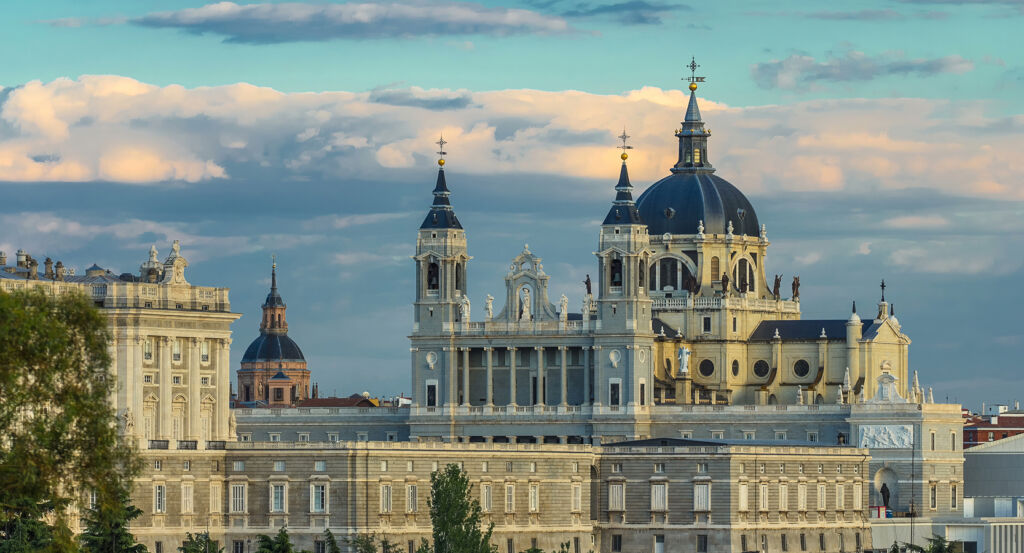
Royal Palace of Madrid is best known for monumentalizing the Bourbon monarchy on the site of the fortress that had anchored royal power in Madrid for centuries. A fire destroyed the Habsburg Alcázar on Christmas Eve in 1734, giving Philip V the opportunity to commission an immense new palace modeled on European Baroque court architecture. Filippo Juvarra produced the initial conception before Giovanni Battista Sacchetti adapted the project to its present site overlooking the Manzanares valley. Charles III became the first monarch to occupy the completed palace in 1764, establishing interiors subsequently transformed by successive Bourbon rulers. Works by artists including Goya, Velázquez, Caravaggio, and Tiepolo entered royal collections associated with the complex, and the Royal Armoury preserves objects connected to the Spanish monarchy across centuries. The palace captures the dynasty, ceremonial power, collecting, and architectural ambition that reshaped Madrid under Bourbon rule.
Day 2: Paco Roncero Restaurante
Paco Roncero Restaurante is best known for Paco Roncero's technically ambitious transformation of Spanish cooking within the historic Casino de Madrid. Roncero emerged from the culinary movement that radically expanded Spain's international influence around the turn of the twenty-first century, applying new textures, temperatures, techniques, and presentations to ingredients rooted in Spanish gastronomy. The restaurant occupies the upper levels of the Casino's expansive building on Calle de Alcalá, placing contemporary cuisine inside an institution founded by Madrid's nineteenth-century elite. Roncero's work developed through sustained experimentation with olive oil, vegetables, seafood, meat, and highly engineered preparations. Two MICHELIN stars in the 2026 guide place the restaurant among Madrid's highest-ranked dining rooms.
Day 2: Museo Nacional del Prado
Museo Nacional del Prado is best known for housing the extraordinary body of European painting assembled by the Spanish monarchy across centuries of dynastic patronage. Juan de Villanueva designed the Neoclassical building during the reign of Charles III as part of an ambitious scientific precinct along the Paseo del Prado. Ferdinand VII and Queen María Isabel de Braganza transformed the unfinished structure into the Royal Museum of Paintings and Sculpture, which opened in 1819. Royal collecting placed Velázquez, Titian, Rubens, Bosch, and other masters within an institution possessing exceptional depth in artists favored by Habsburg and Bourbon rulers. Francisco Goya entered the collection both as a court painter and as one of Spain's most penetrating interpreters of war, monarchy, and society. The Prado converts the collecting history of the Spanish crown into one of the world's defining concentrations of European art.
Day 2: Smoked Room
Smoked Room is best known for Dani García's concentrated exploration of fire, smoke, embers, and maturation within an exceptionally intimate dining room. The restaurant organizes its cooking around direct heat and controlled smoke, applying those mechanisms to seafood, matured fish, meat, vegetables, seaweed, and seasonal ingredients. Omakase-style menus give the kitchen control over progression and temperature, allowing individual preparations to move through raw, cured, smoked, and grilled states. A Japanese-influenced counter places the work of the kitchen at the center of the room, reinforcing the restaurant's unusually compressed scale. Smoked Room holds two MICHELIN stars in the 2026 guide, establishing fire as the governing technical principle of one of Madrid's highest-ranked restaurants.
Day 3: Dani Brasserie
Dani Brasserie is best known for Dani García's contemporary interpretation of Spanish brasserie dining from the rooftop of the Four Seasons Hotel Madrid. García built his career in Andalusia before becoming one of Spain's most internationally prominent chefs, developing cooking that moves freely among southern Spanish products, cosmopolitan influences, and technically refined versions of familiar dishes. Seafood, rice, vegetables, cured products, meat, and preparations carrying Andalusian foundations give the menu a direct connection to his culinary origins. The restaurant crowns the restored complex created from historic buildings surrounding the former Banco Hispano Americano headquarters near Puerta del Sol. Dani Brasserie joins García's modern Spanish cooking to one of the most ambitious architectural rehabilitation projects in Central Madrid.
Day 3: Museo Nacional Centro de Arte Reina Sofía
Museo Nacional Centro de Arte Reina Sofía is best known for placing Picasso's Guernica at the center of Spain's national collection of twentieth-century and contemporary art. The museum occupies the former Hospital General de Madrid, an eighteenth-century institution substantially shaped by architect Francisco Sabatini during the reign of Charles III. Its conversion into an art center gave modern Spanish culture a major institutional counterpart to the historic collections of the Prado. Picasso, Salvador Dalí, Joan Miró, Juan Gris, and other artists establish the collection's exceptional depth in the transformations that reshaped Spanish art during the twentieth century. Guernica, created for the Spanish Pavilion at the 1937 Paris International Exposition, returned to Spain in 1981 after decades at New York's Museum of Modern Art. The Reina Sofía binds artistic experimentation to the civil conflict, exile, dictatorship, and democratic transition that defined modern Spain.
Day 3: Plaza Mayor
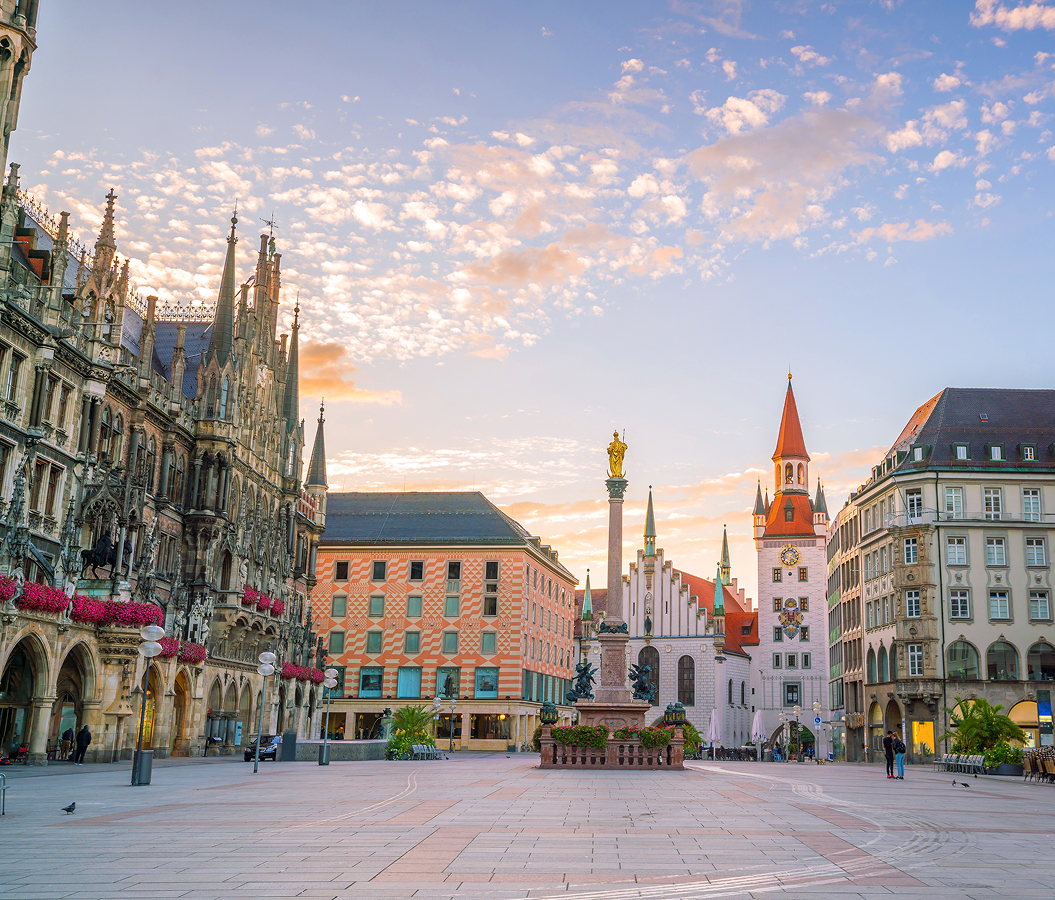
Plaza Mayor is best known for converting Madrid's medieval marketplace into the expansive civic stage of the Habsburg capital. Philip III commissioned the transformation of the former Plaza del Arrabal during the early seventeenth century, with Juan Gómez de Mora imposing architectural order through arcaded facades surrounding a vast rectangular space. Markets, royal celebrations, public ceremonies, theatrical performances, executions, and bullfights filled the square across successive eras. Major fires repeatedly damaged the complex, and Juan de Villanueva directed the reconstruction that established much of its present architectural unity after the 1790 conflagration. The equestrian statue of Philip III ultimately occupied the center, reinforcing the square's relationship with the dynasty that transformed Madrid into an imperial capital. Plaza Mayor remains one of the clearest physical expressions of Habsburg urban authority in Spain.
Day 3: Coque
Coque is best known for the Sandoval brothers' synthesis of cuisine, wine, hospitality, and family culinary heritage within one of Madrid's most elaborate fine-dining institutions. Mario Sandoval leads a culinary lineage originating in the family restaurant established by his grandparents, developing Spanish ingredients through fermentation, preservation, roasting, contemporary technique, and extensive work with agricultural products. Rafael Sandoval directs the restaurant's formidable wine program, extending the family enterprise beyond the kitchen into one of Spain's major gastronomic cellars. The Madrid restaurant structures dinner through a succession of distinct spaces, making the physical movement through the property part of its carefully controlled culinary sequence. Coque holds two MICHELIN stars in the 2026 guide, placing the Sandoval family among the enduring forces in contemporary Spanish gastronomy.
Where your story begins.
Foresyte Travel reveals places that feel extraordinary long before you arrive.
Enjoy editorial crafted for luxury travelers.
Foresyte may earn a commission when you book.