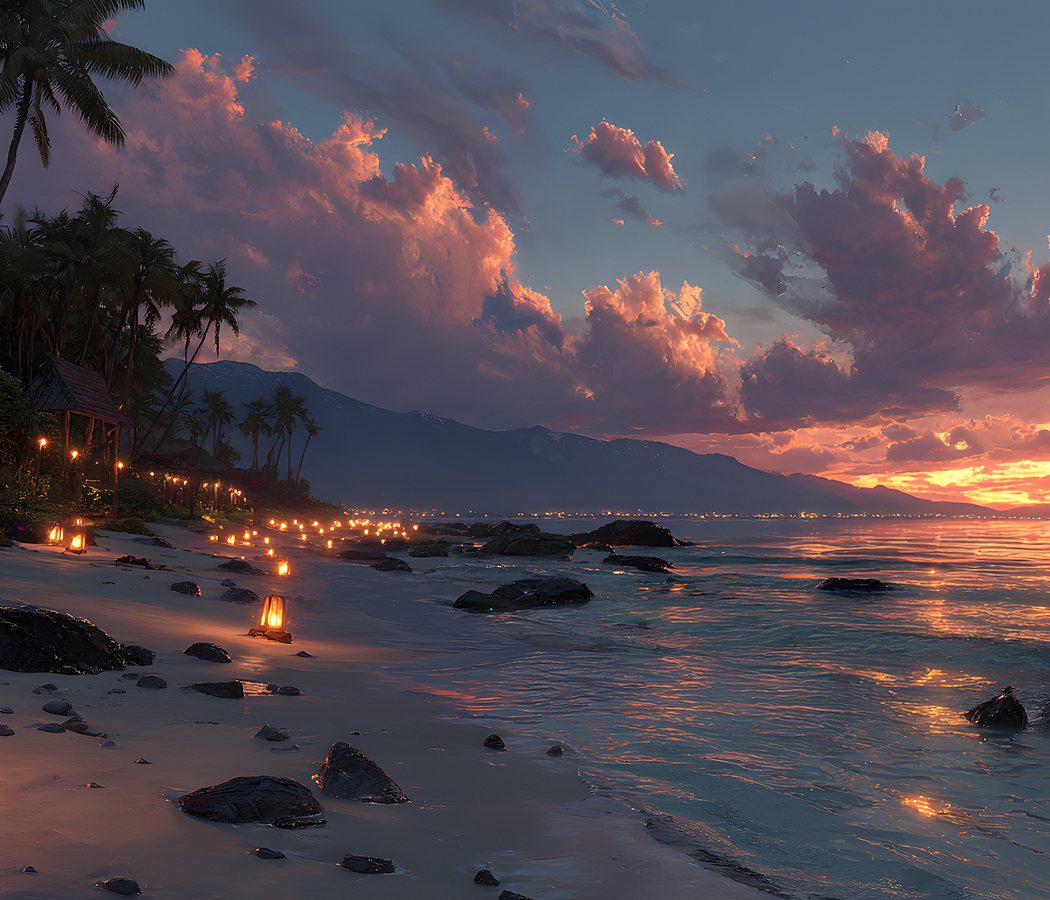
Perfect weekend in Palm Beach, Florida.
Palm Beach's emergence as one of America's most distinguished coastal destinations developed through Gilded Age investment, railroad expansion, architectural patronage, and the transformation of Florida's Atlantic shoreline into an internationally celebrated resort region. Situated on a barrier island between the Atlantic Ocean and the Lake Worth Lagoon, Palm Beach occupies a tropical landscape of sandy beaches, coastal vegetation, and waterfront estates directly east of West Palm Beach. The surrounding territory was inhabited for thousands of years by Indigenous peoples, including communities associated with the Jeaga, whose settlements extended along southeastern Florida's coastal waterways. European maritime activity increased during the Spanish colonial period, although permanent settlement remained limited through much of the eighteenth and early nineteenth centuries. The name Palm Beach became associated with the island following the 1878 wreck of the Spanish brig Providencia, whose cargo of coconuts contributed to the planting of palms along the shoreline. The region's transformation accelerated during the 1890s under industrialist Henry Morrison Flagler, whose Florida East Coast Railway connected the developing resort communities of southeastern Florida with northern population centers. Flagler's investment in luxury hospitality, transportation, and residential construction attracted wealthy visitors from New York, Philadelphia, and other established American cities. The incorporation of West Palm Beach in 1894 created a commercial and residential center serving the neighboring island, followed by Palm Beach's incorporation as a separate municipality in 1911. During the early twentieth century, architects including Addison Mizner introduced elaborate Mediterranean Revival residences inspired by Spanish and Italian precedents, establishing an architectural tradition that profoundly influenced the island's development. Palm Beach subsequently attracted prominent industrialists, financiers, political figures, and philanthropists whose estates and institutional patronage contributed to its enduring association with American high society.
Floridian artistic traditions and architectural achievements have found an influential setting in Palm Beach County, where philanthropic patronage, historic preservation, and the region's tropical environment contributed to the development of major cultural institutions. The Norton Museum of Art, founded in West Palm Beach in 1941 by industrialist Ralph Hubbard Norton and his wife Elizabeth, houses distinguished collections of American, European, and Chinese art, including works by prominent nineteenth- and twentieth-century artists. The Society of the Four Arts, established in Palm Beach in 1936, developed into an important institution for literature, music, visual art, and public education, incorporating galleries, performance facilities, and landscaped gardens. The Flagler Museum occupies Whitehall, the former winter residence of Henry Morrison Flagler, whose Beaux-Arts mansion was completed in 1902 and became an outstanding example of Gilded Age residential architecture. The Ann Norton Sculpture Gardens preserve the former home and studio of sculptor Ann Weaver Norton, whose expansive brick and stone works occupy a landscaped property in West Palm Beach. Palm Beach's architectural traditions extend through the work of Maurice Fatio, John Volk, and Marion Sims Wyeth, whose residential commissions contributed to the island's distinctive concentration of Mediterranean Revival, Regency, and classical architecture. The region's culinary traditions draw upon Atlantic seafood, Florida citrus, tropical agriculture, and the cooking practices of Caribbean, Latin American, and European communities. Stone crab, Florida spiny lobster, grouper, snapper, and locally cultivated produce contribute to coastal dining, accompanied by citrus-based desserts and preparations influenced by the broader Caribbean basin. Contemporary restaurants have expanded these foundations through French culinary techniques, seasonal American cooking, and relationships with agricultural producers throughout southern Florida. A weekend in Palm Beach connects Gilded Age history, exceptional residential architecture, distinguished artistic institutions, and the tropical coastal traditions that shaped one of Florida's most celebrated destinations.
Three day itinerary.
Day 1: Grassy Waters Preserve
Grassy Waters Preserve is best known for protecting a large remnant of the freshwater Everglades ecosystem immediately west of Palm Beach's dense coastal urbanization. The preserve encompasses wetlands, tree islands, marshes, and cypress habitat within the historic watershed that once extended across much of southeastern Florida. West Palm Beach incorporated this landscape into its municipal water supply system during the twentieth century, linking ecological protection with the region's rapid population growth. Alligators, white-tailed deer, otters, wading birds, and numerous amphibians occupy habitats sustained by seasonal fluctuations in water depth. Boardwalks and paddling routes enter the wetland with minimal separation from its hydrology and wildlife. Grassy Waters preserves the ecological conditions that shaped the Palm Beaches long before resort development transformed the Atlantic coastline.
Day 1: Buccan
Buccan is best known for chef Clay Conley's transformation of Palm Beach dining through ingredient-driven contemporary American cooking built for sharing. Conley arrived with a career shaped by acclaimed kitchens beyond South Florida before establishing Buccan on Palm Beach in 2011. The kitchen moves across raw seafood, vegetables, handmade pasta, grilled meats, composed small plates, and preparations influenced by cuisines from the Mediterranean to Asia. Its format loosened the formality historically associated with Palm Beach restaurants while retaining exacting culinary execution and premium ingredients. Buccan subsequently became the foundation of Conley's expanding Palm Beach restaurant group and one of the island's defining independent dining institutions. Its local authorship and culinary influence give the opening dinner substantially greater destination significance than Pistache French Bistro.
Day 2: Worth Avenue
Worth Avenue is best known for concentrating Palm Beach's architecture, luxury commerce, and resort-era urban character along a corridor extending from Lake Worth Lagoon toward the Atlantic Ocean. Addison Mizner profoundly shaped its architectural character through Mediterranean Revival buildings inspired by Spanish and Italian precedents. Courtyards, arcades, tiled roofs, balconies, fountains, narrow pedestrian passages, and landscaped vias turned commercial development into a sequence of intimate architectural spaces. Mizner's work helped establish the visual language that subsequently spread across Palm Beach and South Florida during the 1920s. Fashion houses, jewelers, galleries, and specialty retailers later reinforced the avenue's association with international luxury. Worth Avenue remains one of the clearest surviving expressions of Palm Beach's transformation from winter resort enclave into an architectural and commercial center.
Day 2: Palm Beach Grill
Palm Beach Grill is best known for applying unusually disciplined execution to an American grill format deeply embedded in Palm Beach social life. The restaurant belongs to the Hillstone group, whose emphasis on tightly controlled service, consistent preparation, and polished dining rooms reaches an especially concentrated expression on the island. Prime rib, seafood, salads, sandwiches, vegetables, and classic American preparations define a menu whose apparent simplicity places exceptional pressure on ingredient quality and technique. The dining room operates with the rhythm of an established neighborhood institution despite Palm Beach's seasonal population and international clientele. Its restrained culinary direction fits the island's long tradition of clubby American dining with unusual precision. Palm Beach Grill gives the lunch position greater local relevance and coherence than Avocado Grill.
Day 2: The Breakers Palm Beach
The Breakers Palm Beach is best known for defining the resort character of Palm Beach through an institutional lineage reaching to Henry Morrison Flagler's development of Florida's Atlantic coast. Flagler opened the original Palm Beach hotel complex during the 1890s as his Florida East Coast Railway carried affluent winter travelers southward. Fire destroyed successive hotel structures before the present Breakers emerged in 1926 as an immense Italian Renaissance-inspired resort. Schultze & Weaver designed the building during the same period that produced several of America's great urban hotels, giving its oceanfront massing, arcades, towers, loggias, and richly decorated interiors exceptional architectural authority. The Flagler family retained ownership across generations. The Breakers captures the railroad wealth, resort development, architectural ambition, and social institutions that created modern Palm Beach.
Day 2: Cafe Boulud
Cafe Boulud is best known for bringing Daniel Boulud's French culinary lineage into one of Palm Beach's most established luxury hotels. The restaurant occupies the Brazilian Court, connecting Boulud's cooking with a 1920s property whose courtyards and Mediterranean Revival architecture belong to the island's defining development era. French technique provides the kitchen's foundation, joined by seafood, produce, and ingredients suited to South Florida's climate and coastal geography. Boulud's career developed through elite French kitchens before his New York restaurants made him one of the most influential chefs in American fine dining. The Palm Beach restaurant translates that pedigree into a setting of unusually intimate scale. Café Boulud gives the evening far greater culinary authority than Circle at The Breakers.
Day 3: Hive Bakery & Café
Hive Bakery & Café is best known for an ambitious daytime program built around baking, pastry, breakfast cooking, and polished café service in West Palm Beach. Laminated pastries, cakes, breads, eggs, sandwiches, salads, and composed breakfast dishes place the bakery at the center of the operation. Its connection with the broader Hive collective links food with interiors, design, and retail, creating a distinctly Palm Beach interpretation of the contemporary American café. Pastry work supplies much of the restaurant's technical identity, bringing precise fermentation, lamination, baking, and finishing into a meal period frequently treated more casually. The bright daytime setting reinforces that specialization. Hive gives brunch a stronger local character and greater culinary purpose than Agora Mediterranean Kitchen.
Day 3: Manatee Lagoon
Manatee Lagoon is best known for providing direct observation of Florida manatees beside the warm-water outflow of Florida Power & Light's Riviera Beach generating station. Manatees seek warm-water refuges during cooler periods because prolonged exposure to low water temperatures threatens their survival. The Lake Worth Lagoon site concentrates animals under favorable seasonal conditions and makes a major biological adaptation visible beside industrial infrastructure. Interpretive facilities explore manatee anatomy, habitat, migration, conservation, and the wider ecology of the Lake Worth Lagoon. Observation decks face the water where the animals congregate near the discharge zone. Manatee Lagoon places one of Florida's most recognizable native mammals within the complicated relationship among coastal ecology, energy infrastructure, habitat alteration, and conservation.
Day 3: Clematis Street Historic Commercial District
Clematis Street Historic Commercial District is best known as the historic commercial spine of Downtown West Palm Beach, extending eastward toward the Lake Worth Lagoon. The city developed during the 1890s as a mainland commercial and residential counterpart to Henry Flagler's Palm Beach resort projects across the water. Clematis became a principal corridor for shops, offices, hotels, theaters, banks, and civic activity as West Palm Beach expanded. Twentieth-century suburbanization weakened the downtown commercial core before successive redevelopment campaigns restored residential, restaurant, entertainment, and public-space activity. Historic buildings now stand among newer construction along blocks terminating near the waterfront. Clematis Street traces West Palm Beach's progression from Flagler-era service town through urban decline and reinvestment into the metropolitan center of the Palm Beaches.
Day 3: Flagler Steakhouse
Flagler Steakhouse is best known for placing the American steakhouse tradition inside The Breakers' historic Palm Beach resort complex. The restaurant occupies the former clubhouse of the Ocean Course, connecting its dining rooms with a golf course whose origins reach to the formative decades of Palm Beach resort culture. Prime beef, seafood, classic sauces, substantial side dishes, and an extensive wine program establish a culinary format closely aligned with the island's long tradition of club dining. Its position across South County Road from the main hotel gives dinner a direct relationship with the Flagler-built resort landscape developed around the Atlantic shore. The restaurant's character emerges from that unusually specific combination of golf, hospitality, and Palm Beach history. Flagler Steakhouse gives the final dinner substantially greater geographic and institutional relevance than the original Contango-style choice.
Where your story begins.
Foresyte Travel reveals places that feel extraordinary long before you arrive.
Enjoy editorial crafted for luxury travelers.
Foresyte may earn a commission when you book.