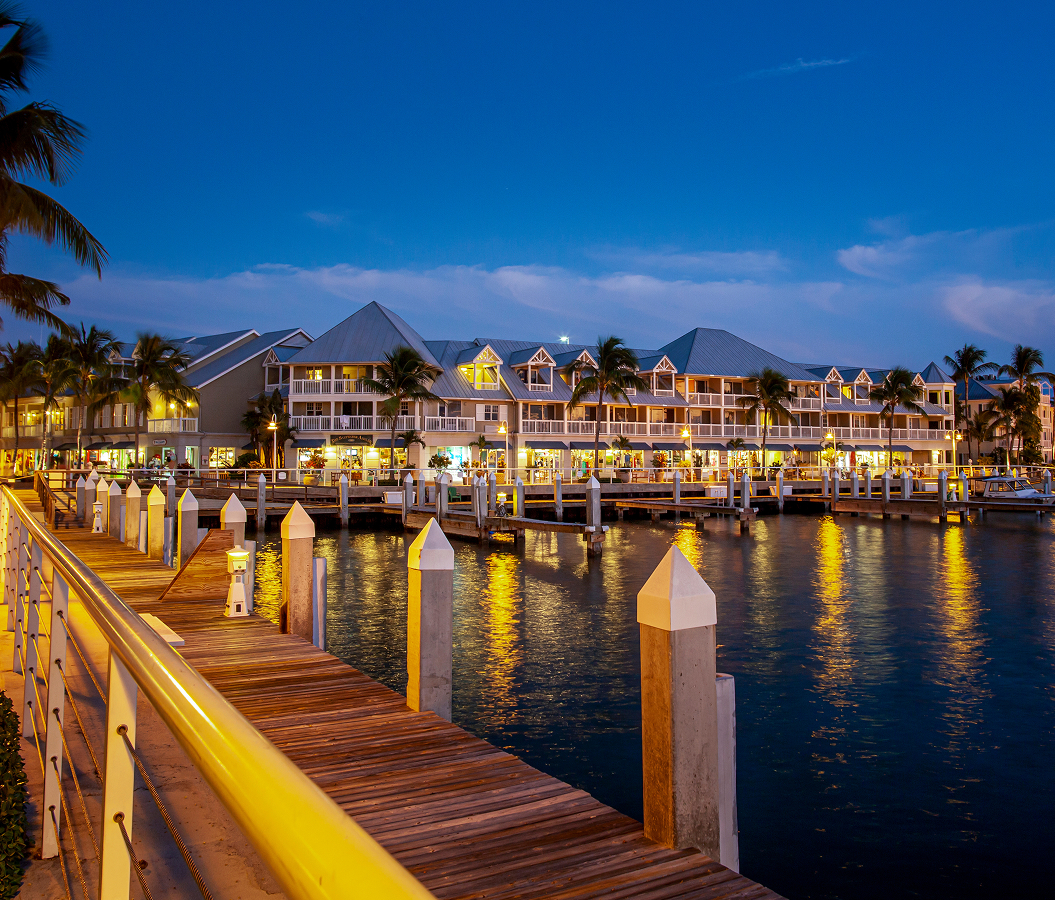
Why Clematis Street Historic Commercial District matters.
Clematis Street Historic Commercial District is an early twentieth-century retail enclave where Downtown West Palm Beach's railroad-era commercial heritage meets the Florida land boom, the architectural development of the city's principal shopping street and the preservation of storefronts associated with its formative decades.
Occupying the 500 block of Clematis Street between Quadrille Boulevard and Rosemary Avenue, the historic district lies immediately west of the Florida East Coast Railway corridor, a short walk from the Brightline station and the commercial streets extending east toward the Lake Worth Lagoon. Its surviving buildings form a compact collection of masonry storefronts, upper-floor commercial premises and former residential accommodations. Decorative parapets, recessed entrances and historic window arrangements distinguish individual properties along the block. Sidewalks connect the buildings with the larger downtown shopping district, preserving the relationship between pedestrian commerce and the original street grid. The result is a nationally recognized commercial district whose surviving architecture preserves the westward expansion of West Palm Beach's early retail economy.
What defines Clematis Street Historic Commercial District.
Clematis Street Historic Commercial District is best known for its concentration of historic commercial buildings constructed during West Palm Beach's early twentieth-century expansion and its designation on the National Register of Historic Places in 1998. The street originated within the settlement established to serve Henry Flagler's developing resort community across Lake Worth. During the 1890s, commercial activity concentrated near the eastern end of Clematis Avenue, where merchants supplied residents, construction workers and businesses associated with the growing town. The street received paved surfaces, sidewalks and electric lighting in 1904, strengthening its function as a principal commercial thoroughfare. By 1916, population growth and increasing property values encouraged retail development westward across the railway tracks. The Campbell Building opened at 535 Clematis Street in January 1918, providing multiple ground-floor retail premises and establishing an important commercial presence within the block. Raymond C. Ketcham opened a dry goods establishment at 522 Clematis Street in 1919, contributing to the concentration of independent merchants serving the surrounding community. Real estate speculation intensified during the Florida land boom, increasing demand for commercial properties along the western section of the street. Gruner's Department Store developed as a substantial retail establishment in 1920, extending the range of merchandise available within the district. The St. James Rooming House and W. E. Pope Building followed in 1921, combining commercial activity with accommodations and professional premises. Hotel Clematis and Suther's Market opened during the following year, supporting the block's increasingly varied commercial functions. The Jennings Building appeared in 1924, followed by the Sirkin Building in 1925 and additional commercial construction later in the decade. The collapse of Florida's land boom and the onset of the Great Depression interrupted this expansion, leaving several premises vacant as economic conditions deteriorated. On October 8, 1998, the district entered the National Register of Historic Places, recognizing its importance to local commerce, community planning and architecture.
Harvey and Clarke's architectural work contributed to the block's varied commercial façades, combining classical detailing with construction methods suited to Florida's developing retail districts. The Sirkin Building at 533 Clematis Street incorporates Neoclassical Revival elements, distinguishing its exterior from neighboring masonry structures. Its composition uses architectural ornament to emphasize the principal street elevation and the relationship between the commercial ground floor and upper levels. The building at 528 Clematis Street incorporates Art Deco features associated with changing architectural preferences during the late 1920s. Geometric decoration and a more streamlined façade distinguish this design from the earlier revival-style commercial buildings. Masonry style structures occupy much of the district, employing brick and stucco construction, rectangular window openings and parapets suited to narrow urban parcels. The W. E. Pope Building at 529-531 Clematis Street demonstrates the practical organization of commercial premises within a compact downtown property. Buildings at 513-515 and 517-519 Clematis Street preserve additional examples of the district's early commercial construction. Narrow storefront widths establish a sequence of individual businesses along the sidewalk, maintaining the pedestrian scale characteristic of American downtown shopping streets. Upper-floor windows distinguish buildings that historically accommodated offices, lodgings and other functions above retail premises. Decorative cornices and parapets conceal rooflines and establish visual continuity between adjoining properties. Changes to individual storefronts demonstrate successive periods of commercial occupation and adaptation. The district's architectural importance rests in the surviving relationship between these modest buildings and the commercial development of West Palm Beach during the Florida land boom.
How Clematis Street Historic Commercial District fits.
Clematis Street Historic Commercial District works as the architectural centerpiece for a Downtown West Palm Beach itinerary connecting the city's early commercial institutions, railroad-era civic development and the preservation of Palm Beach County's historical collections.
Begin at Comeau Building, the Classical Revival commercial building situated at 319 Clematis Street. Completed in 1926, the structure was designed by architects Henry Stephen Harvey and L. Phillips Clarke during the height of Florida's speculative building expansion. Its exterior incorporates classical architectural details associated with the commercial ambitions of the period. The building developed as part of the eastern commercial district, where retailers and professional businesses occupied increasingly substantial downtown properties. Its inclusion on the National Register of Historic Places in 1996 recognized its architectural and commercial importance. The property provides a comparison with the smaller retail buildings preserved farther west. Continue to Palm Beach Mercantile Company, the historic commercial property at 206 Clematis Street. The business originated during West Palm Beach's early development and became associated with Marion Eugene Gruber, a merchant whose activities contributed to the city's commercial growth. The property underwent alterations during the early twentieth century as the downtown retail economy expanded. Its historical importance includes associations with commerce and architectural development across successive phases of the city's growth. The building entered the National Register of Historic Places in 1994, preserving a connection with the enterprises that supplied the developing Palm Beach region. Conclude at Richard and Pat Johnson Palm Beach County History Museum, housed within the historic courthouse at 300 North Dixie Highway. The courthouse opened in 1916, following the establishment of Palm Beach County in 1909. Its Neoclassical Revival architecture incorporates a formal entrance, classical columns and expansive public spaces associated with early county government. The Historical Society of Palm Beach County developed the museum to interpret regional settlement, transportation, commerce and cultural development. Exhibitions examine the county's Indigenous history, agricultural economy, coastal communities and growth during the railroad and land-boom periods. The progression moves from commercial architectural development through early retail enterprise and culminates in the civic institutions that governed Palm Beach County's expansion.
Where your story begins.
Foresyte Travel reveals places that feel extraordinary long before you arrive.
Enjoy editorial crafted for luxury travelers.
Foresyte may earn a commission when you book.