Fun facts about The Caribbean.
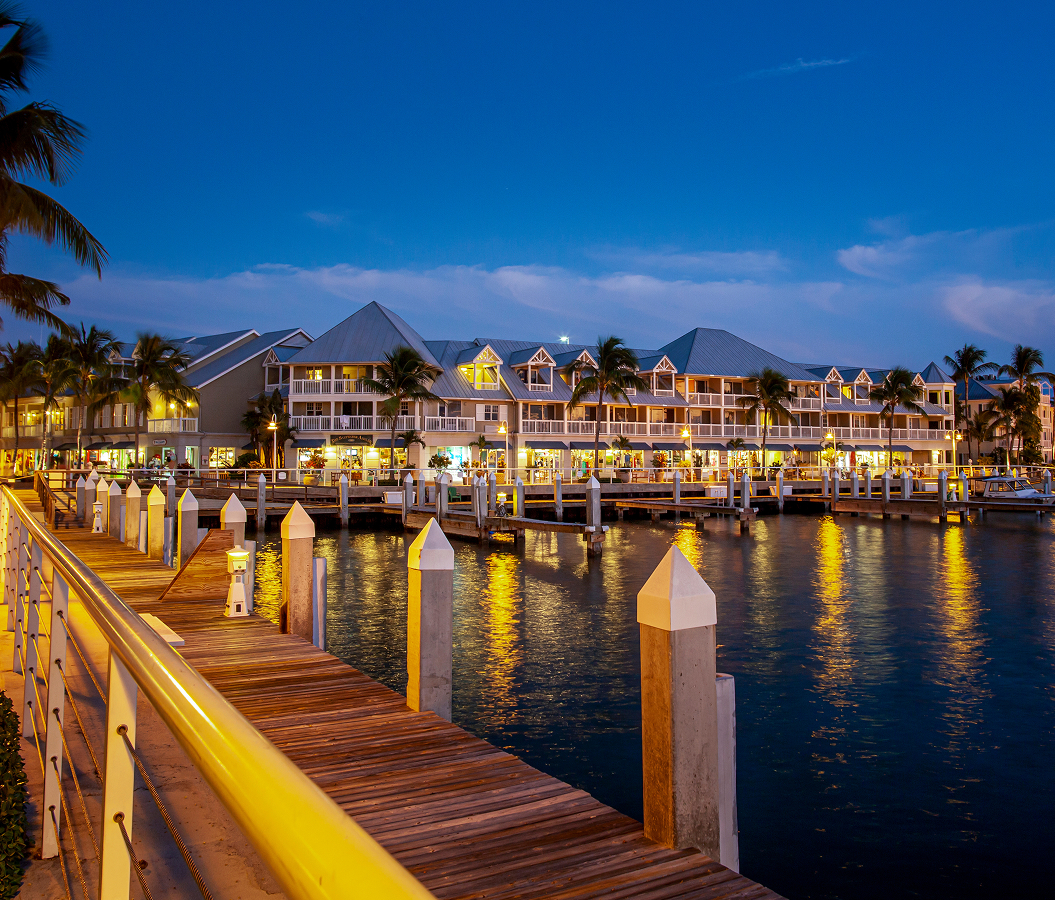
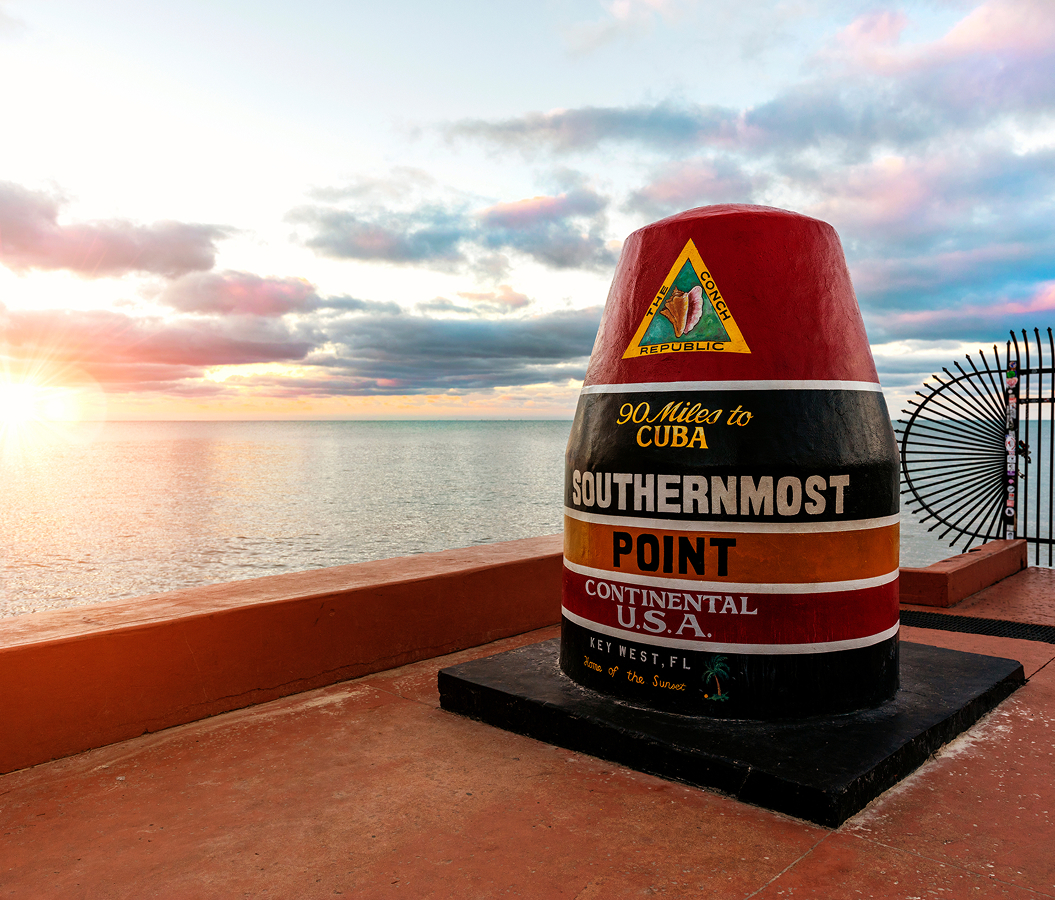
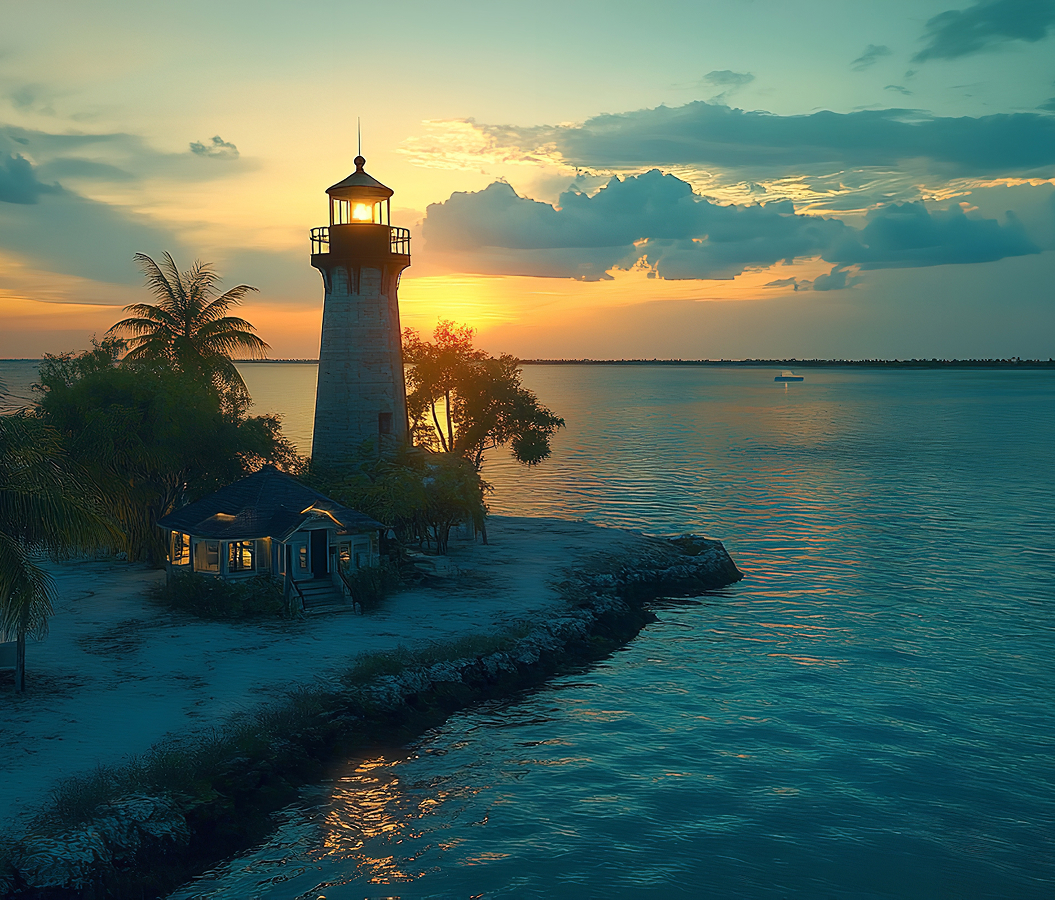
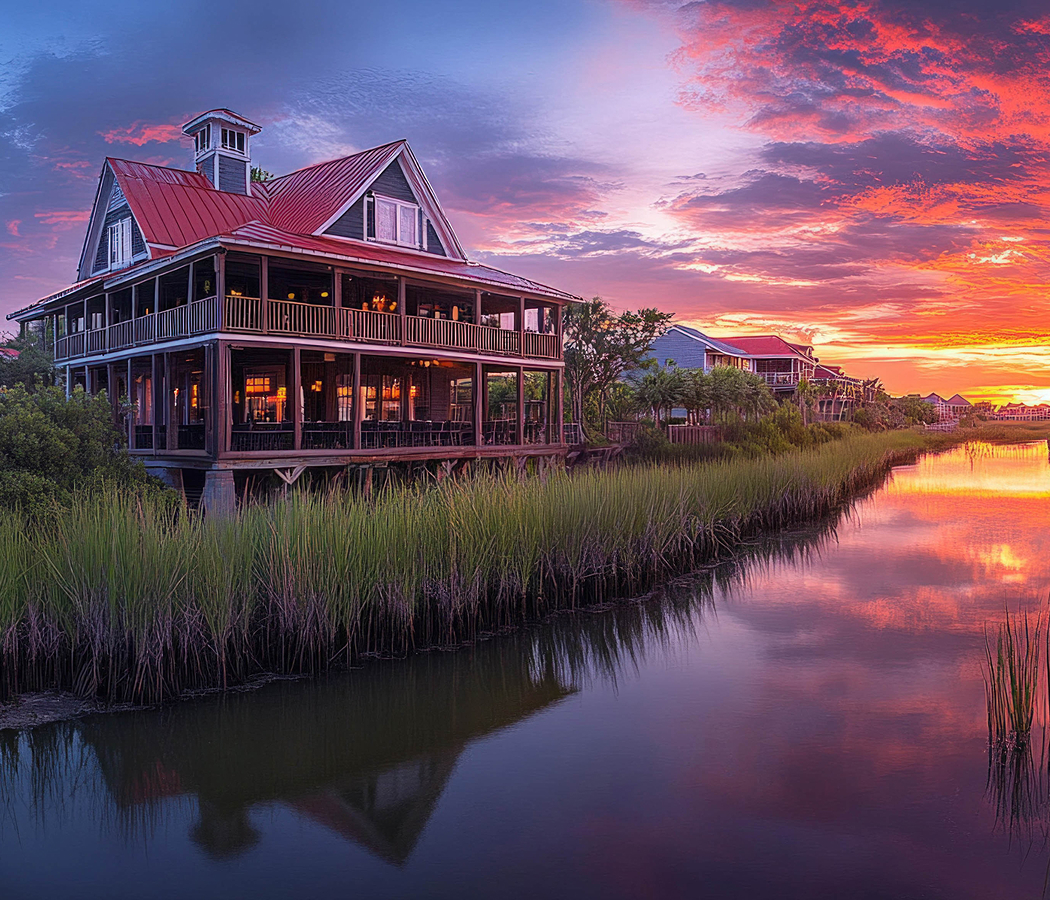
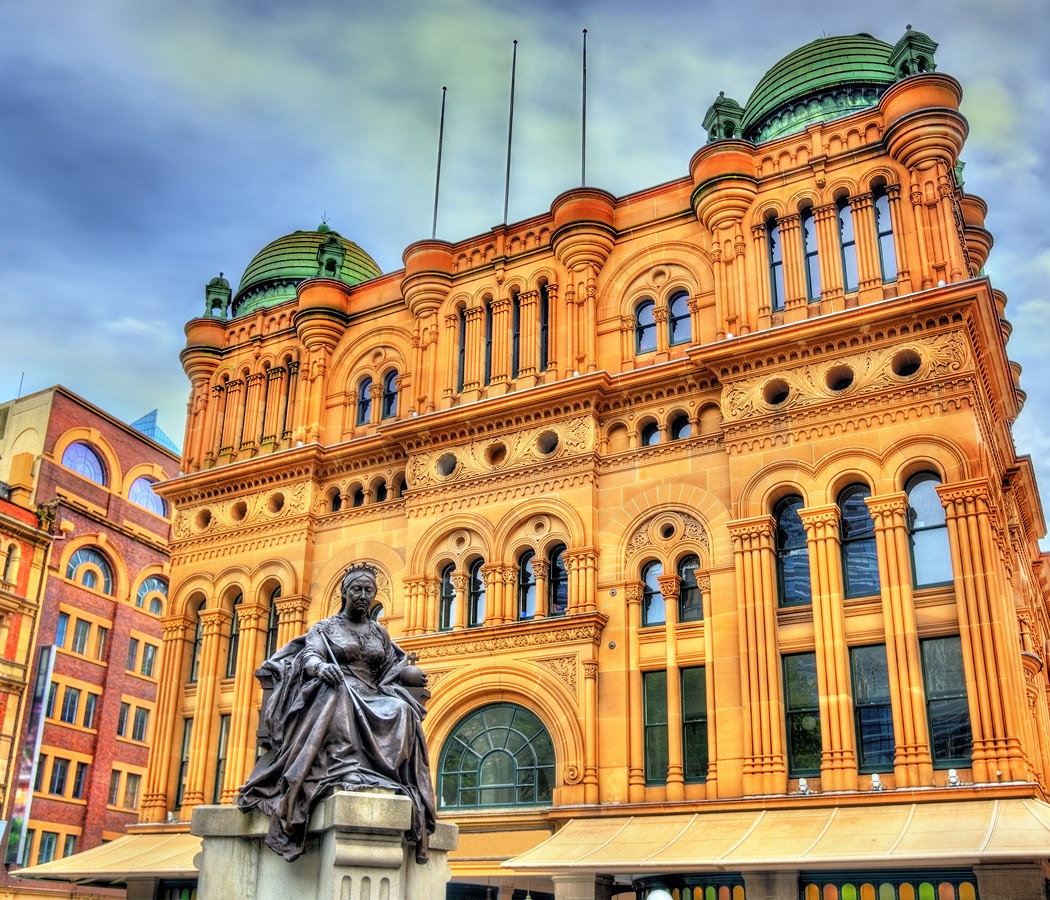
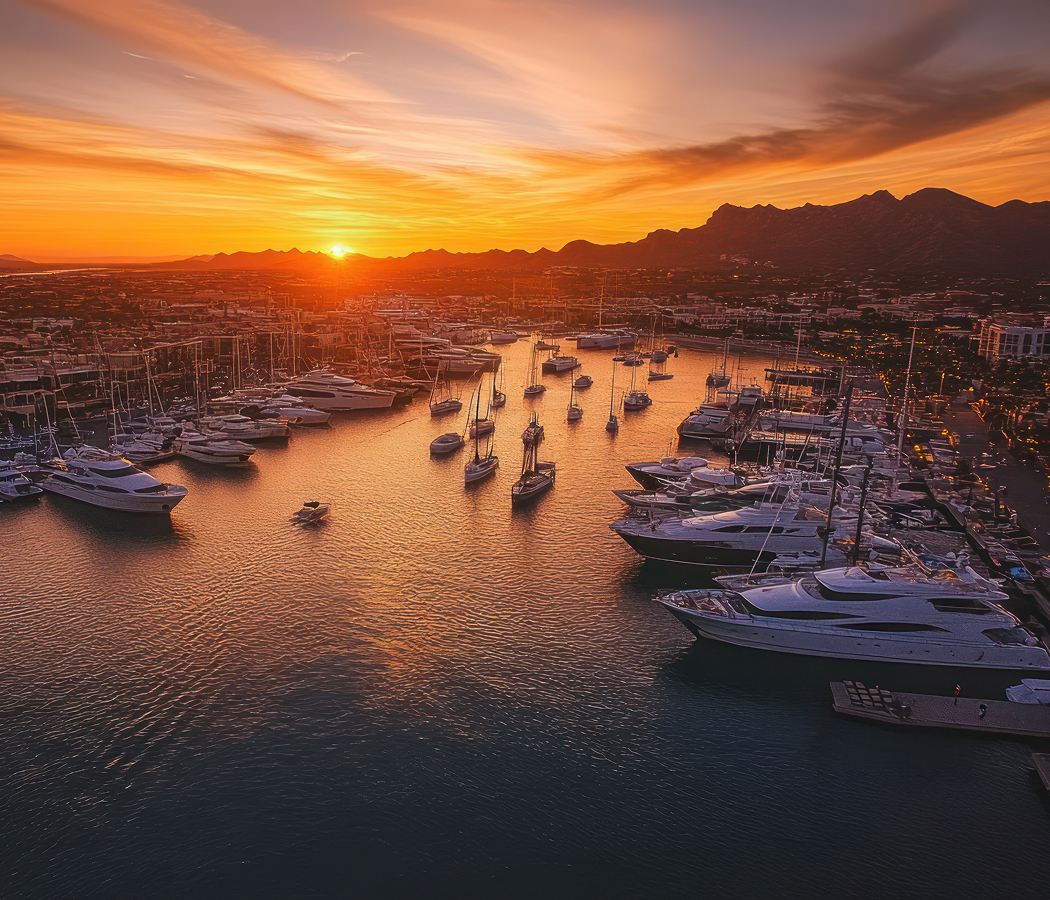
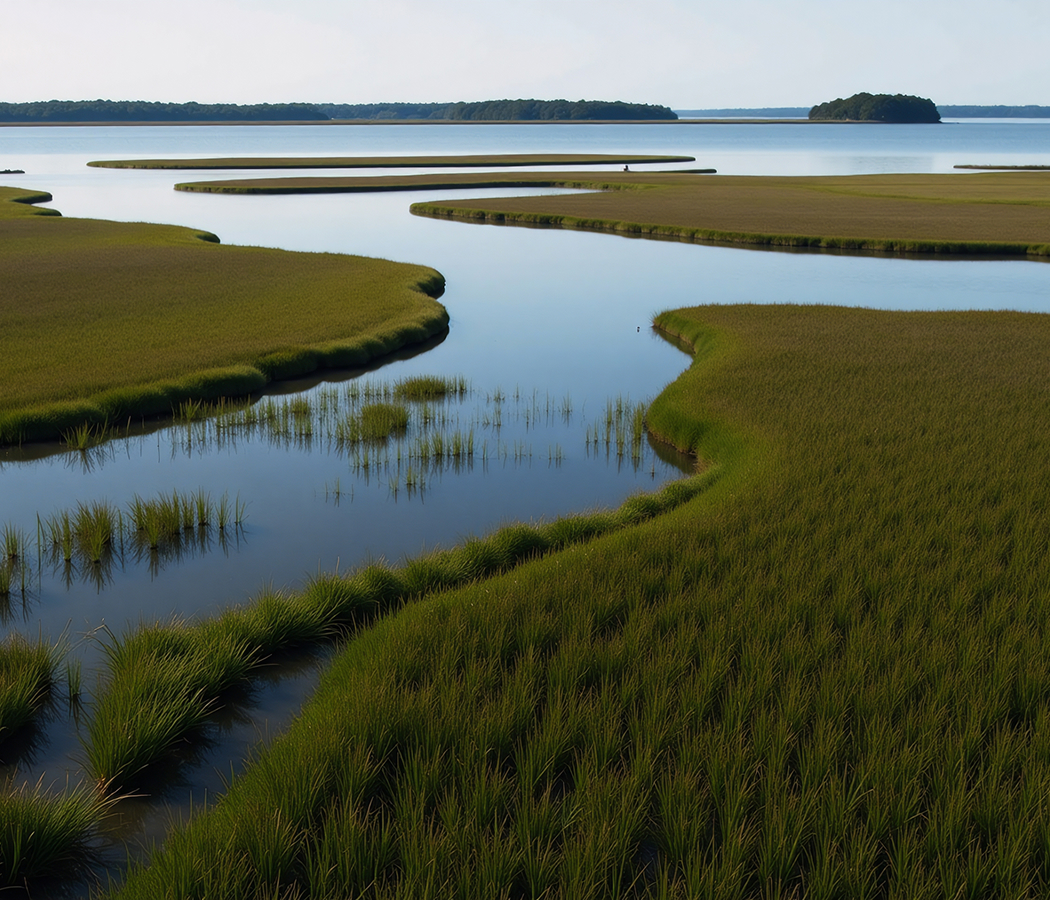
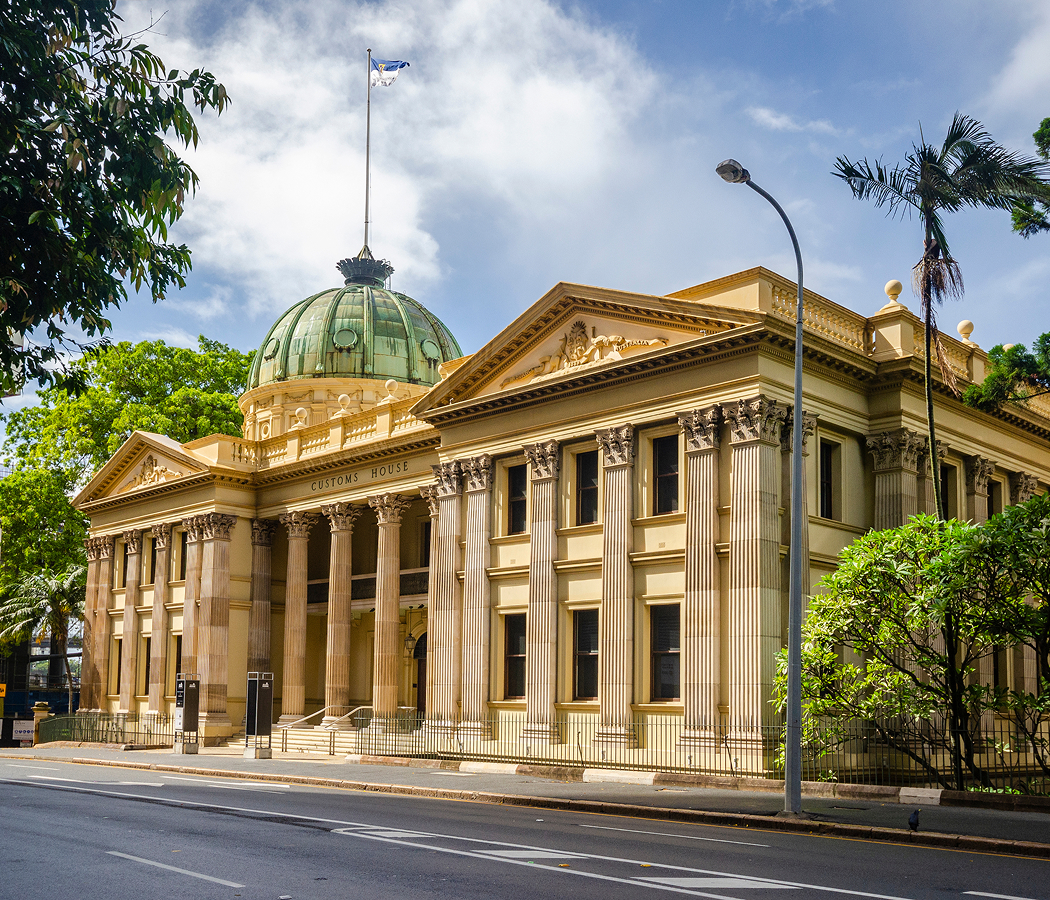
Key West occupies the western end of the inhabited Florida Keys, ninety miles north of Cuba, where the Atlantic Ocean and the Gulf of Mexico meet across a shallow marine landscape of coral reefs, tidal channels, and mangrove islands. The city covers much of a low-lying island whose streets, historic neighborhoods, and waterfront districts remain closely connected to the surrounding sea. Its historic center, commonly called Old Town, follows a compact grid established during the nineteenth century. Narrow streets pass beneath mature tropical trees, with wooden houses, shaded porches, picket fences, and flowering gardens creating one of Florida's most recognizable residential landscapes. Many historic buildings employ style Caribbean construction adapted to the subtropical climate, including raised foundations, broad verandas, louvered shutters, and steep roofs designed to shed heavy rain. Bahamian influences are particularly visible in the island's frame houses, whose architectural forms reflect generations of migration and maritime exchange. Duval Street extends from the Gulf-facing waterfront toward the Atlantic, forming the principal commercial corridor through Old Town. Its historic storefronts contain restaurants, galleries, bars, shops, and entertainment venues, with pedestrian activity continuing well into the evening. Near its northern end, Mallory Square occupies a prominent waterfront setting overlooking the harbor and the western horizon. The surrounding Historic Seaport preserves a network of docks, former warehouses, fishing vessels, and commercial buildings associated with Key West's maritime economy. Schooners, charter boats, and recreational craft share the waterfront with restaurants and pedestrian promenades. Nearby, the Key West Museum of Art & History occupies the former Custom House, an imposing red-brick Romanesque Revival building completed in 1891. Its towers, arches, and substantial masonry distinguish it from the island's predominantly wooden residential architecture. The Harry S. Truman Little White House stands within the former naval station grounds, its white exterior and broad verandas recalling the city's presidential history. Farther south, the Ernest Hemingway Home and Museum occupies a substantial Spanish Colonial residence surrounded by tropical gardens and a high masonry wall. Built in 1851, the property preserves the setting associated with Hemingway's years on the island. The Key West Lighthouse rises nearby, providing a vertical landmark above the surrounding rooftops. At the southern end of Whitehead Street, the Southernmost Point buoy marks a celebrated location near the island's Atlantic-facing shore. The surrounding residential streets contain historic cottages, guesthouses, and small gardens, with tropical foliage softening the dense urban fabric. Fort Zachary Taylor Historic State Park occupies the island's southwestern waterfront, where a nineteenth-century coastal fort stands beside beaches, wooded grounds, and views toward the shipping channels. The fort's brick casemates and heavy defensive walls reflect Key West's long military importance. Along the Atlantic side, Higgs Beach and the adjacent shoreline provide public access to swimming areas, coastal paths, and recreational facilities. East of Old Town, the island transitions into newer residential districts, commercial corridors, and former military properties. The Overseas Highway connects Key West with the remaining Florida Keys through a remarkable sequence of bridges crossing shallow turquoise water. Offshore, the Florida Reef supports extensive coral formations and marine habitats, forming part of the Florida Keys National Marine Sanctuary. West of Key West, the remote islands of Dry Tortugas National Park contain Fort Jefferson, an expansive nineteenth-century masonry fortress surrounded by clear waters and protected marine environments. The city's physical distinction comes from the intimate scale of its historic streets, the proximity of open water in nearly every direction, and the extraordinary contrast between its wooden tropical houses and the immense maritime landscape beyond the harbor.
Caribbean cultural influences give Key West an atmosphere shaped by Cuban migration, Bahamian craftsmanship, maritime storytelling, and a literary tradition unusually rich for a small island city. The island's social history reflects generations of sailors, cigar workers, fishermen, artists, and writers whose lives were connected to the movement of people and goods through the Florida Straits. Cuban communities contributed significantly to local politics, commerce, language, and cuisine during the nineteenth century, and Key West became an important center of support for Cuban independence. The San Carlos Institute on Duval Street preserves this connection through its history as an educational and cultural institution established by Cuban exiles. Bahamian settlers brought maritime knowledge, building traditions, and community practices that remain visible in the island's historic neighborhoods. Key West's literary reputation is closely associated with Ernest Hemingway, who lived on the island during the 1930s and wrote portions of major works including A Farewell to Arms, Death in the Afternoon, and To Have and Have Not during his Key West years. His association with local fishing, boxing, and waterfront life contributed to the island's international literary mythology. Tennessee Williams also maintained a residence in Key West, where he spent substantial periods of his life and contributed to the community's artistic reputation. Elizabeth Bishop lived on the island during the late 1930s and early 1940s, drawing upon its coastal environment and social atmosphere in her poetry. The Key West Literary Seminar brings contemporary authors, scholars, and readers together through an annual program devoted to literature and the craft of writing. Visual art occupies an important place in the island's cultural landscape, with galleries and studios exhibiting painting, photography, sculpture, and work inspired by the surrounding marine environment. The Studios of Key West supports exhibitions, performances, artist residencies, and educational programs within the historic center. The island's performing arts community includes Waterfront Playhouse, a longstanding theater associated with local productions and visiting performers. Music contributes to the atmosphere of waterfront bars and neighborhood venues, where Caribbean rhythms, country, rock, blues, and singer-songwriter traditions intersect. Jimmy Buffett developed an enduring association with Key West during the 1970s, drawing upon its maritime culture and informal social life in songs that helped popularize a distinctive vision of tropical American leisure. Annual celebrations reinforce the island's unconventional public character. Fantasy Fest brings elaborate costumes, parades, performances, and street gatherings to Key West each autumn, reflecting the city's tradition of theatrical self-expression. The nightly Sunset Celebration at Mallory Square combines street performers, musicians, artisans, and spectators along the harbor as the sun descends over the Gulf. Culinary traditions reflect the island's position between Florida and the Caribbean. Key lime pie remains its most recognizable specialty, combining tart citrus filling with a sweet crust and a distinctive pale-yellow color. Conch fritters recall the Bahamian and Caribbean influences that shaped local seafood cooking, and fresh fish such as grouper, snapper, mahi-mahi, and yellowtail appear throughout the island's restaurants. Cuban sandwiches, black beans and rice, roasted pork, and strong Cuban coffee preserve the culinary inheritance of the island's longstanding connections with Havana. Stone crab claws and Florida pink shrimp contribute further regional specialties, particularly during their respective harvesting seasons. Waterfront restaurants, historic cafés, and neighborhood establishments sustain a dining culture closely tied to fishing and maritime trade. Recreational traditions include sailing, snorkeling, diving, and deep-sea fishing, with the surrounding reef and offshore waters supporting an extensive marine recreation industry. Key West's enduring appeal is inseparable from the convergence of these experiences: the shaded porch of a nineteenth-century cottage, a Cuban coffee along Duval Street, a fishing boat returning to the harbor, and the gathering crowd at Mallory Square awaiting the final light over the Florida Straits.
Five fascinations.
5. Key West once became one of the wealthiest cities in Florida through shipwrecks.
Before tourism defined the island, wrecking formed a major part of Key West's nineteenth-century economy. Ships regularly encountered dangerous reefs surrounding the Florida Keys, and local wreckers raced to stranded vessels to rescue crews and salvage valuable cargo. Courts in Key West adjudicated salvage claims, channeling substantial commercial activity through the island. Warehouses, merchants, shipyards, and maritime businesses grew around the trade, helping transform an isolated island into a prosperous port. Key West's early wealth came partly from its hazardous geography: the same coral reef system that threatened ships also generated an extraordinary salvage economy at the southern edge of the United States.
4. Key West was connected to mainland Florida by a railroad that seemed almost impossible to build.
Henry Flagler extended his Florida East Coast Railway through the Keys during the early twentieth century, requiring engineers and laborers to carry tracks across miles of open water, mangrove islands, and exposed coral terrain. The Overseas Railroad reached Key West in 1912 after construction of extraordinary bridges and causeways linking the island chain. A devastating hurricane destroyed major sections in 1935, ending rail service through the Keys. Florida subsequently adapted portions of the former railway infrastructure for the Overseas Highway. Key West's modern overland connection grew from one of the most audacious transportation projects of its era.
3. Ernest Hemingway wrote some of his most famous work from a house in Key West.
Ernest Hemingway lived in Key West during much of the 1930s, occupying a Spanish Colonial residence on Whitehead Street with his second wife, Pauline Pfeiffer. During his Key West years, Hemingway worked on major fiction including To Have and Have Not, drawing upon the island, surrounding waters, Depression-era hardship, fishing culture, and people he encountered there. The property later became famous for its population of polydactyl cats, many possessing extra toes and descended from a long-established feline population associated with the house. Key West became embedded in American literary history through an author whose island years produced both major writing and an enduring cultural mythology.
2. Key West declared itself the Conch Republic in 1982.
A United States Border Patrol checkpoint established on the Overseas Highway created severe traffic disruption and threatened Key West's tourism economy by effectively treating travelers leaving the Keys as though they were crossing an international boundary. Mayor Dennis Wardlow responded with an elaborate protest on April 23, 1982: Key West symbolically seceded from the United States, declared itself the Conch Republic, staged a ceremonial act of rebellion, surrendered shortly afterward, and requested foreign aid. The theatrical protest attracted enormous publicity and the checkpoint soon disappeared. What began as political satire became an enduring piece of Key West identity, celebrated through flags, festivals, souvenirs, and the island's famously rebellious civic culture.
1. Key West is closer to Cuba than it is to Miami.
Key West occupies the southwestern end of the Florida Keys, placing it 90 miles from Cuba across the Straits of Florida while Miami lies substantially farther away by road. This geography has shaped the island for generations. Cuban immigrants profoundly influenced Key West's nineteenth-century cigar industry, political culture, architecture, food, and community life, while maritime movement continually connected the island with the broader Caribbean. The famous Southernmost Point marker turned this geographic position into one of Key West's defining symbols. The island may belong politically to Florida, but its physical location has always placed it within a cultural and maritime world extending far beyond the American mainland.
Where your story begins.
Foresyte Travel reveals places that feel extraordinary long before you arrive.
Enjoy editorial crafted for luxury travelers.
Foresyte may earn a commission when you book.