Fun facts about Philadelphia, Pennsylvania.
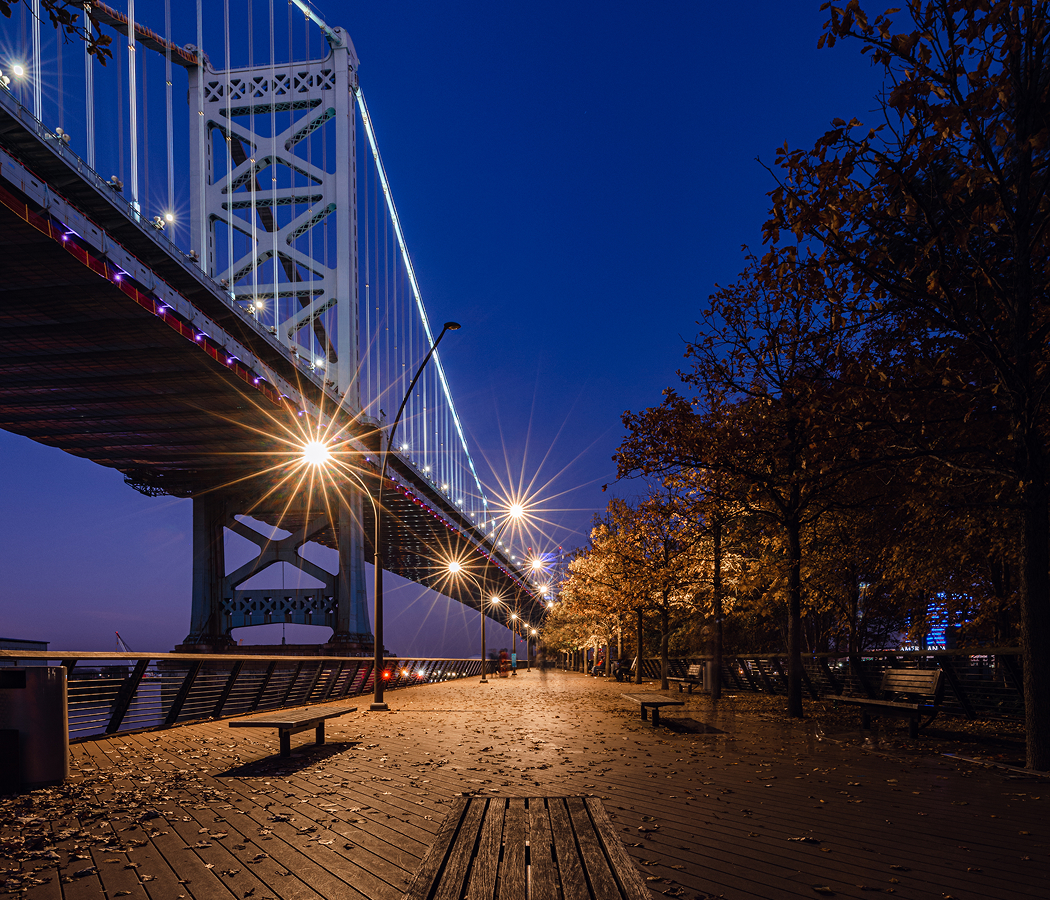
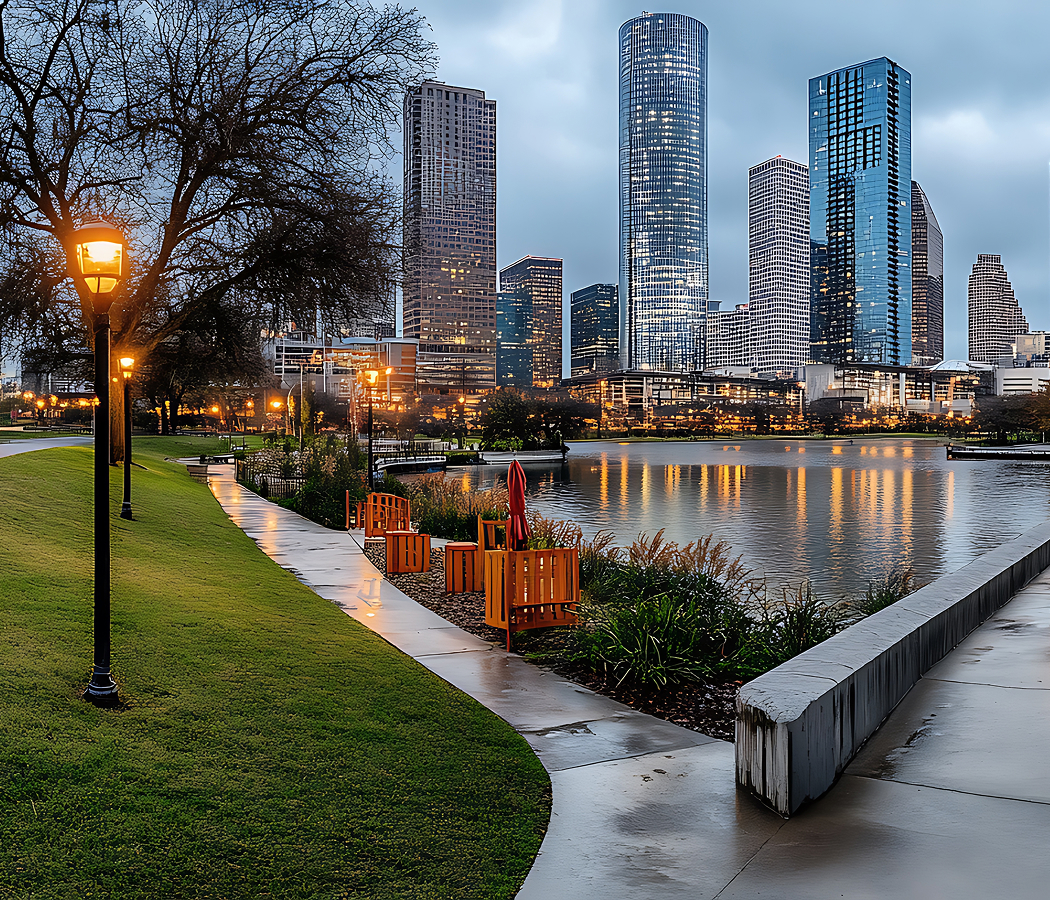
Philadelphia has become one of America's most historic and influential cities by combining the birthplace of the United States, world-renowned cultural institutions, and energetic modern neighborhoods into a destination unlike anywhere else in Pennsylvania. Iconic landmarks including Independence Hall, the Liberty Bell, the Philadelphia Museum of Art, and Reading Terminal Market have become enduring symbols of the city, while neighborhoods such as Old City, Center City, Rittenhouse Square, and Fishtown each reveal a distinct side of Philadelphia's remarkable character. Every district contributes to a destination where colonial landmarks, grand public squares, and contemporary urban culture exist in extraordinary harmony.
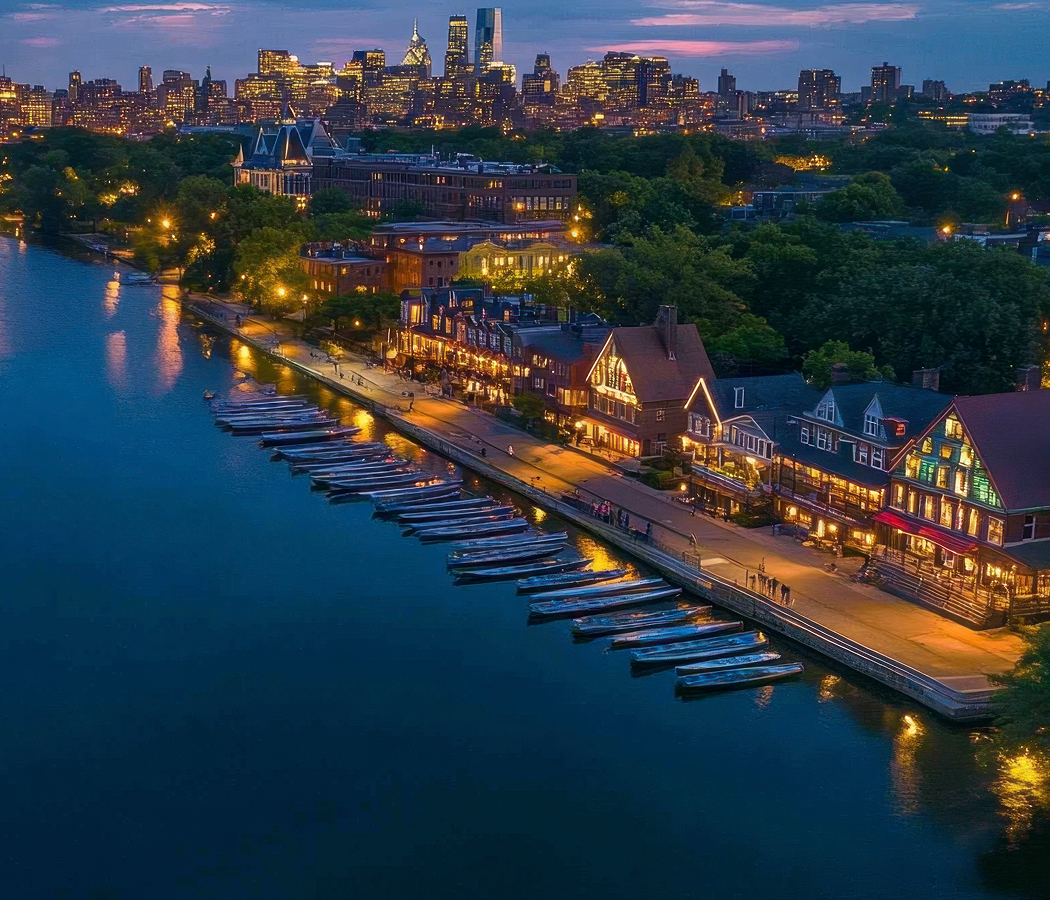
Beyond its celebrated historic sites, Philadelphia fascinates through an exceptional blend of art, history, and innovation. Visitors can admire masterpieces at the Barnes Foundation, explore the collections of the Museum of the American Revolution, stroll the scenic trails of Fairmount Park, or discover cutting-edge science at The Franklin Institute. Cultural destinations including Eastern State Penitentiary, the thriving Italian Market, Spruce Street Harbor Park, and the lively waterfront along the Delaware River demonstrate how Philadelphia continually balances its revolutionary legacy with one of America's richest culinary, artistic, and cultural scenes.
Perhaps Philadelphia's greatest fascination is its remarkable ability to preserve the foundations of the United States while embracing the energy of a thriving modern metropolis. Colonial streets stand beside soaring skyscrapers, centuries-old marketplaces flourish alongside acclaimed restaurants, and public art fills neighborhoods across the city. Whether standing inside Independence Hall, climbing the famous Rocky Steps at the Philadelphia Museum of Art, exploring the cobblestone streets of Old City, or relaxing in Rittenhouse Square, visitors quickly discover that Philadelphia's enduring appeal lies in the seamless blend of American history, cultural richness, and enduring civic pride.
Five fascinations.
5. Philadelphia's street grid was designed before the city had enough people to fill it.
William Penn and surveyor Thomas Holme laid out Philadelphia during the 1680s as an unusually ordered colonial city between the Delaware and Schuylkill rivers. Their plan imposed a rectilinear street grid around five public squares, creating generous blocks and open spaces intended to avoid the congestion and fire hazards of older European cities. Four of those squares survive as major parks surrounding the central square now occupied by City Hall. Philadelphia's familiar downtown geography originated as an ambitious seventeenth-century experiment in planned urbanism, established when much of the territory inside the grid remained undeveloped.
4. Benjamin Franklin helped create institutions that still shape Philadelphia centuries later.
Benjamin Franklin arrived in Philadelphia as a teenager in 1723 and became deeply involved in transforming the growing colonial city. His initiatives contributed to the creation of the Library Company of Philadelphia, the American Philosophical Society, the institution that became the University of Pennsylvania, and an early volunteer fire company. He also served as printer, publisher, scientist, diplomat, and civic organizer before becoming one of the central figures of the American Revolution. Philadelphia preserves an unusual concentration of institutions connected with a single founder whose experiments in civic organization helped establish enduring models for education, intellectual exchange, public safety, and community life.
3. Philadelphia briefly served as the capital of the United States.
Philadelphia occupied the center of American political life during crucial periods surrounding independence and the creation of the federal government. Delegates adopted the Declaration of Independence there in 1776, and the Constitutional Convention assembled at the Pennsylvania State House in 1787. That building later became known as Independence Hall. Philadelphia then served as the temporary national capital from 1790 until 1800 as the new federal city of Washington was developed. Congress met in a building beside Independence Hall, and Presidents George Washington and John Adams governed from Philadelphia. Few American cities contain such a concentrated physical landscape of the country's revolutionary and constitutional origins.
2. Philadelphia City Hall was designed to become the tallest building in the world.
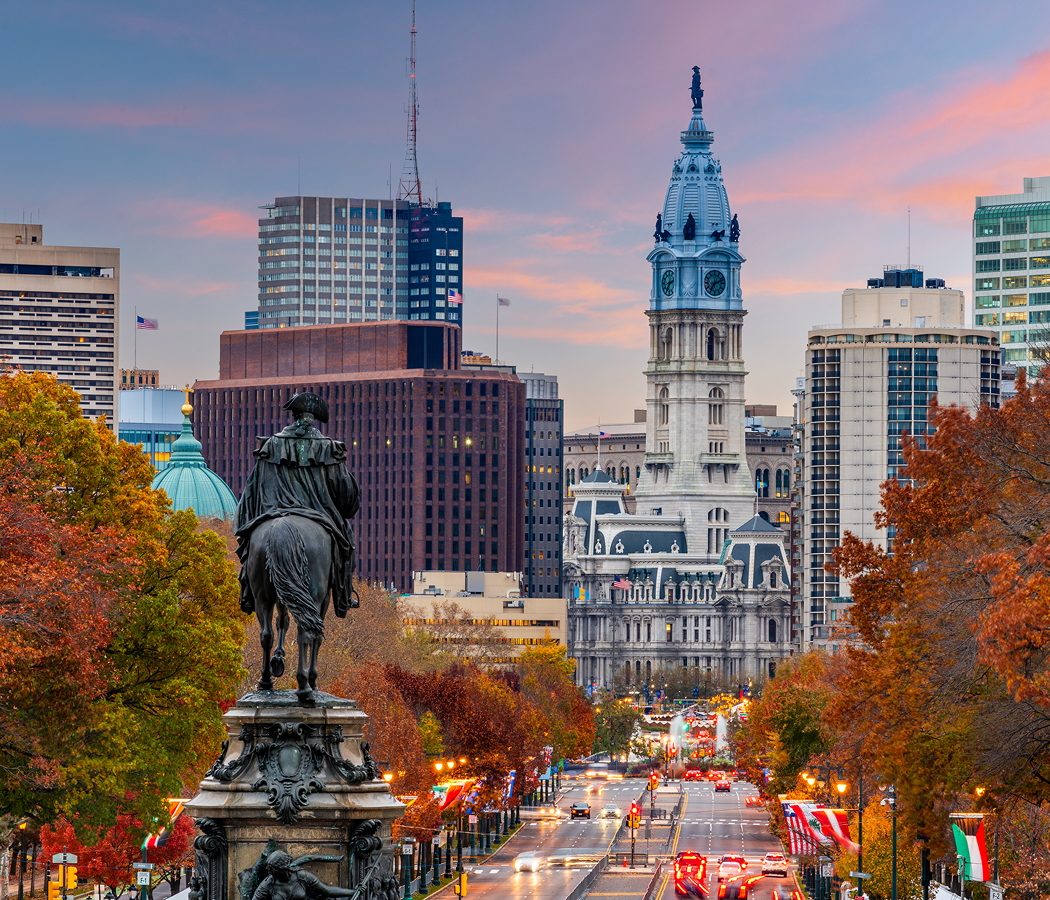
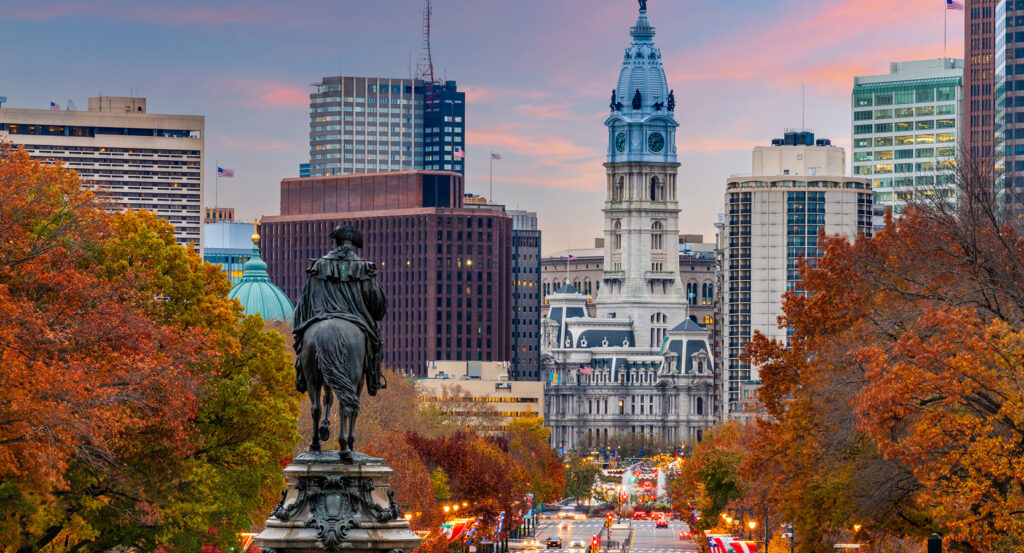
Construction of Philadelphia City Hall began in 1871 and continued for three decades, producing an enormous masonry structure covering 14 acres at the center of Penn's original city plan. Architect John McArthur Jr. designed the building in an elaborate Second Empire style, culminating in a tower crowned by Alexander Milne Calder's colossal statue of William Penn. At 548 feet to the statue's summit, City Hall became the world's tallest habitable building upon completion. Its immense masonry construction remains particularly remarkable: Philadelphia placed one of the nineteenth century's most ambitious architectural projects directly at the geographic heart of the city.
1. Philadelphia deliberately kept its skyline lower than William Penn for nearly a century.
After City Hall's tower established William Penn high above Philadelphia, an unwritten convention discouraged private buildings from rising above the statue. The resulting height restraint helped preserve City Hall as the dominant feature of the skyline even as skyscrapers transformed other American cities. That era ended in 1986 when One Liberty Place rose substantially above Penn's hat, introducing a new generation of towers west of City Hall. Philadelphia folklore later blamed the broken height tradition, the so-called Curse of Billy Penn, for years of professional sports disappointment. A gentleman's agreement about architecture evolved into one of the city's most enduring pieces of popular mythology.
Where your story begins.
Foresyte Travel reveals places that feel extraordinary long before you arrive.
Enjoy editorial crafted for luxury travelers.
Foresyte may earn a commission when you book.