Fun facts about Seattle, Washington.
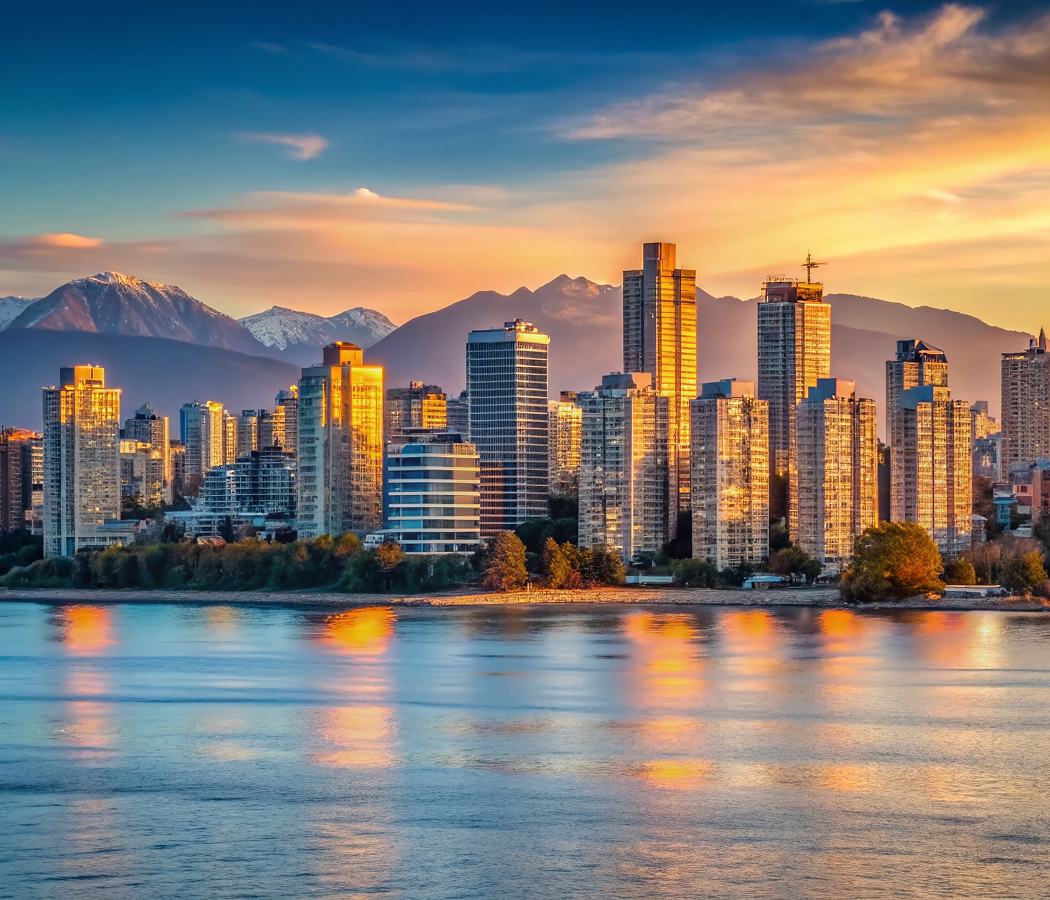
Seattle rises between Puget Sound and Lake Washington across a landscape of steep hills, protected bays, glacially shaped waterways, and forested ridges, producing a metropolitan environment whose streets and buildings respond to unusually dramatic natural geography. Downtown descends toward Elliott Bay through a succession of terraces, with commercial towers overlooking the waterfront, ferry terminals, and the distant Olympic Mountains. Pioneer Square preserves the historic core of the rebuilt nineteenth-century city, where Romanesque Revival buildings, elaborate brick façades, and narrow streets reflect the commercial prosperity that followed the Great Fire. The Pioneer Building, designed by Elmer H. Fisher and completed in 1892, became a defining example of the district's expansive masonry architecture. Nearby, the Smith Tower, completed in 1914, introduced one of the tallest buildings on the American West Coast through its steel-frame construction, classical ornamentation, and commanding position above the waterfront. Pike Place Market occupies a prominent hillside overlooking Elliott Bay, its historic arcades and multilevel passages connecting agricultural commerce with one of Seattle's most recognizable public institutions. Established in 1907, the market developed as a direct connection between regional farmers and urban consumers, retaining a dense environment of produce stalls, seafood vendors, independent shops, and restaurants. North of downtown, the Seattle Center preserves the architectural inheritance of the 1962 Century 21 Exposition, whose futuristic ambitions introduced the Space Needle as a defining landmark of the city's skyline. Designed by John Graham & Company, the tower rises 605 feet above the exhibition grounds, its observation structure reflecting the era's fascination with aerospace technology and modern engineering. The nearby Monorail, constructed for the exposition, connects Seattle Center with downtown through an elevated transportation system that became an enduring feature of the city's urban landscape. Capitol Hill presents a contrasting environment of historic apartment buildings, neighborhood commercial streets, and landscaped public spaces, including Volunteer Park, whose grounds contain the Seattle Asian Art Museum and a historic water tower. The University District developed around the University of Washington, whose campus combines Collegiate Gothic buildings, expansive lawns, and celebrated views toward Mount Rainier. The university's Suzzallo Library introduces an imposing expression of Gothic Revival design through its vaulted reading room and richly ornamented stonework. Across Lake Union, the Fremont neighborhood retains an industrial and maritime inheritance through former manufacturing sites, working waterfronts, and distinctive public art. The Ballard Locks, completed in 1917 as part of the Lake Washington Ship Canal, provide an essential engineering connection between the freshwater lakes and the saltwater environment of Puget Sound, accommodating commercial vessels and recreational boats through a system of navigational chambers. Seattle's extensive park network includes Discovery Park, whose coastal bluffs, wooded trails, and open meadows preserve a substantial natural landscape overlooking the sound. The city's physical character reflects the close relationship between maritime infrastructure, hillside development, experimental architecture, and the powerful natural setting that continues to shape its neighborhoods.
Pacific Northwestern creativity found a defining center in Seattle, where Indigenous artistic traditions, experimental music, independent publishing, coffee culture, and technological entrepreneurship developed into an internationally influential cultural environment. The region's Coast Salish peoples established sophisticated traditions of carving, weaving, basketry, and ceremonial art, preserving visual languages closely connected to ancestral knowledge, natural materials, and the cultural significance of the surrounding waterways. Seattle's contemporary Indigenous institutions and artists continue to sustain these traditions through education, exhibitions, and community practice. During the twentieth century, the city's musical character expanded through jazz, folk, rock, and experimental performance, with neighborhood venues and independent recording studios supporting successive generations of musicians. Ray Charles developed an important early stage of his professional career in Seattle during the late 1940s, performing in local clubs and recording his first commercial music. Jimi Hendrix, born in Seattle in 1942, subsequently became one of the most influential guitarists in popular music, transforming the expressive possibilities of electric guitar through his performances and recordings. The city's international musical reputation changed dramatically during the late 1980s and early 1990s through the emergence of grunge, a movement associated with independent labels, underground venues, and bands including Nirvana, Pearl Jam, Soundgarden, and Alice in Chains. Sub Pop Records became a central institution in this creative environment, helping bring Seattle's alternative rock scene to international audiences. The city's musical influence extended through the development of independent hip-hop, electronic music, and contemporary experimental performance, supported by a network of clubs, festivals, and recording facilities. Seattle's visual arts institutions include the Seattle Art Museum, whose collections connect international artistic traditions with contemporary creative expression, and the Museum of Pop Culture, whose distinctive building was designed by Frank Gehry. The city's literary inheritance includes the work of poet Theodore Roethke, whose career at the University of Washington contributed to the region's intellectual life, and contemporary writers whose fiction explores the social and environmental complexities of the Pacific Northwest. Seattle's culinary traditions reflect its maritime geography and international communities through Pacific salmon, Dungeness crab, oysters, and other seafood associated with the cold waters of the region. Pike Place Market's historic food culture developed alongside a thriving restaurant environment shaped by Japanese, Chinese, Vietnamese, Filipino, and other immigrant communities. The city's international association with coffee expanded through the founding of Starbucks in 1971, followed by the growth of independent roasters and cafés that helped define contemporary American specialty coffee culture. Seattle's technology industry contributed another dimension to its creative character through the development of software, digital services, video games, and innovative approaches to communication and design. The city's environmental traditions also influenced public life through conservation movements, outdoor recreation, and an enduring relationship with the forests, mountains, and waterways of Washington State. Seattle brings together the maritime inheritance of the Pacific Northwest, the independent spirit of its musical communities, and the inventive ambitions of modern technology within a city whose cultural influence extends across art, commerce, environmental thought, and contemporary American life.
Five fascinations.
5. Seattle rebuilt its downtown streets one story above the original city.
After the Great Seattle Fire destroyed much of the commercial district in 1889, the city rebuilt with masonry buildings and raised sections of its street system to improve drainage and reduce flooding. New sidewalks eventually connected to upper floors, leaving portions of the former street level buried beneath the reconstructed city. Passageways, storefronts, and structural remnants survive below Pioneer Square today. Seattle contains an extraordinary architectural layer beneath its modern streets: fragments of the nineteenth-century city physically preserved underneath the one that replaced it.
4. Seattle's famous Space Needle was sketched on a napkin.
The Space Needle emerged from preparations for the 1962 Century 21 Exposition, when hotel executive Edward E. Carlson envisioned a futuristic tower as a defining symbol for the fair. His early concept was famously sketched on a napkin and evolved through extensive architectural and structural development before construction began. The finished tower rose 605 feet above Seattle, supported by a foundation engineered to place its center of gravity close to ground level. A spontaneous drawing ultimately became the permanent emblem of a world's fair devoted to science, technology, and visions of the future.
3. Pike Place Market was created after shoppers rebelled against soaring food prices.
Pike Place Market began in 1907 after public anger grew over the gap between prices received by farmers and those charged by produce wholesalers. Seattle created a designated place where farmers could sell directly to consumers, and crowds overwhelmed the first market day. Permanent market buildings followed along the steep hillside above Elliott Bay, producing the layered collection of stalls, shops, ramps, and passageways that survives today. One of Seattle's most recognizable destinations originated not as a tourist attraction but as a civic response to the economics of feeding a rapidly growing city.
2. Seattle moved an entire neighborhood uphill during one of America's largest infrastructure projects.
Construction of the Lake Washington Ship Canal and Ballard Locks radically altered Seattle's waterways when the system opened in the 1910s. Connecting Lake Washington, Lake Union, and Puget Sound lowered Lake Washington by nine feet and changed shorelines around the city. The project severed the Black River, transformed wetlands, and reshaped transportation and industry across the region. Its locks still raise and lower vessels between freshwater lakes and the tidal waters of Puget Sound, making a century-old engineering intervention fundamental to Seattle's contemporary geography.
1. Seattle's floating bridges exist because the lake beneath them is exceptionally deep.
Lake Washington presented engineers with an unusual obstacle: deep water and soft lakebed conditions made conventional bridge piers difficult and expensive to construct across major portions of the lake. Seattle responded by embracing floating bridges supported by enormous concrete pontoons. The original Lake Washington Floating Bridge opened in 1940, and subsequent crossings expanded the concept at remarkable scale. Today the region contains multiple floating spans, including the State Route 520 bridge, the world's longest floating bridge. A challenging piece of local geography ultimately pushed Seattle toward one of its most distinctive forms of civil engineering.
Where your story begins.
Foresyte Travel reveals places that feel extraordinary long before you arrive.
Enjoy editorial crafted for luxury travelers.
Foresyte may earn a commission when you book.