Fun facts about Madrid, Spain.
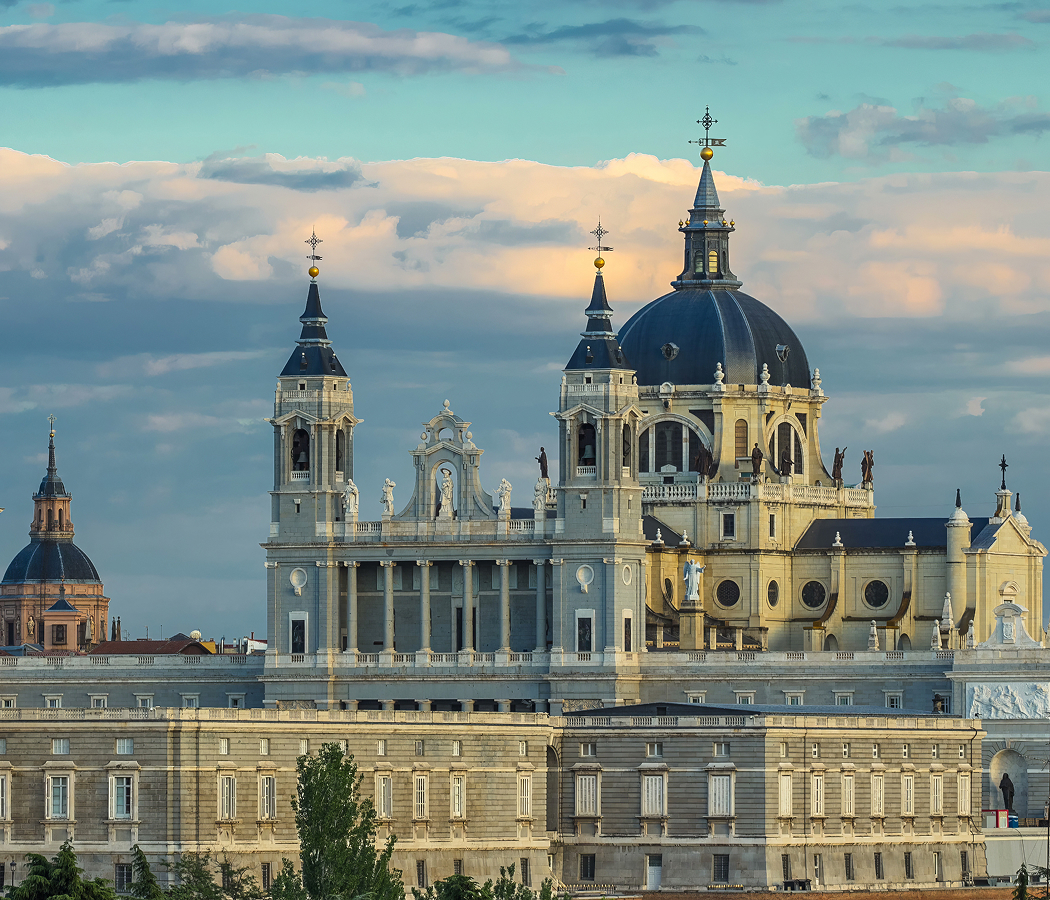
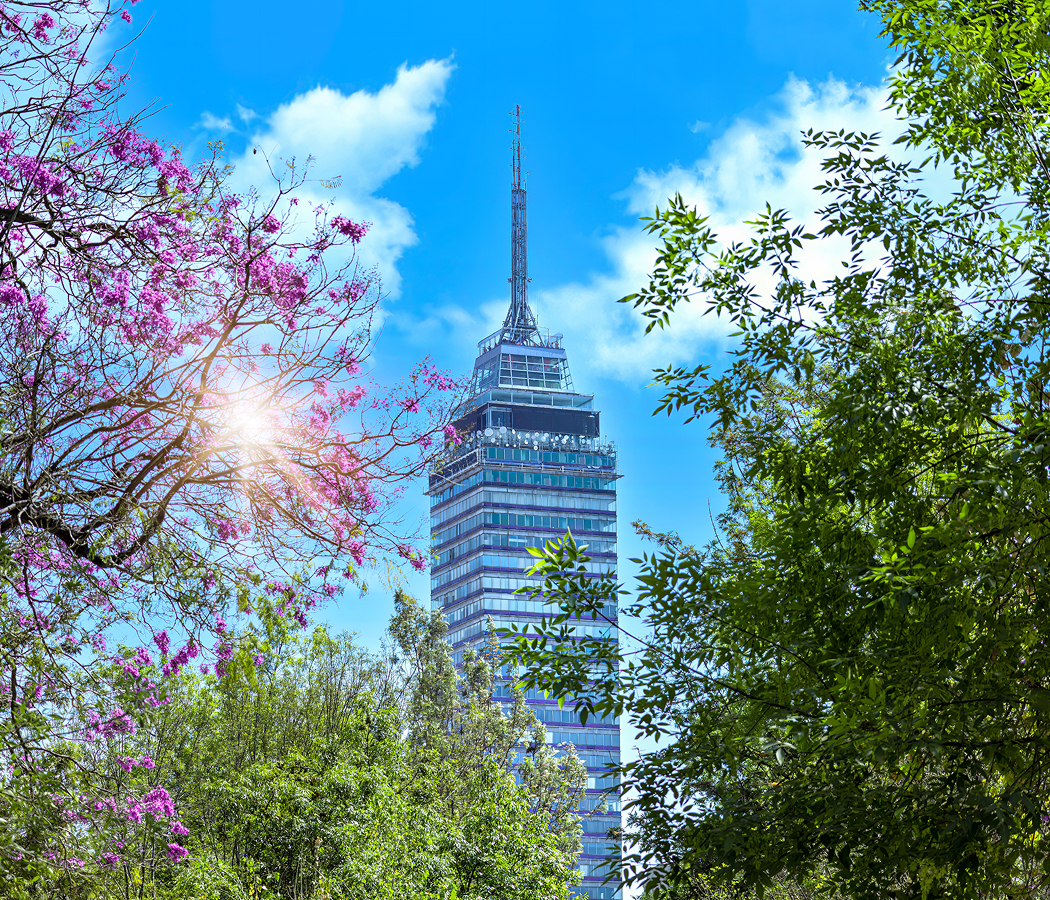
Madrid rises across the elevated plains of Central Spain, where ceremonial avenues, royal palaces, historic plazas, and densely developed neighborhoods form an urban landscape shaped by centuries of courtly patronage and metropolitan expansion. The city stands on the Meseta Central near the Manzanares River, whose valley defines the western edge of the historic center. Madrid's medieval settlement developed around the former Muslim fortress, with irregular streets preserving elements of its early organization. The Royal Palace of Madrid dominates the western historic district through an immense Baroque and Neoclassical composition constructed during the eighteenth century on the site of the former Habsburg Alcázar. Designed initially by Filippo Juvarra and subsequently developed by Giovanni Battista Sacchetti, the palace contains expansive staircases, ceremonial halls, and richly decorated royal apartments expressing the ambitions of the Bourbon monarchy. The adjoining Plaza de Oriente establishes a formal landscaped setting between the palace and the Teatro Real, Madrid's principal opera house. Nearby, the Almudena Cathedral introduces another expansive religious landmark through its Neoclassical exterior and contemporary interior. Eastward, Plaza Mayor preserves the ceremonial heart of Habsburg Madrid through a rectangular square enclosed by arcaded buildings and symmetrical residential façades. Developed during the reign of Philip III, the plaza hosted markets, royal celebrations, religious ceremonies, and public spectacles. The surrounding streets connect with Puerta del Sol, a principal civic square whose historic buildings and transportation connections establish a central reference point within the Spanish road network. Gran Vía extends northwestward through an imposing corridor of early twentieth-century commercial architecture, introducing elaborate Beaux-Arts, Art Deco, and eclectic façades associated with Madrid's modernization. The Metrópolis Building and Edificio Telefónica contribute distinctive landmarks to this expansive avenue. The Paseo del Prado forms another defining urban axis through a landscaped boulevard associated with the Enlightenment-era improvements of Charles III. Its cultural institutions include the Museo del Prado, housed in a Neoclassical building designed by Juan de Villanueva, and the nearby Museo Nacional Thyssen-Bornemisza. The adjoining Retiro Park preserves extensive former royal grounds, with tree-lined avenues, ornamental gardens, and the Palacio de Cristal reflecting nineteenth-century landscape design. The Puerta de Alcalá rises near the park's western edge through an expansive Neoclassical gateway designed by Francesco Sabatini. Northward, the Paseo de la Castellana extends through Madrid's principal modern business districts, where office towers and contemporary commercial developments reflect the city's economic expansion. The Cuatro Torres Business Area introduces a dramatic skyline through four expansive skyscrapers completed during the early twenty-first century. Madrid's residential districts contribute further architectural variety through the elegant nineteenth-century buildings of Salamanca, the historic streets of La Latina, and the dense urban fabric of Malasaña and Chueca. The Madrid Río project transformed former highway corridors along the Manzanares into parks, pedestrian routes, and recreational spaces, reconnecting neighborhoods with the river. Madrid's architectural distinction arises from the interaction between Habsburg ceremonial planning, Bourbon expansive construction, nineteenth-century expansion, and contemporary interventions that have reshaped the capital's public landscape.
Five fascinations.
5. Madrid became Spain's capital partly because of where it sits.
Philip II established his court permanently in Madrid in 1561, transforming a comparatively modest Castilian city into the political center of the Spanish monarchy. Madrid lacked the immense commercial importance of Seville or the entrenched institutional power of older capitals, but its central position within the Iberian Peninsula suited a monarchy governing territories in multiple directions. Royal institutions, aristocratic residences, monasteries, plazas, and administrative buildings subsequently accumulated around the court. One of Europe's great capitals developed not from a dominant port or ancient imperial metropolis, but from a royal decision that fundamentally redirected the city's history.
4. Plaza Mayor was once an arena for spectacles far beyond ordinary city life.
Madrid's Plaza Mayor took its expansive rectangular form during the reign of Philip III in the early seventeenth century, with architect Juan Gómez de Mora playing a central role in its development. The enclosed square became a stage for markets, royal celebrations, public ceremonies, theatrical performances, bullfights, and executions. Fires repeatedly damaged its buildings, leading to major reconstruction and the more unified façades visible today. The elegant pedestrian plaza now associated with cafés and arcades was designed as an extraordinarily flexible civic theater where some of the most consequential public rituals of Habsburg Madrid unfolded before enormous crowds.
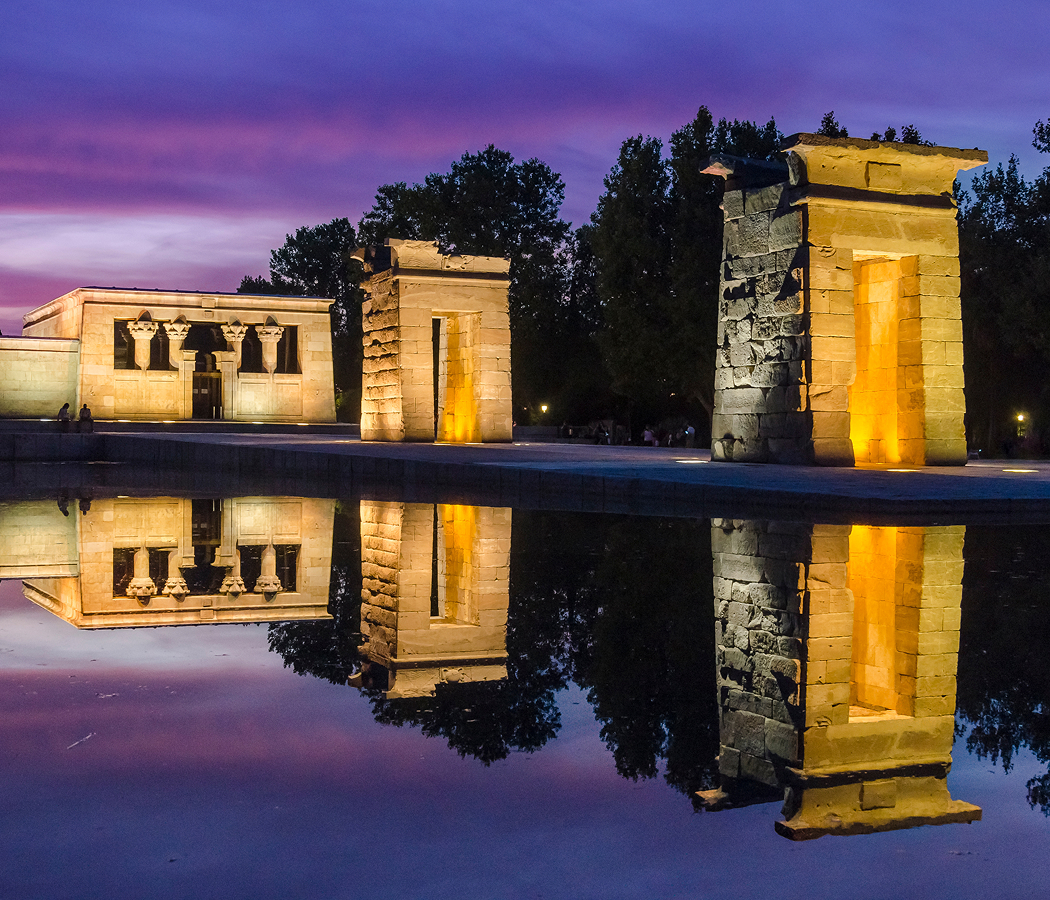
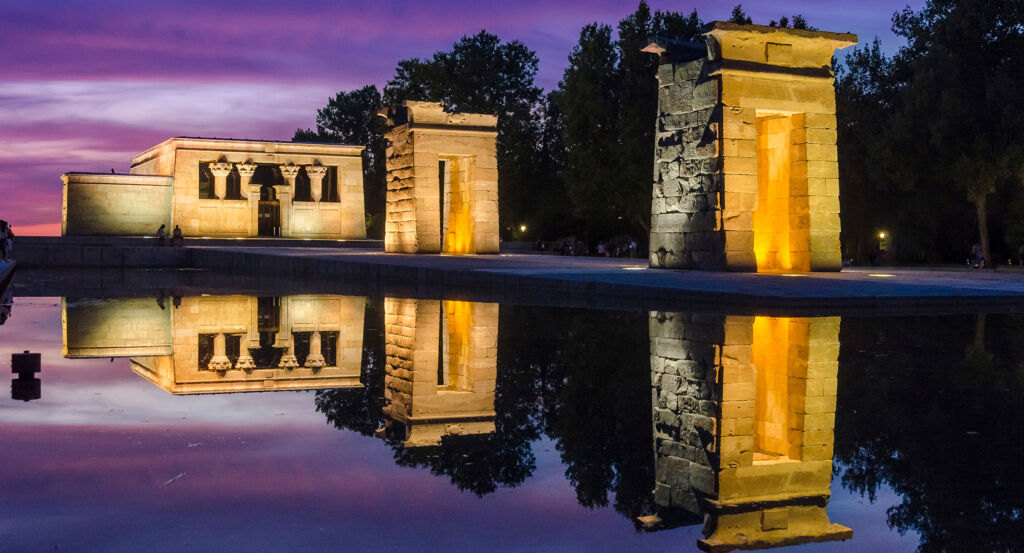
3. Madrid moved an ancient Egyptian temple more than 2,000 miles from the Nile.
The Temple of Debod was constructed in ancient Nubia beginning in the second century BCE and later expanded under Ptolemaic and Roman rulers. Construction of Egypt's Aswan High Dam threatened numerous ancient monuments with inundation during the twentieth century, prompting an international campaign to preserve them. Egypt presented the temple to Spain in recognition of its participation in the rescue effort. Its stone blocks were dismantled, transported to Madrid, and reconstructed near the former Montaña barracks, where the temple opened to the public in 1972. An authentic ancient Egyptian sanctuary stands today on a hill overlooking western Madrid.
2. Madrid transformed a buried motorway into miles of parks along its river.
For decades, major sections of the M-30 motorway dominated the banks of the Manzanares, separating surrounding neighborhoods from the river. A vast twenty-first-century infrastructure project placed substantial stretches of the roadway underground and reclaimed the surface for public space. Madrid Río subsequently introduced parks, playgrounds, pedestrian routes, cycling paths, bridges, and landscaped areas across the recovered corridor. The intervention fundamentally altered the relationship between Central Madrid and a river long overshadowed by transportation infrastructure. An urban expressway landscape became an extensive linear park, reconnecting neighborhoods across territory previously organized around automobile traffic.
1. Madrid's Prado Museum began with a building intended for science, not paintings.
Architect Juan de Villanueva designed the expansive Neoclassical building that houses the Prado during the reign of Charles III. Conceived in the 1780s as a cabinet devoted to natural history, the structure formed part of a broader scientific precinct along the Paseo del Prado. War and political upheaval interrupted its original purpose, and the building ultimately opened in 1819 as the Royal Museum of Painting and Sculpture. The collections expanded into an extraordinary concentration of works by Velázquez, Goya, El Greco, Rubens, Titian, and other masters. One of the world's great art museums occupies architecture originally conceived for an entirely different branch of knowledge.
Where your story begins.
Foresyte Travel reveals places that feel extraordinary long before you arrive.
Enjoy editorial crafted for luxury travelers.