
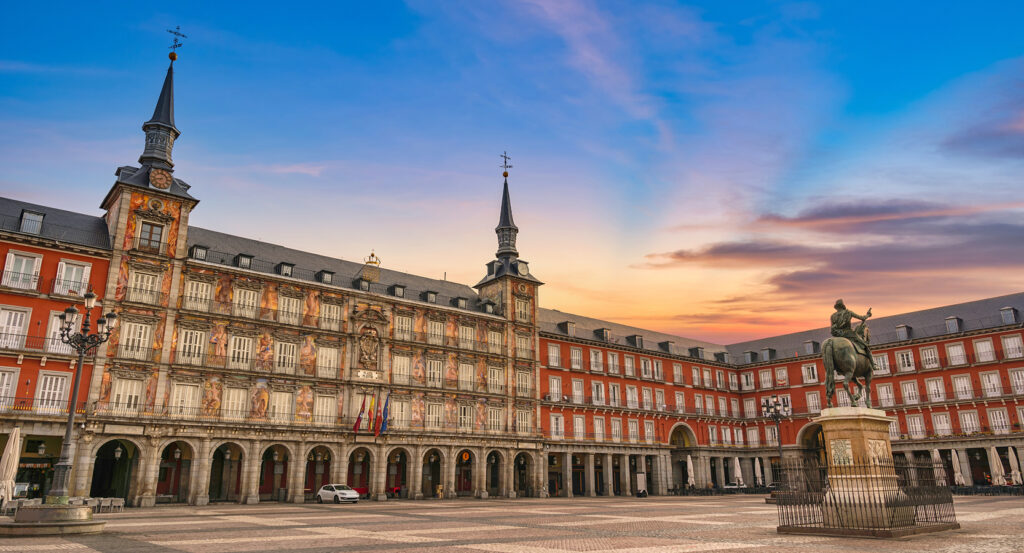
Why Mercado de San Miguel matters.
Mercado de San Miguel, or Market of San Miguel, is Madrid's cathedral of taste, a place where food becomes theater and tradition hums beneath glass and iron.
Step inside its 20th-century shell, and you're enveloped by color and scent: saffron, sea salt, jamón ibérico, and chilled cava mingling in the air. Light filters through wrought-iron beams, glinting off marble counters piled with oysters, pintxos, and glistening olives. Every stall feels like a miniature stage, chefs slicing, pouring, and plating in rhythm with the crowd's pulse. Yet despite its modern bustle, the market holds the quiet soul of old Madrid; it's where the city still gathers to taste itself. Whether you're sipping vermouth at noon or ending a long evening with churros and champagne, San Miguel isn't just where you eat, it's where you belong.
What defines Mercado de San Miguel.
The market's elegance hides a story of near ruin and rebirth.
Built in 1916 by architect Alfonso Dubié as one of Madrid's first iron-and-glass covered markets, San Miguel was inspired by the great European halls of Les Halles in Paris and La Boqueria in Barcelona. For decades it served locals buying produce and meat before the rise of supermarkets emptied its aisles. By the 1990s, the market stood half abandoned, a relic of an older Madrid fading into memory. Its salvation came in 2009, when a collective of Spanish gourmets and entrepreneurs restored the structure, preserving its original Modernist frame while transforming it into a culinary temple. Every detail honors that balance: the latticed iron columns remain untouched; the floor tiles still echo the footfalls of another century. Yet now the stalls showcase the evolution of Spanish cuisine, Galician seafood next to Basque pintxos, Andalusian tapas beside Valencian paella. Few visitors realize the market's design also functions as natural climate control: the high glass canopy regulates temperature through passive airflow, allowing the aromas to mingle. Today, San Miguel is both monument and movement, proof that heritage can adapt.
How Mercado de San Miguel fits.
Visit mid-morning, just as the vendors arrange their displays and the first espresso machines hiss to life.
Enter through the main iron doors facing Plaza Mayor, and let your senses lead. Start with a tapa of anchovies in olive oil or a cone of jamón carved before the eyes, then wander to the oyster bar for a glass of cava, the gentle clink of shells marking the rhythm of the day. Move toward the dessert stalls for violet gelato or crema catalana, and finish with a pour of vermouth on tap beneath the hanging lights. In the afternoon, take a break at one of the tall communal tables, conversation comes easily when surrounded by music, laughter, and the scent of roasting peppers. At night, return again: the market glows amber, reflections dancing across the glass like candlelight. Musicians play at the entrance; locals linger over wine as tourists fade into the rhythm of madrileños at ease. Step outside afterward into the narrow streets near Plaza Mayor, full, happy, a little dazzled, and you'll understand why Mercado de San Miguel isn't just Madrid's most famous food hall. It's its appetite made visible, an eternal celebration of flavor, fellowship, and the art of savoring life.
Where your story begins.
Foresyte Travel reveals places that feel extraordinary long before you arrive.
Enjoy editorial crafted for luxury travelers.
Foresyte may earn a commission when you book.














































































































