Perfect weekend in Washington, D.C.
Washington, D.C., emerged from the political compromises of the American Revolution as a purpose-built federal capital, occupying a strategic position along the Potomac River between Maryland and Virginia. The surrounding region formed part of the ancestral territories of Indigenous peoples including the Nacotchtank, whose communities maintained settlements and trading relationships throughout the Potomac watershed. The Residence Act of 1790 authorized the establishment of a permanent national capital, and President George Washington selected the site the following year. French-born engineer Pierre Charles L'Enfant developed an ambitious urban plan combining broad diagonal avenues, ceremonial spaces, and a regular street grid intended to accommodate the institutions of the new republic. Surveyor Benjamin Banneker contributed to the early surveying of the federal district, and Andrew Ellicott subsequently oversaw important aspects of its physical development. The federal government relocated from Philadelphia in 1800, establishing Washington as the administrative center of the United States. British forces occupied the city in August 1814 during the War of 1812, burning major government buildings and prompting extensive reconstruction. During the Civil War, Washington became a fortified military center and a destination for formerly enslaved people seeking freedom. The abolition of slavery in the District of Columbia in April 1862 preceded the nationwide emancipation measures of the following years. Federal expansion during the New Deal and the Second World War accelerated construction, employment, and residential growth. The Civil Rights Movement subsequently brought major demonstrations to the capital, strengthening its role as a national gathering place for political advocacy. Washington's metropolitan economy developed through federal administration, diplomacy, higher education, scientific research, and professional services, establishing a city whose physical geography remains closely connected to the institutions of American government.
American intellectual and artistic life acquired a national platform in Washington, where federal institutions, historically Black universities, international diplomacy, and cultural patronage supported generations of writers, musicians, and visual artists. The Library of Congress, established in 1800, developed into one of the world's largest repositories of books, manuscripts, photographs, maps, and musical compositions. Its Thomas Jefferson Building, completed in 1897, became an extraordinary example of Beaux-Arts architecture, incorporating elaborate murals, sculpture, and decorative craftsmanship. Washington's literary history includes Frederick Douglass, who lived in the capital during his later years and contributed to national debates over emancipation, citizenship, and civil rights. His former residence at Cedar Hill in Anacostia preserves connections to his political leadership and intellectual achievements. The city's musical traditions developed through African American churches, jazz clubs, military ensembles, and neighborhood performance venues. Duke Ellington, born in Washington in 1899, became one of the most consequential composers and bandleaders in American jazz, developing an orchestral approach that transformed twentieth-century music. Washington subsequently became an important center of go-go, a funk-derived musical tradition pioneered by Chuck Brown during the 1970s. The Kennedy Center, opened in 1971, strengthened the capital's performing arts institutions through opera, theater, ballet, orchestral music, and contemporary performance. Washington's culinary foundations developed through Chesapeake Bay fisheries, Mid-Atlantic agriculture, and the cooking traditions of African American communities. Blue crab, oysters, rockfish, and seasonal shellfish contributed to regional preparations associated with the Potomac and Chesapeake watersheds. Southern cooking traditions brought fried chicken, collard greens, cornbread, and slow-cooked meats into neighborhood restaurants and family kitchens. Ethiopian immigration transformed the metropolitan dining landscape, establishing restaurants specializing in injera, doro wat, tibs, and traditional communal dining. Salvadoran communities contributed pupusas, tamales, and regional Central American preparations, strengthening the city's connections to Latin American cooking. Contemporary chefs incorporate these traditions alongside seasonal Mid-Atlantic produce and international culinary techniques. A weekend in Washington reveals a capital whose political history, African American cultural achievements, international communities, and culinary traditions extend far beyond the ceremonial institutions of the federal government.
Three day itinerary.
Day 1: Washington Monument
Washington Monument is best known for translating the national memory of George Washington into the defining vertical axis of the National Mall. Robert Mills designed the expansive obelisk, and construction began in 1848 before political conflict and financial shortages produced a decades-long interruption. Work resumed under the U.S. Army Corps of Engineers during the 1870s, with Thomas Lincoln Casey directing completion through a revised structural approach. Differences in marble sourced during separate construction periods remain visible as a change in the stone's coloration partway up the shaft. The aluminum pyramid crowning the 555-foot structure represented an exceptionally ambitious use of the metal when the monument was completed in 1884. Its severe geometry established an enduring focal point for Washington's ceremonial landscape and the monuments that subsequently developed around it.
Day 1: minibar
minibar is best known for José Andrés's experimental tasting menus and their role in establishing Washington as a center of modernist American cooking. Andrés arrived in the United States from Spain and developed his Washington restaurant career through interpretations of Spanish cuisine before creating minibar as a tiny culinary laboratory within Café Atlántico. The project separated a handful of diners from the chefs by little more than a counter, allowing dishes to emerge through close interaction between preparation and service. Andrés and successive culinary teams explored transformations of texture, temperature, aroma, and presentation through techniques associated with the international avant-garde. Two MICHELIN stars placed minibar among Washington's most distinguished restaurants, extending Andrés's influence from Spanish cooking into one of the capital's most technically ambitious dining institutions.
Day 2: United States Capitol
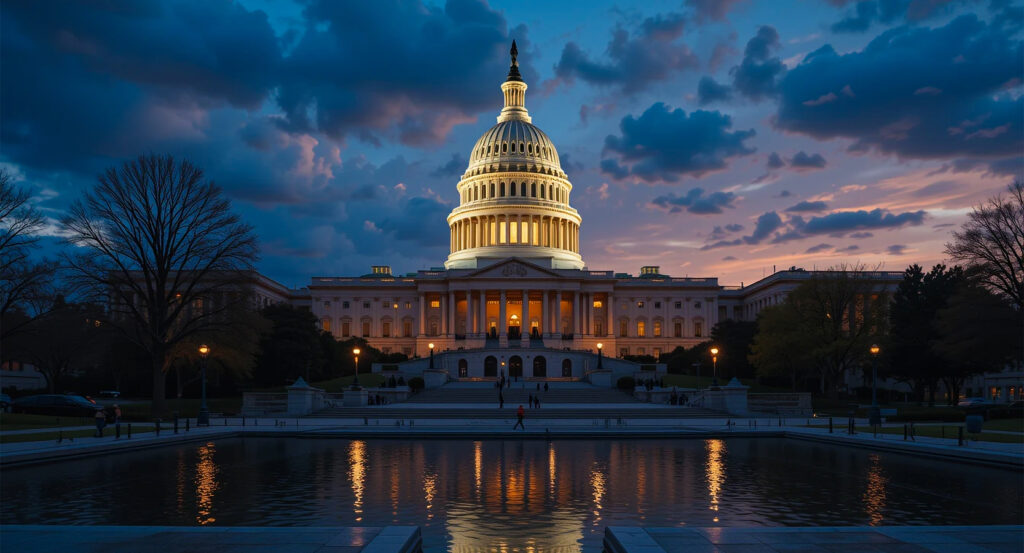
United States Capitol is best known as the architectural seat of Congress and the physical center from which Washington's expansive plan is organized. Pierre Charles L'Enfant positioned the legislature on Jenkins Hill within his 1791 plan for the federal city, and William Thornton's design established the foundation for the building that followed. Construction proceeded through repeated expansions, reconstruction after British forces burned the Capitol in 1814, and major nineteenth-century additions as the nation grew. Thomas U. Walter designed the cast-iron dome that transformed the building's silhouette, crowned by Thomas Crawford's Statue of Freedom in 1863. House and Senate chambers occupy opposing wings beneath an architectural complex shaped by more than two centuries of political change, territorial expansion, war, reconstruction, and democratic government.
Day 2: Albi
Albi is best known for Michael Rafidi's exploration of Palestinian and Levantine cooking through live fire, regional ingredients, and family culinary traditions. Rafidi drew on his Palestinian heritage and professional career in major American kitchens to create a restaurant whose name means “my heart” in Arabic. A wood-burning hearth anchors the kitchen, shaping meats, seafood, vegetables, breads, and ingredients connected to the eastern Mediterranean. Hummus, labneh, spice blends, charcoal cooking, and bread traditions appear within compositions that connect Palestinian foodways to contemporary Washington. Rafidi's work earned national recognition, including the James Beard Award for Outstanding Chef, establishing Albi as one of the most consequential restaurants in the capital and giving Palestinian culinary traditions a powerful position within American fine dining.
Day 2: Lincoln Memorial
Lincoln Memorial is best known for transforming the national memory of Abraham Lincoln into an expansive setting subsequently associated with the continuing struggle for American civil rights. Henry Bacon designed the memorial as a Greek Doric temple overlooking the Reflecting Pool, with 36 exterior columns representing the states in the Union at Lincoln's death. Daniel Chester French created the immense seated figure of Lincoln within the central chamber, and inscriptions reproduce the Gettysburg Address and Second Inaugural Address on opposing walls. Marian Anderson performed from its steps in 1939 after segregation prevented her appearance at Constitution Hall. Martin Luther King Jr. delivered his “I Have a Dream” speech there during the 1963 March on Washington, extending the memorial's meaning from Civil War remembrance into the national history of racial equality and democratic citizenship.
Day 2: The Dabney
The Dabney is best known for Jeremiah Langhorne's interpretation of Mid-Atlantic cooking through regional agriculture and a wood-fired hearth. Langhorne grew up in the region and returned after working in distinguished American kitchens, creating a restaurant focused on the foods of Virginia, Maryland, Pennsylvania, and the Chesapeake watershed. Farmers, fishermen, millers, and producers supply vegetables, grains, meats, and seafood whose geographic origins determine much of the kitchen's direction. Live fire gives smoke, char, and radiant heat a central role in preparations informed by historical cooking methods and contemporary technique. Langhorne received the James Beard Award for Best Chef: Mid-Atlantic in 2018, and MICHELIN recognition established The Dabney as one of Washington's defining expressions of regional American cuisine.
Day 3: Yellow
Yellow is best known for Michael Rafidi's translation of Levantine baking and Palestinian flavors into an ambitious daytime café and bakery. Wood-fired pita provides a foundation for sandwiches and plates built around hummus, labneh, vegetables, meats, spices, and ingredients connected to the eastern Mediterranean. Pastry expands that foundation through laminated doughs, sweets, and preparations incorporating flavors associated with Palestinian and broader Levantine cooking. Rafidi developed Yellow as a more informal counterpart to Albi, allowing related culinary traditions to operate through bread, coffee, pastry, and everyday meals. The project demonstrates the range of a culinary culture whose grains, fermentation, hearth cooking, dairy, spices, and baking traditions translate naturally across restaurant formats and have become an increasingly consequential part of Washington dining.
Day 3: Smithsonian Castle
Smithsonian Castle is the original headquarters of the Smithsonian Institution and one of the most consequential buildings in the architectural history of Washington, D.C. Completed in 1855, the Castle emerged from English scientist James Smithson's extraordinary bequest to the United States, which established an institution dedicated to the increase and diffusion of knowledge. British-born architect James Renwick Jr., whose later commissions included St. Patrick's Cathedral in New York City, designed the building in a Romanesque Revival style distinguished by irregular towers, crenellated parapets, and red sandstone quarried near Seneca, Maryland. Its construction began in 1847 under the supervision of architect Robert Mills, establishing a permanent institutional presence on the National Mall during the Smithsonian's formative years. The Castle originally accommodated exhibition galleries, research collections, laboratories, lecture halls, and living quarters for the institution's first secretary, physicist Joseph Henry. A devastating fire in 1865 destroyed the upper portions of the building and much of Henry's scientific correspondence, prompting reconstruction and substantial changes to its interior. Naturalist Spencer Fullerton Baird subsequently transformed the Smithsonian's collecting ambitions, helping establish the foundations of the National Museum of Natural History and the institution's expanding national museum system. James Smithson's remains were transferred from Genoa, Italy, to Washington in 1904 through an expedition organized by Alexander Graham Bell and were interred in a crypt near the Castle's north entrance. The building's distinctive silhouette has since become an architectural emblem of the Smithsonian, embodying the institution's evolution from a nineteenth-century scientific establishment into the world's largest museum, education, and research complex.
Day 3: National Gallery of Art
National Gallery of Art is best known for transforming Andrew W. Mellon's collection and philanthropy into a national art museum on the National Mall. Mellon offered his collection to the United States and financed a permanent museum building, which Congress authorized in 1937. John Russell Pope designed the neoclassical West Building around a central rotunda and galleries housing European and American art spanning centuries. I. M. Pei later created the East Building as a sharply geometric counterpart devoted principally to modern and contemporary art, using the irregular site to generate its distinctive triangular forms. Holdings by Leonardo da Vinci, Raphael, Rembrandt, Vermeer, Monet, and major American artists give the institution exceptional breadth. The two buildings create an architectural discussion between classical monumentality and twentieth-century modernism within Washington's ceremonial core.
Day 3: Jônt
Jônt is best known for Ryan Ratino's intensely technical tasting menus built around luxury ingredients, Japanese influences, and close interaction between diners and the kitchen. Ratino developed the restaurant above Bresca as a small counter-driven dining room, creating a setting suited to highly controlled multicourse service. Seafood, wagyu, rice, fermentation, stocks, sauces, and carefully calibrated temperature form recurring foundations of a cuisine shaped by Japanese products and contemporary fine-dining technique. The compact format concentrates attention on ingredient quality and the sequencing of individual preparations across the menu. MICHELIN awarded Jônt two stars, placing Ratino among Washington's highest-ranked chefs and establishing the restaurant as one of the capital's most ambitious expressions of contemporary tasting-menu dining.
Where your story begins.
Foresyte Travel reveals places that feel extraordinary long before you arrive.
Enjoy editorial crafted for luxury travelers.
Foresyte may earn a commission when you book.