Perfect weekend in Montréal, Québec.
Montréal's historical importance emerged through Indigenous trade networks, French colonial settlement, industrial expansion, and the development of one of North America's most influential French-speaking cultural centers. Situated on an island at the confluence of the St. Lawrence and Ottawa river systems, the region served as an important gathering and trading territory for Indigenous peoples long before European colonization. The St. Lawrence Iroquoian village of Hochelaga occupied the island when Jacques Cartier arrived in 1535, establishing an early chapter in the documented history of European contact. French colonists founded Ville-Marie in 1642 under the leadership of Paul de Chomedey de Maisonneuve and Jeanne Mance, whose religious and charitable ambitions contributed to the establishment of the settlement. Montréal subsequently developed into a principal center of the North American fur trade, connecting French merchants with Indigenous trading partners across the Great Lakes and continental interior. British conquest in 1760 introduced a new political administration, although French language, Catholic institutions, and established commercial traditions continued to shape the city's development. The completion of the Lachine Canal in 1825 accelerated industrial growth by improving transportation around the rapids of the St. Lawrence River. During the nineteenth century, Montréal became Canada's leading commercial and manufacturing center, attracting substantial investment in railways, banking, shipping, and textile production. The twentieth century brought further political and cultural transformation through Québec's Quiet Revolution, the international attention surrounding Expo 67, and the 1976 Summer Olympic Games. These successive periods established Montréal's enduring importance within Canadian history and the broader French-speaking world.
Montréal's international cultural reputation rests upon achievements in literature, music, cinema, contemporary art, and a culinary heritage shaped by Québec's agricultural traditions and immigrant communities. The Montreal Museum of Fine Arts, founded in 1860, developed extensive collections of Canadian and international art, including important works by artists associated with Québec's modern artistic movements. The Musée d'art contemporain de Montréal, established in 1964, became a significant institution for contemporary Canadian and international artistic production. The city's literary heritage includes writers such as Mordecai Richler, whose novels explored Montréal's Jewish communities, and Michel Tremblay, whose plays brought the language and social experiences of working-class French-speaking Montrealers to the theatrical stage. Leonard Cohen developed his early artistic career in Montréal, drawing upon the city's religious traditions, literary communities, and multilingual cultural environment. The Montréal International Jazz Festival, founded in 1980, became one of the world's largest jazz festivals, attracting performers from across the international music community. The city's culinary traditions combine French Canadian cooking with Jewish, Italian, Lebanese, Haitian, Vietnamese, and other international influences. Montréal-style bagels, smoked meat, tourtière, and poutine occupy established places within local food culture, alongside seasonal preparations featuring Québec cheeses, maple products, freshwater fish, and regional produce. Contemporary Montréal gastronomy has expanded these foundations through ambitious restaurants emphasizing local agriculture, French culinary techniques, and international cooking traditions. A perfect weekend in Montréal brings together colonial history, distinctive neighborhoods, artistic achievements, and the culinary heritage of a city whose French-speaking traditions occupy a distinctive place in North American culture.
Three day itinerary.
Day 1: Old Montréal
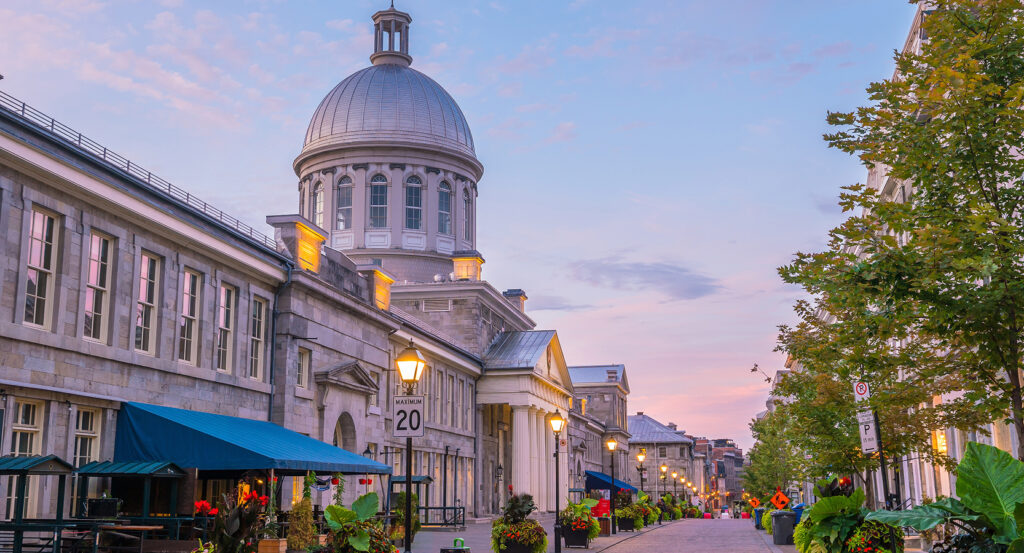
Old Montréal is best known for preserving the historic urban core from which the modern metropolis developed beside the St. Lawrence River. Ville-Marie was founded in 1642 by Paul de Chomedey de Maisonneuve and Jeanne Mance as a French Catholic settlement on the Island of Montréal. Fortifications eventually enclosed a dense network of religious institutions, residences, warehouses, markets, and commercial streets whose alignments remain embedded in the district. Nineteenth-century banks and mercantile buildings subsequently transformed the quarter as Montréal became the financial and commercial center of Canada. Limestone architecture along Rue Saint-Paul, Place d'Armes, and surrounding streets records successive periods of French colonial settlement, British commercial expansion, and industrial prosperity. Old Montréal concentrates nearly four centuries of urban development within the streets where one of North America's great cities began.
Day 1: Le Club Chasse et Pêche
Le Club Chasse et Pêche is best known for Claude Pelletier and Hubert Marsolais's sophisticated treatment of game, seafood, and Québec ingredients within the historic fabric of Old Montréal. Pelletier developed a cuisine grounded in classical technique and unusually concentrated flavors, giving meats, fish, foie gras, vegetables, and sauces equal structural importance. Marsolais shaped the restaurant alongside him as the partnership expanded into one of Montréal's most consequential independent hospitality groups. The subterranean dining room on Rue Saint-Claude gives the restaurant an intimate architectural character suited to cooking built around precision and depth. Le Club Chasse et Pêche became an enduring institution in Montréal fine dining through a culinary character closely connected to Québec's forests, waters, farms, and French gastronomic inheritance.
Day 2: Notre-Dame Basilica of Montréal
Notre-Dame Basilica of Montréal is best known for introducing Gothic Revival architecture to Canada through an expansive church inseparable from Montréal's Catholic and civic history. The Sulpicians established the Notre-Dame parish during the seventeenth century, connecting the institution directly with the French religious community that exercised seigneurial authority over Montréal. Irish-American architect James O'Donnell designed the nineteenth-century church with pointed arches, soaring towers, and a scale unprecedented in the city's earlier ecclesiastical architecture. Victor Bourgeau subsequently transformed its interior through an elaborate decorative program of carved wood, saturated color, gilding, sculpture, and religious imagery. Pope John Paul II elevated Notre-Dame to a minor basilica in 1982, and its role in major funerals and civic ceremonies extended its importance beyond parish life. The basilica captures the architectural ambition, Catholic institutions, and cultural transformation that shaped nineteenth-century Montréal.
Day 2: Toqué!
Toqué! is best known for Normand Laprise's foundational role in transforming Québec fine dining through rigorous relationships with the province's farmers, fishermen, foragers, and artisanal producers. Laprise and Christine Lamarche established the restaurant in 1993, developing a culinary philosophy that placed Québec ingredients at the center of ambitious contemporary cooking. Seasonal vegetables, wild products, seafood, meat, cheeses, and preserved ingredients became the material for precise compositions rooted in the province's agricultural geography. Laprise helped move Montréal restaurant culture toward a deeper engagement with local producers and the distinct possibilities of Québec terroir. Toqué! became an incubator for cooks who subsequently shaped restaurants across the province, extending its influence far beyond its own dining room. Its importance rests on changing how serious Québec cuisine understood the relationship between chef, producer, season, and place.
Day 2: Mount Royal
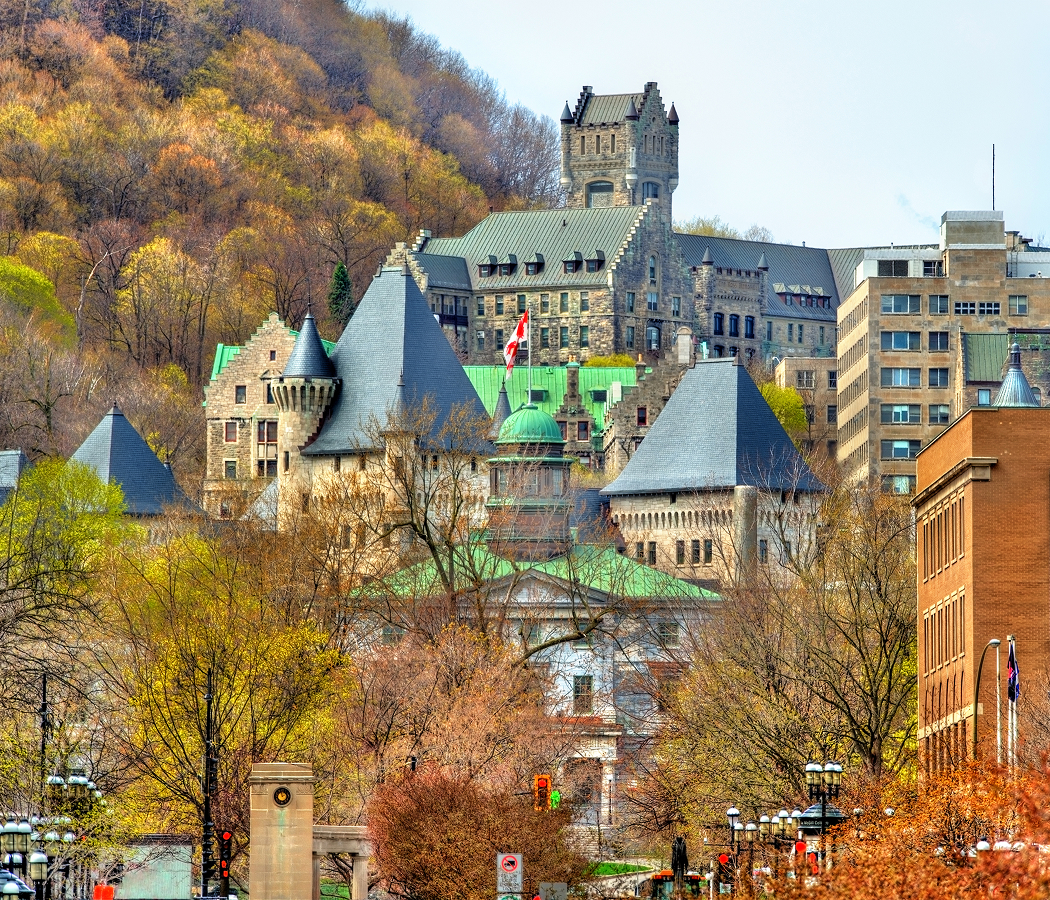
Mount Royal is best known for the wooded mountain that gave Montréal its name and provided the city with its defining topographic feature. Jacques Cartier climbed the mountain in 1535 during his exploration of the St. Lawrence Valley and named it Mont Royal. As Montréal industrialized during the nineteenth century, wealthy families constructed estates along its slopes and cemeteries occupied substantial sections of its terrain. Frederick Law Olmsted designed Mount Royal Park during the 1870s, applying the landscape principles that had already shaped his work on New York's Central Park. His plan used the mountain's elevation, vegetation, and winding circulation to create a large public landscape within the expanding industrial city. Mount Royal remains the geographical reference point around which Montréal's neighborhoods, skyline, institutional precincts, and civic character developed.
Day 2: Damas
Damas is best known for Fuad Alnirabie's expansive presentation of Syrian cuisine through the regional cooking traditions of Damascus and the eastern Mediterranean. The kitchen builds extraordinary depth through charcoal, spice, nuts, pomegranate, yogurt, preserved ingredients, lamb, seafood, vegetables, and carefully worked grains. Mezze establishes a broad foundation of contrasting textures and preparations before grilled meats and larger dishes deepen the meal through smoke, acidity, richness, and aromatic spice. The restaurant's lavish interior draws on Syrian decorative traditions, placing the food within a setting shaped by patterned surfaces, textiles, metalwork, and saturated ornament. Damas became one of Montréal's most important expressions of immigrant cuisine by giving Syrian culinary traditions the scale, technical seriousness, and institutional presence of a major destination restaurant.
Day 3: Dandy
Dandy is best known for transforming daytime dining in Old Montréal through chef Michael Tozzi's focused approach to breakfast, brunch, and lunch. The restaurant occupies a former bank space on Rue Saint-Jacques, placing a contemporary daytime restaurant inside the financial architecture of Montréal's historic commercial center. Eggs, breads, pancakes, vegetables, sandwiches, and carefully constructed sauces receive the technical attention associated with a chef-driven restaurant. Tozzi's cooking gives familiar morning preparations greater precision through fermentation, controlled textures, strong ingredient sourcing, and disciplined seasoning. Dandy has become one of Montréal's defining modern brunch rooms by treating daytime cooking as a complete culinary concept within a district historically dominated by commerce and evening hospitality.
Day 3: Jardin botanique de Montréal
Jardin botanique de Montréal is best known for assembling one of the world's major botanical collections within a vast landscape devoted to plant science, horticulture, education, and garden design. Brother Marie-Victorin, the influential Québec botanist and educator, championed its creation during the Great Depression, and the garden opened in 1931 under the direction of Henry Teuscher. Its development joined scientific classification with ambitious landscape architecture across thematic gardens, greenhouses, arboretum collections, and specialized plant environments. The Chinese Garden draws from classical Chinese landscape principles, and the Japanese Garden extends the institution's international scope through carefully organized relationships among plants, stone, water, and architecture. Montréal Botanical Garden transformed a major tract of the city into an institution where scientific study and designed landscapes operate at metropolitan scale.
Day 3: Old Port of Montréal
Old Port of Montréal is best known for the waterfront infrastructure that connected Montréal's commercial expansion with the St. Lawrence River and continental trade. The riverfront served maritime commerce from the colonial period, but nineteenth-century dredging, wharves, grain facilities, warehouses, and transportation improvements dramatically increased its capacity as Montréal industrialized. The opening of the Lachine Canal and expansion of railway networks strengthened the port's position as an interchange between Atlantic shipping and the interior of North America. Grain elevators and related infrastructure subsequently made Montréal one of the world's major grain-exporting ports. Commercial port activity migrated downstream as ships and cargo systems grew larger, allowing substantial sections of the historic waterfront to assume new civic functions. The Old Port preserves the geographical relationship between Montréal and the river system responsible for much of the city's economic ascent.
Day 3: Garde Manger
Garde Manger is best known for Chuck Hughes's vivacious seafood-driven cooking inside a nineteenth-century building in Old Montréal. Hughes established the restaurant with partners in 2006 and developed a cuisine centered on Québec seafood, substantial sauces, vegetables, meat, and the produce of the surrounding province. Lobster became particularly associated with his cooking, reflecting Montréal's culinary connection to the fisheries of eastern Canada and the Gulf of St. Lawrence. The compact stone-walled dining room ties the restaurant physically to the mercantile architecture of the surrounding quarter. Garde Manger helped establish Hughes as one of Québec's nationally recognized chefs and gave Old Montréal an independent restaurant whose cooking draws its strongest character from the cold Atlantic waters and food-producing regions surrounding the province.
Where your story begins.
Foresyte Travel reveals places that feel extraordinary long before you arrive.
Enjoy editorial crafted for luxury travelers.
Foresyte may earn a commission when you book.